Тут має бути цитата з Лесі або з Леся. Або декілька водночас.
Особисті враження у знеособленій формі. Іноді малюю, іноді шось кажу.
Займенники: присвійні
https://t.co/zsl1YTq6Xo
Зібрала відео із дослідженням акварельних фарб від Колориту. У них є фарби, вони якісні, цікаві хоча й мають дещо проблематичне іменування з погляду на потребу в деколонізації. Але вони українські, професійні і це чудово
Скоро відбудеться 7 джем візуальних новел, а зараз триває літній розпродаж, на якому ви можете купити одразу кілька новел з джему по знижці.
Як то кажуть: разом дешевше.
#visualnovelua
У Steam вийшла детективна візуальна новела Detective INNA DUKE від @HmarkaTeam
У ролі індички-поліціянтки вам треба розслідувати викрадення популярного стрімера-хом’яка в нуарній версії Києва, населеній антропоморфними звірами.
The GDP comparison shows what they took from our economy. Here's what russians took that can't go in a spreadsheet.
Start with what Estonia was in 1939: a functioning European democracy, fifteen years old, with its own constitution, parliament, currency, university, literature, and officer corps. A small country that had built its institutions from scratch and was making it work. That is the thing they set out to destroy. Systematically. With lists.
June 14, 1941. They came at night, because they always came at night.
Around 10,000 Estonians were loaded into cattle cars in a single coordinated operation — executed across the country in hours. The method was deliberate: men were separated from their families at the freight-car doors. Men to labour camps in Siberia. Women, children, the elderly to "special settlements" — places with no infrastructure, no food, no medicine, dropped there and left. Most of the men were dead within eighteen months.
The people they took were not criminals. They were the Estonian state. Officers who had served in the Republic's military. Civil servants. Judges. Teachers. Farmers who owned land. Politicians. Their families.
Eight years later they came back for more.
March 25–28, 1949. Operation Priboi. In 72 hours, roughly 20,700 Estonians were deported — around 90,000 across the three Baltic states. The targets this time were farmers who refused to join collective farms, and families of men who had joined the Forest Brothers resistance. Again: children were in those cars. Grandmothers. Newborns.
Meanwhile, some 70,000 Estonians had already fled to Sweden and the West in 1944 rather than face the second Soviet occupation — most of them educated, professional, the people who run a country. The leadership class was gone. What remained was being systematically removed.
By 1950, Estonia had lost between a fifth and a quarter of its entire pre-war population. You cannot rebuild an officer corps, a judicial culture, an academic tradition, from nothing, in ten years. That damage ran deep and ran long.
And while Estonians were being emptied out, the replacement was being shipped in.
Soviet resettlement was not coincidental migration — it was policy. Factories were built specifically to draw Russian workers. Housing was allocated. Russian was imposed as the language of administration, of higher education, of any career worth having. The message was explicit: assimilate or be left behind. By 1989, ethnic Estonians were 61% of their own country. Latvians were 52% of Latvia. Nations that had been 85–90% of their own homelands in 1934 had been diluted to bare majorities — in two generations, by design.
This is the population Moscow is now presenting to the International Court of Justice as a persecuted minority. People who moved to Estonia under a Soviet resettlement programme specifically engineered to erase Estonians.
The occupation created the imbalance. The occupation ended. We are now expected to answer for the imbalance in The Hague.
We remember who came in those cattle cars. We remember who came after. And we know exactly what both groups were sent here to do. 🇪🇪🇱🇻🇱🇹
Покатала коробку з олійною пастеллю на кількох маршрутках і автобусі, звозила в метро. Погріла в торбі на сонці. Не малювала нею в тому місці, куди возила у сподіванні, що малюватиму нею. Чи можна вважать, що у коробки сталося збагачення середовища?
Помалювала Інктенсовськими олівчиками на гладкому акварельному папері. Давно цього не робила. Сподобалося, не зважаючи на те, що малюнок не такий, яким я його планувала. Незвично, що яблучний зелений міняє температуру при розмитті.
🇺🇦🚢 The fifth Antarctic season of the Ukrainian research ice class vessel Noosfera has officially come to an end.
On 28 May 2026, the vessel returned to Cape Town, South Africa, after completing its most ambitious season yet — and setting multiple records along the way.
🔹 More than 7 months at sea
🔹 9 Antarctic voyages completed
🔹 18 crossings of the legendary Drake Passage
🔹 Over 30,000 nautical miles traveled — farther than the Earth’s equator
This season also marked a historic milestone for Ukraine’s Antarctic research: Noosfera crossed the Polar Circle twice to conduct scientific work in Marguerite Bay, expanding Ukraine’s research area farther south than ever before.
On board, Ukrainian scientists together with international colleagues studied the impact of climate change on the Southern Ocean — from marine heatwaves and geological history to changes in marine ecosystems and microbial loop interactions.
The season became a record-breaker for international cooperation as well. Ukraine collaborated with Poland, Czechia, the UK, the USA, Canada, Colombia, and Mexico. In particular, Noosfera and Vernadsky base hosted the First Mexican Antarctic Expedition, strengthening scientific ties between our countries.
The vessel also traditionally carried out the crew rotation for the 30th and 31st Ukrainian Antarctic Expeditions and transported seasonal teams to and from Vernadsky station.
This demanding mission was accomplished by a team of Ukrainian sailors led by captains Pavlo Panasiuk and Andrii Starish, skillfully navigating storms and iceberg-filled waters.
“Noosfera has become not only a symbol of Ukraine’s openness to new international partnerships, but also a place where global science is developed together to protect the fragile ecosystems of our planet,” said Evhen Dykyi, Director of the National Antarctic Scientific Center.
What a season. ❄️🌎
Leaked chats and documents showcase the Russian presidential administration’s role in false-flag vandalism attacks and election interference campaigns in Europe and beyond.
https://t.co/WRBcEe2crU
Ce n’est pas un secret que la Russie entretient un rapport profondément pervers aux dates symboliques et aux célébrations.
Hier avait lieu la Nuit européenne des musées.
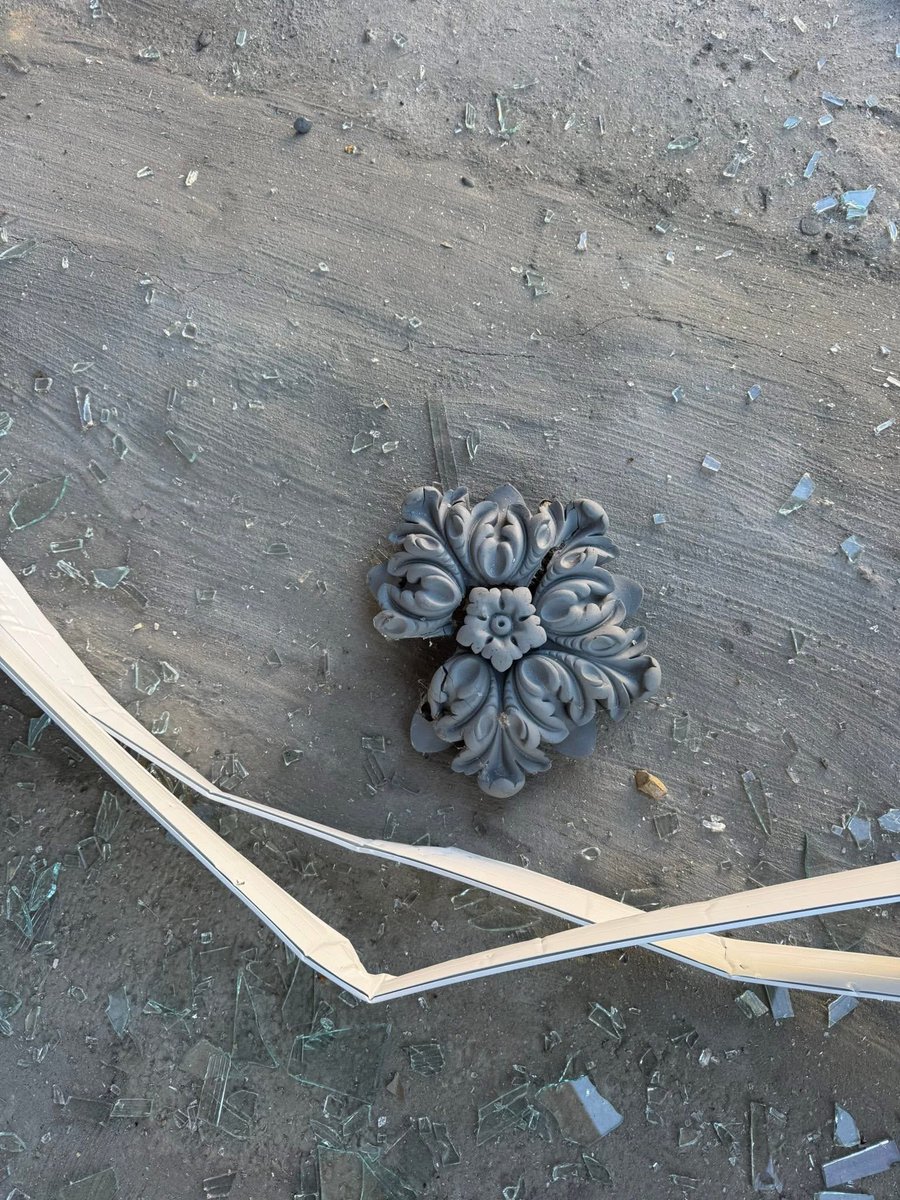
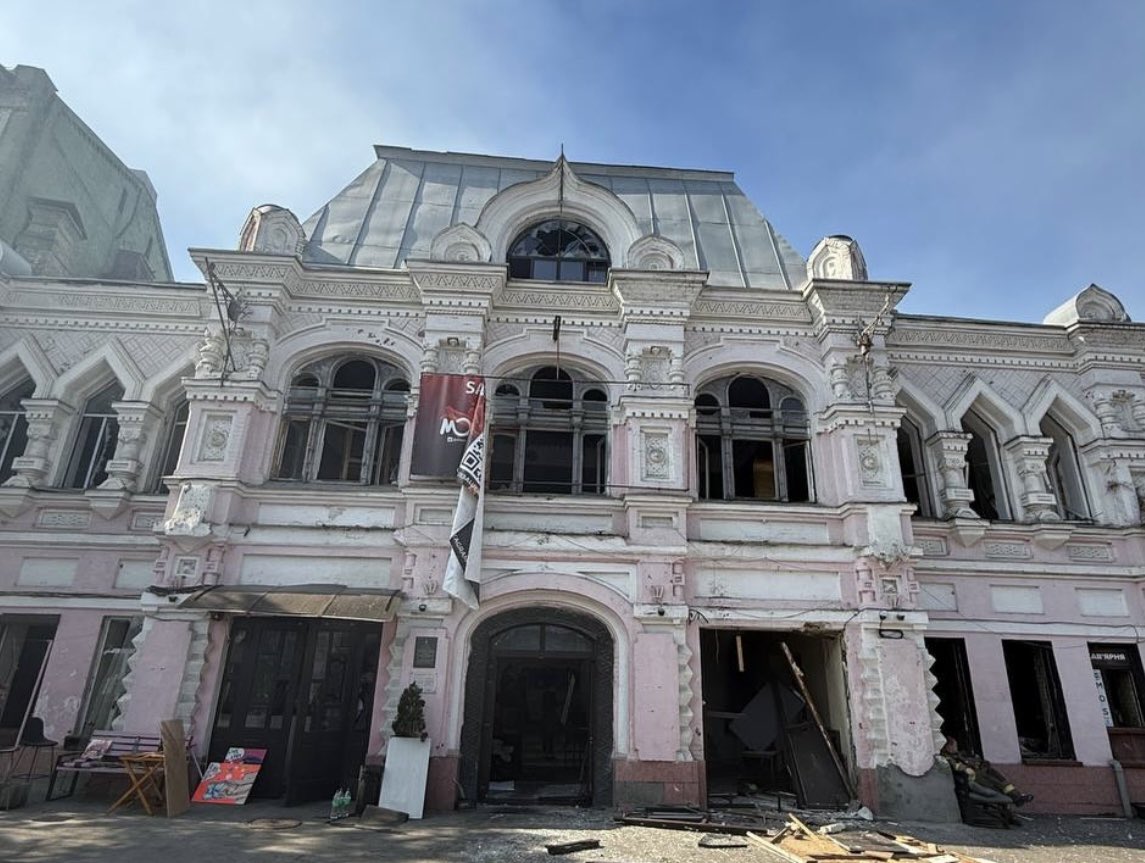
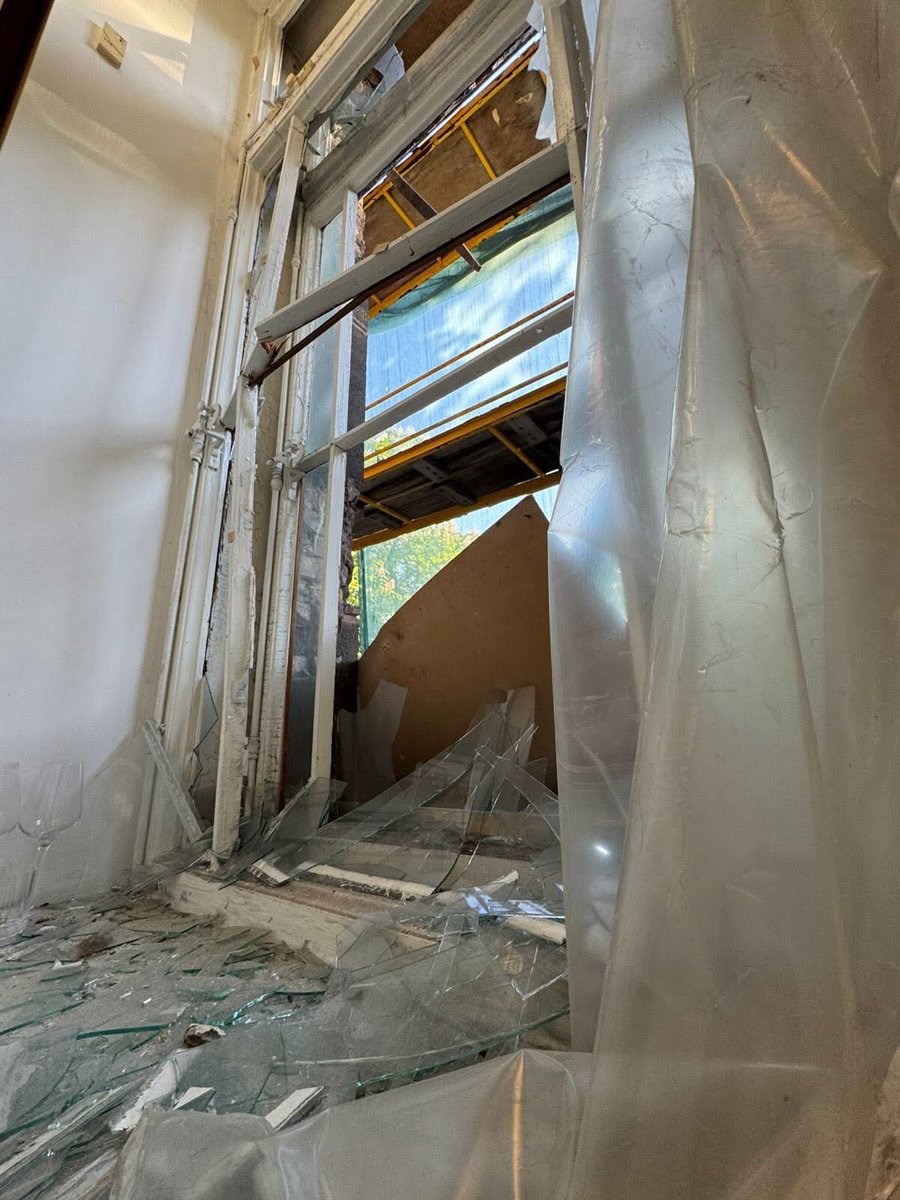
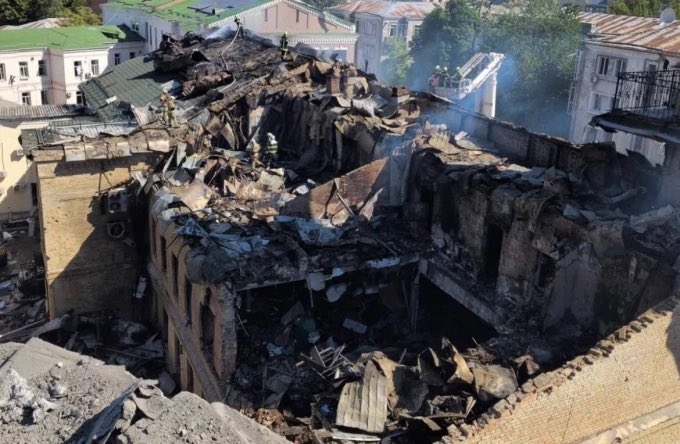
La Russie a choisi de la « célébrer » à sa manière : en bombardant le patrimoine culturel ukrainien.
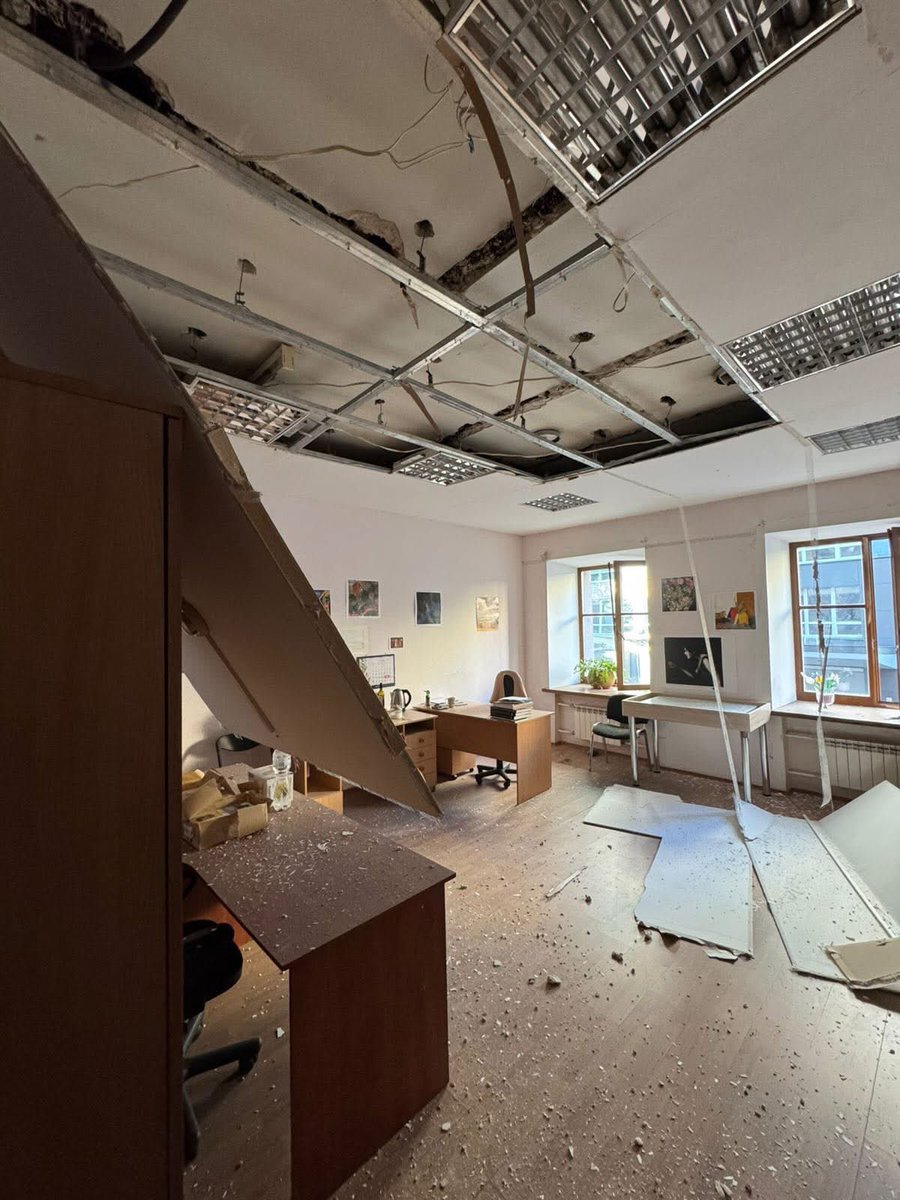
National Art Museum in Kyiv with largest collection of Ukrainian art was damaged during russian attack today.
Source of images: Ministry of Culture of Ukraine