Over the last two weeks, both the U.S. Government and Anthropic took significant actions that demonstrated their power to control access to AI by restricting what others can do with frontier models. This has been one of those moments that, once seen, will be hard to unsee, and it is significantly accelerating many businesses’ and nation states’ efforts to ensure reliable access to AI that no one else can terminate.
Anthropic first released Claude Fable 5, a version of its Mythos model with additional guardrails, including some restrictions that seem well justified on safety grounds (such as limitations on applying it to hacking, bioweapons, and so forth). However, it also restricted developers’ ability to use it to build competing LLM technology. This move was concerning, given that the whole AI community, including Anthropic, has benefitted tremendously from open research — indeed, the AI revolution was kicked off by my former team (Google Brain) freely publishing the Transformers paper!
Imagine if Microsoft’s terms of use barred anyone from using their tools to build competitive software, or if Google barred using it to search for information to work on competing search engines. Anthropic’s argument that it was unsafe for others to be able to make advances in AI also rang hollow. Initially, Anthropic silently degraded Fable 5’s performance for users detected to be working on LLM research through invisible interventions that weakened the model’s outputs without notifying the user. After significant backlash, it walked back this decision and decided to be transparent when it did this, but it still refuses to use its latest capabilities to help AI researchers.
This move represents a raw demonstration of power by Anthropic. It has used “safety” arguments to hinder potential competitors. Platforms succeed when they are viewed as stable, reliable partners that one can build on. The sudden rule changes by Anthropic (including a mandatory 30 day data retention policy for Fable usage) have made developers wonder about the stability of building on any one proprietary LLM provider, not just Anthropic.
The U.S. Government then shortly followed with an even greater demonstration of power. It used the Commerce Department’s authority to regulate technologies that may be national security threats to restrict exports of Mythos and Fable, requiring a license for use by any foreign national, whether inside or outside of the U.S., including employees of Anthropic. This led Anthropic to disable access to Fable to all users worldwide.
Sam Altman pointed out, referring to Anthropic, “It is clearly incredible marketing to say, ‘We have built a bomb, we are about to drop it on your head. We will sell you a bomb shelter for $100 million.’” But when one engages in this type of fear-based marketing, it increases the odds that the U.S. Government will agree with you and slap export controls on the bomb you say you have built.
To be clear, I don't think Anthropic has built anything like a bomb, and I don't think export controls on Fable are appropriate.
However, following the U.S. Government making this move, many nations, including U.S. allies, saw how the U.S. can suddenly yank their access to AI models. In many capitals around the world, this has spurred discussions on AI sovereignty and how others can ensure uninterrupted access to this critical technology.
For decades, many nations were comfortable having many parts of their supply chain rely on the U.S., China, and other major producers. Once a nation issues a threat, or takes action, to limit other nations’ access, other nations will rationally try to secure alternatives. For decades, semiconductor manufacturing in China made slow progress; once the U.S. moved to limit China’s access, China’s efforts kicked into high gear. Similarly, once China threatened U.S. access to rare earth minerals, U.S. efforts to secure alternatives accelerated. Now that it has become crystal clear that private U.S. companies and the U.S. government can limit, in short order, other nations’ access to frontier AI models, the incentive of others to invest more in alternatives like open source grows significantly. Of course, training frontier models is not easy, so it remains to be seen how successful they are, but we have crossed the rubicon.
Satya Nadella wrote an essay about the importance of building a healthy ecosystem on top of frontier AI technology. I heartily agree with him, and hope this week’s events will ultimately prove to be constructive steps toward this.
I hope we can build a more free, more open world, where research is freely shared, and laws and societal norms shape a level playing field that allows everyone to make progress. A silver lining of the events of these past two weeks is now that everyone better realizes key points of instability of the current system, we can all work to create a more stable foundation.
[Original text: The Batch newsletter]
Sergey Brin dropped out of Stanford's PhD program, became a billionaire, and was invited back to celebrate the school's 100th anniversary. He used the occasion to tell the Dean the university model might not survive the next hundred years.
His argument is simple.
Information spreads instantly now. Anyone can watch MIT lectures. Take a Coursera class. Ask an AI to explain anything at any depth. The geographic concentration that made Stanford powerful, putting brilliant people in the same building and letting them collide, is no longer the only way to create that collision.
He went further.
He said he has hired countless people without bachelor's degrees who figured things out on their own in some weird corner of the internet. No institution. No credential. No campus. Just curiosity and access to information.
Stanford built Google and the campus and also the PhD program. The culture of freedom that let two graduate students work on something strange for three years without anyone stopping them.
Sergey is not ungrateful for that.
He is saying the next Google might not need it.
The man who is the greatest argument for the university model just questioned whether the model holds for the next century.
That is worth sitting with.
What do you guys think?
A Japanese immunologist spent 20 years proving that the chemicals trees release into the air walk into your bloodstream, hunt down your stress hormones, and arm your immune system in ways no therapist or pharmaceutical has ever matched, and most of the data has been sitting in Japanese medical journals for two decades waiting to be translated.
His name is Qing Li.
He is a clinical professor at Nippon Medical School in Tokyo and the president of the Japanese Society of Forest Medicine. The Japanese government has been funding his research since 2004, and the body of work he has produced is the reason forest bathing is now an officially prescribed clinical therapy in Japan and Korea.
The story actually starts in 1982, when the Japanese Ministry of Agriculture, Forestry and Fisheries coined the term shinrin-yoku to describe the practice of slow, mindful walking in a forest. They did it for a practical reason.
Japan was urbanizing fast, stress-related illness was climbing, and the country had thousands of square kilometers of forest sitting unused. The idea was to give people a reason to walk into the trees... They had no idea what was actually happening to the human body during those walks until Qing Li ran the first proper experiment in 2005.
He took twelve healthy adult men on a three-day, two-night trip to a forest park. They walked for a few hours each day. Nothing strenuous. No prescribed routes or breathing exercises. They simply walked slowly through the trees, breathing the air, looking at the forest.
Li drew blood and urine samples before the trip, on the second day, on the third day, on day seven after returning home, and again on day thirty.
The numbers that came back from the lab were not what anyone expected.
The activity of a specific type of immune cell called the natural killer cell, which is the cell your body uses to hunt down cancer cells and virus-infected cells before they can spread, had jumped by roughly 50 percent during the forest trip. The actual number of natural killer cells circulating in the bloodstream had increased significantly.
Three different anti-cancer proteins that those cells produce, called perforin, granzymes, and granulysin, had all risen sharply. And the effect did not disappear when the men went home. The immune boost was still measurable on day seven and was still partially present on day thirty.
Two hours a day in a forest had upgraded the immune system for a full month.
Li ran the same experiment with women a year later and found nearly identical results. Then he ran it with a control group who took a three-day trip through an urban area with the same amount of walking, the same hotel quality, and the same diet.
The urban group showed no measurable change in natural killer cell activity at all. The forest was doing the work, not the vacation.
The mechanism turned out to be a class of airborne molecules called phytoncides. Trees produce these compounds to defend themselves against insects, bacteria, and fungi. Pine, cedar, oak, and cypress trees release them in particularly large amounts, especially in warmer weather and after rainfall.
When you walk through a forest, you are inhaling those molecules into your lungs and absorbing them through your skin, and once inside your body they appear to directly stimulate the production and activity of the very immune cells Li was measuring in his lab.
Roughly 50 percent of the health benefit of a forest walk, according to Li's data, comes from the chemistry of the air itself. The other half comes from what the forest is doing to your nervous system.
This is where it stops being only about the immune system and starts being about stress.
A separate Japanese research team measured cortisol, the body's main stress hormone, in 84 participants across 35 different forest sites. They drew samples before and after a 30-minute walk in each forest and compared them to control walks in matched urban environments. The cortisol levels of the people who walked in the forest were lower than the cortisol levels of the people who walked in the city by a significant margin. Their heart rates were lower. Their blood pressure was lower.
The activity of their parasympathetic nervous system, which is the part responsible for rest and recovery, had gone up. The activity of their sympathetic nervous system, which is the part that drives fight or flight, had gone down.
Then a researcher at the University of Michigan named MaryCarol Hunter ran the cleanest version of this experiment ever done. She recruited participants from a city and told them to take a nature pill three times a week for eight weeks.
They were free to choose the time, the place, and the duration of the nature experience, as long as it was outside, in daylight, and free of phones, conversations, and aerobic exercise. They sent her saliva samples before and after each session so she could measure cortisol changes accurately and rule out the normal daily drop in stress hormones that happens to everyone.
The result was that participants experienced a 21.3 percent drop in cortisol per hour spent in nature, with the biggest payoff happening between minutes 20 and 30 of the walk.
After that, the cortisol kept dropping, but more slowly. The threshold dose for measurable stress relief was just 20 minutes outside in something that looked and felt like nature.
What none of this means is that nature is a substitute for therapy or for medication when someone genuinely needs them. Therapy treats different things than a walk does, and Li himself has been careful in interviews to call forest bathing a complementary intervention rather than a replacement for clinical care.
But what the research has settled is that the human body has a physiological response to being among trees that operates on the same biological systems modern medicine is trying to reach with drugs and clinical protocols, and that response is fast, measurable, and free.
The strangest part of Li's work is the implication he keeps repeating in interviews. The average person now spends more than 90 percent of their life indoors. Their cortisol stays elevated. Their natural killer cells stay sluggish.
Their parasympathetic nervous system rarely gets a chance to take over. The system that was tuned by millions of years of life under a canopy of trees is being asked to run permanently inside a box made of drywall and screens.
Your body has not forgotten what it is supposed to do in a forest. It is waiting for you to walk into one.
JD Vance just admitted the White House plan is to take ownership of every major AI company in America.
Steven Bartlett brought up Bernie Sanders' proposal that workers should own 50% of the major AI companies.
Vance's response: "The president by the way likes that idea too. He likes that idea."
Trump's preferred mechanism, Vance said, is a sovereign wealth fund where the US government takes equity stakes in private AI companies.
The Vice President literally just confirmed that an administration is planning the most radical economic policy proposed in modern American history. Partial nationalization of the MOST valuable private companies on earth. And the idea originally came from Bernie Sanders, who Vance said Trump agrees with on this point.
This is not a small thing:
The US has spent 80 years selling the world on the model where private companies stay private and the government stays off the cap table.
The countries that did the opposite, with sovereign wealth funds owning slices of their biggest firms, are Norway, Saudi Arabia, China, and Singapore. And the Trump administration told you on a podcast it wants to do the same to Silicon Valley.
But the reasoning Vance gave for it is where it gets really interesting...
He said the historical analogy that scares him is the original Industrial Revolution. His own words:
"Rich people got way richer. And that led to in Europe fascism and communism."
He believes AI will not cause mass unemployment but mass inequality, and that mass inequality is what breaks societies. His fix is that workers need a seat at the bargaining table before the wealth gets created, not a redistribution check after.
"I think labor unions are a very important model here."
And the other thing about AI that scares him is surveillance. His exact phrase was that AI is "fundamentally a communist technology" because it lets governments and corporations watch and score people in ways NOTHING else can.
He said he doesn't want a social credit system, doesn't want a tech CEO deciding whether you can buy a beer based on an algorithm nobody understands, and is afraid of exactly that outcome.
So here is the full picture:
The sitting Republican administration believes AI will make the rich dramatically richer, that this will radicalize the country the way the Industrial Revolution radicalized Europe, that the answer is government equity stakes plus stronger labor unions, and that the second-biggest threat is the surveillance state these companies are building.
That is not a Republican worldview. That is not even a Democratic worldview.
This is a worldview that has no political home in the United States right now.
Most people are still arguing about whether ChatGPT will take their jobs. But the people with the actual power are already past that argument.
They are quietly designing the framework for owning the companies that will.
The craziest part is how casually Vance dropped it as a sidenote on a podcast millions will half-listen to in the background.
If you have money in OpenAI, Anthropic, or anything like that, you should be watching the full thing yourself.
What do you think?
This is Anagha Rajesh.
And she is crazy.
She wants to store data in bacterial DNA.
Her startup is called BioCompute.
And last year, they actually did it.
They stored data in DNA and retrieved it in their tiny lab in Bengaluru.
This is a huge moment.
But why is she even doing it?
Because DNA is the ultimate storage tool available to us.
Just 1 gm of DNA can store about 215 petabytes of data - that's like storing over 2 million movies in 4K.
On top of that - this data can last for literally 1000s of years.
Right now, they still need to figure out a way to make the reading and writing process faster and cheaper.
But if BioCompute solves this problem - we could theoretically store all the data created in the world every year in the palm of our hands.
And that would be insane.
P.S. Check out this video from @vy0mbhatia going to Anagha's lab and actually doing it.
The Economist writes about India and Modi — “Elites are not fools. They understand that their votes make no difference. But their taxes do. And they are no longer in any mood to suffer for the country.”
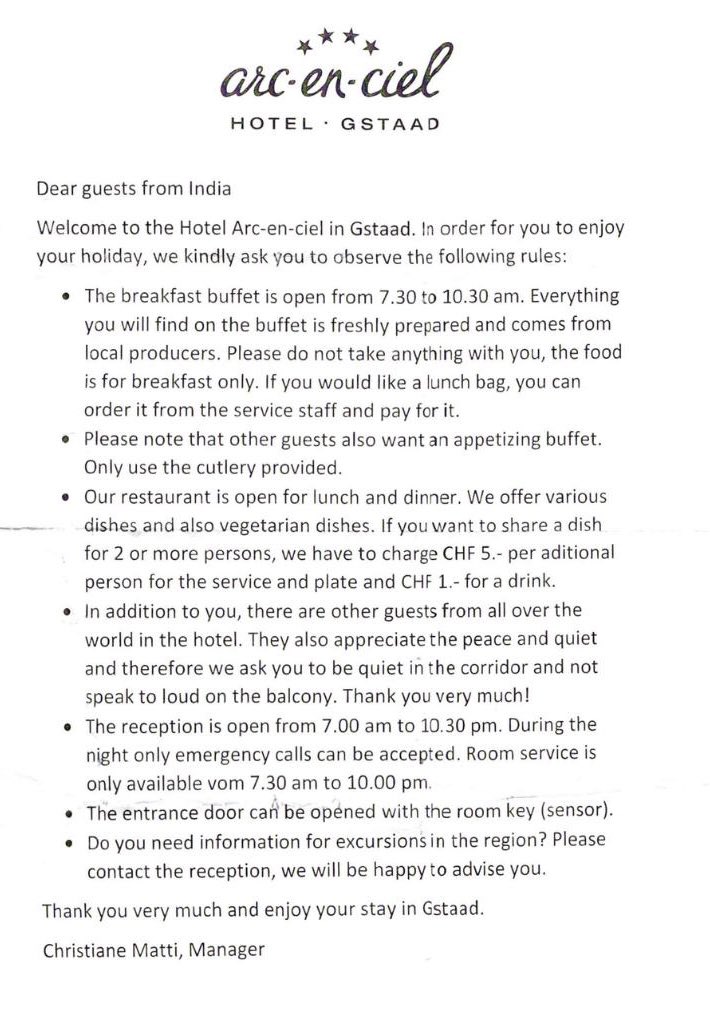
A Swiss hotel once displayed a list of special rules exclusively for Indian guests which I personally saw and was appalled.
Today, videos of garba in restaurants, loud conversations in airports, and turning aircraft cabins into picnic spots keep doing the rounds. Even in Davos, an Indian businessman blasted Punjabi music in a club so the whole town could hear it, calling it “soft power” but to everyone’s annoyance.
Japan earned global admiration through their courtesy and civic sense. If India wants to be a true global superpower, the world should remember Indians for its excellence, consideration and respect for others.
Our civic sense seriously needs to be upgraded.
Deep inner suffering inevitably arises when the human person is reduced to performance, consumption, or a statistical datum. Many young people today live under the yoke of expectations to perform, immersed in an exasperated competitiveness that generates anxiety, fear of not measuring up, and disorientation.
We were able to get full create, read, update and delete (CRUD) access & shell access to CBSE's prod servers (as mentioned in their circular https://t.co/MFiu5xU1DF). This is disastrous. Proof archive is at https://t.co/LWWqKBOGjv.
Prod URL (might be taken down): https://t.co/gbZKz3d65V
right monitor is 20 codex instances. left monitor has situational awareness on autoscroll. center monitor is my word doc mainfesto. two keyboards, one for both hands. left airpod is dwarkesh x eric jang, 3x speed. right airpod tchaikovsky. meta quest 3 overlays my HUD: heart rate, words per minute, blood caffeine content. one assistant hooks me to an iv of chinese peptides, cocktail. the other feeds me kimchi. my unitree robot steps in when my posture slouches. blue light beams down on me in my herman miller chair. efficiency. no wasted movement. no wasted thoughts. think you can keep up with me? good luck. this is just for my morning emails.







![AndrewYNg's tweet photo. Over the last two weeks, both the U.S. Government and Anthropic took significant actions that demonstrated their power to control access to AI by restricting what others can do with frontier models. This has been one of those moments that, once seen, will be hard to unsee, and it is significantly accelerating many businesses’ and nation states’ efforts to ensure reliable access to AI that no one else can terminate.
Anthropic first released Claude Fable 5, a version of its Mythos model with additional guardrails, including some restrictions that seem well justified on safety grounds (such as limitations on applying it to hacking, bioweapons, and so forth). However, it also restricted developers’ ability to use it to build competing LLM technology. This move was concerning, given that the whole AI community, including Anthropic, has benefitted tremendously from open research — indeed, the AI revolution was kicked off by my former team (Google Brain) freely publishing the Transformers paper!
Imagine if Microsoft’s terms of use barred anyone from using their tools to build competitive software, or if Google barred using it to search for information to work on competing search engines. Anthropic’s argument that it was unsafe for others to be able to make advances in AI also rang hollow. Initially, Anthropic silently degraded Fable 5’s performance for users detected to be working on LLM research through invisible interventions that weakened the model’s outputs without notifying the user. After significant backlash, it walked back this decision and decided to be transparent when it did this, but it still refuses to use its latest capabilities to help AI researchers.
This move represents a raw demonstration of power by Anthropic. It has used “safety” arguments to hinder potential competitors. Platforms succeed when they are viewed as stable, reliable partners that one can build on. The sudden rule changes by Anthropic (including a mandatory 30 day data retention policy for Fable usage) have made developers wonder about the stability of building on any one proprietary LLM provider, not just Anthropic.
The U.S. Government then shortly followed with an even greater demonstration of power. It used the Commerce Department’s authority to regulate technologies that may be national security threats to restrict exports of Mythos and Fable, requiring a license for use by any foreign national, whether inside or outside of the U.S., including employees of Anthropic. This led Anthropic to disable access to Fable to all users worldwide.
Sam Altman pointed out, referring to Anthropic, “It is clearly incredible marketing to say, ‘We have built a bomb, we are about to drop it on your head. We will sell you a bomb shelter for $100 million.’” But when one engages in this type of fear-based marketing, it increases the odds that the U.S. Government will agree with you and slap export controls on the bomb you say you have built.
To be clear, I don't think Anthropic has built anything like a bomb, and I don't think export controls on Fable are appropriate.
However, following the U.S. Government making this move, many nations, including U.S. allies, saw how the U.S. can suddenly yank their access to AI models. In many capitals around the world, this has spurred discussions on AI sovereignty and how others can ensure uninterrupted access to this critical technology.
For decades, many nations were comfortable having many parts of their supply chain rely on the U.S., China, and other major producers. Once a nation issues a threat, or takes action, to limit other nations’ access, other nations will rationally try to secure alternatives. For decades, semiconductor manufacturing in China made slow progress; once the U.S. moved to limit China’s access, China’s efforts kicked into high gear. Similarly, once China threatened U.S. access to rare earth minerals, U.S. efforts to secure alternatives accelerated. Now that it has become crystal clear that private U.S. companies and the U.S. government can limit, in short order, other nations’ access to frontier AI models, the incentive of others to invest more in alternatives like open source grows significantly. Of course, training frontier models is not easy, so it remains to be seen how successful they are, but we have crossed the rubicon.
Satya Nadella wrote an essay about the importance of building a healthy ecosystem on top of frontier AI technology. I heartily agree with him, and hope this week’s events will ultimately prove to be constructive steps toward this.
I hope we can build a more free, more open world, where research is freely shared, and laws and societal norms shape a level playing field that allows everyone to make progress. A silver lining of the events of these past two weeks is now that everyone better realizes key points of instability of the current system, we can all work to create a more stable foundation.
[Original text: The Batch newsletter]](https://pbs.twimg.com/media/HLMm79dbgAApRoV.jpg)