2030 Outcome ... "aquaculture is sustainably grown to meet global needs (and) .... enable ... acceleration of fed and non-fed aquaculture production that fits local environmental, governance and economic priorities ...". Isn't me saying this - it's Andreas, Jane, and colleagues.
Our report “Ocean Solutions That Benefit People, Nature and the Economy” - explores new relationships between the ocean and humanity that simultaneously achieve adequate ocean protection, sustainable production, and equitable prosperity. Check it out here: https://t.co/pk5KyTKD43
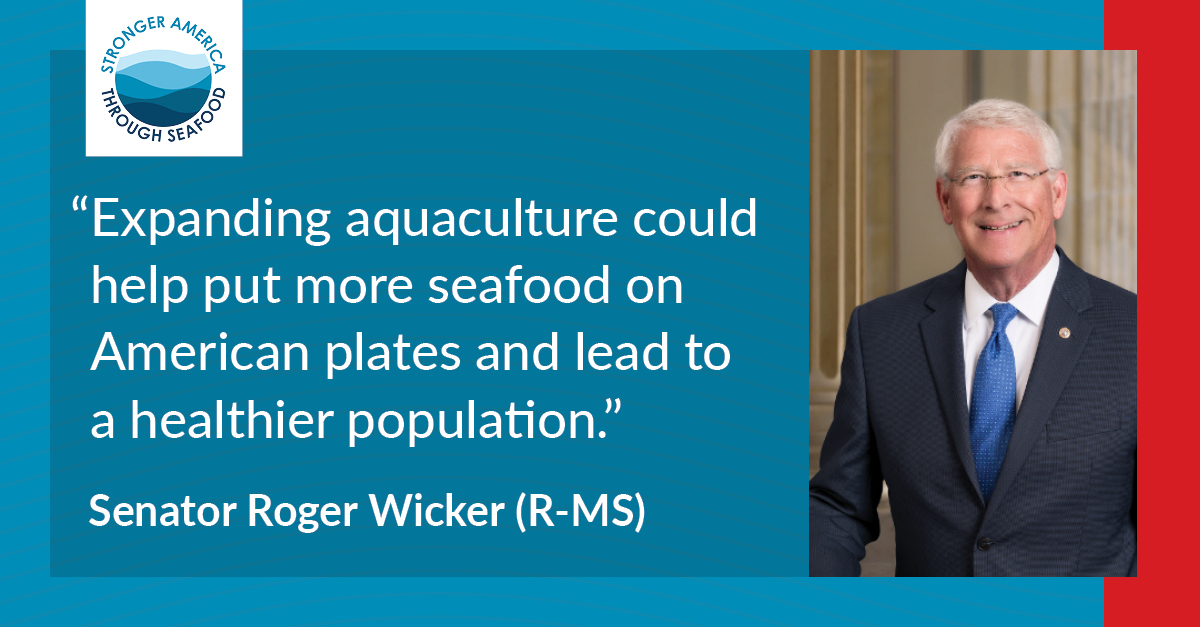
Thank you, @ClimateEnvoy! Yes! This must mean the US fully endorses recommendations of Hoegh-Guldberg et al., 2019 (https://t.co/goAEC9oEnE), right? And starts to transition to more marine-sourced foods. #offshoreaquaculture, yes? Pls talk to @SenatorWicker @senatorschatz
Feeding a growing population that will reach 9 billion by 2050 is one of America's many challenges. American raised seafood is a solution we must seriously consider. #SustainableAquaculture needs to be expanded in the U.S. Read more in SATS' newsletter https://t.co/Gb0YimH7Xs
Week 2 of the @BordIascMhara & @hatchblue1 Aquatech Innovation Studio kicks off with a true pioneer in offshore global aquaculture @NeilAnthonySims from #Hawaii Valuable learnings & exposure 4 our cohort to various aspects of warm water species aquaculture @CargillAnimal@NELHA1
Yes, absolutely! And may these robust tools of science also be equally applied to #offshore#aquaculture! Let's please have a little bit more objective analysis, and a lot less emotional hand-wringing. Let's listen to @NOAAFisheries and @noaaocean. Go, indeed, @alondra
I can’t wait for science, facts, data, hypotheses, prediction, extrapolation, variability, confidence internals and all of it to finally be a thing again. In service of us! The people. All the people. Go!
... higher $/recruit creates more powerful incentives for poor management/ineffective enforcement.☹️ "Ranching" is also sometimes used (incorrectly, IMHO) to describe recruitment supplementation e.g. salmon hatcheries releasing billions of fry, to increase returnee catches. 3/3
Yes, @Marahh2o. That's the primary differentiation. And hatchery production then allows selective breeding benefits, such as humanity has been doing for the last 10,000 yrs or so. So it's full domestication, closed life cycle. Ranching is not evil, per se. Just rustic. 1/3 ...
@WhySharksMatter For me, ranching is when fish are captured in wild as juveniles/ small adults, then grown out to market size—like w/bluefin tuna (boo!) Farming is when there is a hatchery & more full cycle, not taking from wild stock (except the few brood stalk). Thoughts @NeilAnthonySims ?
Ranching bluefin tuna would be fine if the diets were less reliant on forage fish (sardines, etc), and if the wild stocks were well managed. But it is optimization of economic yield-per-recruit, which is a good thing, fisheries-management-wise. The problem is ... 2/3
We don't discriminate on nationality, @jjminich. (I myself took my first formal job here on a green card, so I think of immigrants as one of the US' greatest natural resources!) But applicants would need to be eligible to work in the US.
Interested in joining our team in Kona, Hawaii, to help advance sustainable marine aquaculture? We are committed to building a more DEI aquaculture community, so would welcome applicants of all backgrounds and identities. Marine Fish Program Manager: https://t.co/tudAO2PyJL
Absolutely, yes. Scale is critical. It's how we feed the world. Gentry, et al, 2017 (the 100x paper) underscored the potential pretty well. Even so, let's not besmirch freshwater fish. I wish those folk all the best ... really. 'Twould be nice if they felt the same towards us!
@NeilAnthonySims Neil, would you agree that scalability is much greater in mariculture vs freshwater wrt finfish? It seems like scientists always forget about this important aspect of business dev- these folks don’t even touch on this in the paper
So if you go to the casino to play roulette, do you want to be betting on red OR black, or red AND black? We should be betting on BOTH! (And c'mon, freshwater fish folk ... we shouldn't have to be bickering about it ... sigh ...). 3/3.
Sure, yes, I can imagine that "science can be a cruel place", @DocFroehlich, but try being in a pioneering sliver of the private sector when "science" decides to smear the literal waters in which you swim. (Oof!) But it seems to me they miss the point entirely. 1/3 ...
The point being ... 10 billion increasingly affluent, more health-conscious consumers ... Limited land area and freshwater, and a global climate crisis. So we need more seafood! Desperately! Or we end up with soils like Mars, and atmosphere like Venus. 2/3 ...
"And those dang mobile-car-phone thingies aren't ever going to be any use to anyone, except for a few high-falutin' executives driving around a few blocks of Manhattan" they said, surveying the potential in 1978 for supercomputers in our pockets.
Ummm ... that would be "98% of America's Favorite Candy by State". For the other 2%, it would probably be shave-ice. Yes, we would call that a candy in Hawaii.
"We need to hold their feet to the fire." Great ... I like warm feet! Robust regulations and comprehensive monitoring are critical for industry, too. It provides assurances to the community, and that allows us to earn our social license. @TlustyM@CivilEats
Comments by our very own @TlustyM on responsible #aquaculture production in the future @CivilEats@lisaelaineh. "We can’t sacrifice the environment for economics....Everybody says they’re going to do a good job. We need to hold their feet to the fire." https://t.co/ppjUl5OZtd
"Other(s) will focus on a path forward that would allow for more production of what they see as the most climate-friendly animal protein available, while minimizing the inherent risks via effective regulation." The Continued Fight over Farming the Oceans https://t.co/LglZetr6Cd
"We’re ... supporting our domestic seafood industry .. (so) that it works on a level playing field with its competitors" @JaredHuffman Not really. It only mentions RESTORATIVE aquaculture. Bivalves, seaweeds. No fish? It's like combing your eyebrows when your hair is on fire.
How about ... "to permit > 100,000 tons of seafood production from offshore aquaculture by 2025—and to permit > 200,000 tons by 2030?" That would be a useful start ...
One day, hopefully soon, @OurOcean will pay attention to the science on marine aquaculture, & maybe mention it once or twice. Here, alongside offshore wind? (i.e."to permit > 12.5 gigawatts of energy production from offshore wind by 2025—and to permit > 25 gigawatts by 2030")??