𝘏. 𝘱𝘺𝘭𝘰𝘳𝘪 infection is an infectious disease, and treatment regimens should ideally be guided by antimicrobial-susceptibility testing whenever possible. 🔗 https://t.co/rMlsoi2ATy
Both phenotypic (culture-based) and molecular methods of antimicrobial-susceptibility testing are available (seen in figure). Culture-based testing remains the reference standard because it is the only method that can ascertain the susceptibility of isolates to all antibiotics commonly used for eradication. Molecular antimicrobial-susceptibility testing offers greater efficiency than culture-based testing by eliminating the need for 𝘏. 𝘱𝘺𝘭𝘰𝘳𝘪 culture. Molecular-based testing can be conducted with fresh or formalin-fixed gastric-tissue samples (used for histopathological examination) and successfully cultured isolates. More recently, gastric-fluid samples obtained from a swallowed gastric string have emerged as a cost-effective alternative culture-based testing method. Stool-based molecular antimicrobial-susceptibility testing is now available, which avoids invasive endoscopy. Commercial polymerase-chain-reaction–based kits are now available for identifying 𝘏. 𝘱𝘺𝘭𝘰𝘳𝘪 resistance to clarithromycin and levofloxacin by detecting specific mutations in the 𝘏. 𝘱𝘺𝘭𝘰𝘳𝘪 23S ribosomal RNA and gyrA genes, respectively. A meta-analysis reported high accuracy of these molecular methods for detecting antibiotic resistance in gastric-biopsy samples, with sensitivity and specificity of 96% and 96%, respectively, for clarithromycin resistance and 97% and 99% for quinolone resistance.
Learn more in the Review Article “𝘏𝘦𝘭𝘪𝘤𝘰𝘣𝘢𝘤𝘵𝘦𝘳 𝘱𝘺𝘭𝘰𝘳𝘪 Infection — Advances, Challenges, and the Road Ahead” by Hong Li, MD, PhD, Francis Megraud, MD, and Barry J. Marshall, MD: https://t.co/rMlsoi2ATy
An interactive feature describes a 55-year-old woman who presented to the ED with a 10-day history of nausea, lightheadedness, and generalized abdominal pain. Test your diagnostic and therapeutic skills: https://t.co/K7hEzJIecH
Aspirin after rivaroxaban and aspirin alone appear to be similar in their capacity to reduce the risk of venous thromboembolism after total hip or knee arthroplasty. Research findings from the EPCAT III trial are summarized in a new Quick Take video. https://t.co/MtyT43kPHm
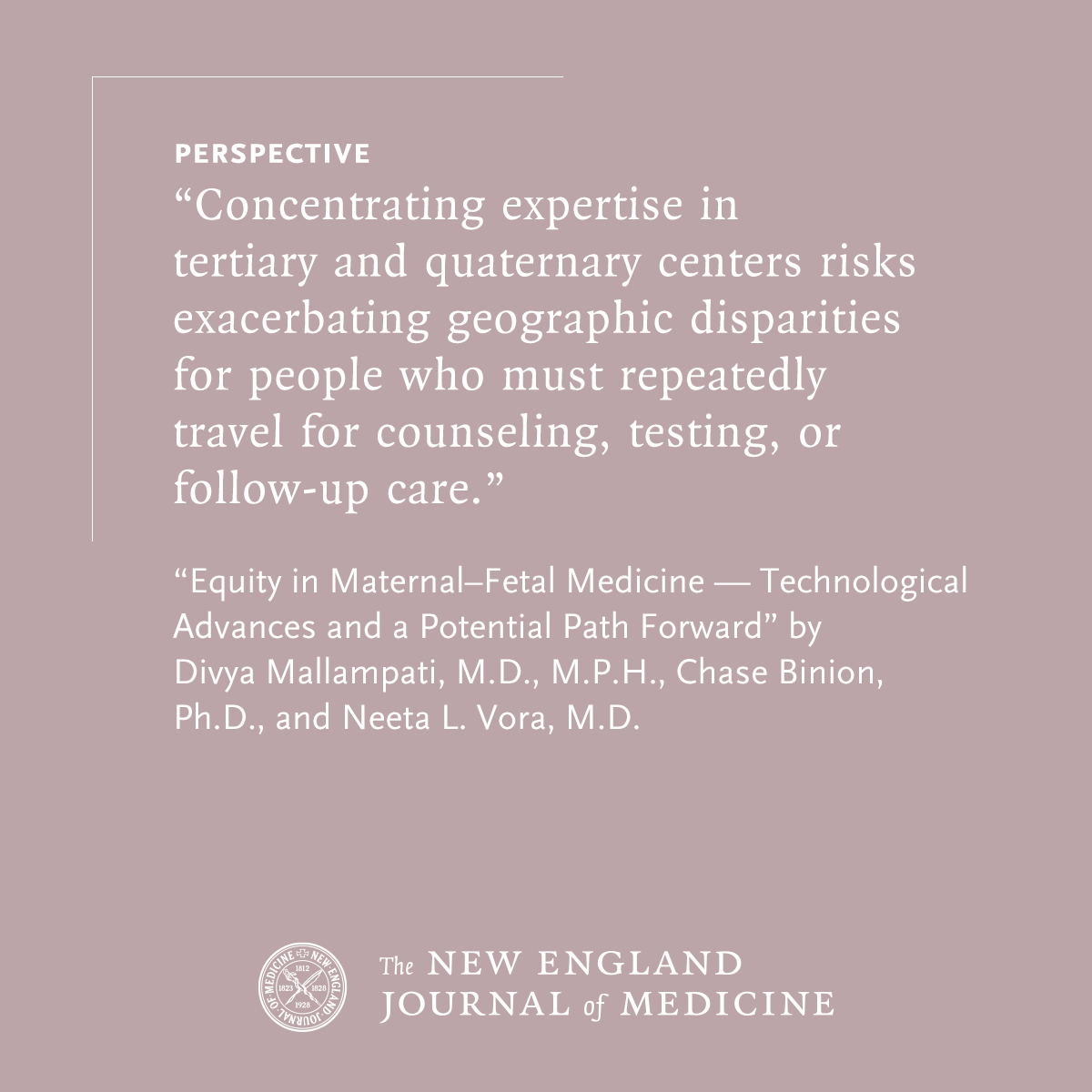
The authors of a new Perspective argue that without safeguards, rapid technological development in maternal–fetal medicine could reinforce existing racial, socioeconomic, and geographic inequities in prenatal care. Learn more: https://t.co/yOX89dtZob
A 54-year-old man with obesity and a viral infection of the upper respiratory tract presented with a painful bruise on his left side that started during a coughing paroxysm. Chest CT showed herniation of the left lower lobe.
Read the full case details in the Images in Clinical Medicine article “Lung Hernia with a Chest-Wall Hematoma”: https://t.co/yc7DURPB4s
Case Record of the Massachusetts General Hospital (@MassGeneralNews): A 50-year-old man was evaluated at the hospital because of recurrent systolic heart failure.
Three years before the current presentation, the patient was evaluated by a hematologist after routine laboratory testing showed erythrocytosis (red-cell count, 6,340,000 per microliter; reference range, 4,500,000 to 5,900,000). The blood pressure was 150/108 mm Hg; the remainder of the physical examination was normal. The carboxyhemoglobin level was normal, and testing for the V617F mutation in the gene encoding Janus kinase 2 (JAK2) was negative. Erythrocytosis was attributed to obstructive sleep apnea and renal-artery stenosis.
On the current presentation, the patient was evaluated in the emergency department of this hospital because of 5 days of progressive chest congestion and tightness, fatigue, leg edema, and progressive dyspnea after a trip to the Caribbean. He also noted that his pulse had been 130 beats per minute, as compared with his baseline pulse of 80 beats per minute. The patient reported several years of erectile dysfunction and decreased libido. He reported no known sick contacts, illicit drug use, exposure to animals or insects, or consumption of raw, undercooked, new, or unusual foods during his recent travel. He noted that he had previously used a tanning bed and applied spray tan.
An ECG (seen in figure) showed sinus tachycardia, left atrial abnormality, delayed R-wave progression, and nonspecific ST-segment and T-wave changes. A urine toxicology screening test was negative.
Read the full case details in “A 50-Year-Old Man with Recurrent Cardiomyopathy,” a Case Record of the Massachusetts General Hospital, by D.S. Adler et al.: https://t.co/Iv97Yghi2h
New in the November 12, 2026, issue of NEJM:
Rivaroxaban vs. Aspirin Alone after Arthroplasty (EPCAT III trial) https://t.co/lrydQBGzeu
Prevention of VTE after Total Hip or Knee Replacement (PEPPER trial) https://t.co/x99wawQaDe
Prasugrel vs. Ticagrelor in Acute Coronary Syndromes (SWITCH-SWEDEHEART trial) https://t.co/KiUZ5MRhAK
Ravulizumab in IgA Nephropathy Trial (I CAN trial) https://t.co/3uvMXfxqkz
Subscribe to NEJM for the latest medical research: https://t.co/QFe1he2Tzn
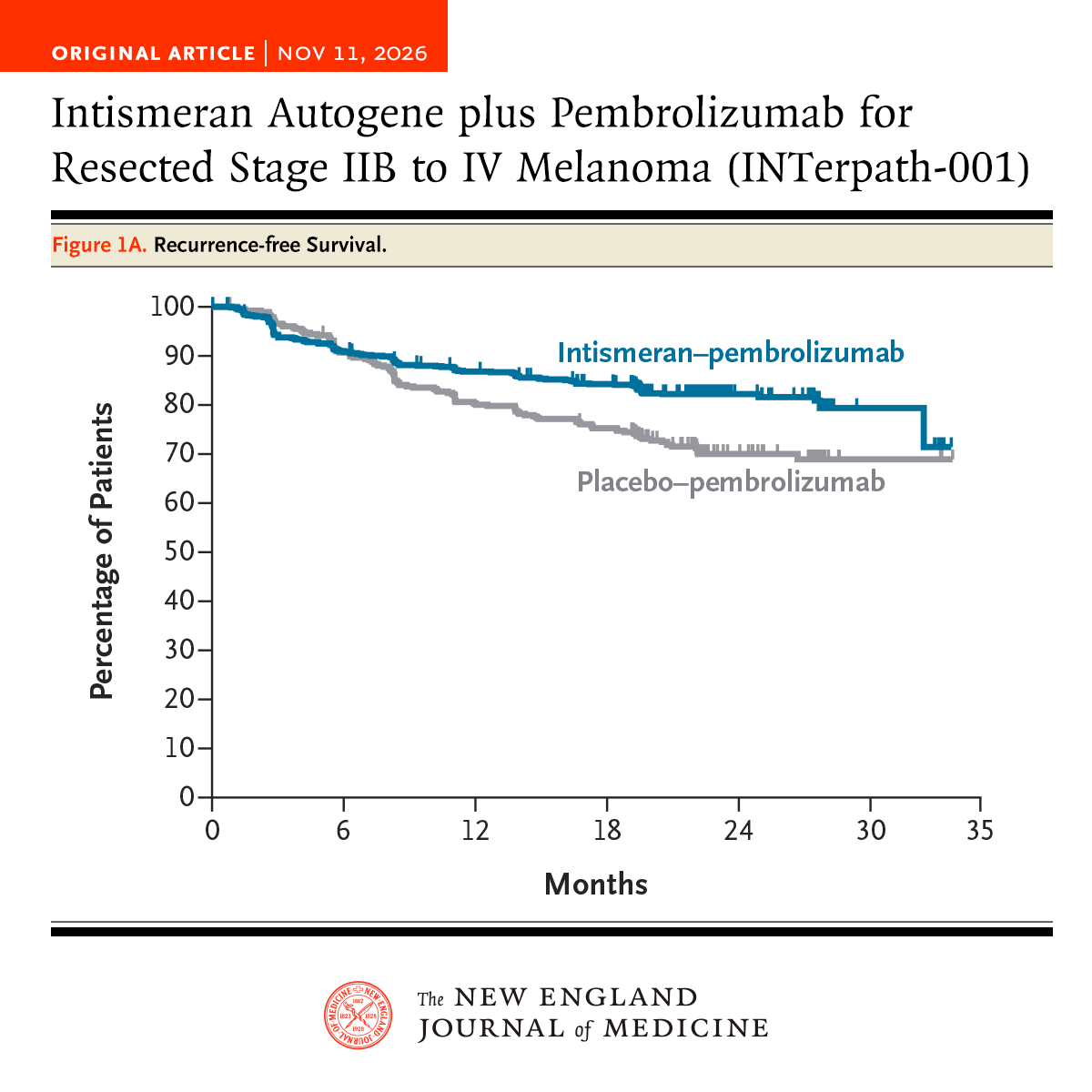
In a trial of the individualized neoantigen therapy intismeran in patients with resected stage IIB to IV melanoma, 24-month recurrence-free survival was 82.2% with intismeran–pembrolizumab and 70.0% with pembrolizumab alone. Full phase 3 INTerpath-001 trial results: https://t.co/AEpBvIuhTp
Editorial: Cancer Vaccines — From Treatment to Prevention https://t.co/S0NtKC6OTw
An 81-year-old man with a remote history of rib and lung resection was noted on examination to have a soft protrusion from the chest wall that moved inward during inspiration and outward during expiration (shown in a video).
Read the full case details in the Images in Clinical Medicine article “Lung Hernia with a Chest-Wall Bulge”: https://t.co/P4gk63Vf6Z
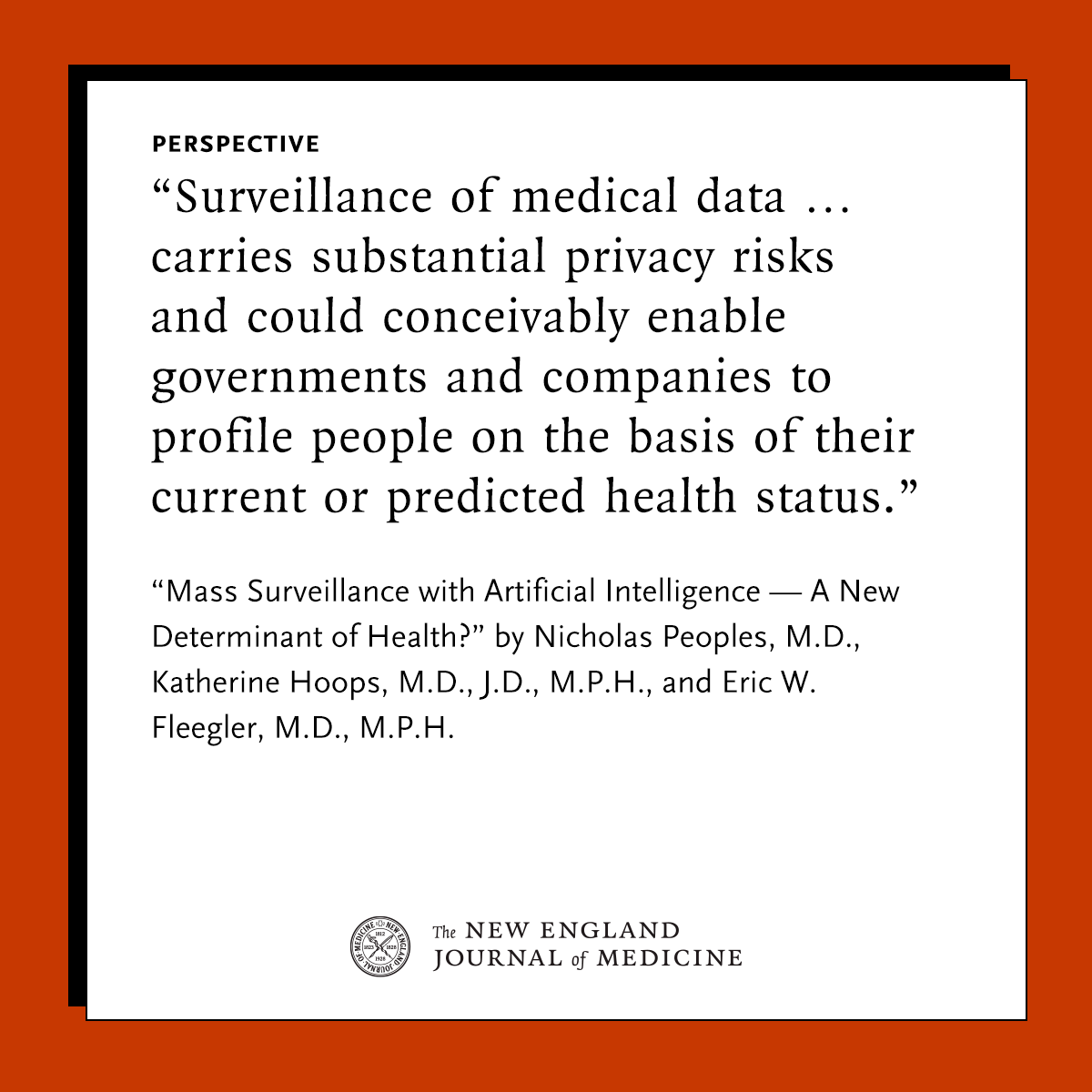
The authors of a new Perspective argue that AI is changing the fundamental nature of surveillance in ways that strain existing privacy law and put public health at risk. Medicine has a responsibility to confront these developments. Read the full Perspective: https://t.co/l4SnXIOb8F
𝗥𝗲𝘃𝗶𝗲𝘄 𝗔𝗿𝘁𝗶𝗰𝗹𝗲: 𝗣𝗿𝗲𝘃𝗲𝗻𝘁𝗶𝗻𝗴 𝗠𝗮𝗹𝗮𝗿𝗶𝗮 𝗜𝗻𝗳𝗲𝗰𝘁𝗶𝗼𝗻𝘀 𝗮𝗻𝗱 𝗠𝗼𝘃𝗶𝗻𝗴 𝘁𝗼𝘄𝗮𝗿𝗱 𝗠𝗮𝗹𝗮𝗿𝗶𝗮 𝗘𝗹𝗶𝗺𝗶𝗻𝗮𝘁𝗶𝗼𝗻
Malaria continues to be a major health challenge worldwide, causing an estimated 282 million cases of illness and 610,000 deaths in 2024, predominantly among African children. Despite recent stagnation in the progress of malaria prevention, the landscape is undergoing rapid
transformation. A new review examines current and emerging approaches to preventing malaria infection and supporting malaria elimination, including vector control, transmission-blocking interventions, chemoprevention, monoclonal antibodies, and vaccines. Next-generation insecticide-treated nets, expanded use of seasonal malaria chemoprevention, and the introduction of RTS,S/AS01 and R21/Matrix-M vaccines are already reshaping control strategies. Looking ahead, long-acting injectable chemoprevention, transmission-blocking medicines and vaccines, and improved surveillance-driven deployment may further accelerate progress. As funding becomes constrained and decision making shifts increasingly to countries where malaria is endemic, effective malaria prevention will depend on locally tailored, integrated combinations of interventions supported by strong surveillance, regulatory capacity, and national leadership.
Read more about these approaches in the Review Article “Preventing Malaria Infections and Moving toward Malaria Elimination” by Andre Marie Tchouatieu, MD, Timothy N.C. Wells, ScD, and Jane Achan, MD: https://t.co/QiQHbasVRd
A trial of venous thromboembolism (VTE) prophylaxis after hip or knee arthroplasty did not show that aspirin was noninferior to rivaroxaban or warfarin for symptomatic VTE or death. Warfarin and rivaroxaban were not noninferior to aspirin for safety. Full PEPPER trial results: https://t.co/x99wawQaDe
Editorial: Aspirin Therapy — Enough after Arthroplasty https://t.co/azVWf3Byln
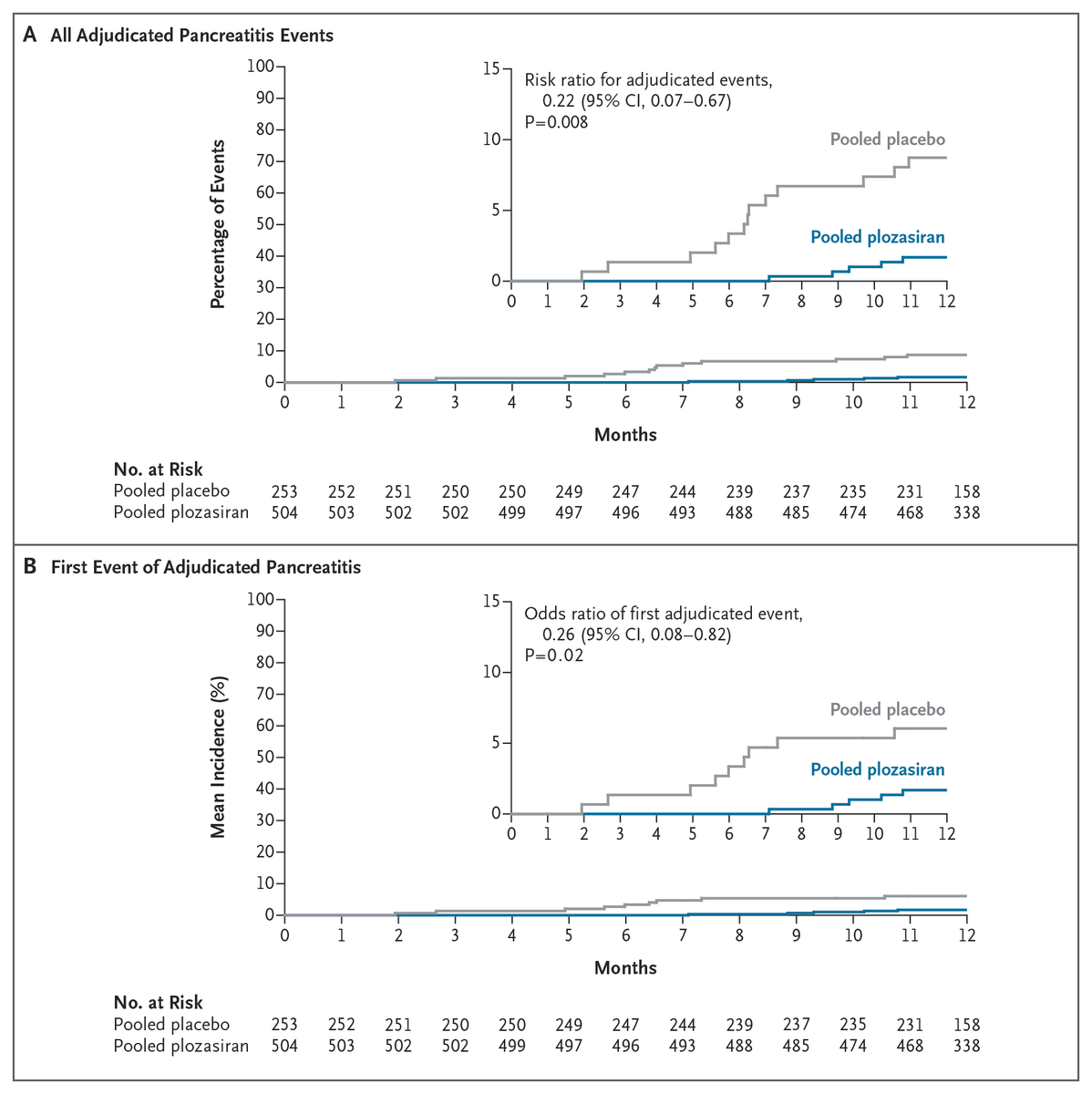
Original Article: Plozasiran for Severe Hypertriglyceridemia and Risk of Pancreatitis (phase 3 SHASTA-3 and SHASTA-4 trials) https://t.co/2yirQhAvMo
#Gastroenterology#Genetics
James C. Grotta, MD, reviews issues related to intravenous thrombolysis for stroke, including the choice of agent, dose, and timing and the relation to endovascular thrombectomy. Read the full review: https://t.co/8czyvS30yN
Among participants with IgA nephropathy, povetacicept, a dual inhibitor of B-cell activating factor and a proliferation-inducing ligand, led to a significantly greater reduction in proteinuria than placebo. Full phase 3 RAINIER AIS-D08 trial results and Research Summary: https://t.co/3WdClNzmud
Should patients pay $1,000 for a full-body MRI scan? New @NEJMClinician Editor-in-Chief @PaulSaxMD, weighs the benefits and harms.
See what else matters this week at https://t.co/Cgkwvhdhl8, including:
❤️ Anticoagulation for Patients with Atrial Fibrillation and One Risk Factor
🩺 Improving Management of Resistant Hypertension
☕ Coffee Consumption and the Liver
🥛 Unpasteurized Milk: Still a Raw Deal
Perspective by Kenneth D. Mandl, MD, MPH, J. Michael McGinnis, MD, MPP, and Monica M. Bertagnolli, MD: The Learning Health System, Made Computable https://t.co/HulY2tRf6R
#HealthPolicy#MedEd