Building an application that depends on real-time web information? Then the way you collect and retrieve data matters more than you might think.
Many AI-powered applications need access to fresh information from the web to deliver useful results. But working with web data isn't always straightforward. Developers need reliable ways to search, extract, and organize information without adding unnecessary complexity to their applications.
That's why having a clean and reliable Web API can be so useful.
Oxylabs offers a unified Web API that allows developers to search the web and retrieve structured data on demand.
Whether you're building LLM-powered applications, full-stack projects, or tools that rely on external web information, it's a useful resource to keep in your developer toolkit.
I think this is worth adding to your dev bookmarks if working with web data is part of your workflow.
Explore it here:
https://t.co/wEoZOznUZE
What kind of application would you build with real-time web data access?
#DeveloperTools #FullStackDevelopment #AI
Stop doing everything manually. These AI tools can save you
AI trading is evolving beyond simple automation. 🚀
Imagine a system that continuously analyzes market signals, tracks performance, and adapts its strategy in real time.
The real power of AI isn't just executing trades faster — it's turning data into smarter decisions.
The future of trading will belong to those who combine intelligent automation with disciplined risk management. 🤖📈
#AI #Trading #Automation #Grok
7 Engineering Decisions Behind Production-Ready Voice Agents
Building a voice agent that can talk is easy.
Building one that can listen, understand, respond naturally, handle interruptions, and work reliably in real-world conversations is much harder.
A production-ready voice agent needs more than speech-to-text and text-to-speech. It requires careful engineering across the entire audio pipeline.
Here are 7 engineering decisions that make the difference.
The type of progress that truly matters involves an AI that understands me more deeply, requires fewer reminders, and continues to improve with each new task.
🚨 THIS IS VERY STRONG
A content creator used Claude Code to discover that his Android phone had stored over 14,219 images captured by the front camera without him knowing.
And the most disturbing part is where they were stored.
They weren't screenshots or photos from the gallery.
They were real images taken by the front camera at different times of the day.
At home, at work, in the car, and even when he simply unlocked the phone.
How did he discover it?
He connected his Android to the computer and used Claude Code to investigate the device's hidden files.
He found images in system directories that normally don't appear in the gallery:
→ /data/system/users/0/faceunlock/cache
→ Directories associated with Google Play Services.
→ Over 10,000 files between normal photographs and infrared images used for facial recognition.
The most concerning thing?
Many of these images included date, time, and GPS location information.
The manufacturer and Google explain that facial recognition uses images to generate depth models and that they are then deleted.
But in this case, he found original files stored on the device.
He also discovered that some system services and apps with special permissions could have access to certain directories.
What did he do next?
→ Disabled diagnostic data.
→ Removed unnecessary camera permissions.
→ Cleared the caches he found.
But there's something you should keep in mind:
Not all images stored in these directories mean that someone has accessed them or that there's a data leak.
Even so, it's worth investigating what your own device is storing.
Want to check it?
You can connect your Android to the computer, make a backup, and ask Claude Code to search for front camera image files outside the gallery.
The AI can help you investigate system files that would normally go completely unnoticed.
Save this post. You might discover something you didn't know about your own phone 🗒️
👉 Follow @julia_coder_ for more AI, tech & privacy discoveries.
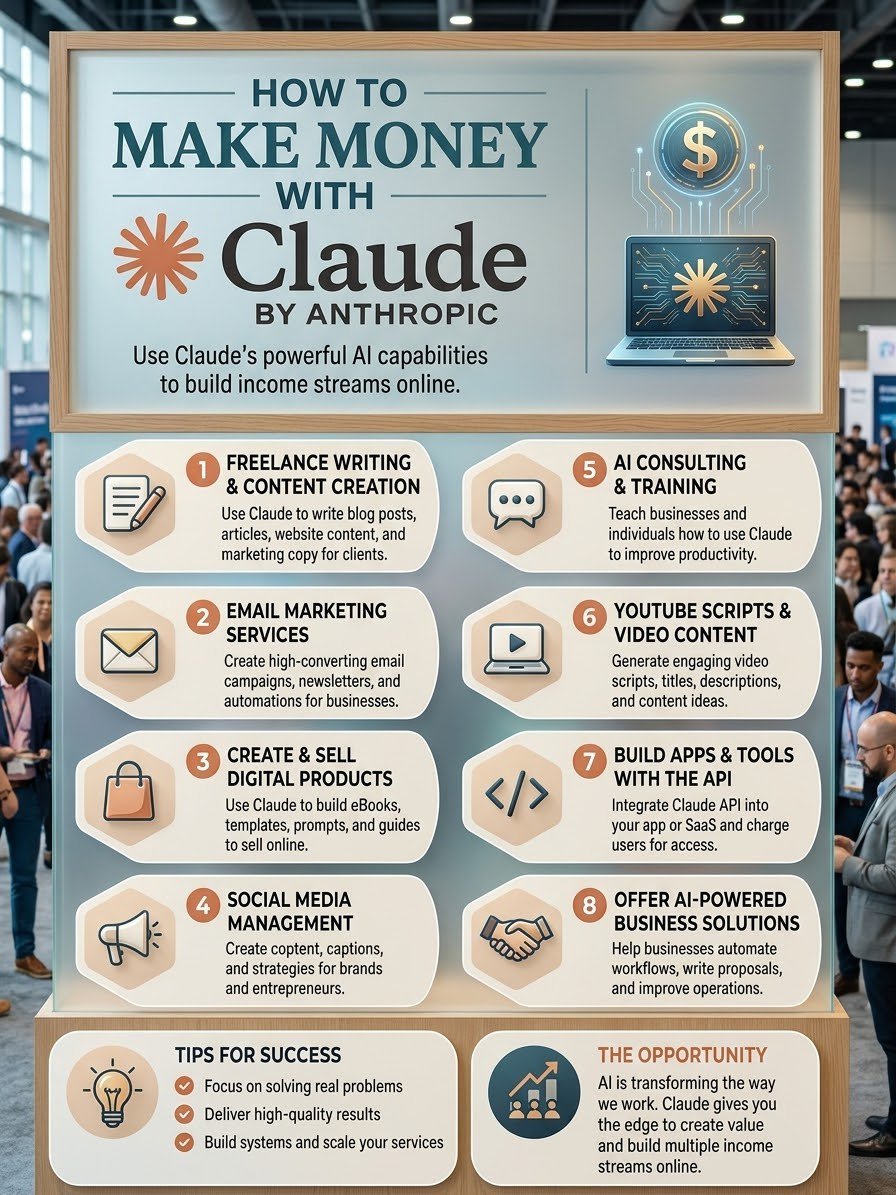
🚀 How to Make Money with Claude AI in 2026
AI is changing the way people work, create, and build businesses.
But here's what most people miss:
You don't need to build the next big AI company to make money with AI.
You need to solve real problems using the right tools.
🚨 GEMINI 4 KRYPTON IS CHANGING THE AI GAME!
What if Gemini could do more than just answer questions?
Imagine having a personal AI powerhouse that can research, create, analyze, code, and automate complex workflows — all with the right prompts.
Most people are barely scratching the surface of what AI can do.
Here are 8 powerful prompts to unlock Gemini’s hidden potential and take your productivity to the next level. 👇
Don't just use AI. Make AI work for you. 🔥
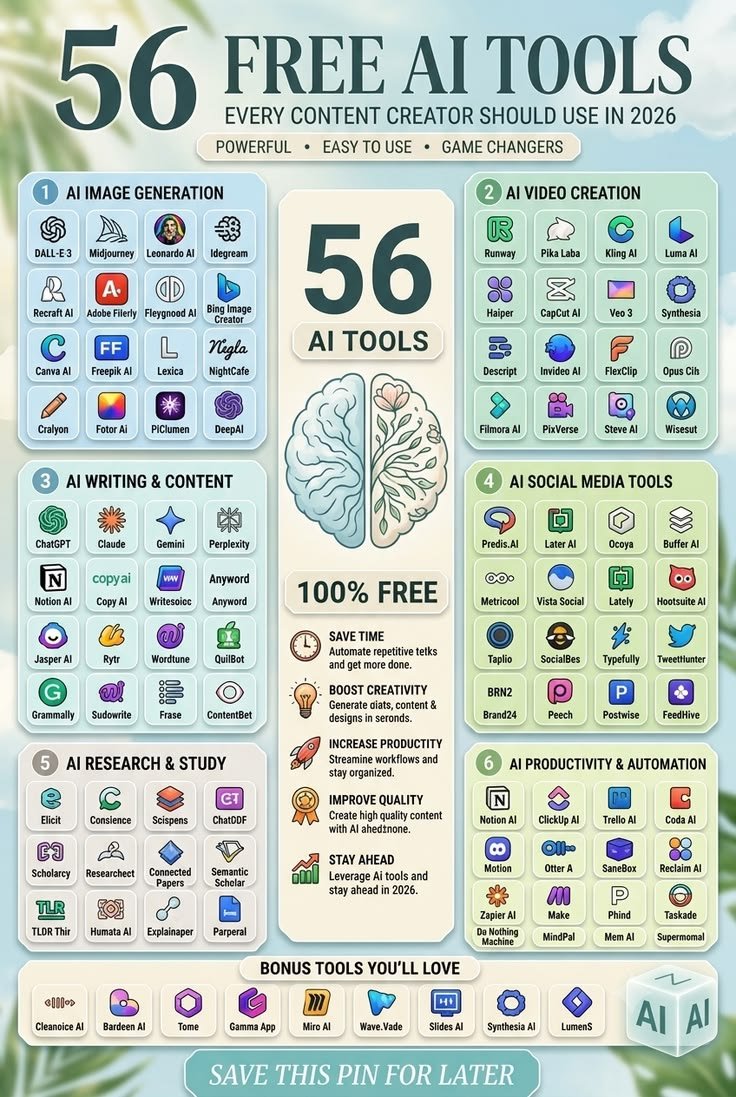
🚀 56 FREE AI TOOLS EVERY CONTENT CREATOR SHOULD KNOW IN 2026
AI is changing the way we create content, work, research, and grow online.
You don't need expensive software to get started. These AI tools can save hours and boost your productivity.
🧵 Here are 56 AI tools worth exploring:
SpaceX is attempting something no company has ever successfully achieved — catching BOTH stages of an orbital rocket with the giant mechanical arms of a launch tower.
November 13, 2026. SpaceX is targeting one of the most ambitious experimental missions in Starship's history.
The objective is extraordinary: recover both the Super Heavy booster and the Starship upper stage using the massive mechanical arms of the launch tower.
SpaceX has already demonstrated its ability to catch the Super Heavy booster. But catching the Starship upper stage using the same technique presents an entirely different engineering challenge.
If successful, this could become a major milestone in the history of reusable rockets.
But there's another important part of this mission.
Starship is also expected to deploy 26 next-generation Starlink V3 satellites, each designed to deliver up to 1 terabit per second of downlink capacity.
Think about the bigger picture.
Today, most rockets are partially or entirely discarded after launch. SpaceX wants to completely change that approach.
Its goal is to develop a rocket system that can launch into space, return to Earth, get recovered, and fly again.
If successfully implemented, this technology could eventually reduce launch costs, increase launch frequency, and make building infrastructure in space much easier.
But Starship's ambitions go far beyond satellite internet.
It is a central part of SpaceX's plans for future lunar missions, sending humans to Mars, and developing entirely new space-based infrastructure.
One rocket. Two recovery attempts. One ambitious vision that could change the future of space exploration.
If SpaceX can make this technology reliable, the entire space industry could look very different over the next decade.
Here's why this mission matters, what SpaceX is trying to achieve, and how it could reshape the future of spaceflight.
My friend is a night cleaner for a massive corporate office.
For 7 years, he found the exact same thing on a 6th-floor desk every Friday:
A $5 bill. Tucked under a stapler.
Always with a sticky note: "For whoever cleans this desk. Thank you."
He didn't touch it at first. He assumed it was a loyalty test from management.
Then the note changed: "Please take it. I mean it."
So, he did. Over 7 years, that quiet generosity added up to $1,800. He only knew the nameplate: "D. Moreno, Senior Manager."
Last Friday, the $5 was there. But the note changed again.
"It's my last day. Can we finally meet? I'll wait until 9 PM."
At 8:50 PM, he walked up to that desk... 🧵👇
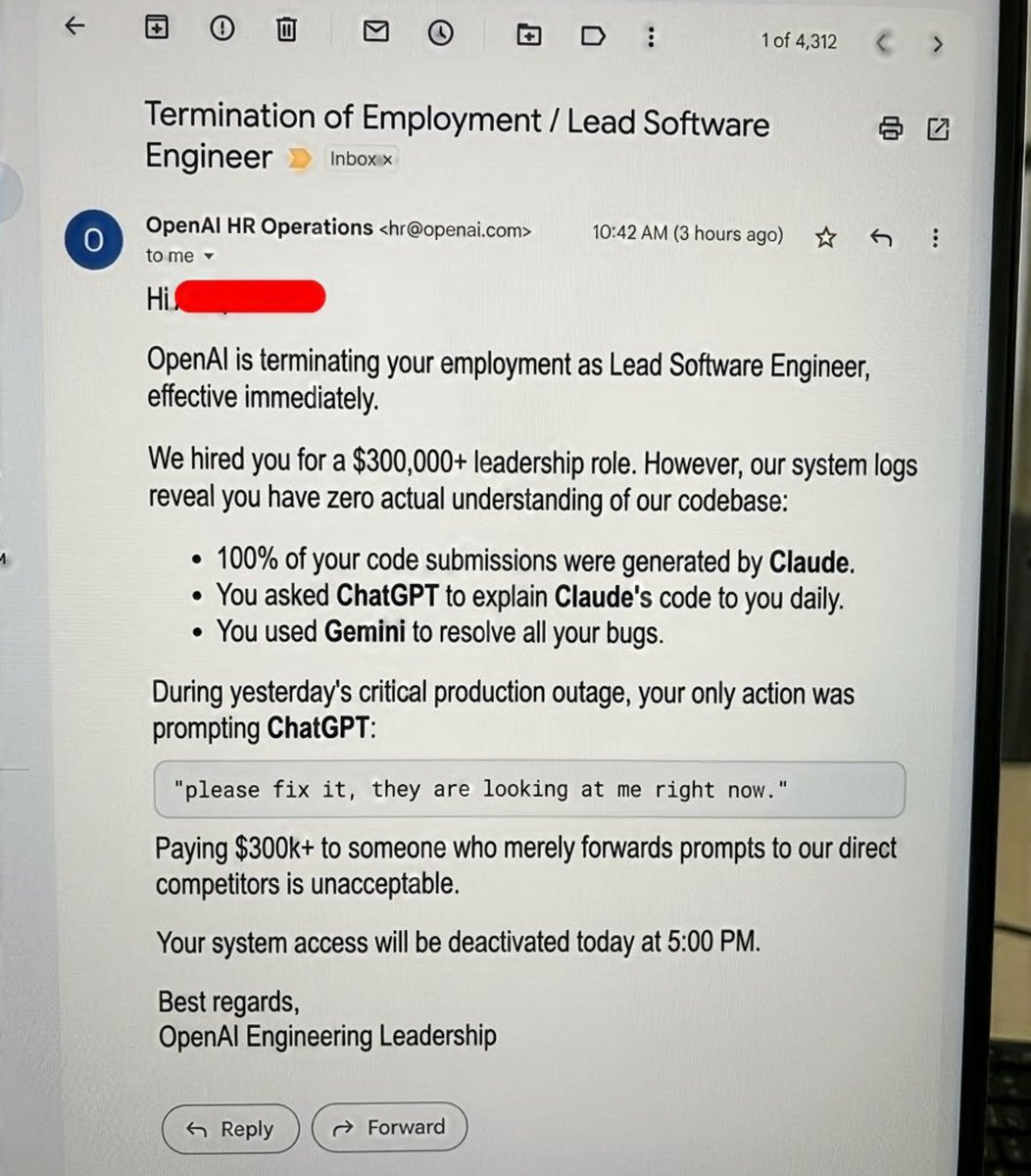
🚨 BREAKING: OpenAI fires a software engineer earning over $300,000 for "cheating"!
A leaked official email revealed that the company has terminated one of its senior engineers after system records showed he had no real understanding of the source code.
The irony? 100% of the code he submitted was generated by Claude, he used ChatGPT daily to explain Claude's code, and he used Gemini to fix all the bugs.
And during a critical production crisis yesterday, all he did was type the following to ChatGPT: "Please fix this, they're watching me right now".
His only defense: "I was just a human interface between the three models, and the system was working perfectly until today".
19 year old Japanese student built a trading bot with Claude Code in 2 days.
Used his iPad as a second monitor.
First night: $6,732 profit.
Starting capital: $68.
Total profit so far: $750,000.
Here's how it works👇
The bot scans over 50 markets simultaneously.
Syncs live BTC data from Binance every second.
Spots price errors before humans even notice.
The edge is pure speed + pattern recognition.
While traders stare at charts trying to predict the next move, his bot is already executing on mispricing across dozens of markets.
No guessing.
No emotions.
No hesitation.
Just Claude Code logic finding gaps that close in seconds.
He built the entire system in 48 hours:
→ Claude Code handles the trading logic
→ Binance API feeds real-time BTC data
→ iPad displays multi-market monitoring
→ Executes trades when arbitrage windows open
The system runs 24/7.
Every price dislocation = profit opportunity.
Most people are still trading manually, refreshing charts, second-guessing entries.
Meanwhile this 19 year old engineering student turned $68 into $750K by letting Claude Code do what humans can't: process 50 markets instantly and execute without fear.
Why are people still trading manually?
I'm giving away the exact Claude Code setup for free.
24 hours only.
To get it 👇
1️⃣ Comment " Claude "
2️⃣ Like and Repost
3️⃣ Follow @Nexa_Tech_Ai (so I can send it via DM)
Unlock the power of AI! 🚀
Here are 20 ways to earn using Claude AI—no team or office needed.
👉 Follow us to stay ahead of the AI curve and level up your skills today!
This is one of the most underrated resources for productivity lovers.
The CEO of Obsidian has made his personal second-brain setup publicly available on GitHub for free. Yet, many people still spend hours building their systems from zero.
7 free GitHub repositories from the Obsidian ecosystem:
-> kepano/kepano (by kepano)
The Obsidian CEO’s personal vault setup. Use it as a ready-made foundation for your own second brain.
-> jsoncanvas (by obsidianmd)
An open format for visual canvases that keeps your maps portable and under your control.
-> obsidian-releases (by obsidianmd)
A hub for discovering community plugins and themes for Obsidian.
-> obsidian-sample-plugin (by obsidianmd)
An official starter template to help developers build their own Obsidian plugins.
-> 40 Questions (by kepano)
40 meaningful questions designed to help you review your year and reflect on your notes.
-> Obsidian Minimal (by kepano)
A clean, minimal theme that makes your workspace simple and distraction-free.
-> Flexoki (by kepano)
A thoughtfully crafted color palette for writing, reading, and coding.
Stop reinventing the wheel when great tools are already available.
Start with these resources, customize them to fit your workflow, and build a second brain that works for you.
Like, comment, and follow for more useful AI & productivity resources!
Follow me: @marvinmary99