The math on this project should mass-humble every AI lab on the planet.
1 cubic millimeter. One-millionth of a human brain. Harvard and Google spent 10 years mapping it. The imaging alone took 326 days. They sliced the tissue into 5,000 wafers each 30 nanometers thick, ran them through a $6 million electron microscope, then needed Google’s ML models to stitch the 3D reconstruction because no human team could process the output.
The result: 57,000 cells, 150 million synapses, 230 millimeters of blood vessels, compressed into 1.4 petabytes of raw data. For context, 1.4 petabytes is roughly 1.4 million gigabytes. From a speck smaller than a grain of rice.
Now scale that. The full human brain is one million times larger. Mapping the whole thing at this resolution would produce approximately 1.4 zettabytes of data. That’s roughly equal to all the data generated on Earth in a single year. The storage alone would cost an estimated $50 billion and require a 140-acre data center, which would make it the largest on the planet.
And they found things textbooks don’t contain. One neuron had over 5,000 connection points. Some axons had coiled themselves into tight whorls for completely unknown reasons. Pairs of cell clusters grew in mirror images of each other. Jeff Lichtman, the Harvard lead, said there’s “a chasm between what we already know and what we need to know.”
This is why the next step isn’t a human brain. It’s a mouse hippocampus, 10 cubic millimeters, over the next five years. Because even a mouse brain is 1,000x larger than what they just mapped, and the full mouse connectome is the proof of concept before anyone attempts the human one.
We’re building AI systems that loosely mimic neural networks while still unable to fully read the wiring diagram of a single cubic millimeter of the thing we’re trying to imitate. The original is 1.4 petabytes per millionth of its volume. Every AI model on Earth fits in a fraction of that.
The brain runs on 20 watts and fits in your skull. The data center required to merely describe one-millionth of it would span 140 acres.
"Nobody understood why Dad kept the storage unit.
Cost him $89 a month. We told him to cancel it, sell the stuff, save the money. He's 68, retired on a fixed income. Can barely afford his medication. But every month, without fail, $89 to Store-All on Industrial Drive.
"What's even in there?" I asked last Christmas.
"Things people need," he said. Wouldn't explain further.
I followed him there in March. Couldn't help myself. Worried he was hoarding, losing his mind, wasting money we didn't have.
Watched him unlock unit 247. It was full. Furniture. Appliances. Clothes on racks. Kitchen supplies. Bedding. Toys. All organized, labeled, clean.
A woman with three kids met him there. He walked her through like a store. "Take whatever you need. No rush. No charge."
She left with a microwave, dishes, winter coats for the kids, blankets. Crying. Thanking him over and over.
"Dad, what is this?"
He sighed. "When your mom and I divorced in '92, I moved into an empty apartment. Slept on the floor for three months. Ate off paper plates. It broke something in me, that emptiness. Made a promise then. If I ever could, I'd help people starting over."
"But $89 a month"
"I don't need much. But they need everything. People leaving abuse. People getting out of shelters. Refugees. Anyone starting from zero."
He'd been doing it for eleven years. Filled that unit with donated furniture, thrift store finds, things neighbors gave him. Gave it all away to people rebuilding their lives. Over 200 families.
"Why didn't you tell us?"
"Because you'd try to stop me. Say I can't afford it. But I can't afford not to. You don't forget what empty feels like."
I posted about it on Facebook. Just a photo of Dad in his storage unit, brief explanation. Asked if anyone had furniture to donate.
It exploded. 4,000 shares in two days. Donations poured in. Furniture stores contributed. People rented additional units. Five units now. Volunteers helping.
"Dad's Second Start" it's called. Sixteen storage facilities across the state doing the same thing. Furnishing empty apartments for people escaping, recovering, beginning again.
Dad still pays for his original unit though. Won't let anyone else cover it.
"It's my promise," he says. "Some things you pay for yourself."
Last week, a woman showed up with her daughter. "Your dad furnished my apartment in 2015 when I left my abusive husband. I'm a social worker now. I send people to him. Brought dishes to donate."
Dad cried. Doesn't cry often.
Because he remembers sleeping on an empty floor. And he made sure hundreds of others never had to."
.
Let this story reach more hearts....
.
Ai image is for demonstration purpose only.
.
By Mary Nelson
Crazy 48H with @DeLoreanlabs is coming!
Trade $DMC to share 35,090,000 DMC airdrop.
🏆 890 winners, up to 464,000 DMC each
⏳ 48H only: Dec 3, 16:00 – Dec 5, 16:00 (UTC)
🎯 Join now: https://t.co/J8819Px4Jh
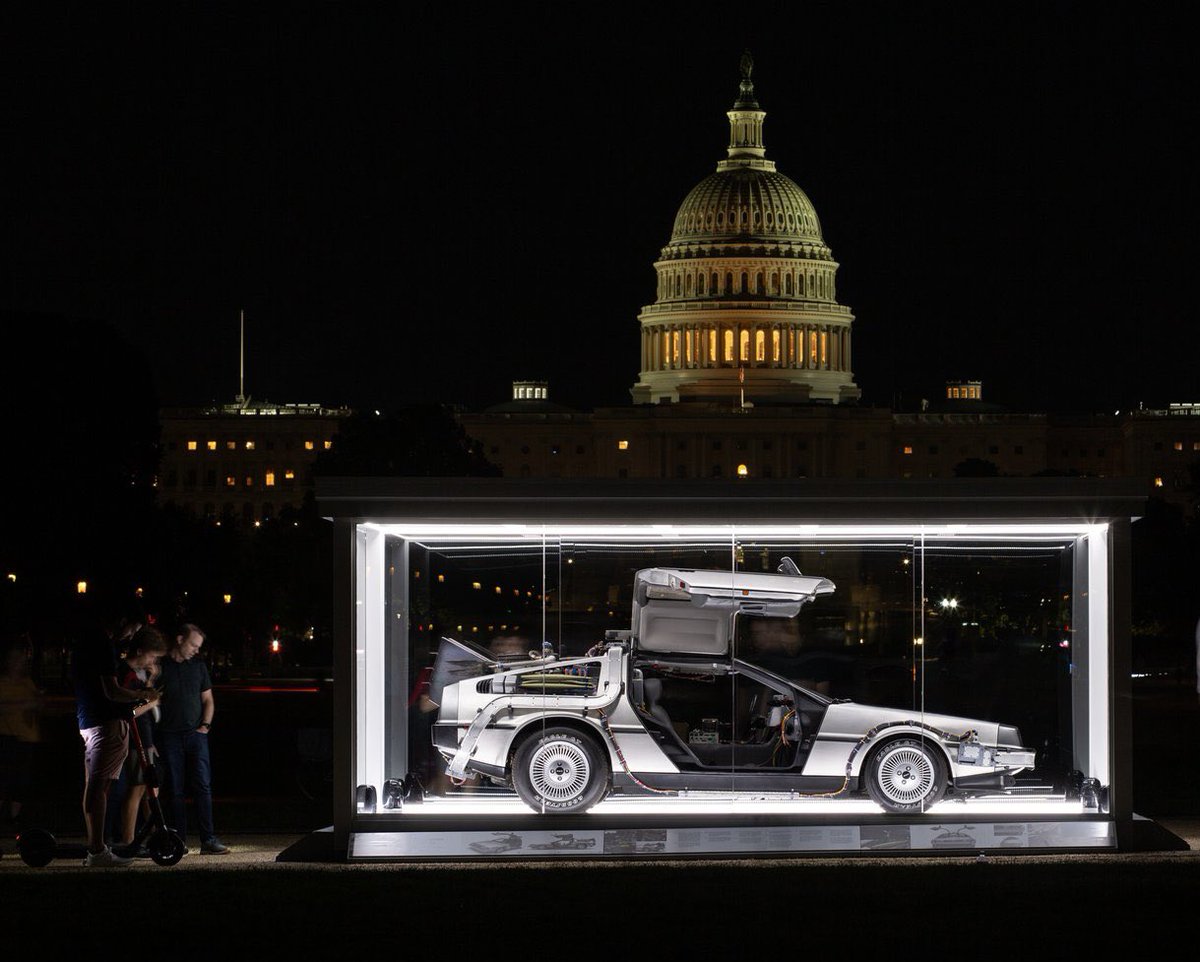
Amazing to see a whole new generation get to experience the DeLorean in the upcoming @Fortnite Chapter 7💥
The HYPE is real!
Fortnite has always been innovative and ahead of the pack with its digital V-Bucks ecosystem and arguably the most culturally relevant game of this decade with over 650M registered players! 👥
It’s an honour to be here and thankful for the iconic DMC to be driven by the next wave of time travellers🖖
See you in-game McFly😎
11.29.25
It’s been a week and the @SuiNetwork SuiFest Vibes are still flowing with this special wrap video. Incredibly thankful for all of the amazing community support and our partners at @batchsys@TheMotorverse 🏎️💨
💥NEW $DMC FAST LANE Cards: come meet us IRL at @DeLoreanlabs sponsored events and pick up your⚡️FAST LANE Card to put you at the front of the line for exclusive merch drops and other major perks!
The future of staking⚡️
We can’t wait to launch our upcoming $DMC staking protocol. Here is why 🫵 should be excited too😎
Stake $DMC to…
- Secure your place in-line for exclusive merch drops with major brand collabs
- Access to private DeLorean events ✅
- Staking multipliers to earn more $DMC
- Rewards for top leaderboard positions
and much more❕❕❕
This is Thomas Seyfried.
He’s a professor of biology, who’s studied cancer for 30+ years.
His message? Cancer isn’t bad genes or bad luck—it’s damaged mitochondria.
This flips everything you’ve been told about how to treat & prevent cancer: 🧵
Are you ready for the final showdown, Dionist?
We're celebrating #FOMOWeek with a special treat - a double-period launch! ⚡️
Periods XI & XII are now live on the $DIONE Epic Cycle — stack your OBOLs and claim your NFTs....whilst you still can 👀
🟣 https://t.co/euOIQqCHpC