A unique celestial object, known as ASKAP J1832–0911, is capturing the attention of astronomers.
Discovered 15,000 ly from Earth, this enigmatic object, located in our galaxy, behaves in a way never seen before.
Identified thanks to the ASKAP radio telescope in Australia and NASA's Chandra X-ray telescope, ASKAP J1832 belongs to the class of long-period radio transients (LPTs), objects that vary in the intensity of their radio emissions on scales of tens of minutes.
But ASKAP J1832 is not just any LPT!
Its main characteristics are:
- Synchronized pulsations.
Every 44.2 minutes, ASKAP J1832 emits perfectly aligned radio and X-ray signals, a unique behavior. It is the first LPT in which an X-ray emission with the same period as radio waves is observed.
- Extraordinary brightness.
Its radio pulsations reach 10–20 Jy (radio flux units), making it one of the brightest LPTs ever observed. Its X-ray luminosity, measured at 7.4 × 10^32 erg/s, is equally impressive.
- Extreme variations.
Between February and August 2024, its luminosity plummeted: radio emissions decreased by a factor of 1,000 (from 10 Jy to 60 mJy) and X-rays dropped by at least a factor of 10, becoming undetectable. This variability is unprecedented!
- Strong magnetic field.
Its radio emissions show a high polarization (about 92%), suggesting a highly ordered magnetic field. The size of the emitting area, less than 150,000 km, indicates that it is a compact object, such as a neutron star or a white dwarf.
Scientists are trying to figure out what ASKAP J1832 is, but no theory fully explains it:
- An old magnetar?
It could be a neutron star with a strong magnetic field (~10^13 G) and an age of over 500,000 years, but its ability to produce such bright radio signals defies current models.
- A binary white dwarf?
Its properties are reminiscent of systems like AR Sco, where a magnetized white dwarf interacts with a companion star. However, ASKAP J1832 would require a record magnetic field (>5 × 10^9 G), the strongest ever hypothesized for a white dwarf in our Milky Way.
Excluding traditional pulsars (its luminosity is too high compared to its rotational energy) and isolated white dwarfs (the X-ray emissions are too intense and variable).
ASKAP J1832–0911 is the first LPT with pulsed X-ray emissions, inaugurating a new category of periodic transients on an hourly scale. Its discovery challenges existing astrophysical theories and raises new questions: How can such an old object produce such intense signals? What mechanisms generate its synchronized and coherent emissions?
Future observations will be crucial to confirm the nature of this object and discover whether it represents a prototype of a new class of celestial phenomena.
Its location close to a supernova remnant (but probably unrelated) adds further mystery.
The discovery of ASKAP J1832–0911 highlights the importance of multi-band observations (radio, X-ray, infrared) to identify and characterize other LPTs. Instruments such as ASKAP, Chandra, and the Very Long Baseline Array (VLBA) are essential to precisely locate and study these objects.
----------------------------------
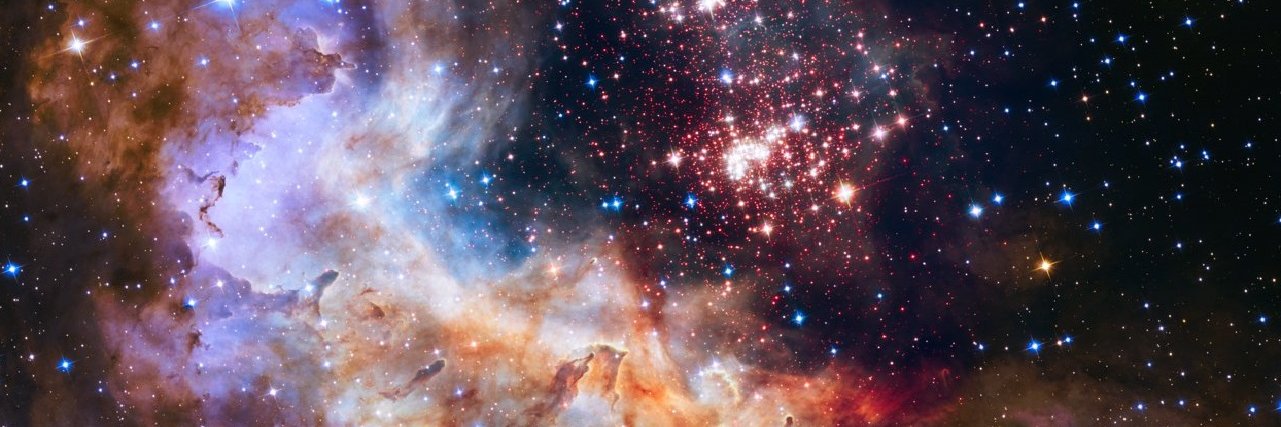
Image: A wide field image of ASKAP J1832 in X-ray, radio, and infrared light.
Credit: X-ray: NASA/CXC/ICRAR, Curtin Univ./Z. Wang et al.; Infrared: NASA/JPL/CalTech/IPAC; Radio: SARAO/MeerKAT; Image processing: NASA/CXC/SAO/N. Wolk
Research Paper: "Detection of X-ray Emission from a Bright Long-Period Radio Transient"➡️https://t.co/MG2TOGqojN
Press Release➡️https://t.co/jUDuTqhnqM
🧵1/6
This is a historic milestone: the very first public image from VISTA telescope (Dec 2009).🔭
It features the Flame Nebula (NGC 2024) in Orion and its surroundings.
Hidden in visible light, it bursts with newborn stars in infrared.
Captured with J, H and Ks filters, this image reveals the dense cluster of very young stars at its core.
It also includes NGC 2023 and the ghostly Horsehead Nebula — all in just 14 minutes of exposure.
https://t.co/MHPIly1wBp
#histsci #galactic #astronomy
Per quanto riguarda le tre stelle della Cintura di Orione:
sì, possono essere considerate stelle “solitarie”. Anche se dal nostro punto di vista formano una bella linea retta, in realtà non hanno legami fisici tra loro. Ognuna vive la propria vita indipendente (anche se alcune hanno delle compagne molto vicine, come Alnitak che è un sistema multiplo). La linea è solo un effetto di prospettiva.
Per quanto riguarda M4 e le possibili collisioni:
anche se sembrano molto stipate, lo spazio tra le stelle è ancora enorme. Nella zona centrale di M4 la distanza media tra le stelle è dell’ordine di 0,5–2 anni luce nella regione più densa. Per capirci: se il Sole fosse una stella di M4, la stella più vicina sarebbe comunque a migliaia di miliardi di chilometri di distanza. Le collisioni sono molto rare. Avvengono solo occasionalmente nel cuore super-denso dell’ammasso, e di solito producono stelle “blu stragglers” (stelle più massicce e giovani create dalla fusione). Non ci sono “incidenti continui”.
Circa il magnetismo come “cuscino”: no, non funziona così. La gravità è di gran lunga la forza dominante. Le stelle si muovono seguendo orbite complesse intorno al centro dell’ammasso. Ci sono campi magnetici (soprattutto intorno alle stelle più attive), ma non sono abbastanza forti da creare un “cuscino” che spinga via le altre stelle. È la dinamica gravitazionale che regola tutto.
L’Universo è davvero pieno di situazioni diverse e bellissime da studiare.
Le tue domande sono sempre ottime! 🤗⚛️💜😊👏👏
🧵1/6
This is a historic milestone: the very first public image from VISTA telescope (Dec 2009).🔭
It features the Flame Nebula (NGC 2024) in Orion and its surroundings.
Hidden in visible light, it bursts with newborn stars in infrared.
Captured with J, H and Ks filters, this image reveals the dense cluster of very young stars at its core.
It also includes NGC 2023 and the ghostly Horsehead Nebula — all in just 14 minutes of exposure.
https://t.co/MHPIly1wBp
#histsci #galactic #astronomy
Bella domanda! Sono contenta che tu stia approfondendo questi argomenti.😊
La differenza tra la Cintura di Orione e M4 è questa:
la Cintura di Orione è un asterismo ovvero le tre stelle sembrano vicine solo otticamente, mentre in realtà sono lontane e non legate gravitazionalmente tra loro.
M4 invece è un vero ammasso globulare. Si tratta di un sistema fisico di decine di migliaia di stelle (più di 100.000 secondo alcune stime) legate dalla gravità e stipate in un diametro reale di circa 75 anni luce.
Quindi, quelle stelle sono spazialmente vicine tra loro. Nella parte centrale di M4 la distanza media tra le stelle è di pochi anni luce (a volte anche meno di mezzo anno luce), il che spiega perché l’ammasso appare così denso e “non c’è spazio per uno spillo”.
Concludendo, nella Cintura si tratta di un effetto ottico, mentre in M4 stai guardando un vero “sciame” di stelle che si muovono insieme da miliardi di anni.💜⚛️🤗
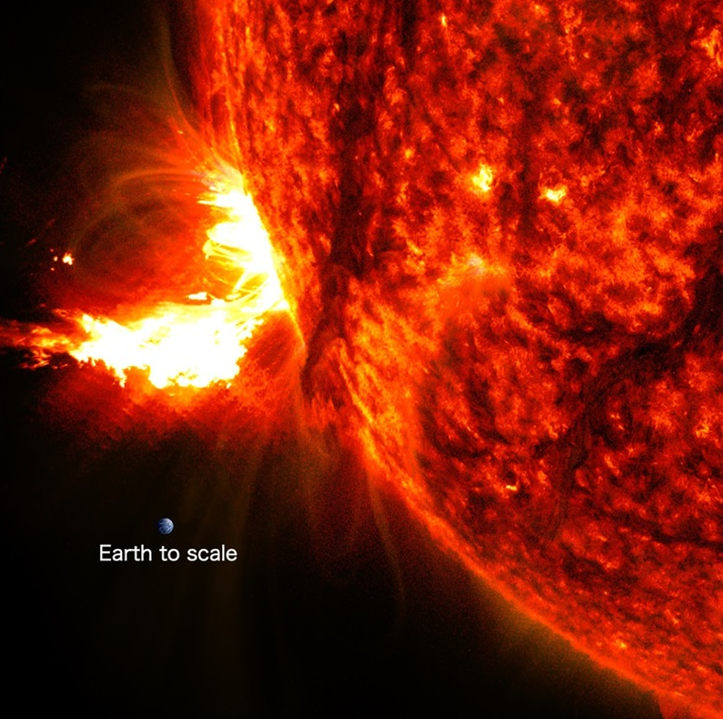
We know that NASA's Solar Dynamics Observatory (SDO) captured spectacular images of the X8.7 solar flare on 14 May 2024 — the most powerful flare seen in this solar cycle so far.
On 27 May 2024 UTC, SDO captured again an image of a strong solar flare from what scientists believe is old AR3664. It is classified as a X2.8 solar flare: X-class indicates the most intense flares, the number refers to its strength.
This solar flare is seen, in the pic, as the bright flash on the limb of the Sun, with an inset image of Earth for scale.
Learn more➡️https://t.co/XhPVNqjGyh
Credit: NASA/SDO
#AR3664 #solarflare #sun
On May 28, 1936 Alan Turing submits "On Computable Numbers" for publication, in which he set out the theoretical basis for modern computers.
More➡️https://t.co/e8E1A8h028
#scritturebrevi#VentagliDiParole#History#computers
Vedo che questa cosa ti ha colpito tanto. Quando capita, l'astronomia può cambiarti il modo di guardare il cielo.
Quello che sembra un bel disegno vicino a noi è quasi sempre solo una proiezione: stelle che possono essere a centinaia o migliaia di anni luce di distanza l’una dall’altra.
Riguardo alla tua domanda, è molto profonda.👏👏
Sì, in astrofisica ci sono tanti problemi irrisolti (energia oscura, materia oscura, natura della gravità a livello quantistico, ecc.). Però la maggior parte di questi non dipende direttamente da famose equazioni matematiche ancora senza soluzione (come l’ipotesi di Riemann o la congettura di Navier-Stokes).
In realtà succede spesso il contrario: è l’astrofisica che pone nuove domande alla matematica.
A volte usiamo approssimazioni o modelli numerici perché le equazioni esatte sono troppo difficili da risolvere analiticamente. Per esempio, il moto turbolento nei dischi di accrescimento intorno ai buchi neri o nella formazione stellare è legato a problemi matematici complessi, ma riusciamo comunque a fare previsioni e simulazioni molto utili.
Quindi no, le grandi equazioni irrisolte non sono oggi un ostacolo insormontabile per l’astrofisica. Semplicemente, la natura è complicata e noi usiamo gli strumenti matematici che abbiamo, spingendoli fino al loro limite.
È proprio questa combinazione tra osservazioni, fisica e matematica che rende tutto così affascinante.💜⚛️🤗
La tua curiosità va dritta al punto! 😊
La Cintura di Orione non è un caso unico, anzi è piuttosto comune nel cielo. Molte figure che vediamo (asterismi) sono solo allineamenti casuali dalla nostra prospettiva: le stelle sembrano vicine tra loro, ma in realtà si trovano a distanze molto diverse e non sono legate gravitazionalmente.
Nel caso specifico della Cintura: Le tre stelle si trovano a distanze diverse (tra circa 1.200 e 2.000 anni luce). Non formano un sistema fisico: non orbitano insieme e la loro influenza gravitazionale reciproca è trascurabile.
Si muovono in direzioni e a velocità diverse, quindi tra qualche centinaio di migliaia di anni (tipicamente tra 200.000 e 500.000 anni) la “cintura” quasi perfetta che vediamo oggi non sarà più così ben allineata.
È proprio questo il bello dell’astronomia: tante figure nel cielo sono effetti ottici creati dalla nostra posizione nella galassia.
Domanda come al solito interessante! 👏💜⚛️🤗
Mi fa davvero piacere averti dato questa gioia.🙂
Sì, è proprio una delle tre stelle della Cintura di Orione. Nell’immagine di VISTA risalta tantissimo perché è molto luminosa e calda, e l’infrarosso la fa “esplodere” di luce rispetto allo sfondo.
È bellissimo quando succede così: pensi “forse è una delle mie stelle preferite”… e invece è proprio lei!
Alnitak, Alnilam e Mintaka sono stelle davvero speciali.
Il tuo entusiasmo è contagioso! 😊🤗⚛️💜
1/3
Scientists, using the the NASA/DLR SOFIA, investigated the magnetic field's physical properties in the Keyhole Nebula to understand the magnetic field's role in a region influenced by strong stellar feedback.
Paper➡️https://t.co/HaZq1gVN9g
#scritturebrevi#VentagliDiParole
Lack of background-independence is sometimes used as an argument against string theory. It was actually a good argument back in the 80s.
But since the advent of AdS/CFT in the 90s I’d say it is the string theorists who have the most credible explicit examples of the emergence of spacetime. There are things not to like but that particular question plays to one of their strengths.
It shows things do progress, which is actually nice to see.
Fully agree.
AdS/CFT has dramatically shifted the debate on background independence: we have explicit, controllable mathematical examples where spacetime and gravity dynamically emerge from the boundary CFT.
While it remains unclear how well this generalizes to our de Sitter universe (especially without supersymmetry), string theory has clearly made real progress on this issue since the 1980s.
Good to see theoretical physics advancing.
🧵1/7
Astronomers detected gamma rays from a rare superluminous supernova using NASA’s Fermi telescope. 🔭
This work offers a new view into what powers these unusually bright explosions.
https://t.co/RVC82xJejJ
#cosmology#stellarastro#astronomy
1/5
#Mathematicians have a stunning new way to tell knots apart: each one now gets its own unique hexagonal “QR code”, delicate and symmetric like a snowflake.
Developed by Dror Bar-Natan and Roland van der Veen, it’s both fast and incredibly powerful.
This is exciting stuff.
#Math #Mathematics
1/2
Congrats to @ATLASexperiment!
The ATLAS team at #CERN reported spotting a new particle — the Bc*⁺ meson.
It’s the 82nd hadronic particle found at the LHC.
It’s been 14 years since their last new particle discovery.
#physics
🧵1/5
Picture this: we’ve recently peered straight into the heart of an active #galaxy 13 Mly away.
Using the #JWST, astronomers have shown that the hot dust around its supermassive #blackhole isn’t mostly escaping in outflows, as everyone thought for decades.
https://t.co/K5RuKxQq7t
#cosmology