Lament for a Lost Icon💔
O monolith of ages past,
Thy fall doth leave my soul aghast.
Thy roots, deep-set in ancient earth,
Have borne the weight of time's rebirth.
Generations mourned thy loss,
Their wails echoing through the moss.
Memories fade, like morning dew,
For this great loss, there's no adieu.
Thy towering form, a beacon bright,
Now lies in ruins, day and night.
My anger burns, a fiery flame,
For this destruction, wrought by name.
O Mother Nature, wise and old,
Thy sorrow I shall here unfold.
This natural icon, lost and gone,
A gaping wound, where hope had shone.
But from the ashes, life shall rise,
And beauty bloom, beneath the skies.
For nature's resilience knows no bounds,
Though loss may pierce, and sorrow astounds.
So let us mourn, and let us weep,
For this great loss, we deeply keep.
But let us also hope and pray,
For brighter days, to come our way.
@LairdOfTheManor 😞🎩
.@_fabinhotavares has today completed a permanent transfer to Al-Ittihad after five years with the Reds.
We would like to thank Fabinho for all of his contributions to the club’s successes during the last five years 👏
Sir Arthur Conan Doyle, best known as the brilliant creator of the world-famous detective Sherlock Holmes, possessed a keen intellect and an unyielding sense of justice that extended beyond the pages of his novels. In a remarkable turn of events in the early 1900s, Doyle found himself taking on the role of a real-life detective to right the wrongs of the justice system and secure the freedom of two innocent men.
It all began when Doyle, an avid reader of crime reports and court cases, stumbled upon two separate cases that piqued his curiosity. Both cases involved men who had been convicted and sentenced for crimes they vehemently claimed they did not commit. Struck by the inconsistencies in the evidence and testimonies, Doyle became convinced of the men's innocence and felt compelled to take action.
The first case involved George Edalji, a solicitor of Indian descent who had been convicted of mutilating animals in the Staffordshire region. Despite a lack of substantial evidence connecting Edalji to the crimes, he was found guilty and sentenced to seven years of hard labor. Doyle carefully examined the details of the case and came to believe that Edalji was indeed innocent.
The second case involved Oscar Slater, a German immigrant who had been accused of murdering an elderly woman in Glasgow. Slater's conviction was based on circumstantial evidence, and he was given the death penalty. Doyle's interest in this case intensified when he discovered numerous flaws in the investigation and the trial process.
Fuelled by his unwavering belief in justice and inspired by the detective skills of his fictional creation Sherlock Holmes, Doyle embarked on a personal mission to exonerate both men. He invested countless hours investigating the cases, gathering evidence, and interviewing witnesses and experts.
With his literary fame, Doyle had the advantage of garnering media attention, which he used to bring public awareness to the injustices faced by Edalji and Slater. His articles and public speeches raised eyebrows and generated discussions about the inadequacies of the legal system.
In 1907, after years of determined efforts, Sir Arthur Conan Doyle succeeded in proving the innocence of both George Edalji and Oscar Slater. Edalji's sentence was commuted, and he was finally released from prison. Similarly, Slater's death sentence was overturned, and he was granted clemency. Though not without their struggles, both men were ultimately vindicated.
The public outcry and media spotlight on these cases prompted significant reforms in the British legal system. As a result of Doyle's unwavering commitment to justice and the exposure of the flaws in the process, the UK established an official Court of Criminal Appeal in 1907. This institution allowed for further scrutiny and the potential for rectifying miscarriages of justice.
Sir Arthur Conan Doyle's extraordinary efforts in real-life detective work not only secured justice for two innocent men but also catalyzed the reformation of the legal system. His determination to see justice served, akin to the character of Sherlock Holmes, continues to inspire generations of readers, writers, and activists to seek truth and fairness in an often complex and imperfect world. Beyond the pages of fiction, Doyle's legacy as a crime solver in real life remains an indelible testament to the power of one individual's relentless pursuit of justice.
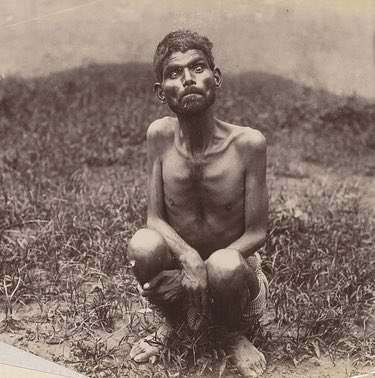
The Wolf Child, 1889. In the Bulandshahr region of the Indian forests, there resided Dina Sanichar, a feral child of merely six years old. Sanichar lived amidst a wild wolf pack, adapting to their ways and partaking in their activities. This remarkable case serves as a vivid demonstration of the impact of environmental factors on human behavior. It exemplifies how the availability of resources, the upbringing environment, and the ability to adapt to surroundings during childhood can shape an individual's physical and mental abilities, ultimately ensuring survival.
The extraordinary narrative of Sanichar captivated the imagination of Rudyard Kipling, who drew inspiration from it for his renowned work, "The Jungle Book." Subsequently, Disney transformed this literary masterpiece into various cinematic adaptations.