This is Nethold Strategy.
We study digital assets the way long-term investors study any market: structure first, noise last.
Here's what you'll find here, and what you won't. 🧵
Concentration risk isn't only about owning one coin.
It hides in the plumbing: one exchange, one custodian, one stablecoin, one chain, one set of keys.
Ten assets held in one place are still one point of failure.
Map where you hold, not just what you hold.
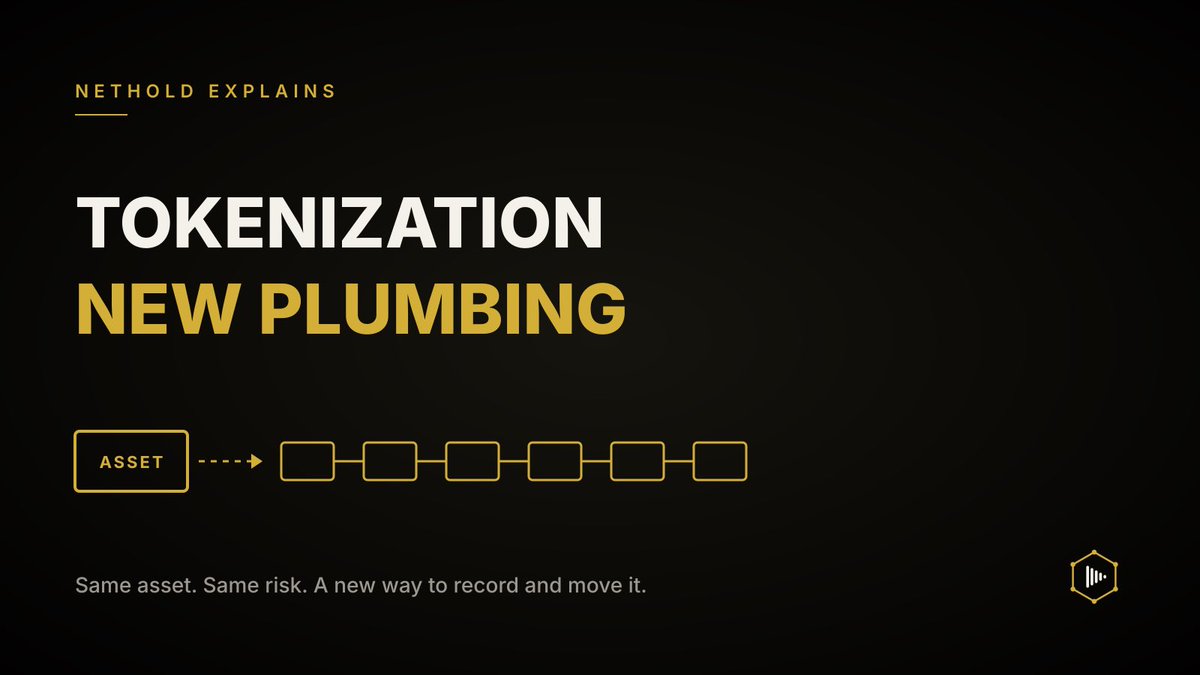
6/ The long-term reading: tokenization is a market-structure upgrade, not a new asset class.
Judge a tokenized product the way you would judge the original. Then ask what the new plumbing adds, and what it can break.
"Tokenization" is everywhere in institutional crypto. But what actually changes when a fund or a Treasury moves on-chain?
Short answer: the plumbing changes. The asset does not.
A thread. #Tokenization
5/ Some risks are added, not removed:
• Smart contract bugs
• Chain outages
• Key management
• Which record wins if the chain and the legal register ever disagree
4/ The long-term reading: demand is shifting toward money that moves when the economy moves, not when banks open.
Those who offer that with clear rules and reliable redemption are building lasting infrastructure. Slowly, and mostly out of sight.
Banks close at night and on weekends. Stablecoins don't.
A new Coinbase and The Block study finds around 73% of screened stablecoin transfer volume in the 12 months to July 31 moved outside US banking hours.
What that tells us about money: #Stablecoins
3/ What doesn't change: a stablecoin is still a claim on an issuer. 24/7 transfer does not remove reserve, redemption or issuer risk.
The rail is always open. The promise behind the token still matters.
US spot #Bitcoin#ETF flows flipped again this week: money in one day, out the next.
Headlines treat each day as a verdict. It isn’t.
Daily flows show short-term positioning. The signal is the multi-month trend: who keeps allocating, and how.
Zoom out before reacting.
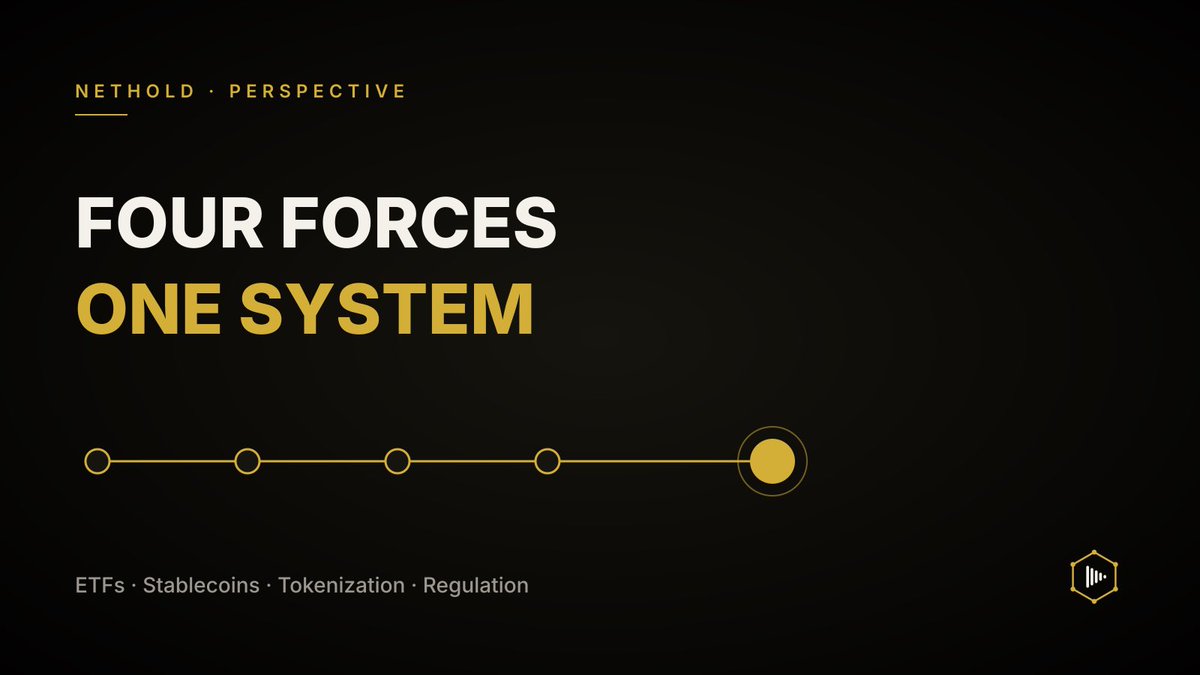
Most people ask which force drives the next cycle.
ETFs bring access.
Stablecoins move dollars 24/7.
Tokenization puts old assets on new rails.
Regulation decides who can use all three.
They aren't competing. They're one system, built in parts. That's the long-term story.
The headline is the chain. The story is the structure.
A bank money fund now lives on more than one public network, where its clients already are.
The asset doesn't change. Where it can move does.
Access is still gated: qualified U.S. investors, one platform.
#Tokenization
BREAKING: @JPMorganAM's tokenized money market funds are live on Solana.
MONY and JLTXX are both available to qualified U.S. investors through Morgan Money, with subscriptions, redemptions and token balances handled on one platform.
6/ The prices of 2022 are history. The lesson isn't.
Before trusting any venue, ask: Who holds the assets? Are they segregated? What backs the balance sheet?
Long-term thinking starts with counterparty risk.
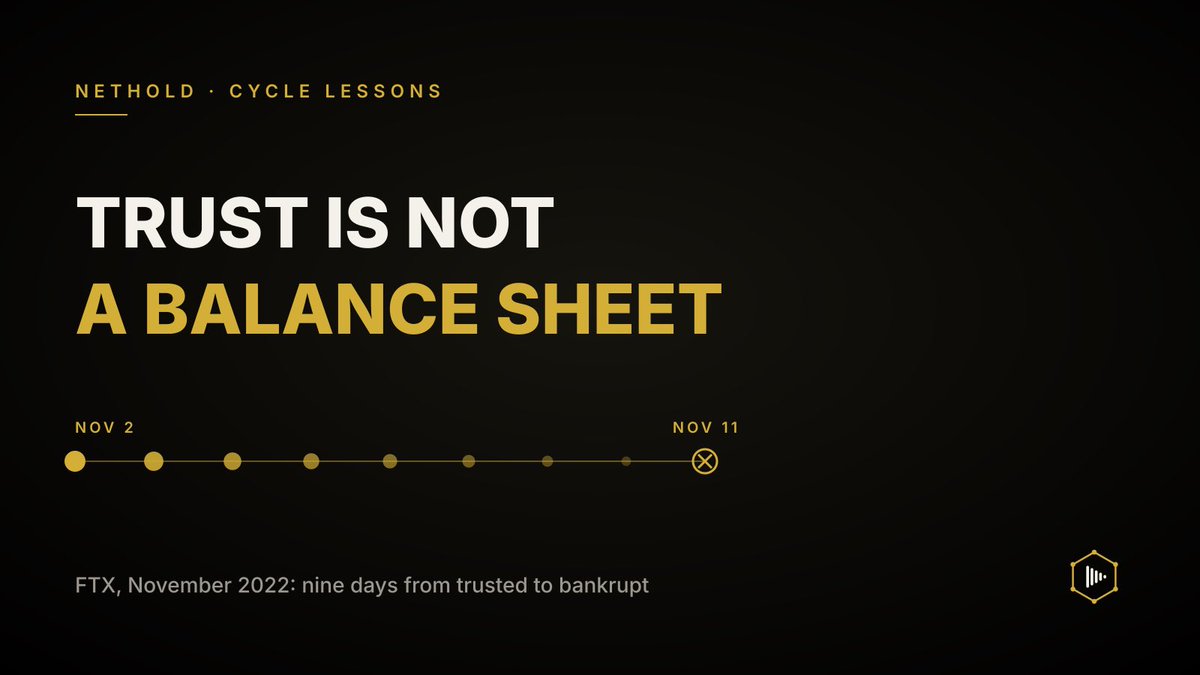
November 2022: FTX, one of the world's largest crypto exchanges, went from trusted to bankrupt in nine days.
It wasn't a market crash. It was a balance-sheet problem nobody could see.
What the FTX collapse still teaches, in a short thread:
5/ Lesson three: solvency is tested on the worst day, not the average one.
Every venue looks liquid until everyone asks at once. Proof of reserves means little without proof of liabilities.