We were honored to host the @AANSNeurosurg Medical Student Chapter Annual dissection lab last week. The program brought together students, #neurosurgery residents, and faculty for a day of rigorous discussion, technical insight, and collaborative learning in skull base surgery🙌🏻
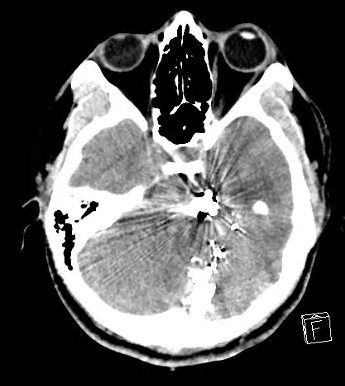
#CNSNexus case featuring Ryan Kitigawa & Laura Zima from UT Health! Patient presenting after posterior GSW. What vascular structure is likely injured? (1/5)
This is a great technical video https://t.co/d7aNVvwfnA by our newest cerebrovascular neurosurgeon (Nicholas Borg) at Nebraska Medicine on CSF-venous fistula in the JNIS. @BorgNicholas@UNMC_NeuroSurg@JNIS_BMJ.
Good rule of thumb: loss of consciousness generally doesn’t happen unless the brainstem or both cerebral hemispheres are not functioning. In other words, if only one hemisphere is not functioning, a person will remain conscious.
Learning to do brain surgery is the same as learning many things. You divide the big task into smaller tasks (chunk). Learn and master those smaller tasks in low risk situations until routine.