since Codex 5.6 released routing the Sol, Terra, and Luna right has been a problem everybody faced
not optimizing tokens and time perfectly
so i built Autorouter for which model & effort should run, automatically routing tasks while a project is going on without you even thinking or changing models
fully based on what Codex itself recommends
it has 3 modes:
1. token saver
2. balanced
3. max quality
it not only chooses the right model (5.6 Sol, Terra or Luna) but also the right effort setting autonomously while you are doing work
completely free, just direct your Codex to this repo, and then it will bring the Autorouter on for you:
https://t.co/kNZwT1yToK
¡Proyectazo! Necesitas esto para tu web o app.
Te genera automáticamente el skeleton de tus componentes. Sin calcular nada a mano.
Envuelves tus componentes con <Skeleton> y listo.
Para Vue, React, Angular y Svelte:
https://t.co/95p9i8FHrs
introducing https://t.co/20es64pAqZ
a dictionary for ui things you can see but can't name
made it because i'm primarily a designer, and my biggest resistance was always knowing what things are called when prompting my agents
it learns as people use it: every search teaches the site new words, and the built-in pocket dictionary grows with it
give it a try and let me know what you think
can't find something? dm me and i'll add it
i want this to be the lowest resistance resource you have
you can just build things
@souvgomes A ideia não é automatizar a institucionalização de padrões, mas reduzir o custo de perceber, qualificar e discutir essas oportunidades.
Obrigado pela sua visão!
Postei um novo artigo no @Substack:
Agentic Design Systems: quando o Design System passa a observar os produtos
A hipótese: talvez o próximo passo dos Design Systems não seja apenas automatizar componentes, mas aprender com os produtos que os utilizam.
https://t.co/unlvF2tRhs
@souvgomes Um padrão recorrente em um único contexto pode continuar sendo só uma boa solução local.
Antes de virar um componente no Design System, teria que passar por critérios de generalização, evidência de uso, aderência às premissas do DS, impacto, risco e revisão humana.
@souvgomes Sim, total. Esse é um dos riscos centrais.
No plano, eu não trato recorrência estatística como decisão de promoção, mas como sinal. O sistema precisa diferenciar exceção local, padrão contextual, lacuna real do DS e candidato à promoção.
The US government, citing national security authorities, has issued an export control directive to suspend all access to Fable 5 and Mythos 5 by any foreign national, whether inside or outside the United States, including foreign national Anthropic employees.
The net effect of this order is that we must abruptly disable Fable 5 and Mythos 5 for all our customers to ensure compliance.
Access to all other Claude models is not affected.
We apologize for this disruption to our customers. We believe this is a misunderstanding and are working to restore access as soon as possible.
Read our full statement: https://t.co/bwn0sximKZ
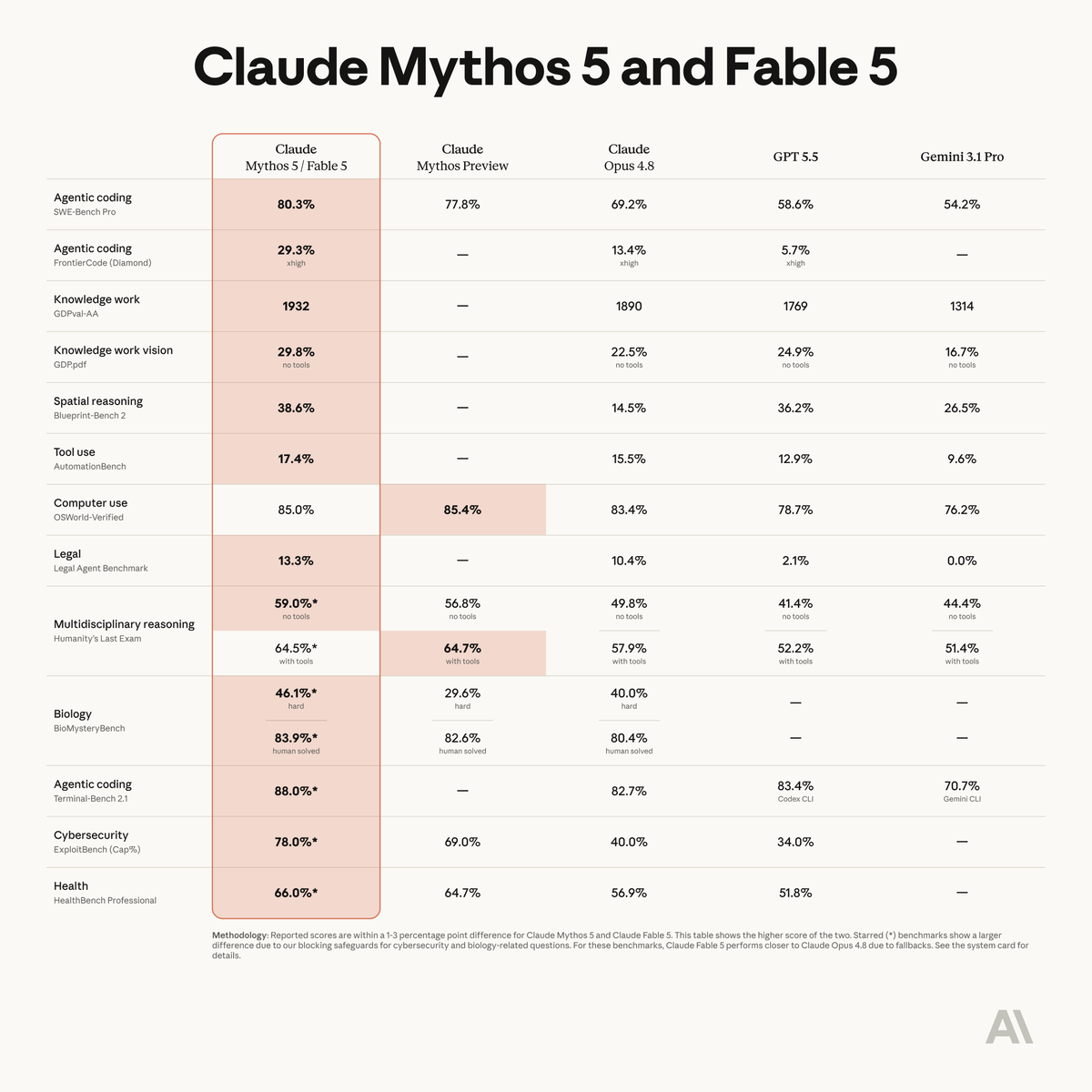
Fable 5 is state-of-the-art on nearly all tested benchmarks, with exceptional performance in software engineering, knowledge work, scientific research, and vision.
The longer and more complex the task, the larger Fable 5’s lead over our other models.
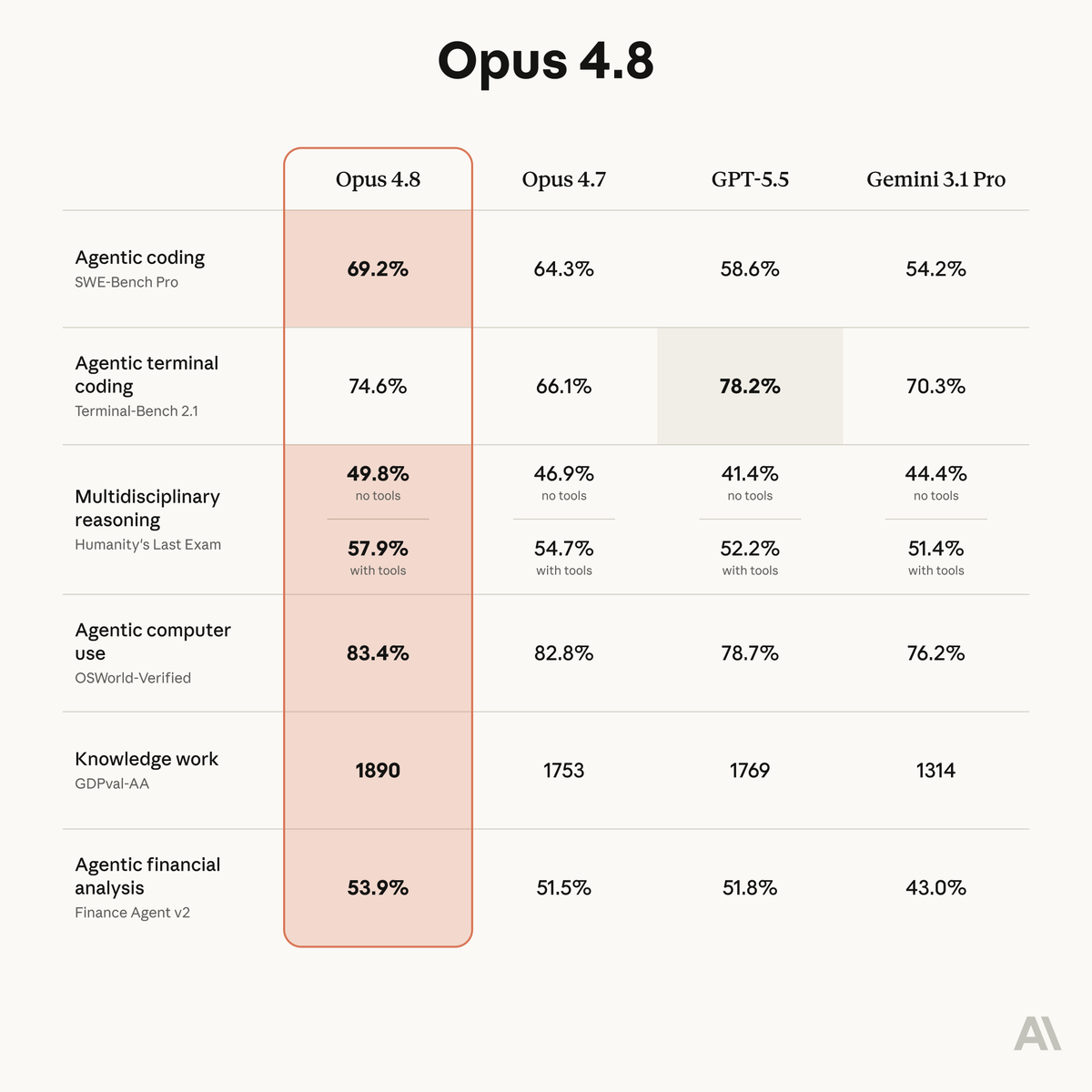
Introducing Claude Opus 4.8: it builds on Opus 4.7 with sharper judgment, more honesty about its own progress, and the ability to work independently for longer than its predecessors.
Available today at the same price.
Open Design 0.8.0 turns assets, systems, prototypes, exports, and workflows into portable plugins agents can use.
From dragging things around
to composing capabilities.
Open Design 0.8.0 is out now.
We’ve shipped a security-guidance plugin for Claude Code that helps identify and fix vulnerabilities as you’re writing code.
Available for all Claude Code users. Install from the plugin marketplace (/plugins).