1) Вооружённые конфликты заканчиваются, когда перестают стрелять, чем раньше, тем больше людей останется в живых
2) Результаты пусть выясняют политики
3) Дружить в засос с бывшим противником не обязательно, но общаться, хотя бы как-то стоит
P.S. Все закончится, рано или поздно
Про бензин ⛽
Закрыли заправку в 2 минутах от дома
Пришлось ехать на другую, в 5 минутах ждать там 10 минут, неудобный разворот и в итоге за место 10 минут на все про все я потратил 35
Приемлемо
🇷🇺 Поздравляем Валерию Клейменову с победой на первенстве мира по шахматам среди девушек до 18 лет!
На турнире в Монтесильвано (Италия) российская шахматистка досрочно завоевала золото.
📷 Федерация шахмат России / Марк Лившиц
If rumours are to be believed I'll be living with a seventh different Prime Minister shortly. If it carries on like this I'm going to stop making the effort to learn their names.
@Deymos888@itan_tennenbaum Вообще-то так и есть, в 90-е была оказия пожить в номерном городе, свой общественный бассейн, двери реально можно было не закрывать, велосипеды на первом этаже оставляли, а в выходные ходили на пикники на природу
@fuking_tviter Он всю свою жизнь был таким. Вы по какой-то причине забыли, что Тинькофф при нём был, наверное, самым паскудным банком, который выбивал долги самыми жёсткими методами.
Пиво у него было тоже не очень, и за качество он, кстати, так и не ответил.
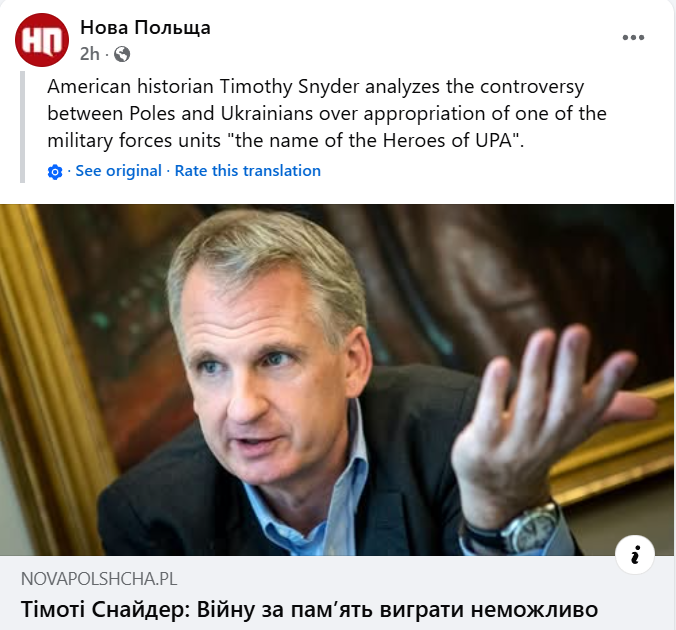
Prof. Timothy Snyder has finally broken his silence and weighed in on the ongoing 🇵🇱-🇺🇦 controversy over the "UPA Heroes."
In his now-familiar role as defense counsel for all things Ukrainian, he argues that when Ukrainians celebrate the UPA, they are thinking only about its anti-Soviet struggle and harbor no hostility toward Poles.
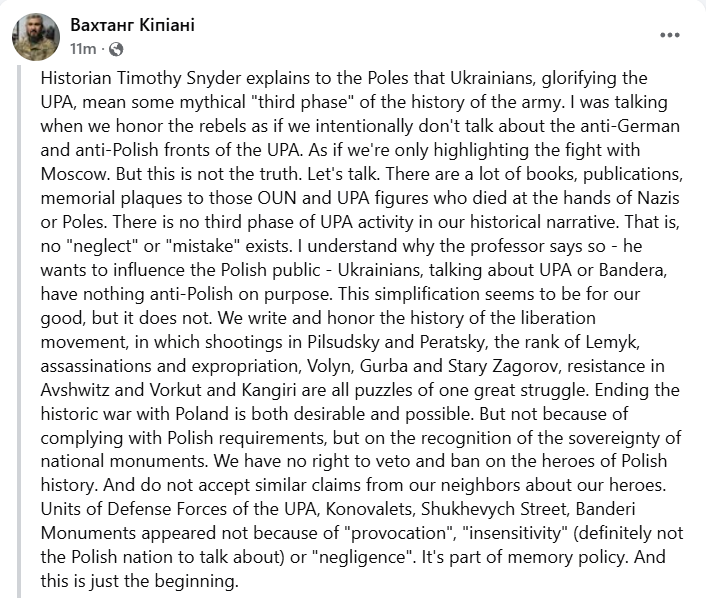
And then along comes AFU officer and journalist Vakhtang Kipiani to ruin the entire defense case.
"We write and honor the history of the liberation movement, in which shootings in Pilsudsky and Peratsky... assassinations and expropriation, Volyn... are all puzzles of one great struggle," he insists.
At this point Snyder's carefully constructed distinction between anti-Soviet resistance and anti-Polish violence collapses like a house of cards.
This creates a slight problem for Snyder's narrative.
A great many Western intellectuals are currently investing enormous effort in whitewashing Ukraine's politics of memory. Figures and movements that were complicit in ethnic violence and war crimes of National Socialism are being repackaged through the language of decolonization, nation-building, anti-imperial resistance, and a host of other fashionable academic frameworks.
The irony is that many Ukrainians themselves are often far more straightforward about whom they are celebrating.
The result is a growing gap between the polished academic narrative and the much messier reality that pushes Ukraine further away from a democratic future.