Legal clients aren't browsing. They're vetting.
Your website has about 8 seconds to pass that test. GMC Law passes it now.
Full case study: https://t.co/mNCm9d9ujO
#Branding#WebDesign#LegalMarketing#WordPress
A law firm's website shouldn't just look professional.
It should make someone feel confident before they've read a single word.
GMC Law in Buffalo didn't have that. We fixed it. 🧵
With the brand locked, the website followed.
We consolidated pages, simplified navigation, and rewrote the content hierarchy so visitors could find what they needed fast. Built on WordPress so the GMC team can manage it themselves without a developer on call.
Fully responsive. SEO-ready from day one.
Traffic up 15.5%. New users up 28.5%.
A complex product catalog doesn't need fewer products. It needs better wayfinding.
Full case study here: https://t.co/6E5GCXiVvB
#WooCommerce#WebDesign#CRO
A $0 UX fix increased new users by 28.5%.
No ad spend. No redesign from scratch. Just a smarter way to help people find what they already came to buy.
Here's what we did for InJoy. 🧵
The standout feature: a custom "Complete Solution Guide."
A short quiz. Asks about classroom environment and learning goals. Spits out the exact product bundle that fits.
Educators stopped second-guessing. Confidence went up. Cart abandonment went down.
Founders love carousels because they "save space."
But space isn't what you are optimizing for on mobile. You are optimizing for momentum.
UX Research by the Nielsen Norman Group confirms this: "Banner Blindness" means users auto-ignore anything that horizontally scrolls like an ad.
Vertical scrolling is a frictionless, unconscious habit. Horizontal swiping is an active, high-friction chore.
Stop using horizontal carousels on your Shopify mobile site.
They are hiding your best products.
Usability data shows that only 1% of users actually interact with marketing carousels. And of those users, 84% never make it past the first slide.
If it’s not visible on the vertical scroll, it doesn't exist. 👇
Novelty drives engagement on the timeline, but utility drives revenue in the cart.
'Wild examples' are fun, but the real agency unlock here is pipeline efficiency. If these tools allow us to deploy high-resolution brand assets and UI motion-graphics without the traditional 4-week studio bottleneck, the ROI is massive.
Don't just prompt for art. Prompt for conversion.
The best media buyer in the world cannot save a broken User Interface.
Brands burn thousands of dollars debating Meta ad settings when their Shopify mobile checkout is actively repelling customers.
Meta’s algorithm will rent you the traffic. But your On-Site UX and Landing Page Design is what actually owns the revenue. Stop optimizing ads before you optimize the architecture.
If you're debating CBO vs ABO vs ASC you're just procrastinating doing actual work.
Every week, I see someone on the timeline arguing about campaign structures.
CBO vs ABO.
ASC vs manual.
How many ad sets?
What bid strategy?
I run one CBO for testing and scaling.
One promo campaign.
And an optional retargeting/catalog campaign.
That's it.
No complex setups.
No 10 campaigns with different objectives.
And this consistently outperforms the "advanced" structures I see brands come to me with.
Here's why.
Meta's algorithm has gotten really good at finding the right people.
That part of the equation is largely solved.
What it can't do is create the right message for those people.
That's still 100% on you.
So when brands spend hours debating structure, they're optimizing the thing that matters least while ignoring the thing that matters most.
The real skill now is creative strategy.
Knowing which awareness stages to target.
Knowing which personas to speak to.
Knowing how to split test properly so you actually learn from every ad you launch.
Knowing how to read the data and diagnose what's actually wrong.
Is it CTR? Then your hooks and angles need work.
Is it CVR? Then your landing page doesn't match your ad.
Is it CPA climbing with frequency? Then you need fresh TOF creatives that hit.
That's where the game is now.
Not in how many ad sets you're running.
Keep your structure simple.
Put your energy into the creative and the funnel.
That's what actually moves the needle.
This is a flawless roadmap. If your goal is to build a high-churn dropshipping store.
But if you want to build a high-ticket DTC brand, you cannot treat 'Brand Identity' as an AI afterthought, or your Abandoned Cart UX as 'set and forget.'
You don't build enterprise equity by downloading templates. You build it with high-fidelity design that commands premium pricing.
Design is not just decoration. It is price framing.
If your website looks like a discount flyer, you will only attract discount shoppers.
Does your UI match the quality of your product?
See how we elevate brands here: https://t.co/m0XNXQvQBh
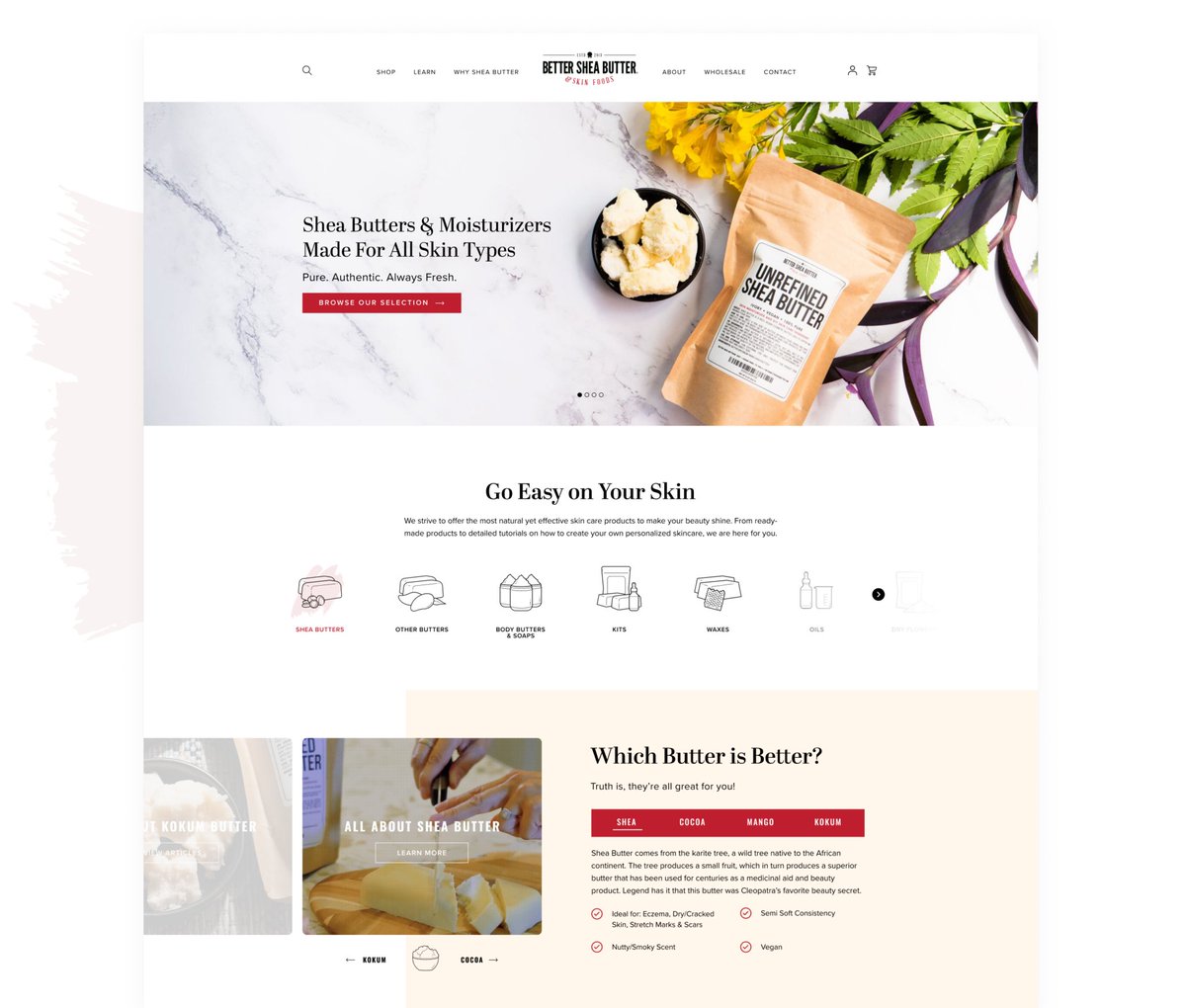
When we build Shopify/Wordpress experiences for high-AOV (Average Order Value) brands, we don't cram the hero section with text and pop-ups.
We give the typography and product imagery room to breathe. This subconsciously signals "premium quality" to the buyer before they ever see the price tag.
If a user can't find what they want in 3 seconds, they leave. Your bounce rate isn't a traffic problem; it's a UI problem.
Audit your mobile navigation today.
Looking to upgrade your Shopify experience? Let’s talk.
The standard mobile "Hamburger Menu" is where eCommerce traffic goes to die.
If your navigation is just a dense list of text links, you are exhausting your customer before they even see a product.
Here is how we turn the mobile menu into a visual discovery engine. 👇
Most brands treat navigation as an afterthought. We treat it as the top of the funnel.
Instead of making users guess what a category means, we use:
1️⃣Visual Hierarchy: Featured product images built directly into the menu.
2️⃣Thumb-Zone UX: Critical categories pushed down to the bottom third of the screen where thumbs naturally rest.
3️⃣Frictionless UX: Zero loading time between expanding sub-categories.