ICC must not be dismantled, says president Tomoko Akane after U.S. sanctions
Deck: Akane urges member states to stand by the court, calling the ICC a “last hope” for victims of the gravest international crimes
THE HAGUE — International Criminal Court (ICC) President Tomoko Akane on Wednesday defended the court against a U.S. campaign of pressure and sanctions, urging member states to maintain support for the Hague-based tribunal. Speaking at an online press conference, Akane said the ICC “must not be dismantled” and described it as the “last hope” for victims of the most serious international crimes.
The United States on August 18 imposed sanctions on Akane and senior ICC trial lawyer Abdallah Seye, among others, accusing the court of overreach. U.S. officials, including Secretary of State Marco Rubio, branded the ICC an “corrupt and highly politicized supranational court” and argued the tribunal had attempted to pursue actions against nationals of countries that are not parties to the Rome Statute.
The sanctions target nine of the court’s 18 judges and include travel bans, asset freezes and restrictions on transactions through the U.S. financial system. Akane said the measures have had personal effects — she has been unable to use some credit cards — but insisted they have not stopped her from performing judicial duties. “I see no reason for these sanctions,” she said, adding she will confront any negative impacts.
Akane appealed to Japan — a major financial supporter of the ICC and a member since 2007 — to help resist U.S. pressure and encourage other states not to withdraw support. Washington has signaled further steps against the court, with some U.S. officials indicating efforts to persuade countries to cut membership or funding.
A key flashpoint in the dispute is the ICC’s issuance in November 2024 of arrest warrants for Israeli officials, including Prime Minister Benjamin Netanyahu, over alleged war crimes and crimes against humanity linked to the Gaza war. The United States and Israel are not ICC members; Palestine is. The court has called the U.S. sanctions an “open attack” on judicial independence and warned that intimidating judges, prosecutors and staff threatens the international legal order. The ICC said it will continue to fulfil its obligations under the Rome Statute with independence and impartiality.
Nepal: Cause of Devastating Flood Revealed — Two-Thirds of Glacier Broke Off
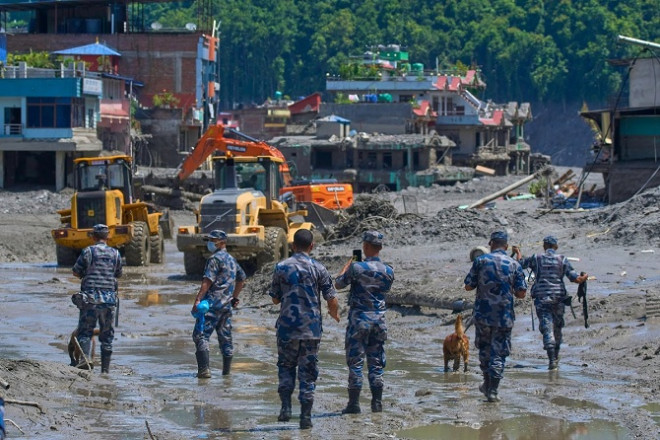
The likely cause behind the devastating flood that struck Nepal on August 26 has come to light. According to preliminary satellite analysis by India's National Remote Sensing Centre (NRSC), part of the Indian Space Research Organisation (ISRO), nearly two-thirds of a glacier near the Nepal-Tibet border in Rasuwa district broke off and collapsed, sending a massive mass of ice and rock crashing down toward the Bhote Koshi river.
NRSC compared Resourcesat-2A satellite imagery from August 26 with earlier images, revealing that debris had temporarily blocked the river's course. When the blockage suddenly gave way, the released water triggered severe flooding and debris flow in areas including Rasuwagadhi, Timure, Bhote Koshi and Trishuli.
The US Geological Survey (USGS) clarified that seismic-like activity initially detected was not caused by an actual earthquake but resulted from the glacier collapse and subsequent debris flow, registering a magnitude of 2.5.
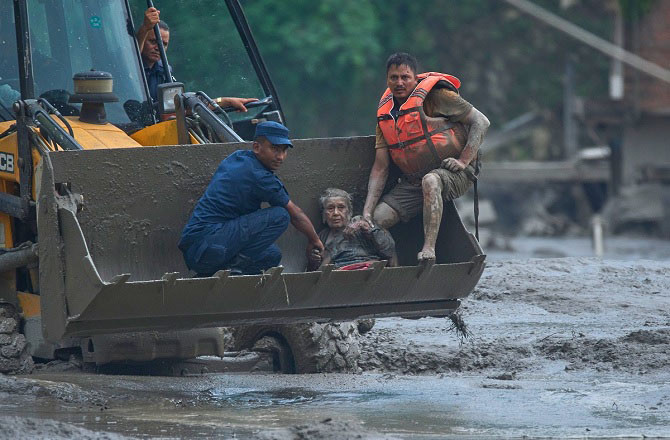
Nepalese disaster officials say the flood damaged homes, roads and bridges across several areas. More than 160 deaths have been reported so far, with hundreds to over a thousand people reported missing across affected regions. NRSC described its findings as preliminary, noting cloud cover has obscured full imaging of some affected areas, and said detailed assessment is ongoing.
162 Dead, About 1,500 Missing in Nepal-Tibet Border Floods
At least 162 people have been killed in devastating floods triggered by a glacier collapse on the Nepal-Tibet border, while nearly 1,500 people remain missing across both regions, including more than 700 foreign nationals.
The floods struck Nepal's Rasuwa district and China's Tibet region on Wednesday, destroying homes, roads, bridges, and power projects. In Nepal, around 826 people are missing, including nearly 500 foreigners, while in Tibet's Gyirong county, 558 people are reported missing, including 260 foreign nationals. Among the missing foreigners in Nepal are 177 Indians, 63 Americans, 34 Australians, 33 Britons, and 25 Canadians.
According to the US Geological Survey, authorities initially suspected an earthquake had triggered the disaster, but later analysis showed the seismic-like activity was actually caused by the collapse of the glacier and rocks, not an earthquake. Satellite imagery showed that a large portion of the glacier broke off from an altitude of about 5,200 meters and fell roughly 1,200 meters into the valley below, temporarily damming the river. When the natural barrier gave way, a powerful surge of water and debris swept downstream.
More than 5,000 Nepali army and police personnel are engaged in rescue operations. On Thursday, 125 people, including 20 foreigners, were rescued. India has sent relief supplies to Nepal. Authorities are also monitoring another lake formed in Tibet due to a blocked river, fearing that its sudden release could trigger further flooding.
Iran, Oman Agree on Temporary Route Through Strait of Hormuz; Full Reopening Tied to US Commitments
TEHRAN/MUSCAT: Iran and Oman have agreed on a new temporary route for commercial vessels through the Strait of Hormuz, though Iran has made clear that a decision on fully reopening the critical waterway has not yet been made.
According to Al Jazeera, a senior Iranian official said the temporary route was finalized following talks between Iran and Oman, aimed at enabling limited maritime traffic under current circumstances.
The official said full restoration of normal traffic through the Strait of Hormuz will not happen until the United States fulfills its obligations under the interim peace agreement reached in June. Iran maintains that Washington must implement the commitments made under that deal before progress can be made toward fully reopening the strait.
The Strait of Hormuz is one of the world's most vital maritime chokepoints, through which a large share of oil and energy products from the Persian Gulf reach global markets. Any disruption to this route can significantly affect global oil prices, energy supplies, and international trade.
The temporary agreement between Iran and Oman is being described as a limited but significant step toward normalizing maritime traffic in the region, potentially allowing some commercial vessels to pass through the sensitive area via a relatively safer route. However, with full restoration contingent on the US fulfilling its promises, the situation surrounding the strait remains uncertain.
Global oil markets have been closely monitoring developments. Oil prices reportedly eased in recent days following news of the Iran-Oman talks, as investors grew hopeful that the strategic waterway could soon reopen fully. The latest development suggests both sides are pursuing a phased approach to resolving the maritime standoff, though a complete reopening remains linked to the broader US-Iran agreement and its implementation.
Neha Dhupia Made a Name for Herself Beyond Films Too
In the world of Hindi cinema, some actresses are known not just for their films but for their personality, their conversation, their outlook, and their ability to make their own decisions — qualities that set them apart from the rest. Neha Dhupia is one such artiste. Starting her career in modelling, Neha did not let conventional notions of beauty become the sole basis of her identity; instead, she expanded her work across acting, television, radio, hosting, and digital platforms. At times she appeared in films, at times she hosted TV shows, and at times she stayed in the news through her outspoken conversations. Her journey, spanning more than two decades, is proof that lasting relevance in the entertainment world requires not just success but also the skill of adapting to changing times.
Neha Dhupia was born on August 27, 1980, in Kochi, Kerala. Her father, Pradeep Singh Dhupia, was a Navy officer, while her mother, Manpinder Dhupia, was a homemaker. Because of her family's military background, her childhood was not confined to one place, and she got the opportunity to live in various locations with her family. Her early education also took place in different cities. She later moved to New Delhi and completed her graduation in History from Jesus and Mary College. As soon as she finished her education, she began gravitating towards the world of modelling and glamour.
Neha began her career in modelling, working in various advertisements and fashion shows. At that time, modelling was considered an important gateway into films within the Indian entertainment industry. Neha too advanced along that path and stepped into the world of acting. However, even before starting her film journey, she had already showcased her talent in beauty pageants.
In 2002, she won the Femina Miss India pageant and later represented India at the international Miss Universe pageant. Although she did not win the Miss Universe crown, the competition certainly gave her significant national recognition.
After becoming Miss India, the doors of the film world began opening for her. Her first film was the Malayalam movie "Munnariyippu," while her Bollywood debut came with "Qayamat: City Under Threat." The film also featured Ajay Devgn, Suniel Shetty, Sanjay Kapoor, and other actors. Though the film did not achieve extraordinary success, Neha's presence certainly caught filmmakers' attention.
Her film journey included titles such as "Kya Kool Hai Hum," "Shootout at Lokhandwala," "Phas Gaye Re Obama," "Ek Chalis Ki Last Local," "Singh Is Kinng," "Dus Kahaniyaan," "Garam Masala," and others. Although she did not achieve consistent success as a leading heroine in most of these films, she certainly carved out a distinct place for herself.
Neha's case was different from actresses who got confined to a specific type of role. Over time, she embraced supporting roles, comic roles, serious roles, and various television formats — establishing her identity not just on the big screen, but also in hosting, radio, and digital media.
High Alert in Uttar Pradesh, Bihar After Devastating Flash Floods in Nepal
New Delhi: A devastating flash flood in Nepal's Bhote Koshi river on Wednesday wrecked havoc in Nuwakot and Dhading districts, prompting a high alert in the Indian states of Uttar Pradesh and Bihar.
Indian authorities issued an advisory following a sudden rise in water levels in Nepal's Trishuli river, amid suspected Glacial Lake Outburst Flood (GLOF) activity near the Nepal-China border. The advisory warned the flood wave could move toward the Gandak river, though its intensity was expected to diminish en route.
In Bihar, a high-level team led by the Chief Secretary and DGP has been formed, with evacuation preparations underway in East and West Champaran, Gopalganj and Muzaffarpur districts. Union Home Minister Amit Shah spoke with Bihar CM Samrat Chaudhary, assuring full support, and the NDRF has been mobilized.
In Uttar Pradesh, CM Yogi Adityanath directed local administrations in Maharajganj and Kushinagar districts to remain on high alert.
According to the Nepal Tourism Board, at least 384 people are missing — 291 foreigners (including 105 Indian nationals) and 93 Nepali citizens. Reports say the floodwaters originated from the Tibetan side of the border.
Trump's Rivals Lead the Race for TIME Person of the Year on Polymarket
The U.S. president has won the honor twice before, but a third win looks unlikely this time.
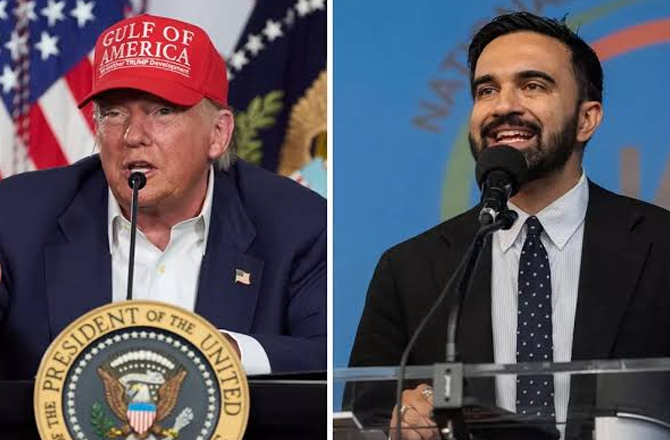
TIME magazine will announce its Person of the Year in the coming months, and if prediction markets are any indication, Donald Trump is set to be disappointed. On both Kalshi and Polymarket, the Republican president — a two-time winner of the title — currently sits in third place. Topping both sites are New York City Mayor Zohran Mamdani and Pope Leo XIV, both running neck-and-neck with Trump.
Trump's relationship with Mamdani has swung between hostility and cordiality. The president has repeatedly attacked Mamdani, branding him a "communist," even as a relatively friendly meeting between the two in November fueled speculation of an unlikely alliance. Trump said at the time, "I hope he really does a great job... the better he does, the happier I am." The two met again in February, with Mamdani expressing hope of cooperating with Trump on issues like housing. But by April, Trump accused Mamdani of "destroying" New York with his tax policies, and in June, the administration's border chief threatened to send in ICE forces if the state passed new sanctuary protections.
Trump's relationship with Pope Leo has been even more strained. The first American pope has repeatedly criticized the administration's "inhumane" immigration policies and its rhetoric on Iran, prompting Vice President JD Vance — himself Catholic — to warn the pope to be "careful" when weighing in on theological matters. Trump, in turn, accused the pope of being "weak" on crime and a foreign-policy failure. The rift has widened the gap between the administration and the Catholic Church, exemplified by the April cancellation of an $11 million federal contract with Catholic Charities of the Archdiocese of Miami, which had provided housing and aid to migrant children for 60 years.
Meta Agrees to $16.68 Billion Settlement Over Social Media Addiction Case: Report
Meta has agreed to a settlement of up to $16.68 billion with US states to resolve a major legal dispute. The case centered on allegations that Facebook and Instagram were made addictive for young users, that the company provided misleading information about platform safety, and that it illegally collected children's personal data. The settlement is subject to approval by a US federal court.
The case was filed by the state of California and other states, with a total of 47 states, the District of Columbia, and US territories eventually joining the legal action. Initially, 29 states had filed suit against Meta in 2023. The states alleged that the company designed features on Facebook and Instagram intended to keep children and teenagers on the platforms for as long as possible, while failing to adequately address concerns about the potential mental health harms of such designs.
Under the settlement, Meta will be required to make several major changes to protect young users on its platforms. These include daily usage limits for teen users, restrictions on access during nighttime hours, and limiting notifications during school hours. According to some reports, the daily usage limit for teen users on social media will be set at approximately two hours, though certain exceptions will apply for messaging and long-form content. Parents will also be given options to modify or grant permissions regarding some of these restrictions.
The agreement also includes measures to improve age-verification systems, limit children's access to inappropriate content, and make parental oversight more effective. Teen users will also be given the option to turn off personalized feed recommendations. Additional measures are expected to include restrictions on certain cosmetic-surgery-related filters and reducing social comparison driven by likes on posts.
Notably, this settlement between the states and Meta comes at a time when thousands of lawsuits over the potential harms of social media are pending against the company. Previously, in a case in New Mexico, Meta was ordered to pay $375 million for violating child-protection laws, which a state court later increased to a total of $567 million including additional penalties.
In the current case, the states had sought damages of nearly $200 billion from Meta, while the company had estimated the maximum possible legal penalties could reach as high as approximately $1.4 trillion. However, the current settlement is far lower than the states' initial estimate, and in exchange, Meta will be required to implement significant safety changes across its platforms.
Meta has not admitted any wrongdoing, but the company has expressed support for further measures to protect young users. The agreement also includes a financial structure under which part of the total amount is contingent on other major social media companies — particularly YouTube and TikTok — adopting similar safety measures.
The settlement is being described as a significant turning point for the US social media industry, as it is expected to bring notable changes to how children and teenagers use Facebook and Instagram. It also adds weight to the broader debate over how accountable social media companies should be held for young people's mental health, privacy, and online safety.
PM Stresses Promoting Holy Prophet's (PBUH) Seerah Teachings to Strengthen Unity Among Nation, Ummah
ISLAMABAD, Aug 26 (APP): Prime Minister Muhammad Shehbaz Sharif on Wednesday emphasized the need to further strengthen unity and brotherhood among the nation and the Ummah by imparting the core teachings of the Seerah of Holy Prophet Muhammad (PBUH) to younger generations to help them confront contemporary challenges.
Addressing the International Seerat (PBUH) Conference, the prime minister urged Ulema and religious scholars to play their role through mosques and pulpits by promoting unity, tolerance, compassion, and interfaith harmony.
He said the Holy Prophet (PBUH) was an embodiment of peace, affection, truthfulness, uprightness, honesty and forgiveness, and these principles should guide the character building of the younger generation.
Referring to the Gulf conflict and the armed conflict with India in May 2025, the prime minister said the nation displayed remarkable unity in both critical situations. He commended Field Marshal Syed Asim Munir's role in engaging both sides to secure regional peace and stability.
The PM also termed the Makkah Agreement a sign of enduring brotherhood between Pakistan, Saudi Arabia and Turkiye, saying the two nations "stood with Pakistan like an iron wall" during the Pakistan-India conflict.
Earlier, Minister for Religious Affairs Sardar Muhammad Yousuf said the Seerah-e-Tayyaba (PBUH) provides real guidance to youth, especially amid the negative effects of social media and materialism.
The prime minister also distributed awards among winners of various categories at the event, attended by ministers, diplomats, religious scholars, media and students.
PIMS Hospital Newborn Deaths: PM Chairs Emergency Meeting, Suspends Health Secretary
Prime Minister Muhammad Shehbaz Sharif chaired a high-level emergency meeting following the tragic fire at the nursery of the Pakistan Institute of Medical Sciences (PIMS) in Islamabad, which resulted in the deaths of several newborn babies. The Prime Minister expressed severe displeasure over the alleged negligence of concerned officials during the session.
During the meeting, the Prime Minister immediately suspended Federal Secretary Health Aslam Ghouri and directed him to leave the meeting. He also constituted a high-level inquiry committee to investigate the incident, headed by former Interior Secretary Shahid Khan, with Establishment Secretary Dr. Barrister Naveel Awan among the other members.
According to a press release issued by the Prime Minister's Office (No. 310/2026), PM Shehbaz Sharif offered heartfelt condolences to the parents of the innocent newborns who lost their lives in the devastating nursery fire at PIMS. "Our hearts are grieved by this tragic incident. We share equally in the parents' grief. May Allah Almighty grant the bereaved families patience and strength," the Prime Minister said.
Per the press release, the high-level committee has begun its investigation to determine responsibility for the incident and to recommend measures to prevent such tragedies in the future.
Japan: 1,800 Volunteers Hand-Pull 360-Tonne Historic Hirosaki Castle Turret
In a rare and remarkable scene in northern Japan, around 1,800 volunteers took part in a major preservation project, hand-pulling the 360-tonne turret of Hirosaki Castle — built in 1611 — more than two metres across the ground. Teams took turns pulling 30-metre ropes attached to the turret, moving it 1.13 metres on Saturday and a further 1.09 metres on Sunday.
The turret, the castle's main keep, was relocated from its original site in 2015 to allow repairs to the castle wall, which had been damaged by a major earthquake. Authorities used the traditional Japanese technique known as "hikiya," in which entire structures are moved intact on rollers rather than demolished. The wall has since been fully repaired, with all 2,185 stones restored to their original positions.
According to Kensuke Hiasaka, head of Hirosaki's parks division, roughly 8,000 applications were received for just 1,800 spots — nearly four times the available places — with applicants coming from across Japan as well as Southeast Asia, Europe and North America. This month, around 4,100 people will help move the turret a total of five metres by hand, while machinery will cover the remaining 73 metres.
Hirosaki Castle is one of only 12 surviving original castle turrets in Japan and is designated a nationally important cultural property. It is the only castle from the Edo period (1603–1867) still standing today, and was named among Japan's top 100 castles by the Japan Castle Foundation in 2006.
Meta Reportedly Working on a "Kill Switch" for Smart Glasses After Secret Filming Backlash
Meta appears to be working on a "kill switch" for its controversial smart glasses, according to reports. The company first introduced the glasses in partnership with Ray-Ban in 2021, featuring a front-facing camera that makes it easy to capture photos and videos. In recent months, the glasses have faced sustained criticism because they make it easy to film people without their knowledge or consent — backlash severe enough that the glasses have informally come to be called "pervert glasses."
A new patent filed by Meta earlier this year and granted last week appears to show the company working on new ways to limit the video recording capability of the glasses. Although the patent was filed before the current controversy intensified, it may have been developed in response to ongoing concerns that smart glasses pose a threat to people's privacy. The patent describes a feature for "consumer devices, including augmented reality devices." While it does not directly name Meta's smart glasses, several of its diagrams closely resemble glasses currently on the market. The patent describes a "hardware privacy mute circuit."
This system would allow one or more sensors in the glasses to be disabled at the hardware level itself. According to the patent, this would provide "privacy controls that are difficult to tamper with and cannot be defeated through software-based attacks." If implemented, the glasses would become physically incapable of recording — meaning the camera could not be reactivated through hacking or software interference. Meta's current smart glasses already include features meant to limit the ability to capture photos and videos without people's knowledge or consent, including a light on the front of the glasses that turns on when the camera is active. However, various guides available online have described several ways to conceal this light.
Guterres Calls Confirmation of Famine in Gaza and Sudan a "Shameful Milestone"
UN Secretary-General António Guterres told the Security Council on Tuesday that the confirmation of famine in Sudan and the Gaza Strip marked a "shameful milestone" in global food insecurity. He said 2025 saw not only the highest number of armed conflicts since World War II, but also record levels of global hunger, with at least 266 million people facing severe food insecurity. In 12 of the 13 areas experiencing the most severe food crises, he said, violence remains the primary driver of hunger.
WFP Acting Executive Director Carl Skau drew a direct link between wars and food shortages, saying, "One oil tanker anchored in the Strait of Hormuz can mean one less meal a day for a child in Sudan." He noted that basic food prices in Sudan have risen nearly 40% since February.
A crisis at three key maritime chokepoints
Skau outlined a "crisis at three key maritime chokepoints" — the Strait of Hormuz, the Red Sea, and the Black Sea. He warned that restrictions in the Strait of Hormuz have severely reduced fertilizer availability, even though roughly a third of the world's fertilizer trade passes through it. Oil prices rose 36% after the war in Iran began, while grain shipments through the Bosphorus Strait have fallen 40% compared to last year, posing serious risks to import-dependent countries like Somalia. Guterres proposed a limited-duration confidence-building measure focused initially on neutral verification and registration of fertilizer-carrying vessels, but stressed this was a practical facilitation mechanism, not a substitute for fully restoring maritime access rights in the region.
Systematic attacks on food systems
Action Against Hunger CEO Perrine Benoist said more than 900 attacks on food systems have occurred in Sudan since April 2023, including bombings of markets and looting of livestock. She said being a woman in Sudan has become a statistically significant indicator of the likelihood of going hungry, and that within just three weeks of losing access to food, children can begin suffering organ failure and severe physical wasting.
Guterres urged the Security Council to act preemptively rather than waiting for a formal famine declaration: "We cannot wait for formal confirmation of famine or catastrophe." He called for full implementation of UN Resolution 2417 to prevent the starvation of civilians as a method of warfare, protection of farms, ports, and food storage markets, and sanctions against those illegally obstructing humanitarian access. Skau noted a "glimmer of hope" in Gaza, but warned that funding shortfalls in Afghanistan mean WFP is unable to reach six out of every seven malnourished children there.
Cuba Ready for Talks with US, But Rejects Any Preconditions: President Diaz-Canel
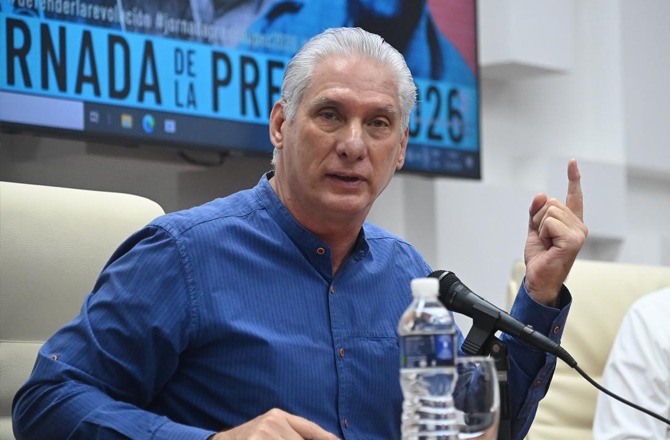
Havana: Cuban President Miguel Diaz-Canel has said the dialogue process with the United States is at a "standstill" and there is currently no set agenda for negotiations. In an interview with Brazil's Folha de S.Paulo, he said, "The willingness for dialogue exists, and some officials in our government have reached out to the US government, but no progress has been possible so far. There is no agenda."
He made clear Cuba is ready to open the path to negotiations with Washington, but rejected talks conducted under pressure and coercion: "There can be no dialogue under coercion. We need to find a way to negotiate without any preconditions."
Diaz-Canel accused the Trump administration of trying to economically squeeze Cuba and trigger a social explosion aimed at ending the Cuban revolution. Citing statements by US Secretary of State Marco Rubio, he accused Washington of trying to close "all avenues" available to Cuba. He rejected claims that the country is on the verge of economic collapse, even as Cuba faces severe shortages of fuel, electricity, food, and medicine.
He acknowledged problems caused by government bureaucracy and delayed reforms, but attributed the root cause of the crisis to the US-imposed "economic blockade." According to Folha de S.Paulo, Cuba's economy has contracted by 15% since he took office, with the country also facing prolonged power outages and fuel shortages. He defended 176 economic measures approved by parliament in June, which expand the role of private business and foreign investment, but rejected the notion that they are steering Cuba toward capitalism.
The interview comes amid rising tensions between Havana and Washington. Diaz-Canel said Cuba will continue to defend its sovereignty, but remains ready for talks with Washington without preconditions.
Attempt to Erase Imran Khan From Public Life: Michael Atherton Criticises Pakistan Government
Former England captain Michael Atherton has criticised the Pakistani state over its handling of former Prime Minister and cricket captain #ImranKhan, alleging authorities have tried to "almost erase" him from public life. He made the remarks alongside Nasser Hussain on Sky Sports' cricket podcast, saying: "The basic point was that the state has tried to almost erase Imran from the scene, which is becoming harder to do in the age of social media."
Atherton and Hussain are among 21 former international captains who wrote t PM Shehbaz Sharif on Sunday, requesting humane treatment, adequate medical care, and family visits for Imran Khan — as former teammates and rivals, not as politicians. The appeal followed a Supreme Court order for Imran Khan's hospital transfer for a medical exam, and the restoration of weekly family visits.
The signatories include Indian cricketers Kapil Dev, Sunil Gavaskar, and Dilip Vengsarkar. Kapil Dev clarified the appeal concerns humane treatment in prison, not Imran Khan's legal cases.
#ImranKhanNeedsJustice Khan, who captained Pakistan to its 1992 World Cup win and served as PM from 2018–2022, has been jailed since 2023. Former cricketer Ramiz Raja said Imran Khan is in solitary confinement and recently had an eye issue, though he is reportedly doing better now.
Fire at PIMS Children's Hospital Nursery Kills 14 Newborns
ISLAMABAD: Report by Muhammad Saleem
A devastating fire broke out in the nursery of the Pakistan Institute of Medical Sciences (PIMS) Children's Hospital, killing 14 newborn infants. One baby was rescued in time by hospital staff.
The incident occurred at approximately 6:45 am. Initial reports suggest the fire was caused by a short circuit, though the exact cause has not yet been confirmed. A forensic team is examining the site, investigating possibilities including short-circuiting or a compressor explosion in an air conditioning unit.
The presence of oxygen lines, cylinders and other equipment in the nursery caused the fire to spread with extreme speed. Some of the deceased infants were only a few hours old, while others were just one day old. Most deaths were attributed to suffocation and smoke inhalation from burning plastic.
The bodies of around six infants have been identified and handed over to their parents, while the remaining bodies are being released following necessary legal procedures. Doctors, nurses, paramedical staff, and mothers present near the nursery at the time of the incident remained safe.
On the special directive of the Prime Minister, an investigation committee headed by a Vice Chancellor has been formed, while the Islamabad administration has also constituted a separate committee headed by the Deputy Commissioner. The Prime Minister has demanded an investigation report within 24 hours.
Federal Minister Dr. Tariq Fazal Chaudhry, who rushed to the site immediately from the Jinnah Convention Centre upon receiving the news, said: "I personally inspected the site of the incident. Forensic experts are examining all aspects of the incident. If negligence is proven at any level of the PIMS administration, strict action will be taken — no one will be spared. This is an extremely tragic, painful, and immense human catastrophe."
The Executive Director of PIMS and the Secretary of Health are present at the scene, and investigations are ongoing. The Prime Minister will be briefed on the preliminary report and the situation.
Japan: PM Sanae Takaichi Felt Lonely After Staff Removed a Cockroach From Her Residence
Japanese Prime Minister Sanae Takaichi has shared an unexpected personal story from the country's official residence, revealing that after she refused to kill a cockroach found inside, and staff eventually removed it themselves, she surprisingly felt a sense of loneliness. Takaichi, who moved into the residence in December, shared the story while answering questions from social media users.
Despite working long hours and frequently spending weekends at the official residence, Takaichi said she has never encountered the ghosts rumored to haunt the building. Instead, her unexpected visitor turned out to be a cockroach that suddenly darted past her feet. But she chose not to kill it. A longtime fan of Osamu Tezuka's classic manga series "Phoenix," Takaichi said its themes of reincarnation and the interconnection of lives have influenced her since childhood. She wrote: "About that cockroach that ran through the official residence — I thought perhaps this life too was part of that long chain of reincarnation."
However, she decided to wait for it to leave on its own — but her secretaries had other ideas. According to reports, one of them declared: "This is unclean. I'll take care of it." What followed was a plan Takaichi jokingly called "Operation Combat Action," and the cockroach was removed. Afterward, Takaichi wrote: "I felt relieved, but also a bit lonely — or perhaps sad."
The post also offered a glimpse into Takaichi's work habits. She said she prefers using the official residence over the prime minister's office because it reduces the burden on staff and security personnel, and that she generally prefers small meetings.
The 65-year-old prime minister is known for working late into the night and through weekends, often getting by on very little sleep. In July, she revealed that after typically sleeping zero to three hours a night since taking office, she finally managed to get five hours of sleep. Her posts came after reports questioned how often she attends parliamentary sessions and how much time she works from the residence. Nikkei reported that she spent more than half her weekends and public holidays at the residence since becoming prime minister, while Bloomberg found she has held fewer cabinet meetings than any Japanese prime minister since 2012. The reports came as her approval rating dropped to 41%, down 10 percentage points in a month and below 50% for the first time since her election victory in February.
US Prepares Largest Visa Revocation in History, Nearly 200,000 Foreigners to Be Affected: Report
The Trump administration is preparing to revoke business and tourist visas of up to 200,000 foreign nationals in the United States who have applied for asylum or are currently seeking it, according to a report by the Associated Press. The State Department is expected to announce in the coming weeks the revocation of B1 and B2 visas issued between 2016 and 2026, specifically targeting holders who have applied for or are applying for asylum. The action will be carried out in coordination with the Department of Homeland Security.
If carried out, this would be the largest single revocation of visas in US history and could face legal challenges. The information was obtained by AP through State Department documents and two US officials.
State Department spokesman Tommy Pigott said: "We are working with the Department of Homeland Security to identify and revoke the nonimmigrant visas of foreign nationals who came to the United States claiming short-term travel but then applied for asylum to remain here permanently." He declined to comment on the exact number of visas likely to be revoked, saying that since the process would be ongoing, the number of revocations would remain dynamic and be carried out in phases.
According to officials, who spoke on condition of anonymity, most individuals with pending asylum cases will be reclassified but will lose their business or tourist traveler status. In a social media post on Monday, Deputy Secretary of State Christopher Landau criticized people who enter the US on tourist and business visas and then apply for asylum. Landau wrote on X: "Americans and people around the world are tired of fraudulent asylum claims. Asylum is not a loophole to bypass immigration law." He cited the case of a Colombian national who entered the US on a tourist visa in 2015 and later applied for asylum, saying the system has long been overwhelmed with asylum applications, that the process takes years, and that applicants put down roots in the country while their cases are pending.
B1 visas are generally issued for business trips, while B2 visas are issued for tourism, family visits, or medical care. It was not immediately clear from the documents or officials how many of these visa holders are seeking or have sought asylum, or how many will be affected by the revocations. Meanwhile, current B1 and B2 visa applicants are being asked to confirm that they will not apply for asylum in the United States and to demonstrate an intent to return to their home countries.
Saudi Arabia, France Reaffirm Support for Palestinian State, Demand Israeli Withdrawal from Lebanon
Saudi Arabia and France have reaffirmed their support for the establishment of a Palestinian state and called on Israel to withdraw from all Lebanese territory. The statement was issued in a joint communiqué at the conclusion of Saudi Crown Prince Mohammed bin Salman's official visit to France, following talks with French President Emmanuel Macron in Paris. The two leaders also co-chaired the first meeting of the Saudi-French Strategic Partnership Council, emphasizing a shared vision for regional stability based on state sovereignty, international law, and diplomatic solutions.
On the Palestinian issue, Riyadh and Paris firmly rejected efforts to undermine the Palestinian people's right to establish an independent state based on the 1967 borders, and called for an end to Israel's illegal settlement policy and settler violence. Both countries stressed the need to create favorable conditions for a sustainable ceasefire in Gaza, ensure unhindered humanitarian aid delivery, and reaffirmed their support for Palestinian Authority reforms.
Regarding Lebanon, Saudi Arabia and France agreed to intensify efforts toward a final settlement, calling for the full implementation of UN Security Council Resolution 1701, the disarmament of armed groups operating outside state authority, and a complete Israeli withdrawal from all Lebanese territory.
On Iran, both sides emphasized the need for a negotiated resolution to Tehran's nuclear program and called on Iran to resume cooperation with the International Atomic Energy Agency (IAEA). On Syria, the two leaders expressed their commitment to the country's stability and economic recovery, and welcomed the establishment of a joint Saudi-Syrian-French business council.
Who Would Be Hit If the U.S. Imposes New Sanctions on Iran?
Islamabad — New U.S. financial sanctions on Iran would ripple beyond Tehran, affecting key partners including China, Turkey, Iraq, Oman, Pakistan and India through disrupted energy flows, trade channels and banking ties.
China: As Iran’s largest oil buyer, China would see major impacts. Chinese private refineries have long routed Iranian crude through intermediaries (often via Malaysia, Indonesia) and settled transactions in yuan, complicating U.S. monitoring. Kepler estimates China bought about 1.38 million barrels per day of Iranian oil in 2025. U.S. secondary sanctions targeting intermediaries or banks could curb China-Iran energy trade or push it further underground.
Turkey: With annual bilateral trade of roughly $5–6 billion and Iranian gas supplying around 13% of Turkey’s imports in some estimates, sanctions could squeeze Turkey’s energy supplies and raise costs for industry and consumers.
Iraq: Trade with Iran exceeded $10 billion in 2025. Iraq depends on Iranian energy for electricity generation; sanctions would force Baghdad into a difficult balancing act between securing energy supplies and avoiding U.S. penalties, risking power shortfalls and higher import costs.
Oman: Longstanding friendly ties and a mediating role mean Oman could face diplomatic strains and disruptions in regional shipping and trade flows, though direct economic shock may be limited compared with larger partners.
Pakistan: Iran–Pakistan trade includes oil, wheat, rice, livestock and medicines, with informal trade sizable. U.S. actions targeting Iran’s partners could pressure Pakistan’s trade and banking channels, complicate payment mechanisms, and disrupt energy and supply chains at a time Islamabad and Tehran aim to boost bilateral commerce.
India: India’s trade with Iran fell sharply after 2020 and remained subdued into 2025–26. Fresh U.S. sanctions could further constrain energy imports and financial transactions, forcing New Delhi to navigate strategic ties with Washington and Tehran.
Key implications:
Energy supply disruptions and price volatility in regional and global markets.
Shift toward alternative suppliers, opaque trading routes, and non-dollar settlements to bypass restrictions.
Increased risk for banks and firms facilitating Iran trade due to secondary sanctions.