Why Is Moving Average (MA) So Important in Trading?
Moving Average is one of the most popular technical indicators, but its real purpose is often misunderstood.
MA doesn't predict the future. It simplifies price movements by filtering out market noise, making the dominant trend easier to identify.
Think of it as a clearer picture of the market:
- Uptrend: Prices are generally moving higher.
- Downtrend: Prices are generally moving lower.
- Sideways: The market lacks a clear direction.
But here's the catch: MA always comes with a lag.
Because it uses historical prices, it reacts after the market moves. The longer the MA period, the greater the lag, but the more stable the signal tends to be.
That's the trade off: less noise, but slower reactions.
As we learn through ADAM, understanding how an indicator works is more important than blindly following its signals.
Master the basics before chasing the next trade. The market rewards preparation, not guesswork.
@ACIToken
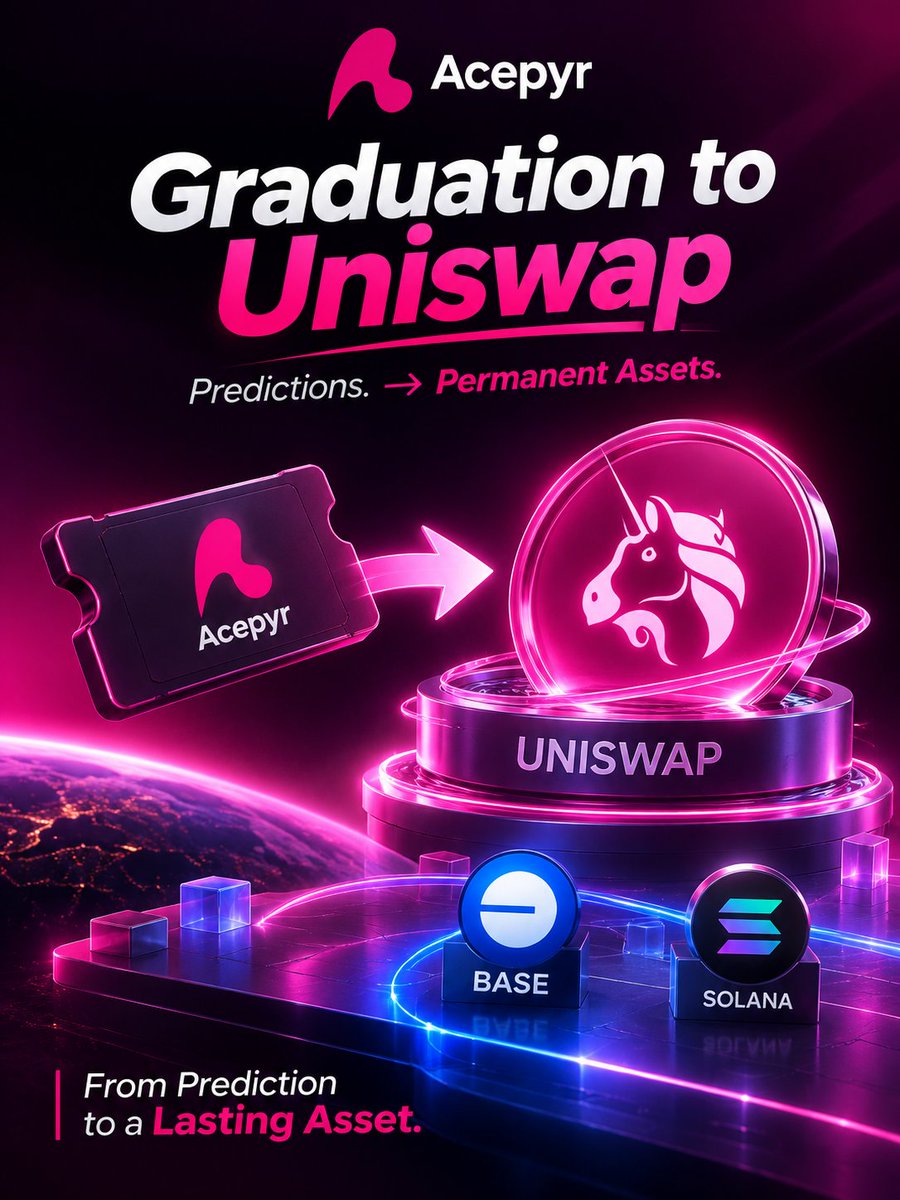
Graduation to Uniswap: When Predictions Become Permanent Assets Across the Base Ecosystem.
Traditional prediction markets follow a rigid lifecycle: open, trade, close, and settle.
Acepyr is changing that with its innovative Graduation mechanism.
Once UMA Oracle confirms a market's outcome, the winning side isn't simply paid out and removed. Instead, its tokens are permanently locked into a Uniswap liquidity pool.
This changes everything.
The winning tokens evolve from temporary prediction positions into lasting digital assets that can be traded across the Base ecosystem, bridged to Solana, and even serve as Priors for future markets.
And what about the losing side? It doesn't simply disappear either. It remains active on its bonding curve, allowing traders who still see potential to continue trading.
The bigger vision is what makes this interesting:
Truth isn't rewarded with a one time cash payout. It's rewarded with permanent status as a globally tradable liquid asset.
Acepyr is turning prediction markets from short term speculation into continuous price discovery.
The market doesn't have to end when the prediction is resolved. It can graduate into something much bigger.
@acepyr
Testing my ADAM paper trading strategy with a SHORT position on ETH/USDT at 1,706.42, anticipating a potential price pullback.
My Stop Loss is set at 1,734.65, above the nearest swing high, with a Target of 1,632.61. This gives me a 1:2.62 Risk/Reward ratio.
As ADAM teaches, a solid trade plan starts with managing risk. Now, let's see whether the market follows the setup or breaks higher.
#ADAMChallenge @ACIToken
Epoch 8: Your Last Chance to Get in Before Beta Mainnet!
The clock is ticking for the DeFi community!
Stabilizer has officially opened Epoch 8, the final epoch of Phase 2 Testnet on Arbitrum Sepolia.
So, why is this important?
Once Epoch 8 ends, Stabilizer will move into the Crossing Window, bringing the protocol one step closer to Beta Mainnet.
This means one thing: the current testnet experience is entering its final chapter.
If you've been waiting to explore Stabilizer's zero slippage ecosystem, now is the time to get involved.
Here's what you can experience:
- 5 fully operational liquidity pools.
- Zero slippage swaps.
- Hands on interaction with the protocol before Beta Mainnet.
Don't be the person who looks back and says, "I knew about it, but I never bothered to try."
Opportunities to become an early participant don't stay open forever.
Epoch 8 is your final ticket to Phase 2. Don't miss the train!
Get involved, explore the ecosystem, and let your wallet become part of Stabilizer's early journey toward Beta Mainnet.
@StabilizerFi
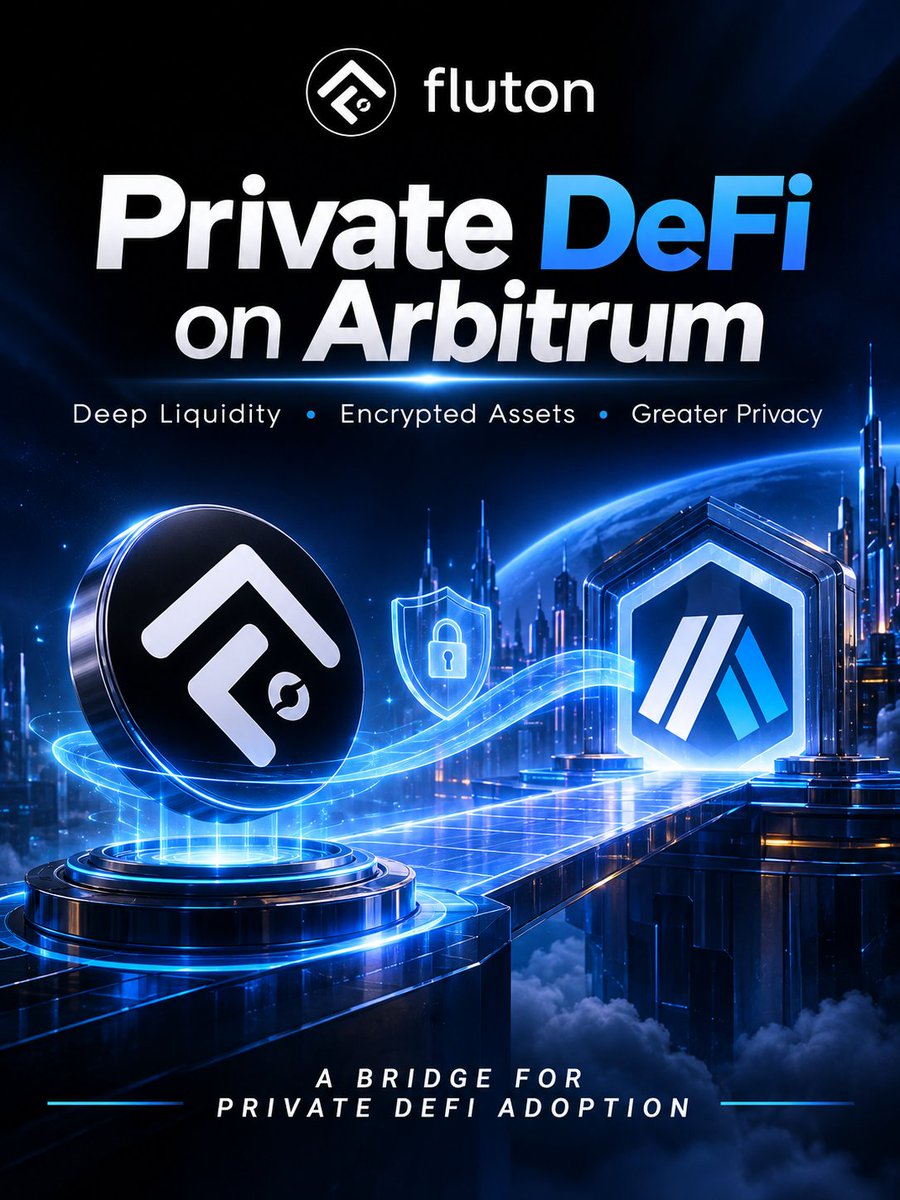
The Future of DeFi Liquidity Is Private. And Arbitrum Is the Perfect Place to Start.
Fluton's Mainnet launch is a strategic move.
Arbitrum is already home to deep liquidity, massive trading activity, and a thriving DeFi ecosystem. Bringing Private Transfers and Encrypted Balances into this environment could change how users interact with onchain finance.
Here's what makes it exciting:
- Move assets from public wallets into Private Balance.
- Keep balances and transactions confidential.
- Use FHE and ZK technology to strengthen privacy.
- Maintain access to DeFi composability without leaving Arbitrum.
No more choosing between financial privacy and access to a rich DeFi ecosystem.
This is bigger than just another privacy feature. Fluton is building infrastructure that could make private DeFi accessible to users, whales, and potentially institutional capital.
Deep liquidity. Encrypted assets. Private interactions.
The next wave of DeFi adoption may not just be about moving more capital, but moving it with greater privacy.
Fluton is positioning itself right where that future could begin.
@FlutonIO
Wrapped up today's paper trading session with a solid win! 🔥
I took a SHORT position on BLUR/USDT and managed to lock in a satisfying profit.
One important lesson from ADAM's Trend Following material: opportunities aren't only found when the market goes up. Sometimes, the best setups appear during a strong downtrend.
Instead of always looking for LONG entries, learning to read bearish momentum and follow the trend can open up better opportunities.
The key is to stay disciplined, stick to your trading plan, and always use a Stop Loss to manage risk.
Every trade is another chance to learn and improve.
#ADAMChallenge @ACIToken
Contract Transparency Is the Next Big Step for Retium.
Retium's testnet Explorer now supports smart contract verification, giving builders another important tool to earn trust.
The process is simple:
- Deploy your smart contract.
- Publish its source code on the Explorer.
- Let anyone check whether the published source matches the contract running onchain.
Why does this matter?
Because deployed contracts run as compiled programs, not the original code developers write. Without verification, users have no easy way to confirm whether the source code they're reading is actually what's running onchain.
Now, builders can make that connection visible.
My take: Trust shouldn't depend on promises. It should be open to verification.
This is also a natural next step after Retium's SDK launch. Deploying a contract is one thing. Making its source transparent is another level of responsibility.
One important distinction: verification doesn't automatically mean a contract is safe or audited. It simply makes the deployed code easier to inspect and compare.
If you're building on Retium, don't wait until users ask for proof.
Deploy it. Verify it. Let the community check it.
That's how onchain trust should be built.
@RetiumChain
Back with another ADAM paper trade
Here's my trade plan:
- Entry: 62,808
- Stop Loss: 61,610
- TP Hit: 63,850
- Final Target: 65,382
I've already secured some profit at 63,850 while keeping the remaining position open toward the final target.
One thing I learned from ADAM's "Thinking in Probabilities" lesson is that the market doesn't always move the way we expect. Taking profit along the way helps reduce risk while giving the remaining position room to follow the trend.
For me, it's about staying flexible and sticking to the plan instead of getting greedy or making emotional decisions.
Still learning with every trade. That's the whole point of paper trading.
#ADAMChallenge @ACIToken
Retium Testnet: 5 Stops. 1 Account. Real Onchain Experience.
Want to see how Retium works in practice? Now you can explore its core features in one simple loop.
Here's the journey:
1. Claim RTM – Get test tokens to start.
2. Open Your Wallet – Manage your testnet assets.
3. Swap on Whisk – Experience onchain trading.
4. Mint an NFT – Try a different type of transaction.
5. Check the Explorer – Verify what actually happened onchain.
What makes this interesting is how everything connects. You're not just clicking through separate features. You're following one account through real blockchain activity.
Even better, Retium says network fees can be paid in either RTM or RTD on testnet. That means every step is an opportunity to understand how transaction fees work.
My favorite part? The Explorer.
Your wallet shows what you see. The Explorer lets you check what the blockchain actually recorded.
Try one transaction, open it in the Explorer, and compare the amount and fee with your wallet.
Five simple steps. One connected ecosystem. A chance to experience Retium firsthand.
Testnet tokens have no real monetary value, so now is a good time to explore before the next stage. Don't just watch the ecosystem grow. Get hands on and see how it works.
@RetiumChain
The End of Testnet Drama. Zero Slippage Is Coming to Reality.
The testnet journey is approaching its final chapter.
Epoch 8 on Arbitrum Sepolia marks the end of Stabilizer’s Phase 2, bringing the protocol one step closer to Beta Mainnet.
For years, DeFi users have dealt with slippage and impermanent loss as if they were unavoidable costs of providing liquidity and trading. Stabilizer is challenging that status quo with a different approach: true 1:1 swaps designed to eliminate slippage.
With Capacity Vaults supporting liquidity and a carefully designed fee mechanism protecting pools, Stabilizer is building more than another AMM alternative. It's pushing toward a new standard for stablecoin trading.
The final testnet epoch is here. Mainnet is next.
Don't just watch the transition happen. Be part of the journey before Stabilizer enters its next chapter.
The future of zero slippage DeFi is getting closer.
@StabilizerFi
Closed my BTC/USDT Short with a solid execution.
Entry at 64,018, exit at 62,420. ADAM's lessons on trend following and multi chart analysis helped me recognize bearish momentum and stay disciplined.
My biggest lesson: Follow the trend, trust your analysis, and always manage risk with a Stop Loss.
What's your approach, holding until the final target or taking profits gradually?
#ADAMChallenge @ACIToken
Prediction Markets Without Technical or Financial Barriers
One of the biggest obstacles to Web3 adoption has always been technical complexity and financial friction. Participating in DeFi often means buying ETH for gas fees, setting up a wallet, and navigating complicated smart contracts.
Acepyr is changing that experience by putting users first.
You can sign up using Google, X, Apple, or email, deposit USDC directly from Solana, and trade without ever needing to hold ETH.
With transparent fees (1.25% per trade and 0.5% for switching sides), the flexibility to sell anytime, and the ability to swap YES to NO in a single transaction, Acepyr removes many of the barriers that have kept everyday users away from prediction markets.
Creators also benefit from a fair incentive model, earning a share of the trading fees generated by the markets they launch.
This is more than a smoother user experience. It's about making prediction markets accessible to everyone.
No complicated setup. No ETH requirement. Just bring your conviction and put it to the market.
The future of prediction markets shouldn't be limited to crypto natives. Everyone deserves a seat at the table.
@acepyr