New Cambridge Element, Wittgenstein and Skepticism by Andrea Kern, out now! Read for free for the next 2 weeks at
https://t.co/uphvrOsKuW
#cambridgeelements#philosophy
Avec French Response, le gouvernement s’est entouré d’une galaxie d’influenceurs, non rémunérés, mais avec lesquels il entretient des relations privilégiées et à qui il transmet des éléments de langage pour répondre aux campagnes d’ingérences étrangères.
Un de ces influenceurs est carrément rémunéré par Taïwan pour faire de la promo pour eux.
Ces mêmes influenceurs passent ensuite leur temps à nous attaquer en nous présentant comme des amis des dictatures et à intervenir publiquement contre nous.
Est-il normal que des influenceurs soient rémunérés ou financés par des puissances étrangères ?
Trump bir denetim istedi. Farkında olmadan doların 50 yıllık en büyük sırrını ortaya çıkardı.
Trump geçen gün garip bir emir verdi. Fort Knox'taki altının tek tek sayılmasını istedi.
Orası, Amerika'nın altınının yarısından fazlasını sakladığı dev bir kasa.
Herkes şimdi aynı şeyi soruyor. Ya altın yerinde değilse, ya çalınmışsa?
Bence yanlış soru.
Çünkü çok tuhaf bir şey var.
Amerika o altını defterinde hâlâ 42 dolardan yazıyor. Oysa bugün bir ons altın piyasada 4.500 dolar.
Bu iki rakam arasındaki uçurum, aslında koca bir sözün hikayesi.
Bir zamanlar tutulan, sonra bir gecede bozulan bir sözün.
Anlatıyorum.
Bir zamanlar devletin sözü şuydu. Elindeki doları bize getir, karşılığında sana altın verelim.
Yani doların değeri kâğıttan değil, o sözden geliyordu. İstediğin an kâğıdı altına çevirebiliyordun. İnsanlar paraya işte bu yüzden güvendi.
Sonra 1929'da büyük kriz patladı. Ekonomi çöktü, bankalar battı. Korkan insanlar kâğıdı bırakıp altına hücum etti.
1933'te Başkan Roosevelt çok sert bir şey yaptı. Halkın elindeki altına el koydu.
Yanlış duymadınız.
Amerikalılar altınlarını devlete teslim etmek zorunda kaldı. Evinde altın saklamak suç oldu.
Devlet insanlardan altını toplamaya başladı.
Toplanan altın 2.600 tonu geçti. Peki bu kadar altın nereye saklanacaktı?
Fort Knox işte tam bu yüzden, 1936'da yapıldı.
Yani o kasadaki altın gökten inmedi. Büyük kısmı, o yıllarda sıradan Amerikalıların elinden alındı.
İkinci Dünya Savaşı bittiğinde dünya yeniden kuruluyordu.
Savaş Avrupa'yı yakıp bitirmişti. Ülkeler silahı, yakıtı, ekmeği hep altınla ödedi. O altın da tek bir ülkeye gitti. Amerika'ya.
1944'e gelindiğinde dünyadaki altının yarısından fazlası Amerika'nın kasalarındaydı.
İşte o güçle Amerika dünyaya yeni bir söz verdi.
44 ülke bir araya geldi. Anlaşma şuydu.
Dolar altına bağlı kalacaktı, diğer bütün ülkeler de paralarını dolara bağlayacaktı.
Böylece dolar altın kadar sağlam oldu. Artık herkes altın yerine dolar tuttu. Çünkü dolar, her an altına çevrilebilen bir sözdü.
Doların dünya kralı olması işte buna dayanıyordu. O tahtın altında Fort Knox'un altını vardı.
Ama bir sorun yavaşça büyüyordu.
Amerika yıllar içinde çok para harcadı. Uzayan savaşlar, harcamalar.
Devlet, kasasındaki altının çok üstünde dolar bastı.
Söz hâlâ ortadaydı. İsteyen dolarını getirir, altınını alırdı.
Ama artık ortalıkta karşılığı olmayan bir sürü dolar dönüyordu.
İlk fark eden Fransa oldu.
"Biz bu kâğıda güvenmiyoruz, altınımızı isteriz" dedi. Dolarlarını topladı, Amerika'ya yollayıp karşılığında altın istedi.
Fort Knox'un kapısından altın çıkmaya başladı. Verilen söz, tutulamayacak kadar büyümüştü.
15 Ağustos 1971. Bir pazar akşamı, Başkan Nixon televizyona çıktı.
Tek bir cümleyle sözü bozdu. Bundan böyle hiçbir ülke dolarını altına çeviremeyecekti.
"Geçici bir önlem" dedi. Üstünden 55 yıl geçti. Hâlâ geçici.
O akşam, paranın altın olduğu çağ sessizce kapandı. Doların arkasında artık altın yoktu. Sadece bir söz vardı, ama bu kez karşılığı olmayan bir söz.
İşte o günden sonra paranız sessizce küçülmeye başladı.
Şöyle bakın.
Hep "altın pahalandı" deriz. Yanlış. Altın değişmedi, bir ons altın hâlâ aynı altın. Değişen, onu ölçtüğümüz dolar.
1971'de bir ons altın 35 dolardı. Bugün 4.500 dolar. Arada yaklaşık 128 kat fark var.
Tersinden okuyun.
Dolar, altın karşısında değerinin neredeyse tamamını kaybetti. 1971'deki bir doların altın olarak karşılığı, bugün yok denecek kadar az.
Aynı dolar. Üstünde hâlâ aynı rakam yazıyor. Ama içi yıllar içinde yavaşça boşaldı.
Peki Fort Knox?
Altın hâlâ orada. Ama artık hiçbir şeyin karşılığı değil. Hiçbir sözü tutmuyor. Öylece duruyor.
İşin ilginç yanı şu.
Amerika o altını bugün hâlâ 1970'lerin başından kalma resmi fiyattan, yani 42 dolardan yazıyor.
Yani Trump şimdi o kasayı saydırırken, aslında çoktan bozulmuş bir sözün altınını, o sözden kalma bir fiyatla sayıyor.
Bir zamanlar para, elle tutulan bir altın külçesiydi. Bugün ekranda yanıp sönen bir sayı.
Fort Knox bu iki dünyanın tam ortasında duruyor.
Para eskiden de bir sözdü. Ama o sözün arkasında altın vardı.
Bugün geriye yalnızca söz kaldı.
@magattew Exactly. The West should stop treating Africa like it desperately needs their help. This is patronizing nonsense.
Frankly, my observation is that the average happiness in a village in Africa is higher than the average happiness in Beverly Hills!
Pope Leo XIV says control of artificial intelligence must not remain in the hands “of a few” while warning that technology is fueling world conflicts, setting out his proposals in the first major theological document of his pontificate. https://t.co/wjUxSley9t
Evidence of exceptional ability and asking how they solved hard problems down to the brass tacks level is what matters.
Those who actually deserve credit know the details of the solution, because it was so hard it got seared into their brain. The phonies and posers who falsely claim credit will flounder at the second or third level of detail.
Maybe progress in science is hampered mostly by entrenched stereotypes? In linguistics, we have, for example, (1) the word stereotype, (2) the grammar/dictionary stereotype, (3) the building-block stereotype, and (4) the speaker directionality stereotype https://t.co/OCXQeJGJhI
This is a recent documentary about the amazing ancient structures of Peru. I have seen many myself and no way were they built by a 'primitive' culture (the same with endless others all around the world). Official 'history' really is bunkum.
Human 'evolution' is supposed to only progress 'forward' when in fact the infusion - or deletion - of KNOWLEDGE is what decides is possible.
Instead of repeating the official fairy tales delivered by Cult-controlled 'education' and media we should be - as here - asking who built these structures and how.
Millions of years ago, the Sahara Desert was not a barren ocean of sand but a vastly different world of rivers, wetlands, and enormous lakes teeming with life. Regions that are now among the driest places on Earth once supported crocodiles, giant fish, hippos, elephants, dense vegetation, and countless microscopic organisms. One ancient body of water, often called Lake Mega-Chad, was once one of the largest lakes on the planet.
Over immense stretches of time, algae, plankton-like organisms, shells, fish remains, plants, and other life settled into the lake beds and wetlands. As climates slowly shifted, the region dried, the lakes disappeared, and those ancient ecosystems became buried within layers of sediment rich in phosphorus, iron, and other nutrients.
Today, powerful winds lift millions of tons of this dust from the Sahara and carry it across the Atlantic Ocean in massive plumes visible from space. The journey can span more than 5,000 kilometers before the dust finally falls over the Amazon rainforest.
What makes this extraordinary is that the Amazon depends on it. Heavy rainfall constantly washes nutrients from the rainforest’s soil, especially phosphorus, a critical element for plant growth. Sahara dust helps replenish some of what is lost, acting like a natural fertilizer for one of the most biodiverse places on Earth.
On its journey the dust also feeds the ocean itself. Iron and other minerals carried from Africa nourish microscopic marine organisms called phytoplankton, tiny drifting lifeforms that form the foundation of many marine food chains and help produce much of the oxygen we breathe.
In a profound way, parts of the modern Earth are still being nourished by worlds that vanished millions of years ago. The remains of ancient organisms, mixed with rock and dried lake sediments, continue to cycle through the atmosphere, across oceans, and into forests thousands of miles away.
Long before humans existed, ancient ecosystems were already shaping the future of life on Earth. Even today, the living world still depends in part on the dust of vanished lakes and the remains of long-dead life carried on the wind.
📢 Call for Proposals:
10th International Conference on Language Documentation & Conservation:
Arts Sustaining Language
March 4-7, 2027
Honolulu, Hawai‘i, USA
For details about the conference theme and the CFP, please visit our conference website:
https://t.co/JApbo8CC5O
New Cambridge Element, Language and Script in Achaemenid and Hellenistic Central Asia, by Rachel Mairs, out now! Read for free for the next 2 weeks at
https://t.co/SDFplMAGIK
#cambridgeelements#archaeology
Elon Musk avait dit un truc qui m'avait marqué sur l'allocation de ressources. En substance : passé un certain niveau de richesse, l'argent n'est plus de la consommation, c'est de l'allocation de capital.
Cette phrase change tout.
L'économie, dans le fond, c'est juste un problème d'allocation. Tu as des ressources finies et des usages infinis. Qui décide où va quoi ?
Imagine une cour de récré. 100 enfants, des paquets de cartes Pokémon distribués au hasard. Tu laisses faire. Très vite, un ordre émerge. Les bons joueurs accumulent les cartes rares, les collectionneurs trient, les négociateurs trouvent des deals. Personne n'a planifié. Et pourtant chaque carte finit dans les mains de celui qui en tire le plus de valeur. Le système maximise le bonheur total de la cour. C'est ça, la main invisible.
Maintenant fais entrer la maîtresse. Elle trouve ça injuste. Léo a 50 cartes, Tom en a 3. Elle confisque, redistribue, impose l'égalité. Trois effets immédiats. Les bons joueurs arrêtent de jouer, à quoi bon. Les mauvais n'ont plus de raison de progresser, ils auront leur part. Les échanges s'effondrent. La cour est égale, et morte. Elle a maximisé l'égalité, elle a détruit le bonheur.
Le problème de la maîtresse, c'est qu'elle ne peut pas avoir l'information que la cour avait collectivement. C'est le problème du calcul économique de Mises, formulé en 1920. L'URSS a essayé de le résoudre pendant 70 ans avec le Gosplan. Résultat : pénuries, queues, effondrement. Pas parce que les Soviétiques étaient bêtes, parce que le problème est mathématiquement insoluble en mode centralisé.
Quand Musk a 200 milliards, il ne les consomme pas, il les alloue. SpaceX, Starlink, Neuralink, xAI. Chaque dollar est un pari sur le futur. Et lui a un track record. PayPal, Tesla, SpaceX. Il a démontré qu'il sait identifier des problèmes immenses et y allouer des ressources avec un rendement spectaculaire.
L'État aussi a un track record. Hôpitaux qui s'effondrent, éducation qui décline, dette qui explose, services publics qui se dégradent malgré des budgets en hausse constante. Le marché identifie les bons allocateurs, la politique identifie les bons communicants.
Le profit n'est pas une finalité, c'est un signal. Il dit : tu as alloué des ressources rares vers un usage que les gens valorisent suffisamment pour payer. Plus le profit est gros, plus la création de valeur est grande. Quand Starlink est rentable, ça veut dire que des millions de gens dans des zones rurales ont enfin internet. Quand un ministère est en déficit, ça veut dire qu'il consomme plus qu'il ne produit. L'un crée, l'autre détruit, et on appelle ça redistribution.
Dans nos sociétés il y a deux catégories d'acteurs. Les entrepreneurs et les bureaucrates. L'entrepreneur prend un risque personnel pour identifier un problème, mobiliser des ressources, créer une solution. S'il se trompe il perd. S'il a raison, ses clients gagnent, ses employés gagnent, ses fournisseurs gagnent, l'État collecte des impôts. Il est la cellule de base du progrès humain.
Le bureaucrate ne prend aucun risque personnel. Son salaire est garanti. Au mieux il maintient une rente existante. Au pire il la détruit par excès de réglementation, mauvaise allocation forcée, incitations perverses qui découragent ceux qui produisent. Mais dans aucun cas il ne crée.
Regarde les 50 dernières années. iPhone, internet civil, SpaceX, Tesla, Google, Amazon, Stripe, mRNA, ChatGPT. Toutes des inventions privées, portées par des entrepreneurs, financées par du capital risque. Pas un seul ministère n'a inventé quoi que ce soit qui ait changé ta vie au quotidien.
La France est devenue le laboratoire mondial de la dérive bureaucratique. 57% du PIB en dépenses publiques, record absolu. Une administration tentaculaire, une fiscalité qui pénalise la création de richesse. Résultat : décrochage face aux États-Unis, à l'Allemagne, à la Suisse. Fuite des cerveaux. Désindustrialisation. Dette qui explose.
Et le pire c'est que la mauvaise allocation s'auto-renforce. Plus l'État prélève, moins les entrepreneurs créent. Moins ils créent, moins il y a de base fiscale. Plus l'État s'endette et taxe. Boucle de rétroaction négative parfaite. La maîtresse pense qu'elle aide, et chaque année la cour produit moins.
Dans nos sociétés, ce sont les entrepreneurs, toujours, qui font avancer la civilisation. Les bureaucrates au mieux maintiennent une rente, au pire la détruisent. Aucune société n'a jamais progressé en taxant ses créateurs pour subventionner ses gestionnaires.
La question n'est jamais qui a combien. C'est qui alloue le mieux la prochaine unité de ressource pour maximiser le futur de l'humanité. La réponse depuis 200 ans n'a jamais changé. Ce ne sont pas les fonctionnaires.
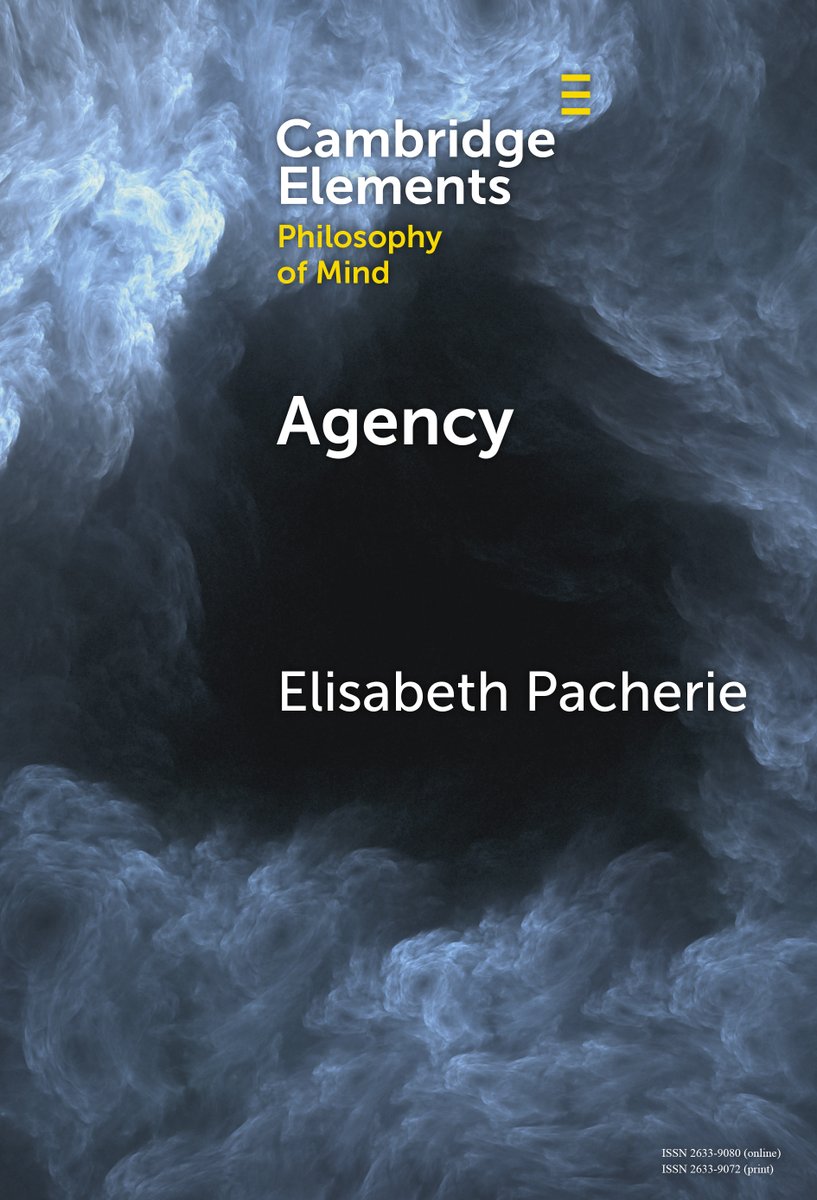
New Cambridge Element, Agency, by Elisabeth Pacherie, out now! Read for free for the next 2 weeks at
https://t.co/4I0zG41E8n
#cambridgeelements#philosophy