I took my time to read @vangrid_io white paper over the night and One thing I’ve been thinking about is how quickly a place can change while its digital version stays the same.
Think about a new shopping complex opening in Singapore. Shops move in, walkways change, entrances get redesigned. A 3D model captured months ago might already be missing important details.
For companies building robots or digital replicas of real places, outdated data isn't just inconvenient. It can lead to poor decisions. And sincerely thins @vangrid_io strikes it there.
Instead of relying entirely on expensive teams to revisit every location, Vangrid lets people use their smartphones to capture specific places when the data is needed.
What stands out to me is the on-demand approach. Sometimes, companies don't need more data everywhere. They need accurate data from one particular place, right now.
The real opportunity isn't just mapping the world. It's keeping the map useful as the world changes.
Imagine a company needs a 3D view of a train station in London. Normally, they might send a team with expensive equipment to capture it.
Vangrid approaches the problem differently.
Someone can post a specific capture request, fund it with USDC, and let someone nearby with a smartphone complete the job. That reminds me of how delivery platforms changed logistics.
Instead of one company owning every vehicle, they coordinate people who are already where the work needs to happen.
That’s what I find interesting about @vangrid_io.
The smartphone becomes the tool, the contributor becomes the local operator, and the blockchain handles the escrow and payment layer.
Even better, the bounty is funded before it appears, so the contributor knows the reward is already locked. It’s a simple idea, but the infrastructure behind it could scale surprisingly far.
Early alpha is here
Almost nowhere launches and swaps RGB.
A few clicks. Dark Horse Knight NFT, and 1,000 Horseshoes.
@RGBHorse can become the Pump on Bitcoin.
Click the image below to join 👇https://t.co/UpbHCUhVWX
Something I hadn't connected before is that @vangrid_io is part of NVIDIA Inception.
That matters because Vangrid is working on a problem that sits directly around the Physical AI stack. Robotics systems need more than capable models.
They also need information about the physical environments those models are expected to operate in.
Vangrid is building infrastructure around that missing layer by coordinating smartphone-based capture of real-world locations.
The NVIDIA Inception connection gives some useful context for where Vangrid fits. It's not simply positioning itself as another consumer mapping product.
The network is being built around physical-world data that can potentially support robotics, spatial intelligence and world-model development.
What I find interesting is the combination of the two directions: NVIDIA is helping develop the computing and AI infrastructure for physical AI, while Vangrid is working on the real-world data layer that those systems need. Different pieces of the same emerging stack.
It's second day of October already, hope you had a good night.
Something i found interesting while using @zerufinance is that your zap journey can include activity from before you ever joined.
If you have wallets with previous trading history, you can connect them and see whether that onchain activity qualifies toward your zap balance.
Zeru looks at this through zscore, with the score also accessible through etherscan. after that, there are more ways to accumulate zaps through eligible activity, and joining a clan adds another layer to the experience.
What makes this worth tracking is the role zaps are expected to play later. they are planned to factor into a future airdrop, depending on the final rules, and larger balances may also qualify users for things like zeru whitelist opportunities.
So instead of assuming your zeru journey starts today, check the wallets you’ve already used.
Your trading history may already have something waiting for you.
What's happy Monday without sharing insight on @BeldexCoin.
Masternode registration on Beldex is getting another option.
The LWS Wallet, which stands for Light Wallet Service, is being developed to support masternode registration directly from a web-based wallet.
Right now, users can register through the Electron desktop wallet or the CLI wallet. The Electron wallet is easier to use, while the CLI option requires some technical know-how.
Having this available through LWS could make things easier for users who would rather use a browser than deal with the command line.
I like this because it’s not really about adding another random wallet.
It’s about making an existing Beldex function easier to access.
The Beldex Wallet already handles BDX transfers, BNS purchases and masternode registration. LWS is simply adding another way to interact with these services through the web.
Sometimes the useful upgrades are the ones that remove a little friction from something that already works.
Spent part of my Sunday going through Beldex’s EVM integration research.
To be clear, this is still research and proof-of-concept work. The EVM environment and confidential-asset functionality are not live on Beldex mainnet today. The research is part of a longer-term roadmap.
@BeldexCoin plans to introduce account-based addresses alongside its existing UTXO addresses, with confidential assets planned for a private EVM-based sidechain. The EVM capabilities themselves are currently targeted for Q2 2027.
What caught my attention is the way these pieces are being developed in stages. The goal isn't simply to add EVM compatibility. The roadmap connects EVM functionality with confidential assets and privacy-focused applications that developers could eventually build on Beldex infrastructure.
For now, the important thing is the research and direction, not claiming functionality that hasn't shipped yet. That distinction makes the roadmap much easier to follow.
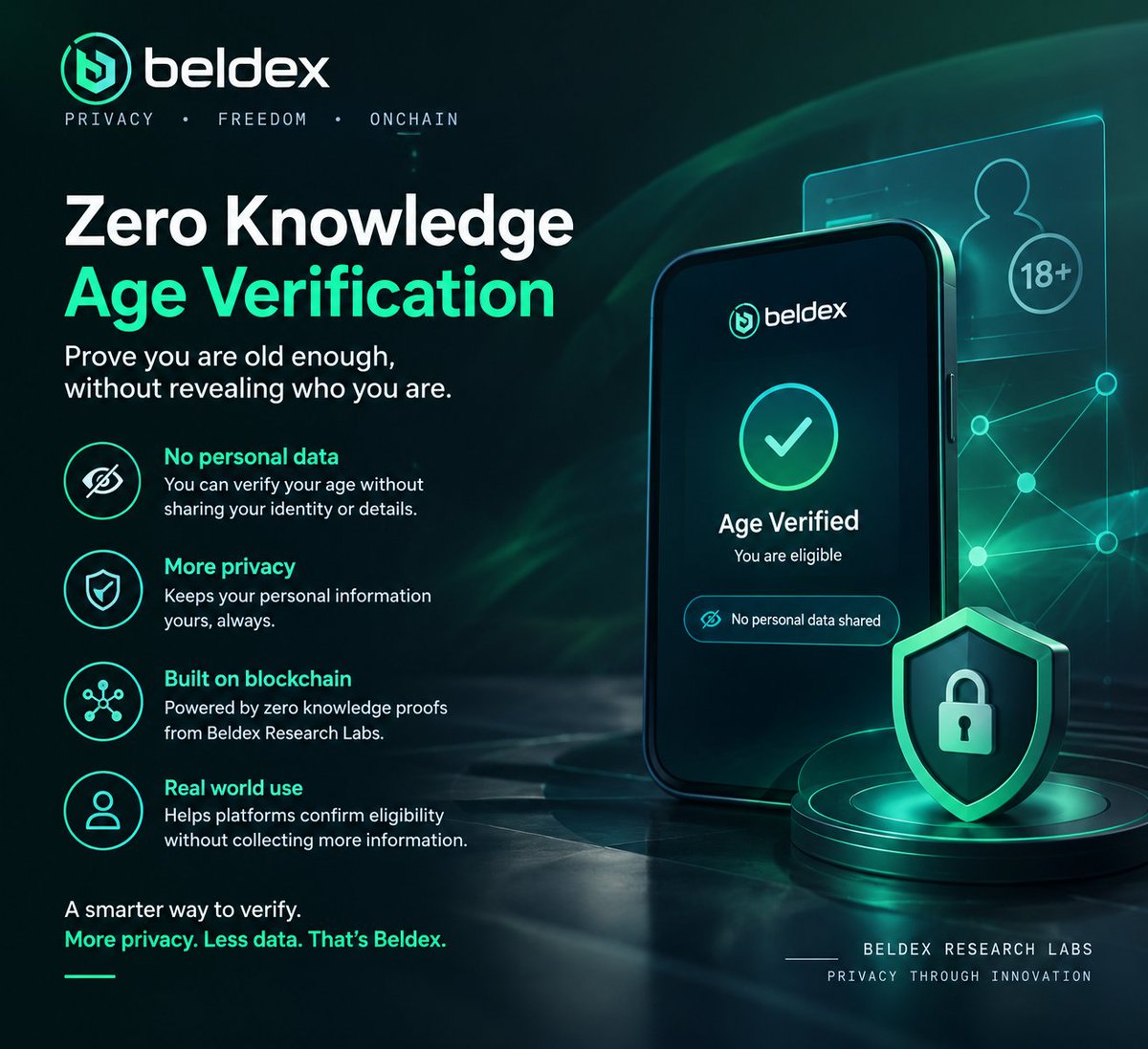
One @BeldexCoin feature I have not seen discussed enough is its zero knowledge age verification research.
The idea is simple. Instead of handing over personal information to prove you meet an age requirement, a user can prove eligibility without revealing the underlying data.
That changes how verification can work online. Platforms may need to confirm someone is old enough, but that does not mean they should receive an identity profile.
Beldex Research Labs is exploring this through zero knowledge proofs, bringing privacy into a problem that usually depends on collecting more information.
For me, this is a different side of BeldexCoin. It is not only about private messaging, browsing, or transactions. It is also about proving something is true while keeping information private.
That is the privacy infrastructure Web3 needs.
When physical ai starts depending on real world data, the first question shouldn't be how much data a network can collect.
It should be whether that data can actually be trusted.
That's one reason @vangrid_io keeps standing out to me.
The interesting part isn't only the devices or the capture jobs. it's the verification happening underneath.
Observations are fingerprinted, organized into merkle batches, then anchored on base, giving each piece of captured data a trail that can be checked instead of simply taking the platform's word for it.
And the activity already shows this is moving beyond an idea. 1,108,533 captures anchored, 4,039 attestations, $424,914 usdc settled, and 559 bounties logged.
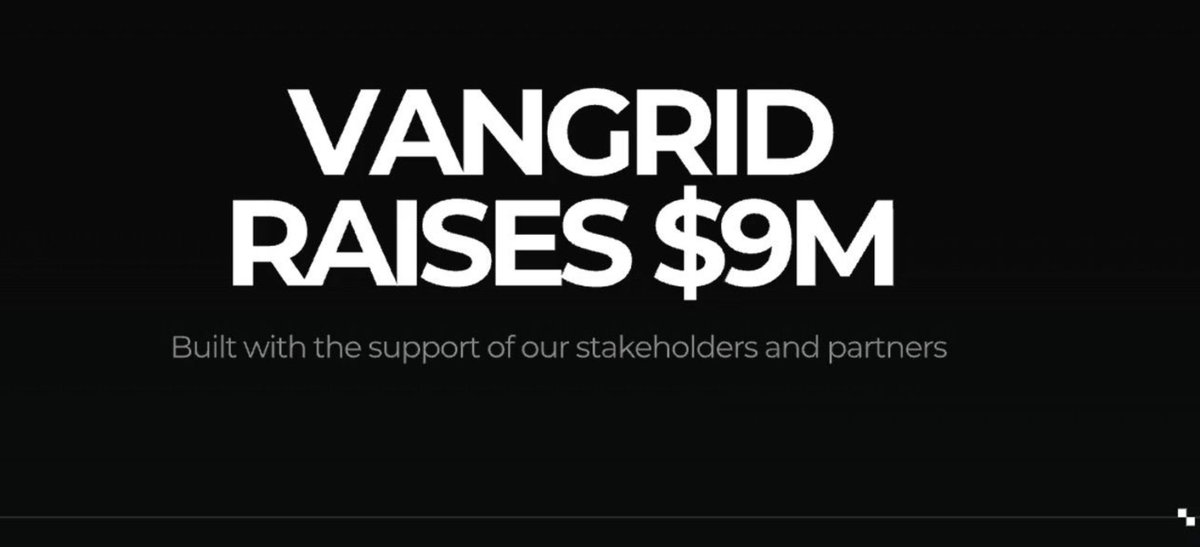
with $9m raised from hashkey capital, animoca brands, borderless capital, cryptocom capital, gate labs and mapleblock capital, the focus now becomes scaling that infrastructure.
Tor physical ai, reliable data isn't enough. The network needs to prove where that data came from and how it was verified.
that's the layer vangrid is building.
Yesterday, I spent some time reading through @BeldexCoin’s roadmap and gladly came across the Browser Extension Wallet.
Wallets are becoming a bigger part of how people interact with Web3, so bringing wallet functionality directly into the browser makes sense.
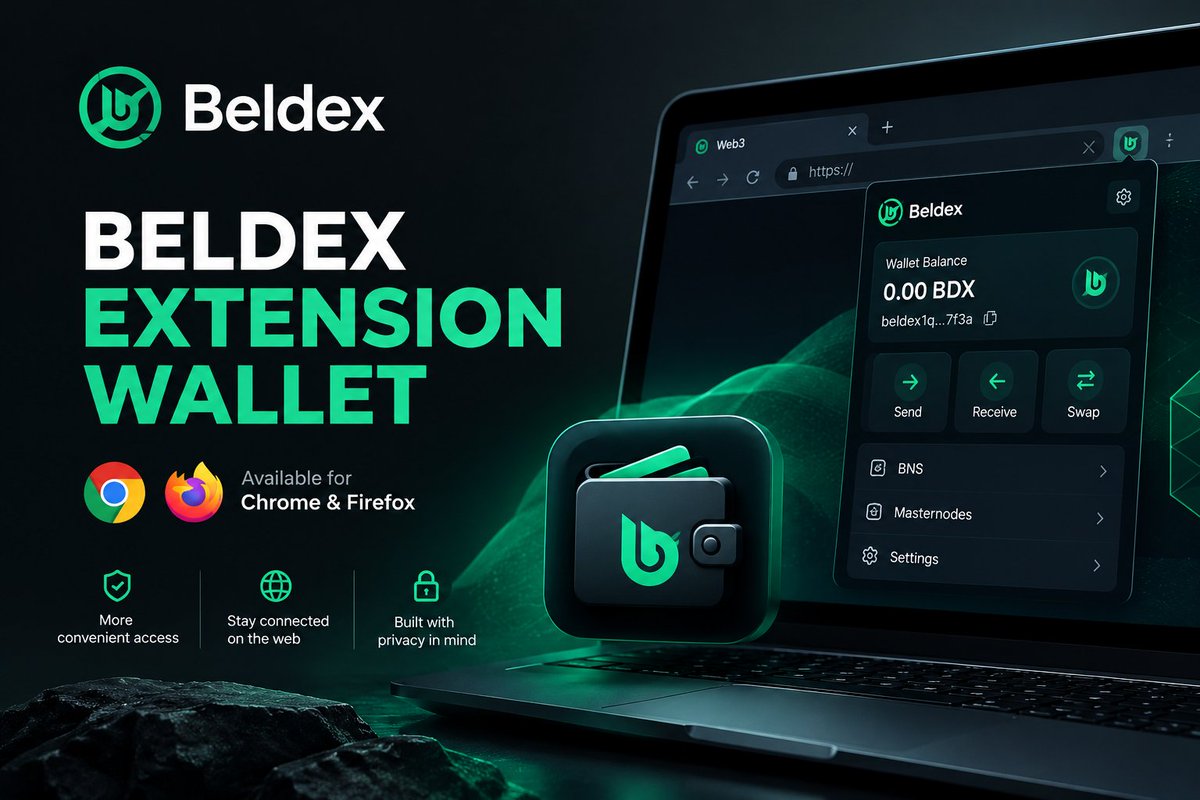
Beldex is building an extension for Chrome and Firefox that can make accessing wallet functionality more convenient while users are on the web.
It’s worth noting that this isn’t live yet. The Browser Extension Wallet is currently in Beldex’s internal security audit phase.
What caught my attention is how it fits into the bigger picture.
The Beldex Wallet already handles BDX transfers, BNS purchases, and masternode registration. The extension adds another access point, while Beldex is also working toward its EVM-based ecosystem.
I didn’t think of this as just another wallet release. It’s another piece being added to the infrastructure around Beldex’s privacy and interoperability roadmap.
Age verification usually creates a difficult trade-off.
A platform may need to know whether someone meets an age requirement, but traditional verification can require users to hand over information such as their date of birth or identity documents.
@BeldexCoin Research Labs has explored another approach: zero-knowledge age verification.
The underlying idea is straightforward.
Instead of revealing the personal information behind an eligibility check, zero-knowledge technology can allow a user to prove that they satisfy a particular requirement without exposing the underlying data used to establish that fact.
For example, if a service needs to confirm that a user meets an age threshold, the important result is the eligibility itself.
The user's complete date of birth does not necessarily need to become part of that interaction.
This is an important distinction for privacy-first systems.
Data protection isn't only about securing information after it has been collected. It can also mean designing interactions so that unnecessary personal information doesn't need to be disclosed in the first place.
Beldex Research Labs has published research on zero-knowledge age verification as part of its broader work around privacy-preserving technology.
It is a useful example of where privacy can move beyond messaging and browsing into everyday digital verification.
The full research paper is available through Beldex Research Labs.
The next phase of AI is moving beyond screens.
Robots, autonomous vehicles and other physical AI systems need to understand actual environments, not just text, images or internet-scale datasets.
That creates a different data problem.
A robot operating inside a warehouse, on a street or in a building needs information about the physical space around it. What does the environment look like? Where are objects positioned? What changes when the environment is captured again later?
This kind of data cannot simply be scraped from a website.
It has to be collected from the physical world.
That is the part of the Physical AI stack I find interesting about @vangrid_io .
Vangrid is building a distributed capture network where smartphones can collect spatial data from real-world locations. Instead of depending entirely on a limited number of specialized mapping devices, the network turns devices people already carry into potential data-collection nodes.
The important distinction is that the data can be requested for a specific place and captured on demand, with its provenance anchored onchain.
NVIDIA is already treating physical-AI data generation, curation and evaluation as a major infrastructure problem.
Vangrid is approaching another part of that equation:
getting fresh ground-level spatial data from the real world in the first place.
That makes the data layer worth watching as Physical AI moves from models into physical environments.
One thing i noticed while testing @BeldexCoin today:
A wallet doesn’t need to feel heavy just because the network underneath it is doing serious work.
That’s where the Lite Wallet path gets interesting.
Instead of waiting for Electron to download and verify the whole chain locally, it can connect through a remote node and start handling wallet activity without carrying the entire blockchain on the device.
But receiving $BDX is where the distinction gets technical.
The payment reaches a stealth address rather than simply reusing a public address. the wallet still needs to scan for that output, so the restore state matters.
What i find interesting is that this lighter wallet experience still connects into the broader Beldex architecture: RingCT for native $BDX, with the same masternode network supporting BChat and BelNet.
The tradeoff is obvious though.
Less local infrastructure means more reliance on the remote node.
That’s the part i’m still thinking about: convenience is easy to measure, but trust is harder.
For anyone using the Lite Wallet, how did your first stealth receive behave?
Physical ai has a strange data problem: models can process enormous amounts of information, but getting fresh data from a specific physical location still requires someone to be there.
Exactly what I see @vangrid_io fixing
A robotics company could need current visual data from a warehouse entrance, a shop, a loading area, or a particular street. instead of sending its own team across the country, it can post the request to vangrid with a bounty.
Someone already near that location can complete the capture using their phone. the submission is verified, then the contributor gets paid.
So the phone becomes more than a camera. it becomes a way for physical ai companies to request and source ground-level data on demand.
Knowing vangrid is already live on web and android makes it more actualising. And not just that, but distributed data model is what i’m watching.
Good morning, mutuals.
Yesterday was one of those days where everything felt packed, but at least it ended with something useful.
I spent some time with the latest @BeldexCoin Electron Wallet v7.1.0, and QuickEx caught my attention.
The useful part isn't just that swapping is now available inside the wallet. It changes the flow completely.
Select the asset, choose the pair, enter the amount, check the details, and approve without jumping between different platforms.
That sounds like a small change until you actually use it. And the wallet doesn't abandon the protocol's privacy architecture for convenience. Beldex still uses ring signatures, stealth addresses and RingCT at the protocol level.
Desktop support across Linux, Windows and macOS also keeps the experience flexible.
For me, this is what a practical wallet update should look like: fewer interruptions, fewer unnecessary steps, more functionality in one place.
$BDX #BeldexCoin
Most smartphones are sitting idle when they could be observing the physical world.
I see @vangrid_io focusing this aspect. They essentially turns everyday phones into distributed data-collection nodes. A company can specify the information it needs from a particular location, fund the request through on-chain escrow, and let contributors handle the physical capture.
But collecting the footage is only one piece of the system.
The phone can process sensitive elements such as faces and license plates before the data moves beyond the device. The resulting capture can then be converted into structured spatial information and 3D representations, with provenance attached to help establish where and when the data originated.
There’s also a useful verification step for buyers.
Instead of blindly accepting a dataset, they can inspect a watermarked preview first and determine whether the capture actually satisfies the request.
If it does, the contributor gets paid in USDC on Base.
What makes this model particularly interesting is the feedback loop it creates.
More requests bring more captures. More captures create a richer spatial dataset. Better coverage makes the network useful for more demanding applications.
And that matters because robotics, physical AI, autonomous systems and infrastructure management all depend on something that is difficult to obtain continuously:
fresh, geographically relevant ground truth.
The smartphone may not just be a device we use to access the digital world.
With networks like Vangrid, it could become one of the ways the digital world continuously learns what is happening in the physical one.
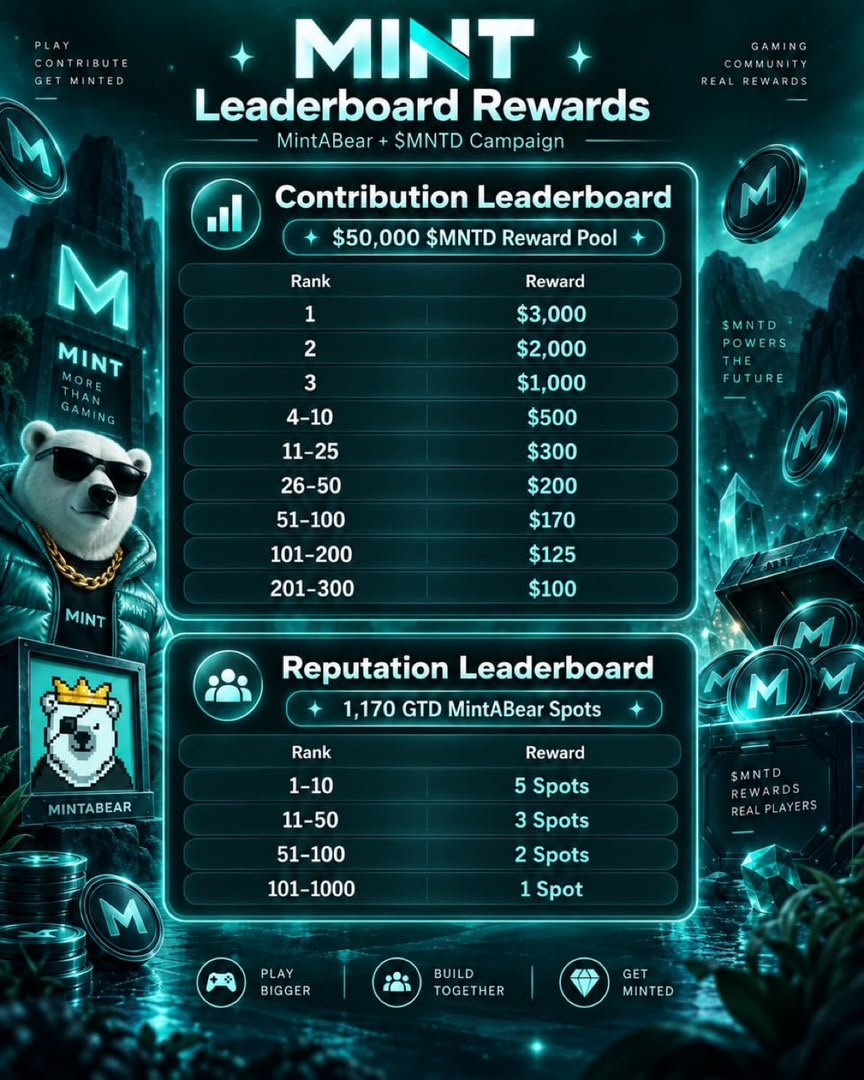
MINT is officially on Nucleus today, kicking off a campaign that’ll run for the next month.
Rather than trying to explain the entire ecosystem at once, I’m starting with one part that caught my attention: MintABear.
@PlayOnMint is launching a 4,444-piece of NFT collection, with a free mint on Robinhood Chain. What makes it more interesting to me is how some of the supply connects directly to activity on MINT.
A portion of the NFTs will be distributed to users through wagering activity, while additional spots are being made available through selected communities and collaborations.
So this isn’t simply an NFT collection sitting beside the product. There’s a connection between what users actually do on MINT and how they can participate in the MintABear ecosystem.
That’s the kind of mechanic I want to explore throughout this Nucleus campaign.
There’s still a lot more to unpack around MintABear, MINT’s platform, XP, rewards and the wider $MNTD ecosystem, but I’d rather take those one topic at a time.
For today, I’m starting with MintABear and the way MINT is connecting its NFT ecosystem to actual platform activity.