Cùng nhau chia sẻ và học hỏi .
Hãy đến với mạng xã hội X
đọc và học hỏi những vấn đề xh đang phát triển .
PI NETWORK MUỐN PHÁT TRIỂN TRỞ THÀNH ĐỒNG TIỀN CHUNG
Pi Network has over 60 million Engaged Pioneers.
For developers, that creates an important opportunity: How do useful apps get discovered by these millions of people on Pi?
Ecosystem Directory Staking was built to help answer that.
It is a decentralized way for Pioneers and businesses to actively support and promote the ranking of Pi apps and utilities in the Ecosystem Interface. Staking through this feature increases an app’s exposure to the Pi community, helping boost visibility within the ecosystem.
This feature provides a self-service avenue for developers and creators to use Pi to tap into the attention resource of Pi Network to acquire users.
As AI makes app creation easier and easier, the challenge shifts from building products to getting them in front of people.
Ecosystem Directory Staking improves ecosystem discovery, making it easier for developers and creators to connect with users, and easier for users to discover new apps.
https://t.co/EpsNc81gOv
Watch Pi Founder Nicolas Kokkalis speak in the Consensus 2026 panel “How to Prove You’re Human in an AI World (Without Doxing Yourself)”.
The discussion focused on how digital trust and identity verification systems must evolve as AI makes it possible to generate bots, agents, and synthetic identities that closely resemble real human behavior at scale.
The panel explored a core question for the AI era: how systems can continue to verify real human participation without requiring unnecessary disclosure of personal information.
A key theme was that proof of humanity is context-dependent, with different systems requiring different levels of verification depending on use case and risk.
The importance of privacy-preserving design was also highlighted, ensuring verification can scale while remaining usable for real users.
As AI lowers the barrier to building and interacting online, the harder challenge may be connecting digital systems to real users, trusted participation, and meaningful utility.
Pi’s Layer 1 blockchain, identity verification, payments infrastructure, non-custodial wallets, smart contracts, and engaged global community are all part of Pi’s ongoing work to address that challenge.
Watch the full presentation now!
https://t.co/nFCz9nF7RR
AI is creating a new wave of builders.
People are turning ideas into apps faster than ever before.
But most creators still face the same problem after building:
How do you actually reach users?
Pi App Studio can now help close that gap.
Creators can now take apps built with external AI coding tools and connect them directly into an ecosystem with:
60M+ engaged users
Integrated payments
Decentralized human workforce
Platform-level infrastructure
If you know builders, vibe coders, indie creators, or AI communities looking for distribution and real users, share this with them.
The next generation of apps will come from more people than ever before.
Now they need places where those apps can actually be used.
Read more: https://t.co/xyfArx1SJp
As some Pioneers may have noticed, affiliate badges have recently been assigned to the Pi Founders’ official X accounts. This helps you identify their only real accounts!
For your safety, always verify information through the official Pi Safety Center and official Founder accounts listed below.
Official Pi Safety Center: https://t.co/r4rh8Vs30i
Official Founder X accounts:
• Nicolas Kokkalis — @nkokkalis
• Chengdiao Fan — @chengdiao
Please remain cautious of impersonators, unofficial accounts, and misleading links claiming to represent Pi.
Vibe coders and creators can now tap into Pi Network’s massive user base of over 60 million Engaged Pioneers by easily bringing their external AI-created apps to Pi’s real distribution network and utility ecosystem through Pi App Studio!
Creators, who may be technical developers or non-technical product people, can build apps using platforms such as Codex, Claude Code, Replit, Cursor, Lovable or other AI-assisted coding tools, and then use Pi App Studio to convert those apps into Pi Apps.
That changes the equation for creators.
AI can already help people generate apps quickly; the harder part is distribution and turning those apps into products people actually use.
Pi helps close that gap.
Instead of rebuilding infrastructure from scratch, creators can connect their apps to an existing ecosystem with users, payment capabilities, identity verification, decentralized human infrastructure and platform-level tools already in place.
This feature makes Idea → App → Users that much faster.
Because your ideas are too good not to be seen.
Try the Pi App Studio Now! If you’re a vibe coder or know someone building apps with AI who needs distribution, head to Pi App Studio today to convert AI-created apps into Pi Apps and access the Pi ecosystem’s users, infrastructure, and monetization opportunities.
Reminder: All Mainnet nodes are required to complete the Protocol 23 upgrade by May 15, 2026 to remain connected to the network. This upgrade takes longer to complete, so please plan ahead.
Details: https://t.co/9VehO7hhj1
Pi Founder Chengdiao Fan spoke today at Consensus 2026 Miami in her session, “Aligning Web3, AI, and Blockchain for Utility.”
Dr. Fan shared how Pi’s blockchain infrastructure, identity verification, and a globally engaged network can support utility-driven products and businesses in the AI era.
Her talk built on a central challenge in the broader crypto industry: the frequent misalignment between token design and real innovation. While tokens in the industry have often been used primarily as capital-raising tools or quick exits, Dr. Fan discussed Pi’s approach to treat tokens as tools that can support growth, engagement, and long-term utility.
Pi’s approach to ecosystem tokens and launch mechanisms focuses on tokens for user acquisition and integrating token design into the product innovation process. By using tokens to help products acquire real users who can engage, provide feedback, and use those tokens within actual product experiences, this approach connects token design more directly to utility and product development.
More broadly, Dr. Fan’s talk invited discussion on how blockchain can help shape AI-era business models, financial literacy, ownership, and socioeconomic participation. As AI lowers the barrier to building, the focus shifts toward something harder to replicate: real users, real participation, and trusted human input at scale.
Stay tuned for the full session video!
The Pi Mainnet is upgrading to Protocol 23 – Deadline: May 15.
All Mainnet nodes are required to complete this step before the deadline to remain connected to the network. This upgrade takes longer to complete, so plan accordingly.
Details here: https://t.co/9VehO7hhj1
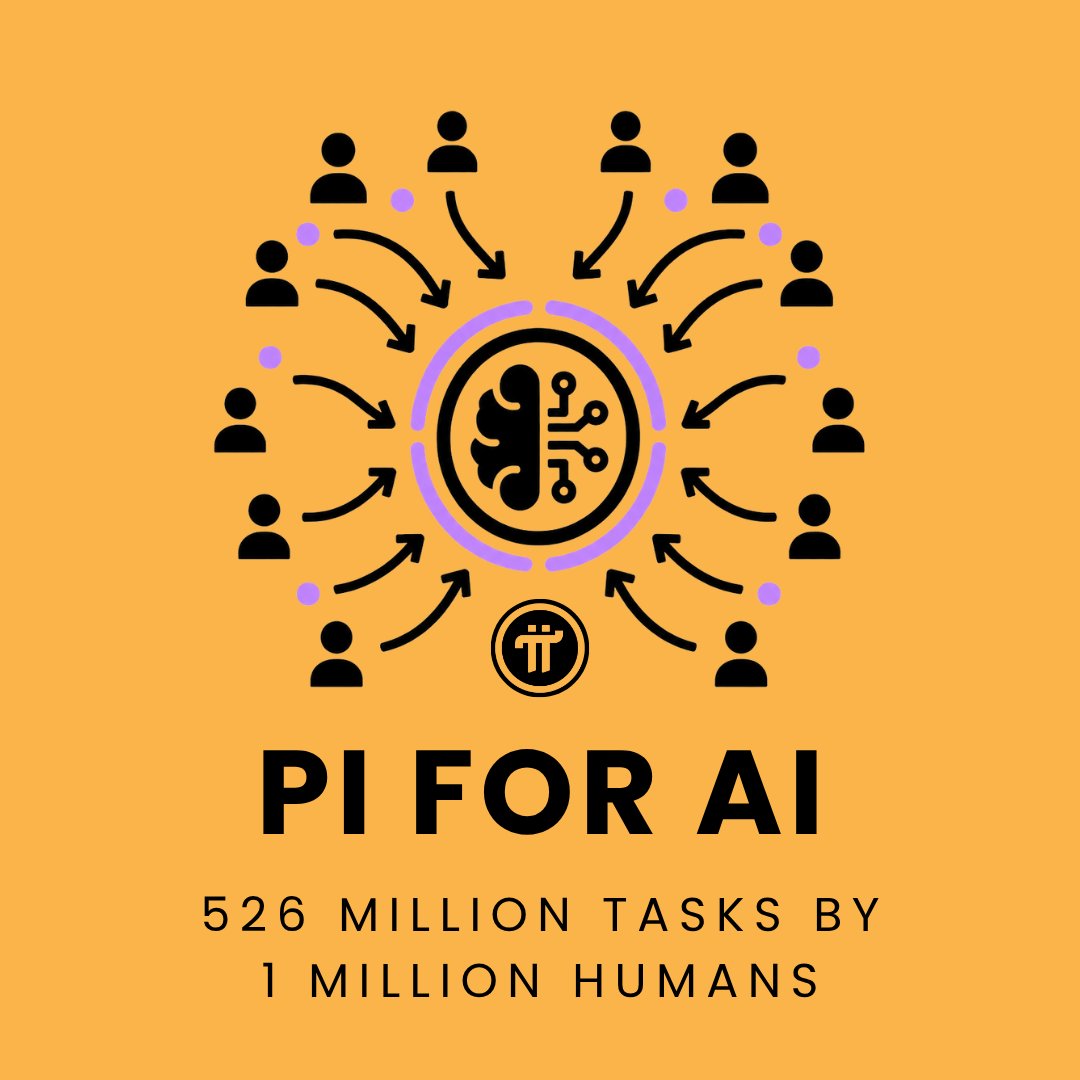
526 million human KYC validation tasks have already been completed on Pi.
By over 1 million verified people.
AI is advancing quickly.
But the hardest part of building reliable systems is still deeply human.
Models don’t improve from compute alone.
They improve from:
Judgment
Correction
Context
Nuance
Pi represents something different.
A globally distributed, identity-verified human workforce that has already demonstrated coordination at scale, already active in the Pi ecosystem.
This is real infrastructure, it’s already been used to process hundreds of millions of real tasks.
For AI systems, that changes what’s possible.
Go to the Pi mining app home screen to learn more.
AI companies can access Pi’s human input infrastructure through the network’s over 18 million identity-verified Pioneers to improve models, tune inference quality, and scale data labeling and evaluation.
Read the announcement to learn more about how Pi can provide such services for AI companies, and share it with AI companies that may be interested!
https://t.co/uB1vllCkzs
To open the Testnet subscription smart contract to technical review and community feedback, Pi has released the second Pi Request for Comment (PiRC2).
Developers are encouraged to try integrating subscriptions in their own apps, review the subscription contract design, and test for bugs or edge cases, if any.
https://t.co/nLpGQQngvs
Pi is tackling one of the most urgent problems in the AI era: proving real human identity online.
Pi Founder Nicolas Kokkalis will speak on a panel at Consensus 2026 on Thursday, May 7, from 10:15-10:45 AM EDT at the Convergence Stage.
The session, “How to Prove You're Human in an AI World (Without Doxing Yourself),” explores how the internet’s trust model is breaking as AI systems become capable of creating bots that can generate profiles and interact like real users.
At the core of the discussion is a simple challenge: how do you verify a real human online without exposing private identity data?
Want to know how? Join us in Miami on May 7th!
See you there!
Pi’s first smart contract capability is now live on Testnet: subscriptions!
This fosters real, recurring, utility-driven use cases.
Think e-commerce, streaming, online tools, and more, powered on-chain.
Read more in the Pi mining app.
The Pi Mainnet is upgrading to Protocol 22 – Deadline: Apr 27.
All Mainnet nodes are required to complete this step before the deadline to remain connected to the network.
Details here: https://t.co/9VehO7hhj1
There are over 18 million identity-verified users on Pi.
But there is one clear difference between Pi’s users and others.
1 million verified users on Pi ≠ 1 million users on other networks.
Most networks measure growth in accounts.
Few measure it in verified users.
There’s a difference.
Pi recognized the importance of identity verification early on and that unverified account creation is simply not enough. Verified identities are needed for any meaningful transactions, especially in real-world economies.
Any time an asset (like crypto, fiat currency, property, etc.) is transferred, it raises a basic question of identity: who is sending it, and who is receiving it. If those identities aren’t clear, it becomes difficult to trust that the transfer is valid or that it went to the right person.
Therefore, Pi Network has built a fully KYC-verified Mainnet ecosystem.
Because when users are verified:
Spam drops.
Trust increases.
Utility becomes more reliable.
Consensus Miami is getting a slice of Pi!
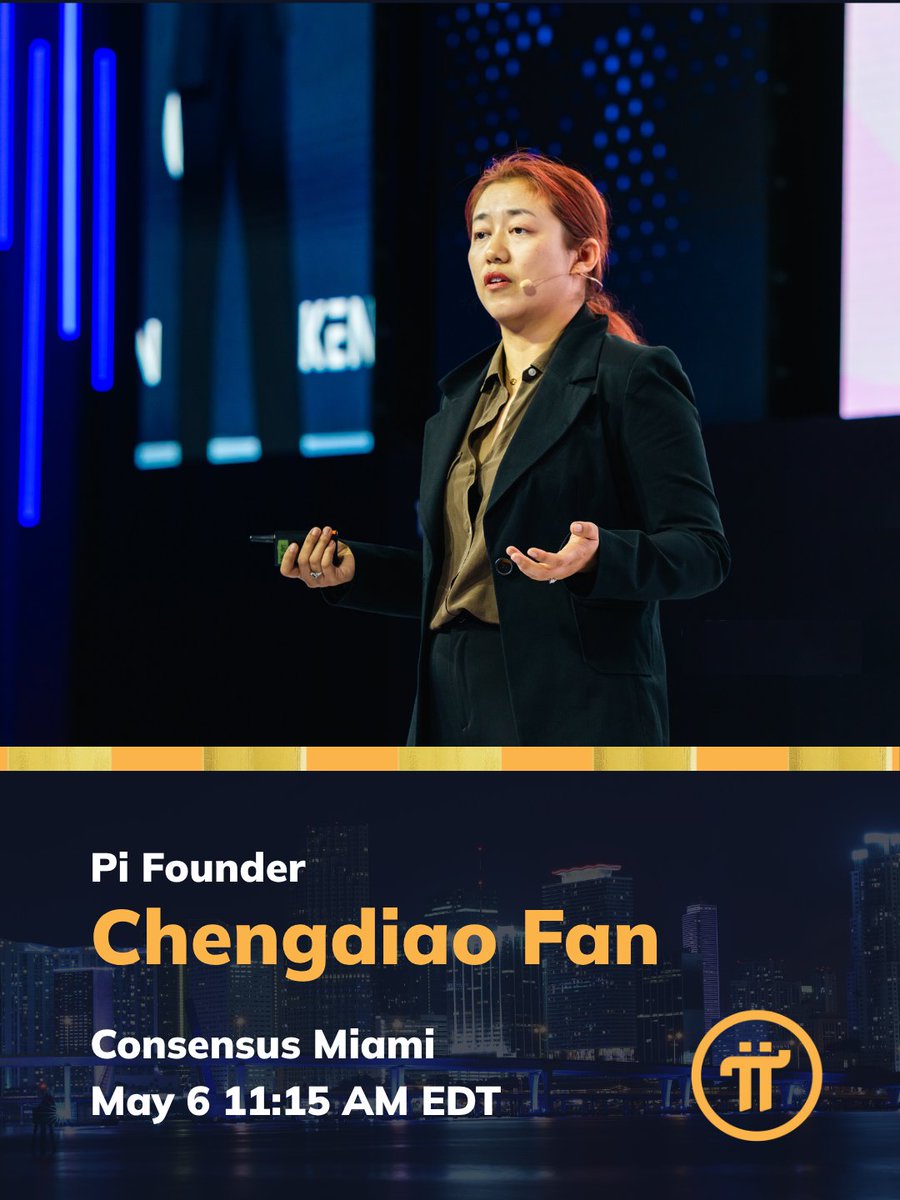
Pi Founder Chengdiao Fan will speak at Consensus 2026 on Wednesday, May 6, from 11:15–11:35 AM EDT at the Convergence Stage.
As AI dramatically lowers the barriers to building products, competition increasingly centers on authentic data, user acquisition, and trusted human participation.
Chengdiao’s presentation will explore how Pi’s blockchain infrastructure, verified identity, and globally engaged network can support utility‑driven products and AI‑era business models.
The session presents a fresh perspective on crypto tokens not as exits, but as tools for sustainable growth and real‑world adoption.
See you all there!
The Pi Mainnet has successfully upgraded to Protocol 21.
Node operators, please ensure your systems are up to date and stay tuned for instructions regarding the upcoming v22 upgrade.
The first distribution of KYC validator rewards is now complete!
Rewards were calculated for over 526 million validation tasks completed by more than 1 million KYC validators.
This demonstrates the scale and capability of Pi’s decentralized human workforce worldwide in driving meaningful real-world outcomes, especially in areas that require human judgment and input.
To benefit from future KYC validator rewards and other decentralized work opportunities, become a KYC validator. Complete accurate validation tasks and join Pi’s decentralized workforce!
https://t.co/pN8VpeZzvy