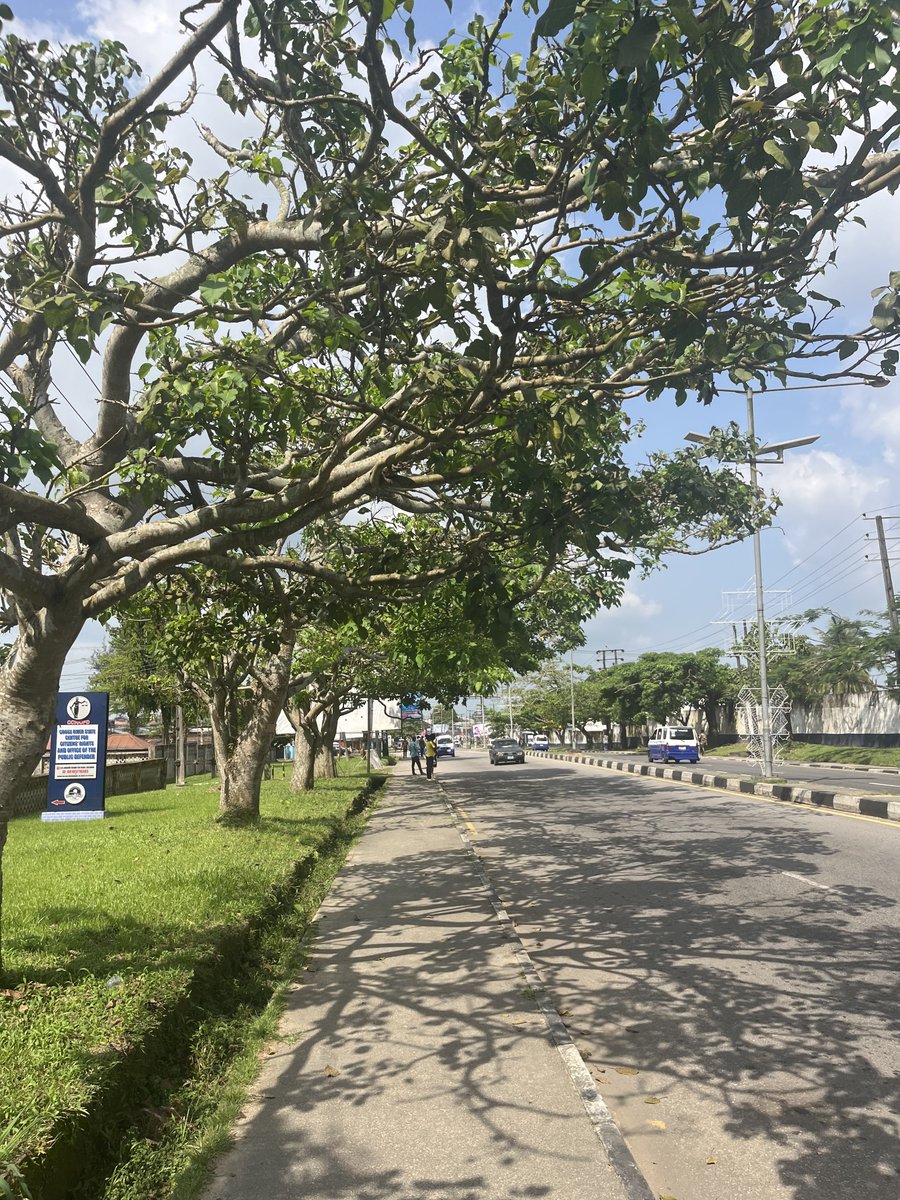
Spent a few days in Calabar, and here are my few culture shocks;
1. Calabar people are sooo law-abiding— they obey traffic lights even on Sunday nights
2. Calabar passes for the greenest city in Nigeria — the roads are tiny but there are enough spaces for trees and green lawns.
3. They are liberals— they are not as conservative as their sister state. You can walk through streets without hearing Efik (I know the state is multicultural, but it gave the vibes of Lagos and Abuja).
4. There are no aesthetically pleasing restaurants, lounges or hotels — they have all these things but they are basic.
5. Crispy chicken restaurants are literally everywhere, even in their bathrooms.
6. Most places are named after women — Marian rd, Maria, Mariam, Mary, Marina Resort etc (funny how they all start with “M”)
7. The mini buses carry 2 people in front. They’ll pack you like sardines.
8. Calabar is sooo safe. I hardly hear of petty theft. You can walk the streets early hours without fear.
9. Keke are not commonly seen — though, they have particular routes they ply.
10. They have only one mall, Spar.
Calabar people are sooo nice. I mean, out of this world nice.
11. All the meals I ate here bangs. They really know how to cook.
12. The state is on a nosedive, it has a lot of breathtaking tourist sites, but negligence is killing these places.
13. They don’t joke with Christmas decorations and carnivals. O m g. You’d think that’s the only event the states enjoy.
14. Calabar is small shaa
15. The only luxury car I saw here was a G-wagon. And it’s just one.
16. The weather is always rainy even in November.
17. I enjoyed Calabar. Do I wanna come back? Definitely!!! 😜
etc.
It’s beneficial for all if the tourism goals of a nation is appropriately democratised. The ripple impact on the GDP covers a wider spread and betterment for most.
That’s what unity is about.
The proposed Federal task force for Detty December is great! However, we’ve had Carvival Calabar for the last ~20 years, I might be wrong but no specific Federal Government Task Force has been setup for this, even in the face of ebbing media exposure vis à vis awareness creation
If we truly desire issue-based politics, we must first create the conditions for ideological alignment; equity, trust, and a shared national identity. Without these, there can be no common ground to establish a meaningful course forward.
Until we confront and dismantle religious, ethnic, and nepotistic biases, our political systems will remain incapable of being driven by ideology.
Ideology requires a shared foundation of common values, mutual trust, and collective vision for society. But when identity politics
interests and patronage.
As long as our loyalty to tribe, religion, or kin supersedes our commitment to national progress and common good, ideology will remain elusive. What we’ll have instead is a politics of survival i.e., transactional, divisive, and short-sighted.
A nation that has not overcome its religious, ethnic and cultural differences can not have political parties based on ideologies. It is for this reason many see party platforms as mere umbrellas to achieve personal ambitions laced with self-aggrandizement.
As a nation, we must recognize the vital link between Research and Development (R&D) and sustainable progress; without it, meaningful change remains elusive. In a capitalist economy, industry-driven R&D often prioritizes profit, focusing on development and economies of scale in
services and stifling productivity, which can erode GDP. Equally critical is the urgent need to fund our educational sector—a national priority too often overlooked. Robust investment in education fuels the pipeline of talent and ideas essential for R&D,