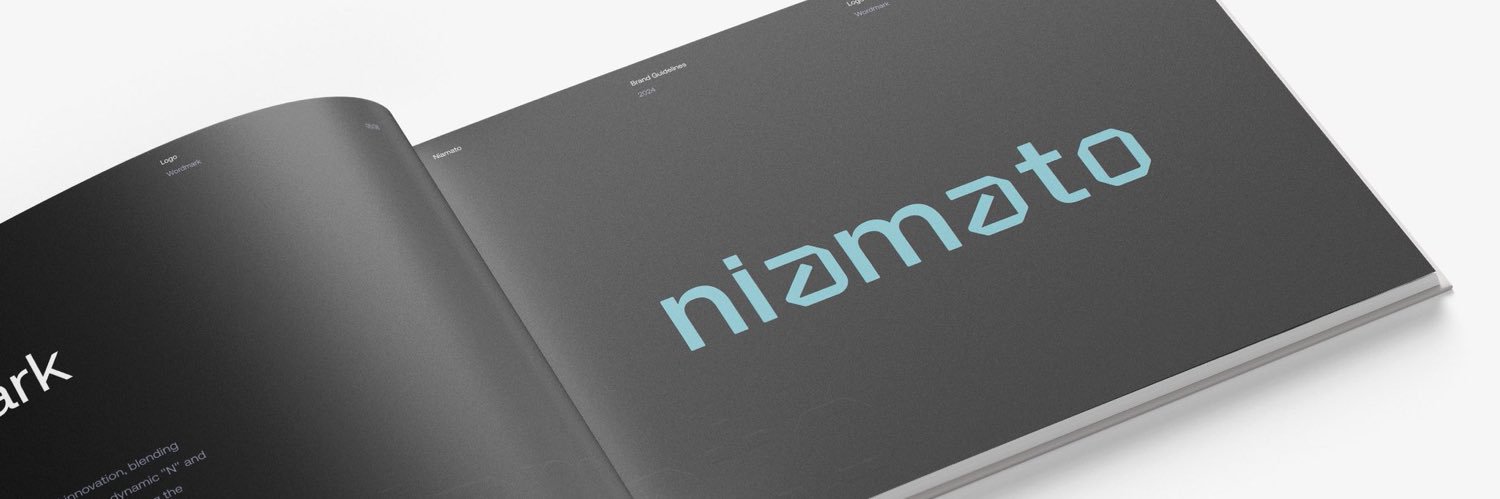
We're a group of likeminded individuals, pushing the boundaries on automotive design, experiences and technology. Currently in Stealth Mode. Reach via Instagram
Brand identity and web design for a luxury electric car manufacturer from France @Niamatomobility
Excited for the day I spot a car rolling by with my logo on it.
🎓 Officially a doctor now 😊!!!
As a first-gen college kid, this moment means the world to me.
Grateful beyond words to all my mentors who’ve guided me along the way — from @GMartius who first introduced me to research back in 2017, to @volokuleshov who sparked my love for generative modeling, and finally to @jwthickstun and @Jimantha for their incredible mentorship through the final stretch of my PhD. ❤️
Today we launched Tinker.
Tinker brings frontier tools to researchers, offering clean abstractions for writing experiments and training pipelines while handling distributed training complexity. It enables novel research, custom models, and solid baselines.
Excited to see what people build.
.@RichardSSutton, father of reinforcement learning, doesn’t think LLMs are bitter-lesson-pilled.
My steel man of Richard’s position: we need some new architecture to enable continual (on-the-job) learning.
And if we have continual learning, we don't need a special training phase - the agent just learns on-the-fly - like all humans, and indeed, like all animals.
This new paradigm will render our current approach with LLMs obsolete.
I did my best to represent the view that LLMs will function as the foundation on which this experiential learning can happen. Some sparks flew.
0:00:00 – Are LLMs a dead-end?
0:13:51 – Do humans do imitation learning?
0:23:57 – The Era of Experience
0:34:25 – Current architectures generalize poorly out of distribution
0:42:17 – Surprises in the AI field
0:47:28 – Will The Bitter Lesson still apply after AGI?
0:54:35 – Succession to AI
We built a robot brain that nothing can stop.
Shattered limbs? Jammed motors? If the bot can move, the Brain will move it— even if it’s an entirely new robot body.
Meet the omni-bodied Skild Brain:
Science has long relied on single ML models - powerful, but limited because they are bound by baked-in knowledge. Our recent experiments show that genuine discovery emerges when a very large number of agents interact, adapt, and co-create, much like biology itself. Last week at Harvard’s Big Data 2025 I shared how multi-agent swarms may allow us to move beyond pattern-analysis to invent - exemplified in very difficult problem spaces such as de novo proteins and music with long-range form. The swarms are formulated like reinforcement-learning collectives, where agents learn on the fly, adapt to each other, and evolve strategies in real time, to yield hallmarks of intelligence that a single model cannot exhibit.
Our swarm generated proteins well outside natural and single-model clusters (UMAP), and the music scored the highest small-worldness with the most long-range links, the signature of integrated, human-like creative structure. In a deeper analysis, when we mapped how themes in the music connect across time, the swarm built networks with the tightest balance of local clusters and global connections, beating all baselines. The resulting composition was not just repeating patterns stitched together, but featured organic global coherence without repetition, like sparks of creativity emerging on their own. Preprints coming soon!
"Follow your passions. If you keep the passion to answer the question, you'll do very well."
Get some valuable career advice from our 2023 Nobel Prize laureates Katalin Karikó, Claudia Goldin and Anne L'Huillier.
@SoulProvocateur There is no robust evidence that tailoring your diet strictly to your blood type improves weight or metabolism. Multiple large reviews (including American Journal of Clinical Nutrition, 2013) concluded that no well-designed studies support the health claims of blood type diets.