Indians live in a fantasy world thinking China is their competition. China is competing to eat the US's lunch. India is 30 years behind China and at the current pace will never catch up. Corruption, not lack of skills, is why India is a laggard. China also has corruption, but India's is 10 X more, unstructured with bigger egos.
The West poured $50 billion into fast breeder nuclear reactors and abandoned every single one. India poured $900 million and just achieved criticality on the first commercially viable one outside Russia.
The US spent $15 billion. Gave up. Japan spent $12 billion. Their Monju prototype had one sodium fire in 1995 and never recovered. The UK spent $8 billion. Germany spent $6 billion. France, Italy, all walked away. Six of the richest nations on Earth concluded this technology was too hard and too expensive to pursue.
India started building in 2004 with an initial budget of $420 million. Twenty-two years, a dozen missed deadlines, and a cost doubling later, the Prototype Fast Breeder Reactor at Kalpakkam just sustained a controlled fission chain reaction. The reactor is now alive.
The reason India never quit is a constraint most people have never thought about. India has only 1-2% of the world's uranium reserves. For a country of 1.4 billion people trying to build energy independence, that's a death sentence if you're running conventional nuclear.
But India has 25% of the world's thorium. The single largest national reserve on Earth.
The problem: you can't just burn thorium the way you burn uranium. A physicist named Homi Bhabha designed a three-stage nuclear program in the 1950s specifically to solve this. Stage 1: burn natural uranium in heavy water reactors, collect plutonium as a byproduct. Stage 2: feed that plutonium into fast breeder reactors, where it breeds MORE plutonium AND converts thorium into fissile uranium-233. Stage 3: burn thorium directly at scale.
India just entered Stage 2. Seventy years after Bhabha drew it up on paper.
The math on the thorium endgame is wild. At current energy consumption rates, India's thorium reserves could power the country for over 700 years. Most nuclear nations are playing a uranium game with maybe 80-100 years of runway. India is playing a completely different game with a 7x longer fuel supply.
The West quit because uranium stayed cheap and sodium coolant is terrifying. It catches fire on contact with air. It explodes on contact with water. Russia's BN-600 had 27 sodium leaks and 14 sodium fires between 1980 and 1997. And Russia kept going anyway because Russia doesn't quit nuclear projects. India watched all of that and kept going too.
When you have 1% of the uranium but 25% of the thorium, the engineering difficulty stops being a reason to quit. It becomes the price of admission to a 700-year energy supply that nobody else can access.
If only Indian twitterati and commentariat werent such snowflakes they would realise that China's rise was its own doing. It's rise was not an American gift. The Chinese planned well, worked well, their engineers didnt sell soap, coke or maggi or join the IAS or worse IRS. They innovated, they built, they invested, they educated their people. The Chinese miracle is of their own making. Similarly whether India will rise or not is in Indian hands. If India rises it wont be because the Americans or Europeans allowed us to or gifted it to us. And we will never rise as long as our first talking point with other countries is "transfer of tech". This is the height of imagination and profoundity of the Indian bureaucrat and techno-crat. Big powers will never allow anyone to equal them. That is a no brainer. If India has to rise, we will on our own genius or not at all. And we will have to find our own way to rise. We cant copy someone else. We must learn from others (assuming we understand we are not the repository of all wisdom in the world and get off our hobbyhorse of being vishvaguru) but we must find our own way to the top because every country has to find its own path.
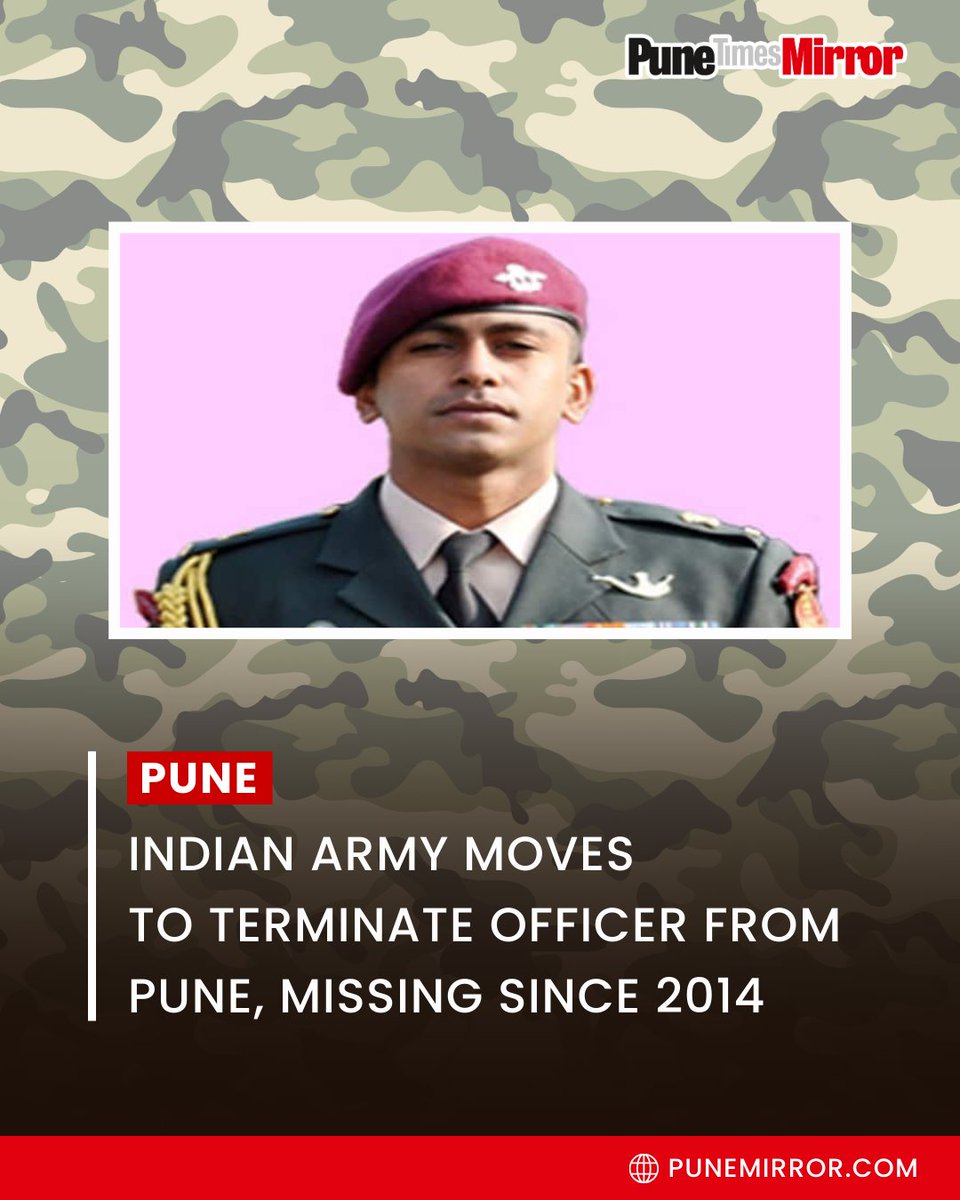
The Indian Army has initiated action to terminate a Special Forces officer from Pune who has been missing from duty since 2014. The officer was last traced to Spain and Norway during the investigation.
After remaining untraceable for more than a decade despite repeated efforts, the Army has started the formal process to remove him from service as per rules. Officials said the action has been taken due to prolonged unauthorized absence and lack of communication over the years.
#PuneTimesMirror #PuneNews #IndianArmy #DefenceNews #IndiaNews
Is common sense banned in this country?
A cleaner is seen throwing garbage onto the railway tracks from a moving train. Does he not realise this makes the entire surroundings filthy?
What do Railway SOPs say about waste disposal? Are contractors allowed to dump trash like this?
Why aren’t such contractors terminated immediately? Clean India cannot just be a slogan.
<rant> We Indians are inherently dishonest, corrupt, and have zero empathy. This is a country where people would happily mint money by making milk out of detergents (knowing that it will be consumed by children), where food adulteration happens at an industrial scale, and where a contractor would let a person die in a ditch because if he rescued him, his corruption would be exposed. If you are in your early to mid 20s, it's best if you leave this 3rd world shithole for greener pastures. I missed the bus, you better don't. </rant>
Conclusion of the India-EU Free Trade Agreement today marks a significant milestone in our relations. I thank all the leaders of Europe over the years for their constructive spirit and commitment in making this possible. This agreement will deepen economic ties, create opportunities for our people and strengthen the India-Europe partnership for a prosperous future.
I have heard it said that India does not count for much these days on the American calculus. It has “taken away”jobs from Americans and it is “incapable” of being a strong competitor to China. Let me try and break this down.
On “India not counting for much”
Some American military and strategic thinkers do argue this, especially in academic settings where people speak more freely. Their core claim is blunt: India is slow to mobilise power, cautious to a fault, and reluctant to align decisively. From that angle, India looks like a partner that consumes attention but delivers limited strategic leverage in the near term.
That critique is not invented. It circulates inside parts of the Pentagon, among younger China-focused planners, and within US think tanks that prioritise speed, interoperability, and clear alliance structures.
But it is not the settled American calculus.
At the strategic level, the US does not have the luxury of dismissing India. Geography alone prevents that. India sits astride the Indian Ocean, anchors the western Indo-Pacific, and complicates China’s two-front planning. Even a slow-moving India is a constraint on Beijing. In strategy, constraints matter almost as much as capabilities.
Washington’s frustration is real, but frustration is not irrelevance.
On jobs being “taken away”
This argument comes straight from the economic nationalism now embedded in US politics. India is often lumped together with China in domestic American debates on outsourcing, IT services, and manufacturing relocation.
That framing is politically powerful in the US, but analytically sloppy. Indian services exports did displace some American jobs, yes. They also reduced costs for US firms, increased competitiveness, and deepened corporate interdependence. Even the US government quietly recognises this, which is why decoupling rhetoric rarely translates into full decoupling with India.
What matters is perception. In a MAGA-influenced environment, being economically useful is no longer enough. Partners are judged on domestic political optics as much as strategic value.
On India being “incapable of competing with China”
This is the most misunderstood point.
India is not a peer competitor to China in the way the US defines competition. It does not match China in manufacturing scale, infrastructure speed, or state-driven mobilisation. American strategists who expect India to mirror China’s model are bound to be disappointed.
But India was never meant to be a mirror. Its value lies in asymmetry.
India competes with China by forcing dispersion. By absorbing attention. By denying uncontested space in South Asia and the Indian Ocean. By offering an alternative economic pole over decades, not electoral cycles.
The US military understands this better than some of its commentators. You do not need India to “beat” China. You need India to ensure China cannot dominate uncontested.
So is the assessment “true”?
It is a candid expression of one American school of thought, not a verdict.
It reflects impatience, domestic political pressure, and a desire for faster returns. It does not reflect strategic abandonment, nor does it negate the long-term bet the US continues to place on India.
The uncomfortable truth for India:
India’s problem is not that America misunderstands it. It is that India often under-signals its own intent. Strategic autonomy matched with capability equals credibility . Capability without speed looks like hesitation.
The US will not romanticise India. It will test it.
There is frustration in Washington, but frustration is not dismissal. India is not judged by America as a China replica, but as a long-term balancer. The real question our American friends ask is whether India converts autonomy into capability fast enough to remain indispensable.
#IndiaUSRelations
#Geopolitics
Dipu Chandra Das worked at a factory in Bhaluka, Mymensingh. He was a poor laborer. One day, a Muslim coworker wanted to punish him over some trivial matter, so in the middle of a crowd he announced that Dipu had made derogatory remarks about the Prophet. That was enough. Frenzied followers of the Prophet pounced on Dipu like hyenas and began to tear him apart. Eventually the police rescued him and took him into custody—meaning Dipu was under police protection.
Dipu told the police what had happened, stated that he was innocent, that he had made no comment whatsoever about the Prophet, and that it was all a conspiracy by that coworker. The police did not go after the coworker. Many among the police harbor a fondness for jihad. Was it in the excess of this jihadist zeal that they threw Dipu back to those fanatics? Or did jihadist militants shove the police aside and take Dipu out of the station? They held a full-blown celebration—beating Dipu, hanging him, burning him—a jihadist festival.
Dipu Chandra Das was the sole breadwinner of his family. With his earnings, his disabled father, mother, wife, and child survived. What will happen to them now? Who will help the relatives? Who will bring the mad murderers to justice? Dipu’s family doesn’t even have the money to flee to India to escape the jihadists’ hands. The poor have no one. They have no country left, not even a religion left.
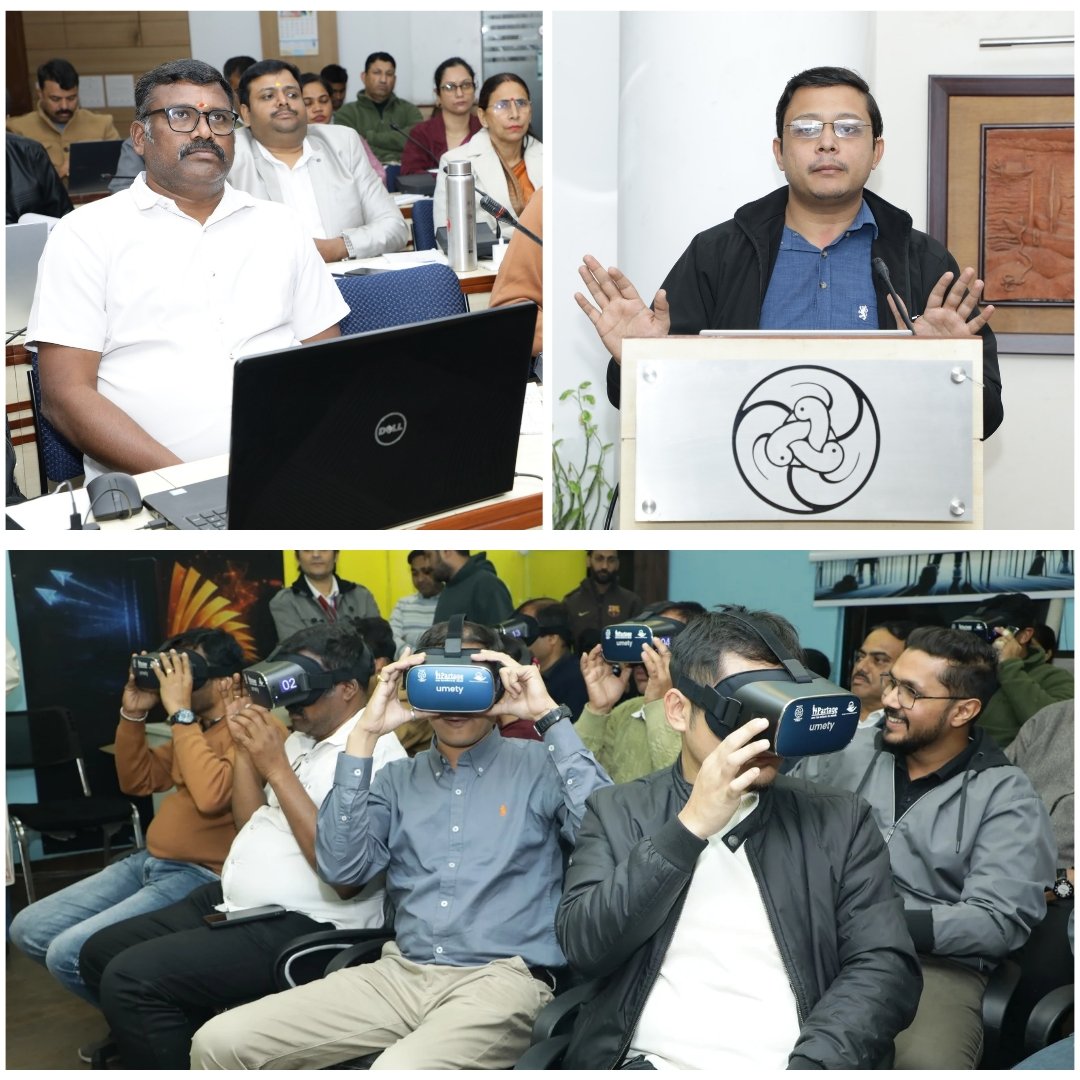
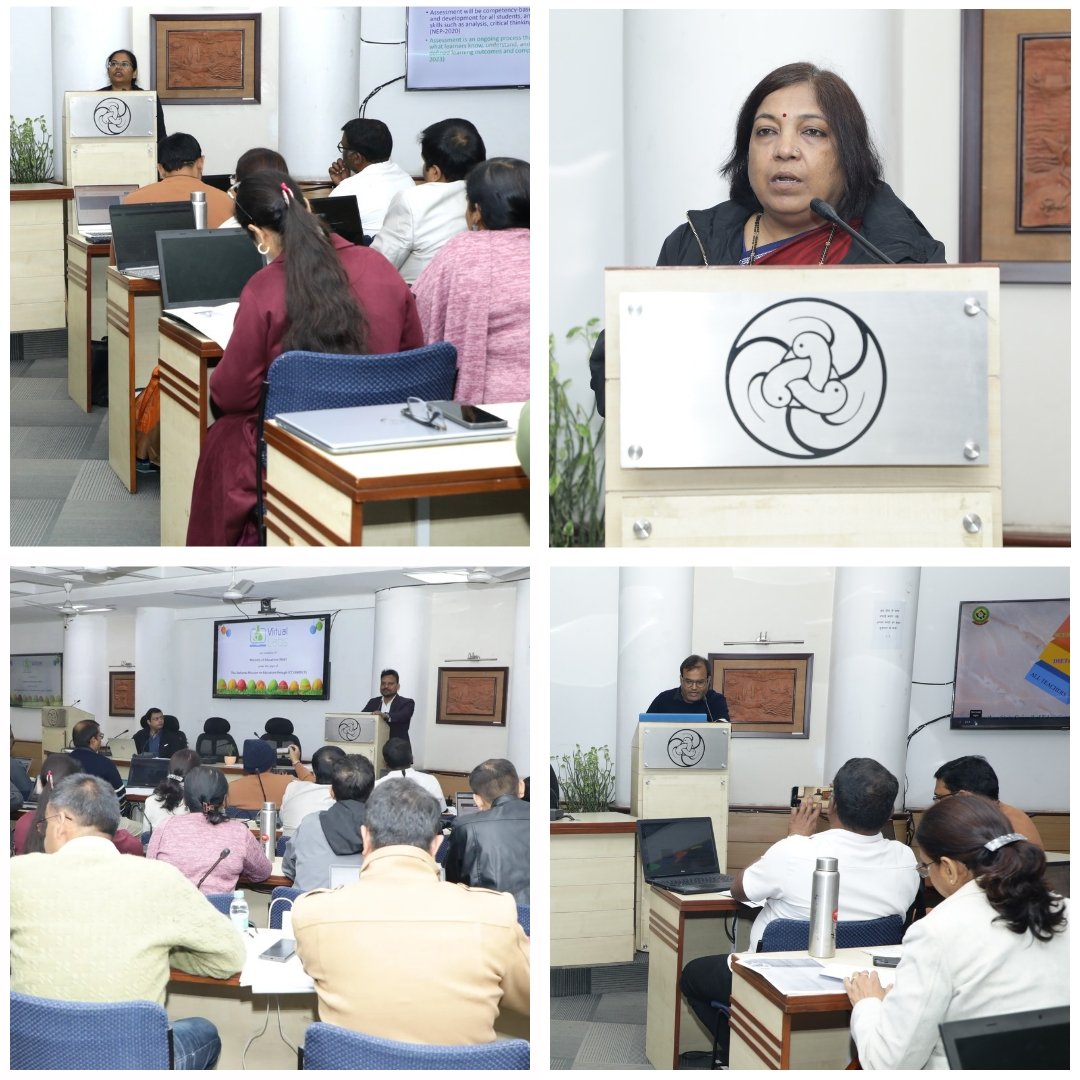
𝐇𝐢𝐠𝐡𝐥𝐢𝐠𝐡𝐭𝐬 | 𝐌𝐚𝐬𝐭𝐞𝐫 𝐓𝐫𝐚𝐢𝐧𝐞𝐫 𝐓𝐫𝐚𝐢𝐧𝐢𝐧𝐠 𝐏𝐫𝐨𝐠𝐫𝐚𝐦 𝐨𝐧 𝐕𝐢𝐫𝐭𝐮𝐚𝐥 𝐋𝐚𝐛𝐬 𝐈𝐧𝐭𝐞𝐠𝐫𝐚𝐭𝐢𝐨𝐧
Day 2 featured impactful sessions focused on enhancing the use of Virtual Labs in science education.
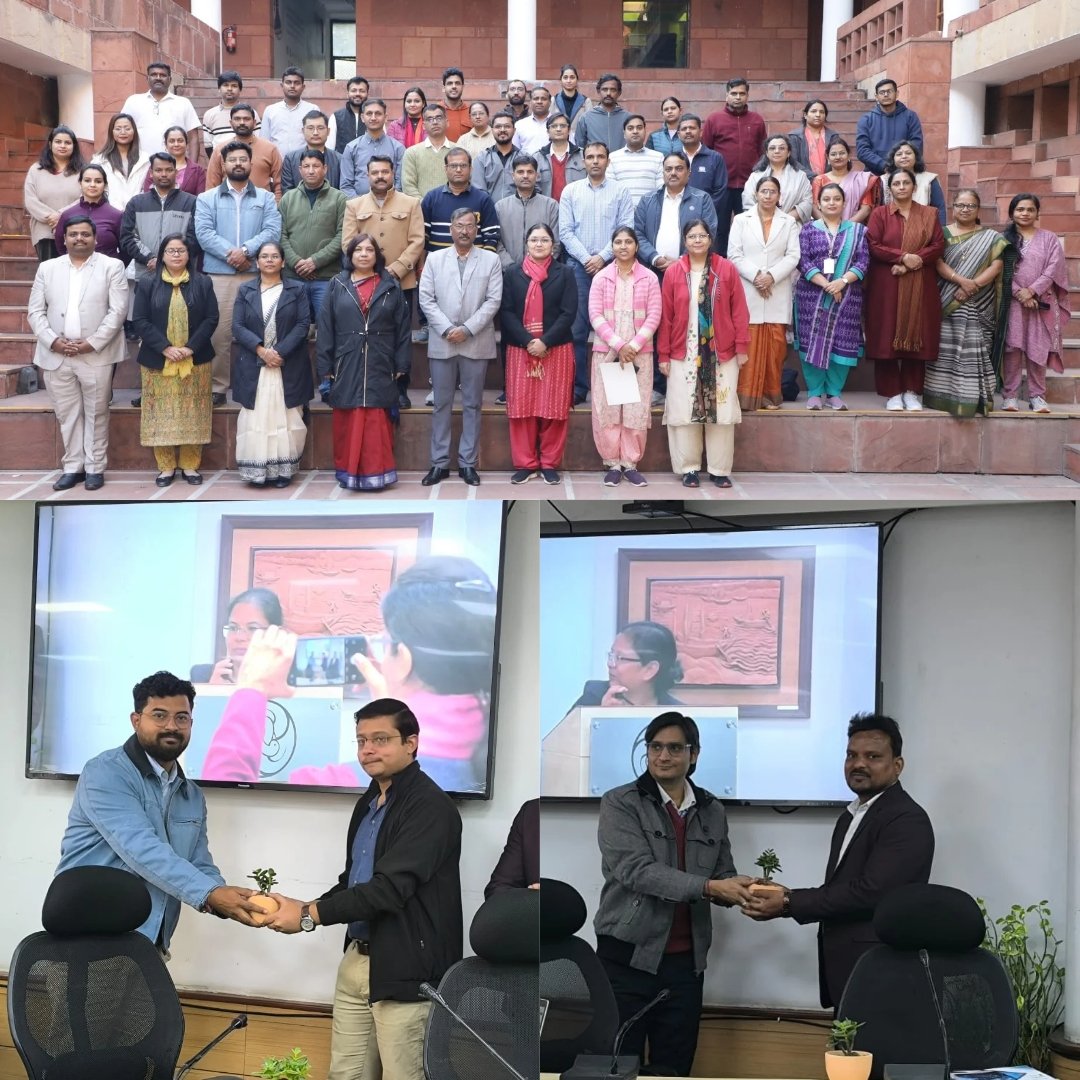
The programme brought together 32 faculty members from SCERTs and DIETs across 15 States and 4 Union Territories, with the aim of empowering educators to integrate Virtual Labs into science teaching and train teachers nationwide.
𝐒𝐞𝐬𝐬𝐢𝐨𝐧 𝟏
Mr. Chandan Kumar, Senior Project Assistant, IIT Delhi, and Mr. Sameer Hasan, Project Scientist, IIT Delhi, explained the key features, objectives, and the three phases of creating Virtual Lab experiments—development, testing, and scripting.
𝐒𝐞𝐬𝐬𝐢𝐨𝐧 𝟐
Dr. Praveen B. Binjha, NCERT, discussed assessment and lesson planning, followed by Dr. Rejaul Karim Barbhuiya, NCERT, who showcased the user-friendly features of the DIKSHA platform for accessing Virtual Labs.
𝐒𝐞𝐬𝐬𝐢𝐨𝐧 𝟑
Participants developed lesson plan using virtual labs, shared feedback, actionable poonts and way forward for their states.
𝐕𝐚𝐥𝐞𝐝𝐢𝐜𝐭𝐨𝐫𝐲 𝐒𝐞𝐬𝐬𝐢𝐨𝐧 ended with Certificates presented by Prof. Indu Kumar, Head DICT and Traning Division, CIET-NCERT and Dr. Parveen B. Binjha, Associate professor and programme coordinator CIET-NCERT, who delivered the Vote of Thanks.
A productive and inspiring day dedicated to strengthening digital science learning.
#VirtualLabs #ScienceEducation #TeacherTraining #DigitalLearning #NCERT #IITDelhi #DikshaPlatform #EdTechIndia #STEMEducation #CapacityBuilding #TeachingWithTechnology