If you were wondering what magnetic polarons are, wonder no more, as we were actually able to observed the with small angle neutron diffraction: https://t.co/p19LX3S8NL
Les professeurs Jeffrey Quilliam et Bertrand Reulet nous parlent de leur projet porteur : Excitations émergentes dans les matériaux quantiques 👇
#IQUSherbrooke
https://t.co/frBQrctPJI
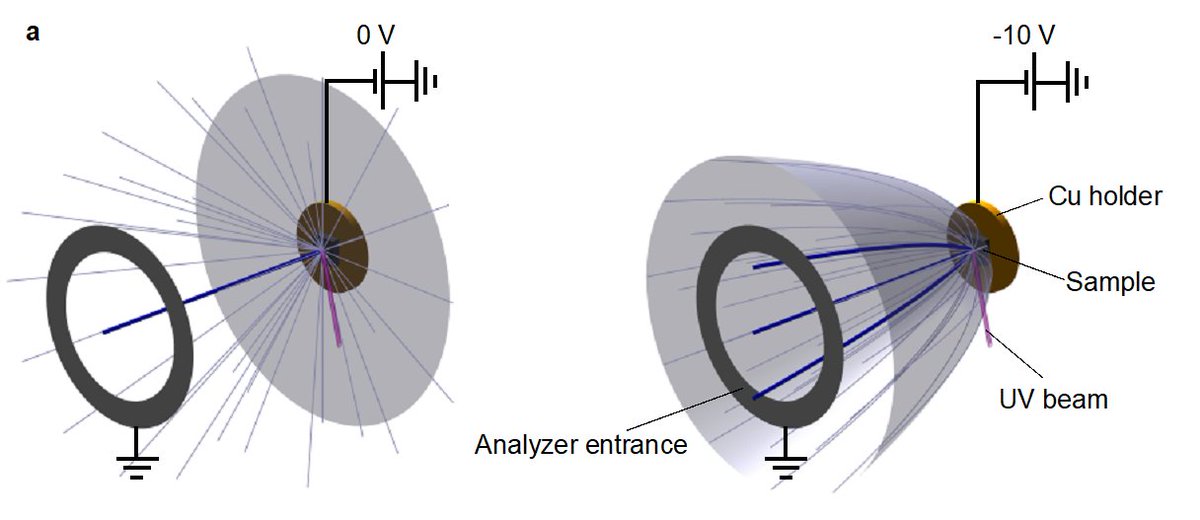
Our work on a 'wide-angle lens' for ARPES was published today in Review of Scientific Instruments! We showed how to increase the momentum field of view by applying a bias on the sample, a technique especially relevant for setups using laser light sources. https://t.co/pfPIqveHF3
Une communauté, 4 équipes de recherches, 4 projets d’avenir, l’IQ dévoile ses projets porteurs.
One Community, 4 Research Teams, 4 Research Projects, IQ unveils its promising projects.
➡️ https://t.co/9mU6MASXEH
#IQUSherbrooke
PRB Editors' Suggestion: #Quantum-well states in fractured crystals of the heavy-fermion material #CeCoIn5
Nicolas Gauthier et al.
Phys. Rev. B 102, 125111
#physics#condmat#EdSugg@APSPhysics
Article: https://t.co/7o3xPL0PWV
Our work about quantum well states in the heavy fermion material #CeCoIn5 has just been published in @PhysRevB! And if you feel like it, you can even play with the data, as it's openly available on the Stanford Digital Repository. #EdSugg#condmat#OpenData
As confinement is a trendy topic these days, here is our most recent work on the confinement of electrons! Do you feel quantized as the electrons do? https://t.co/NAkxP3Fy70
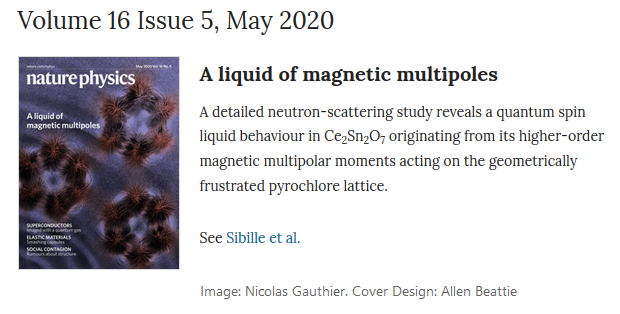
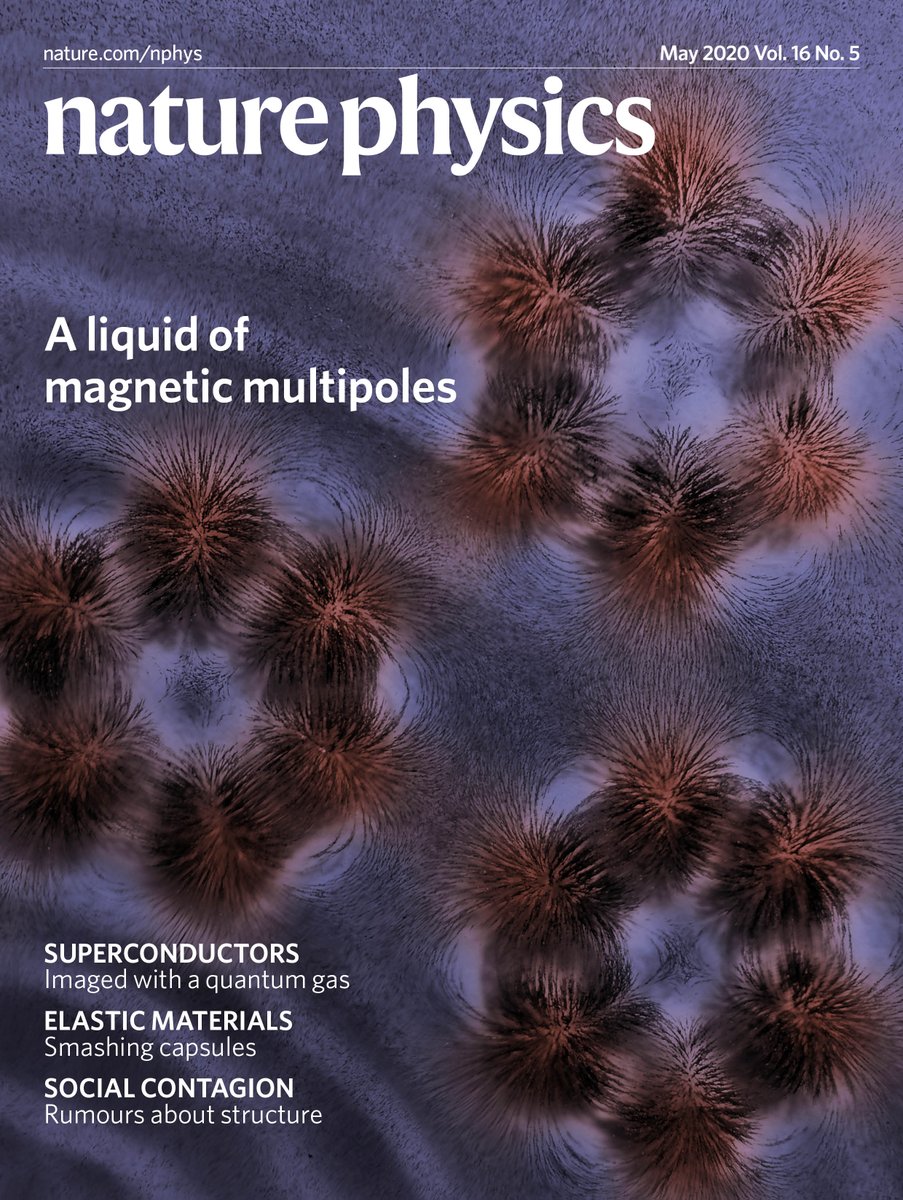
On @NaturePhysics cover!
Degrees of freedom in this octupole ice are quantum objects whose dual dipole–octupole nature can be controlled using magnetic fields or - as demonstrated here - temperature.
Opens perspectives for #quantum many-body systems !
https://t.co/L4CS94u3b7
We made the cover of Nature Physics! =D
Our results showed the realization of a spin liquid where the basic building blocks are magnetic multipoles instead of the more conventional magnetic dipoles.
I really like this approach! Comparing different momenta and fields all together in a single model gives it strong credibility. But also, that's quite a challenge experimentally!
Need to think of something else than a virus? Read our latest work in Nature Physics about a quantum magnet where magnetic moments of higher order (octupoles!) form a strongly entangled disordered state.
Paper: https://t.co/piU32Ngdwr
News & view: https://t.co/BgSZzbbKRA
Colleagues at Stanford developed this amazing new technique to measure subtle phase transitions with the elastocaloric effect. Have a look at their nice work published today in Review of Scientific Instruments! https://t.co/P4kqETjZif
Lots of information can be hidden in broad diffuse scattering features. We just need to be able to extract it properly! Using the ANNNI model, that's exactly what we have be able to do with 1D frustrated magnets. Have a look at our recent work: https://t.co/YfSTZG7ZFv