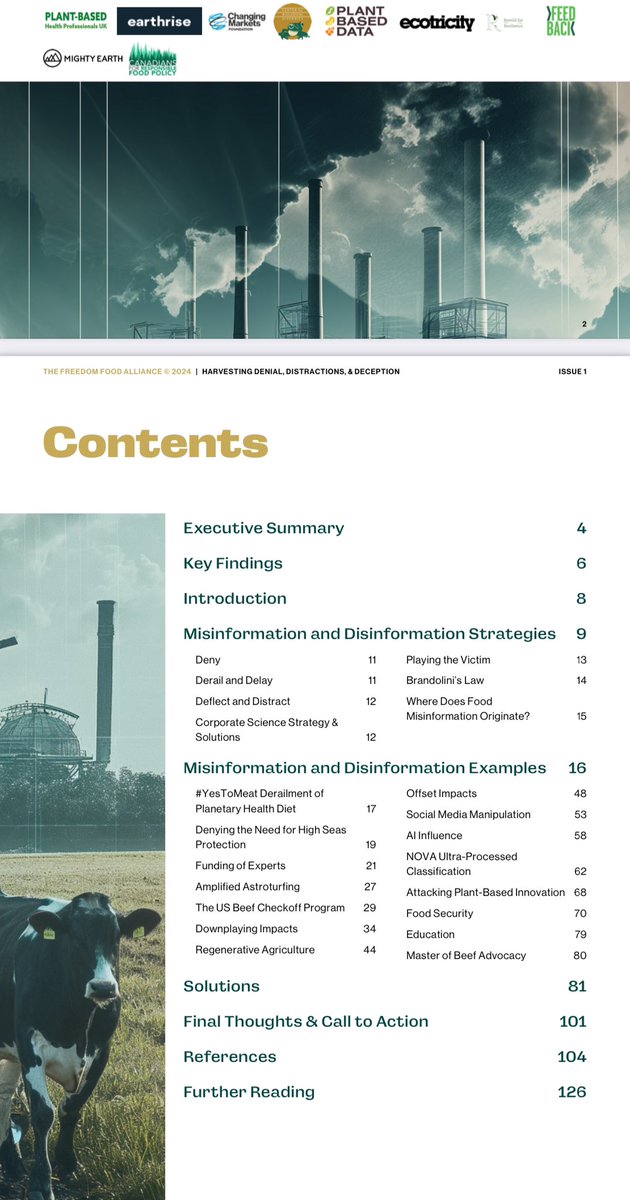
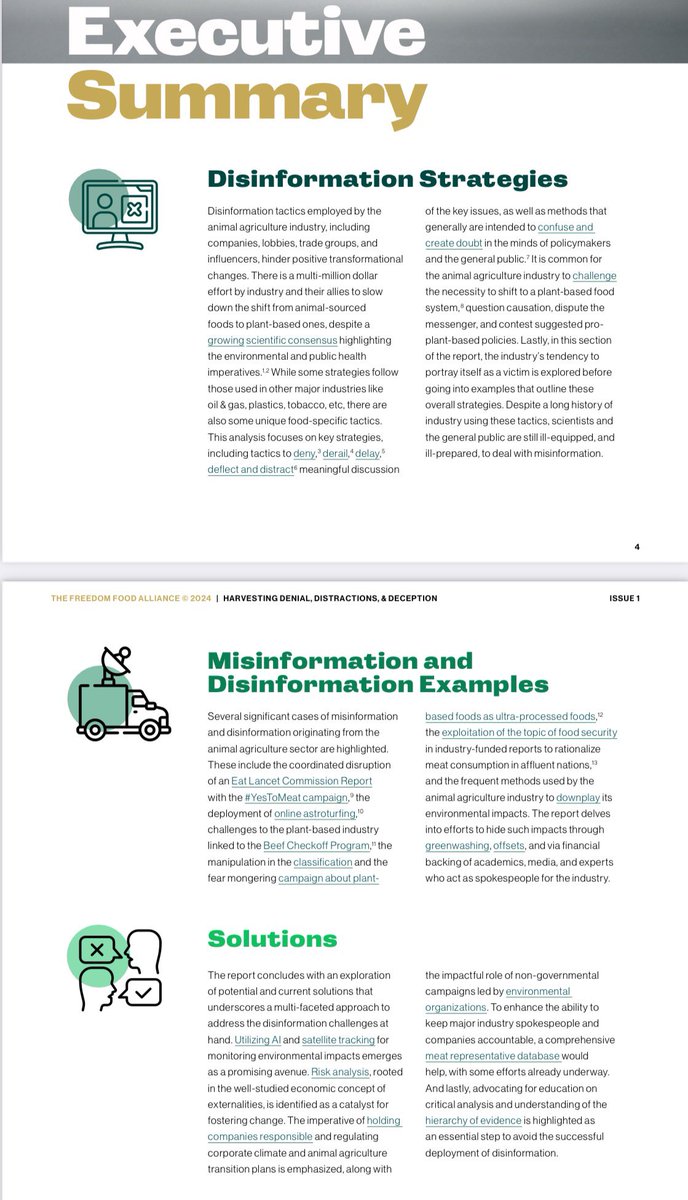
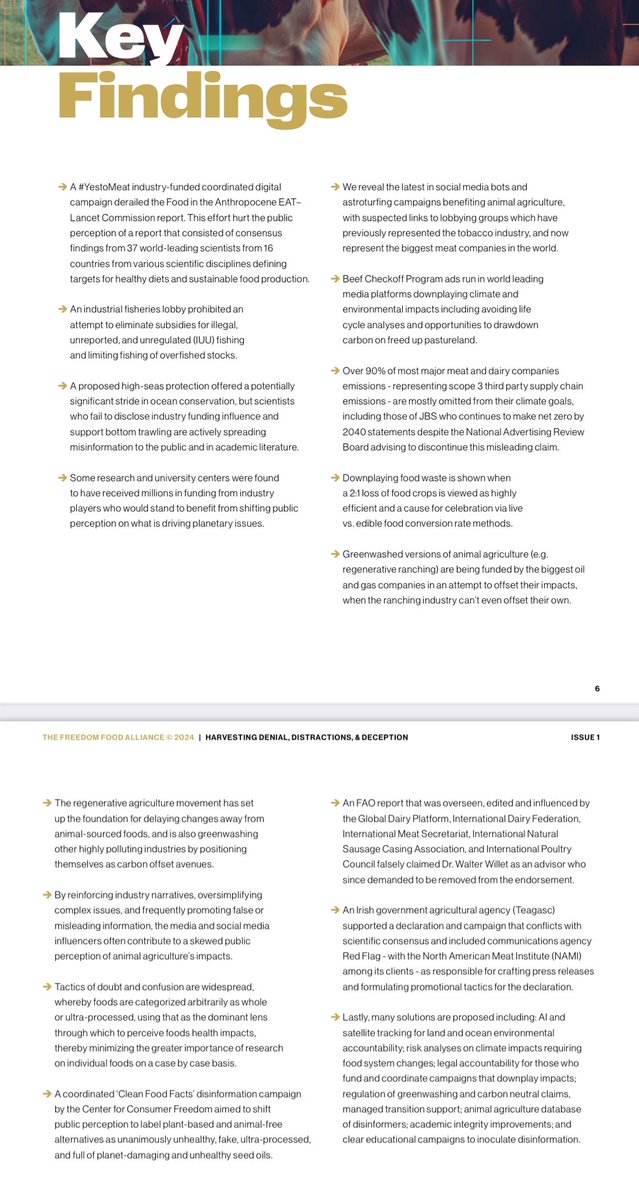
Out today, my analysis of animal agriculture’s disinformation campaigns over the past few years that has influenced public opinion, policy, and continues to delay the major changes we need.
‼️
Full Report: https://t.co/gicWv89Cs7
⬇️
Coverage:
https://t.co/fEqvarqVOl
@dale_wen@NukeSavesLives I can appreciate her advocacy for farm worker rights but she frequently makes false environmental claims around regenerative grazing and ridiculous naturalist fallacies.
I'm also not anti-tech/innovation. We need a mix of many approaches.
On one end of this migration is the Peruvian anchoveta fishery, driven to complete collapse.
On the other end is the Antarctic krill fishery, drowning the whales themselves in trawl nets.
Both are to feed fish farms, marketed as the sustainable solution to wild capture.
@NukeSavesLives@dale_wen Ok well I'm neither of those. Do you have a recent resource of the economic case for nuclear, esp against solar and wind? It's not my area and happy to change my mind. I also don't see any way around degrowth, in some way, from luxury western lifestyles.
"Rather than investing their considerable resources into climate solutions, the biggest meat companies treat climate science as a PR problem and spend millions of dollars on strategic communications and public affairs to manage it."
https://t.co/3WzMZ0jNLJ
@NukeSavesLives@dale_wen No to former (too expensive), yes to latter (esp precision fermentation which isn't GMO per se). Degrowth is so broad, it can be as simple as improving insulation, less luxury nonsense, minimalism, while still abundance of basic needs and best parts of life.
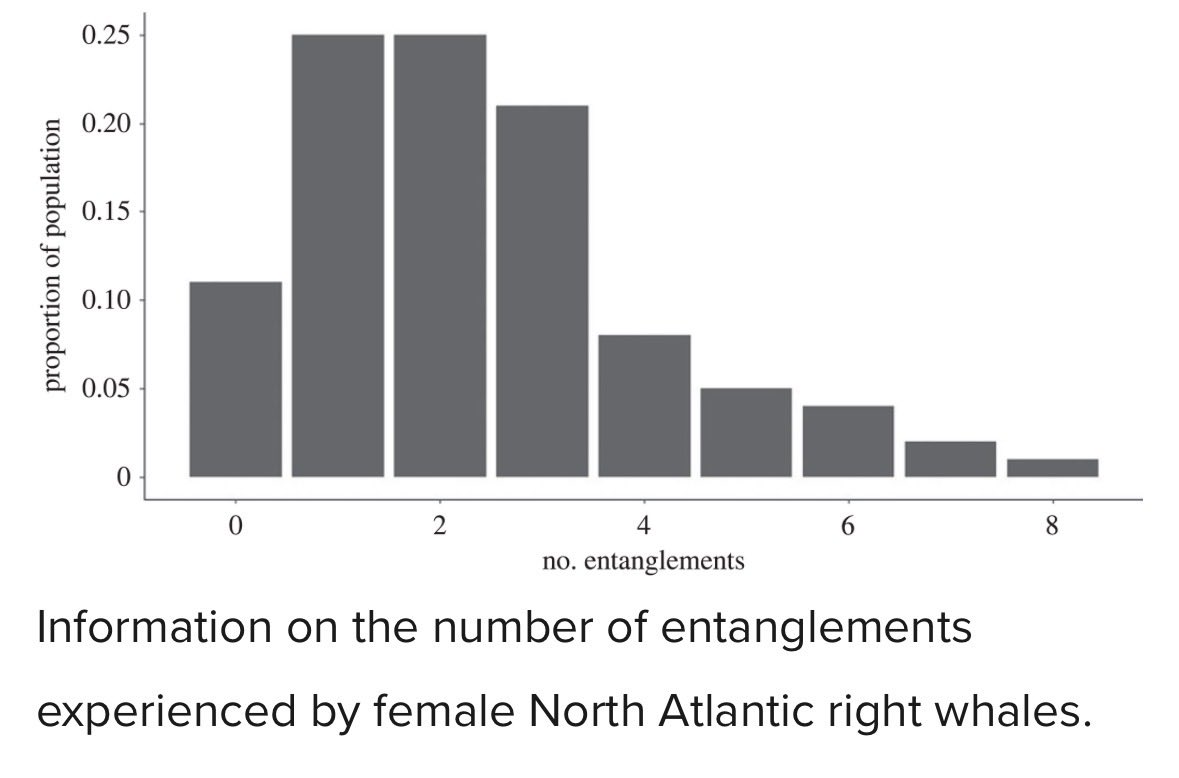
The right whales would boom if we just banned lobster trapping.
89% of females suffer at least one entanglement. It’s the species’ number one threat.
We are very literally choosing the extinction of a great whale to preserve this kitschy novelty food commodity.
@dale_wen Ok so you do think major polluters who benefit financially from pollution should be given a platform to delay, deny, and deflect accountability. Good to know where you stand.
Your silly extreme example says nothing about a privileged person, like yourself, who studied in Cali
@dale_wen Energy wise, degrowth is an option. Saying there's only tradeoffs is a cop out to do nothing.
But what does this have to do with my original post critiquing clearly more polluting animal-sourced foods, where by the way, there are clearly non-technical solutions?
Allowing fossil fuel & livestock lobbyists all over UN COP31 apparently isn't enough. They're still platforming industry reps to push their narratives largely unchallenged.
They proudly rep McDonald's, dairy associations, IMS "Meat for the World". Stop this nonsense.
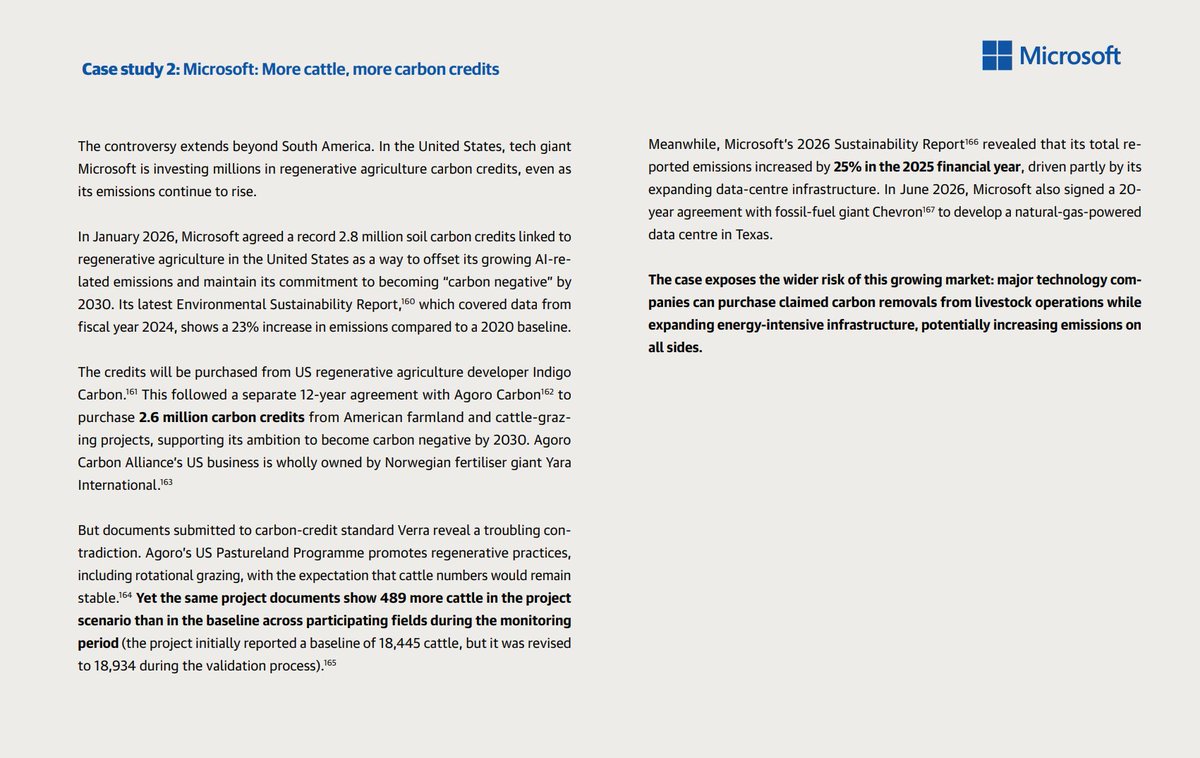
Me pasé la mitad del año trabajando en esta investigación sobre el uso y los problemas de los esquemas de carbono de ganaderia regenerativa.
Cuando encontré esto no lo podia creer: están usando vacas para compensar las emisiones de centros de datos en Estados Unidos.
Wrong.
This marginal land BS they push ignores that some of that land can grow crops & removing livestock could allow 6Mkm² of forest to regenerate, absorbing several years’ of global CO₂
https://t.co/tOtl8kyoHL
And it's not marginal to native wildlife culled or fenced out!
Instead of asking why livestock require so much land, perhaps we should be asking how we can best optimize the land used to feed a rapidly growing population. 🤔
Don’t make me tap the sign.
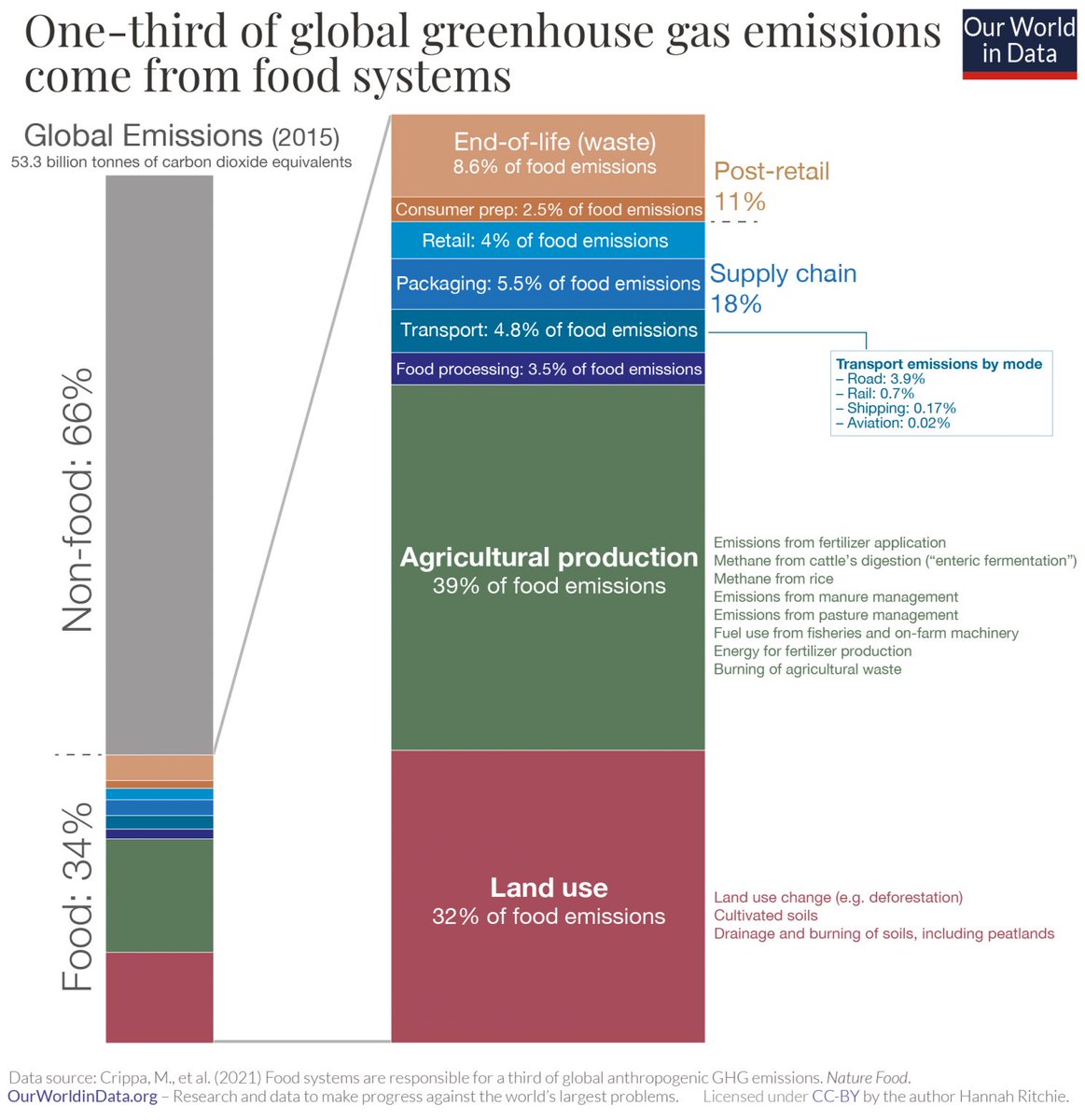
Transport accounts for ~4.8% of total food system emissions.
Locally sourced meat causes more environmental damage than pretty much any plant-based food from anywhere in the world.
@johann_bjorn Interesting Björn thanks for sharing, always helpful to know what works. Not surprised by crisis framing being neutral/losing cred with audience.
Going to try to update my framing too towards nature loss and risking extinction of animals and plants.
We just published the 2026 State of the Climate Report. Of 16 planetary vital signs spanning greenhouse gas concentrations, temperatures, the oceans, ice, energy balance, and wildfire, 7 (44%) are currently at record extremes. Read report here: https://t.co/Ppb8TluFCG
Just like Exxon knew about the impacts of climate change, the beef industry knew too.
A new PLOS Climate study documents how the National Cattlemen’s Association (NCA), now NCBA, responded to evidence linking cattle methane to global warming from 1986–1996
(study 🔗 at 🧵end)
Exxon faced lawsuits over climate deception.
Beef industry associations deserve the same scrutiny and legal accountability.
Full study:
Jacquet J, Loy L (2026) Global warming and the National Cattlemen’s Association 1986–1996. PLOS Clim 5(10): e0001061 https://t.co/m04WcgI4PV
Just like Exxon knew about the impacts of climate change, the beef industry knew too.
A new PLOS Climate study documents how the National Cattlemen’s Association (NCA), now NCBA, responded to evidence linking cattle methane to global warming from 1986–1996
(study 🔗 at 🧵end)
“If the US had reduced beef and veal consumption by 50% starting in 1992 and replaced that consumption with other products…it is possible that somewhere between 4 and 13 Gt CO2eq could have been avoided between 1992 and 2023.” (Jacquet et al., 2025)
Not incl foregone land C seq