New episode of the Fathom the Mind podcast: I spoke with philosopher of science Prof. Michel Bitbol about phenomenology, the “hard problem” of consciousness, and why revisiting common assumptions may be exactly what scientists need to make progress.
https://t.co/dndK6Y6Fhc
“…the most basic tools for a science of mind and for natural science—our science of matter—are the same: we use our mind to investigate both matter and mind.”
—Prof. Piet Hut
https://t.co/diwko9ksw6
On the first episode of Fathom the Mind, a new podcast produced by @Center_CCR, Prof. Piet Hut discusses his new research program to bridge matter and mind.
https://t.co/qC5OawTXlX
#consciousness#podcast
Fascinating podcast (Fathom the Mind; https://t.co/eOx0m8j2XU) with the incomparable @NicholasMatiasz and Professor Piet Hut on the fascinating topic of bridging the gap between matter and mind! Don’t miss it!
LLMs that merge spans of text are not doing the same reasoning that scientists do when they merge causal-structure constraints to identify their implications.
I still haven't heard a good answer to this question, on or off the podcast.
AI researchers often tell me, "Don't worry bout it, scale solves this."
But what is the rebuttal to someone who argues that this indicates a fundamental limitation?
I‘ll be giving a talk titled “What is contemplative science?” on February 5, 2025, at 11:00 a.m. PST, as part of the online series The Dawn of Contemplative Science, hosted by Les Cèdres Bleus.
Speaker list and registration: https://t.co/QfYTYUmfdo
I‘ll be giving a talk titled “What is contemplative science?” on February 5, 2025, at 11:00 a.m. PST, as part of the online series The Dawn of Contemplative Science, hosted by Les Cèdres Bleus.
Speaker list and registration: https://t.co/QfYTYUmfdo
I believe the way forward is to expand the domain of empiricism to include the faculty of mental perception, & to acknowledge that objectivity is rooted in intersubjective verification. @BAlanWallace & I make this case here (full preview available, Ch. 7): https://t.co/PUQfJONcTN
My magnum opus of the fall: the arguments for scientific incompleteness and consciousness being a true but unprovable statement within science
https://t.co/ZA7IrOIynB
In @EJNeuroscience, @alcinojsilva, Justin Wood, & I discuss how the cumulative evidence index (CEI) can gauge both the consistency of a single line of evidence and the convergence of multiple lines of evidence, addressing the reproducibility crisis. #CEI
https://t.co/ZleLxMnKfP
For anyone interested in the mind, I strongly recommend Prof. Piet Hut’s new blog “FEST” (= Fully Engaged Science and Technology — or, alternatively, Fully Empirical Science and Technology).
https://t.co/RwqYAuRv6m
“The crucial point here is that we do not have empirical access to any form of matter, where empirical is defined as given in experience”
—Piet Hut
https://t.co/5rk8eZvYKc
In a new chapter published by @routledgebooks, @BAlanWallace & I discuss how professional contemplatives can work with neuroscientists, psychologists, and even physicists—not just as study participants, but as true colleagues who help frame the research.
https://t.co/kU2O19A6N9
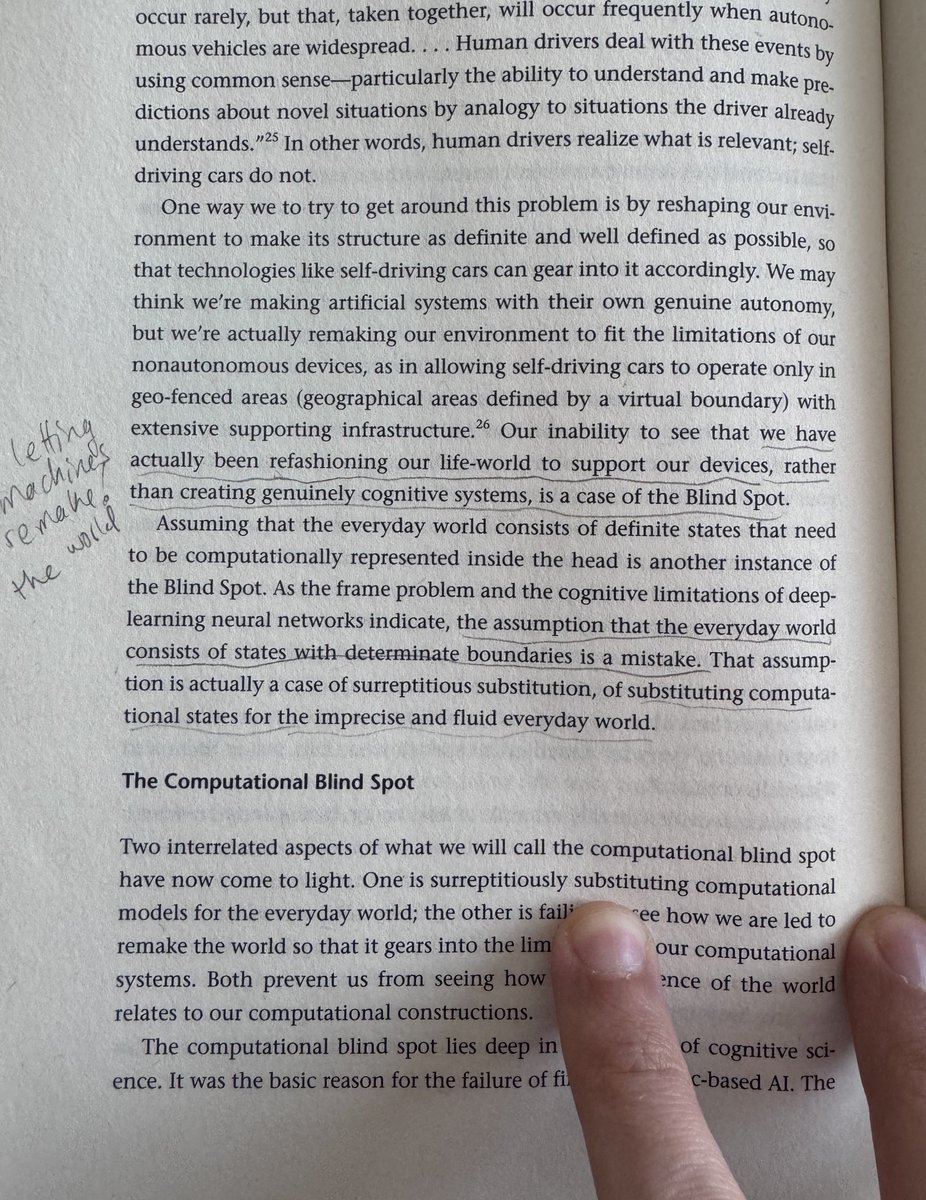
In my opinion the most important pages of *The Blind Spot* are in the Cognition chapter dealing with artificial intelligence and machine-learning. @evantthompson @AdamFrank4@MGleiser