How does the face form? Why do faces look different? We leverage the strengths of the zebrafish system to understand craniofacial development and variability.
The sclerotome is the source of the dorsal and anal fin skeleton and its expansion is required for median fin development
Read this #OpenAccess Research Article by Raisa Bailon-Zambrano, James Nichols @NicholsLab and colleagues:
https://t.co/QKTT4gNPwo
This a special one for us, I found this weird mutant without a dorsal fin close to 15 years ago while a postdoc with Chuck Kimmel @uoregon
Ultra talented @BailonRaisa uncovered a complete story as my first PhD student. Back burner projects can pay off.
https://t.co/QgSfYZatcz
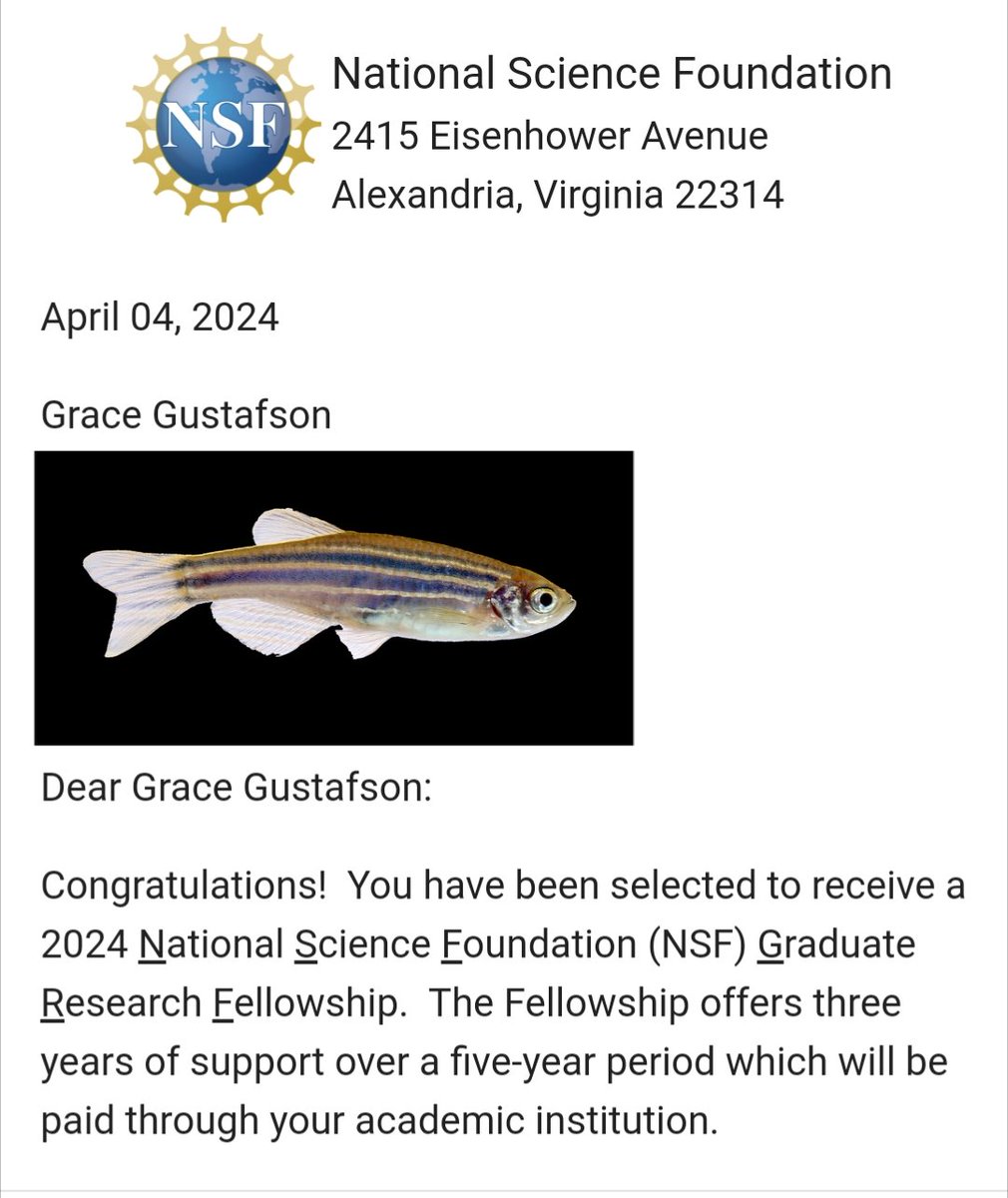
Big congratulations to Grace Gustafson for earning an NSF GRFP! She’s an outstanding scientist that really deserves this award. #creative#smart 🐟🧬#nsf#grfp@molbcu
Attention craniofacial and oral biology researchers! We are looking to hire a new faculty member (at the rank of Assistant Professor) to join our collegial, research-intensive Department. Job posting: https://t.co/jGR8plSvOG
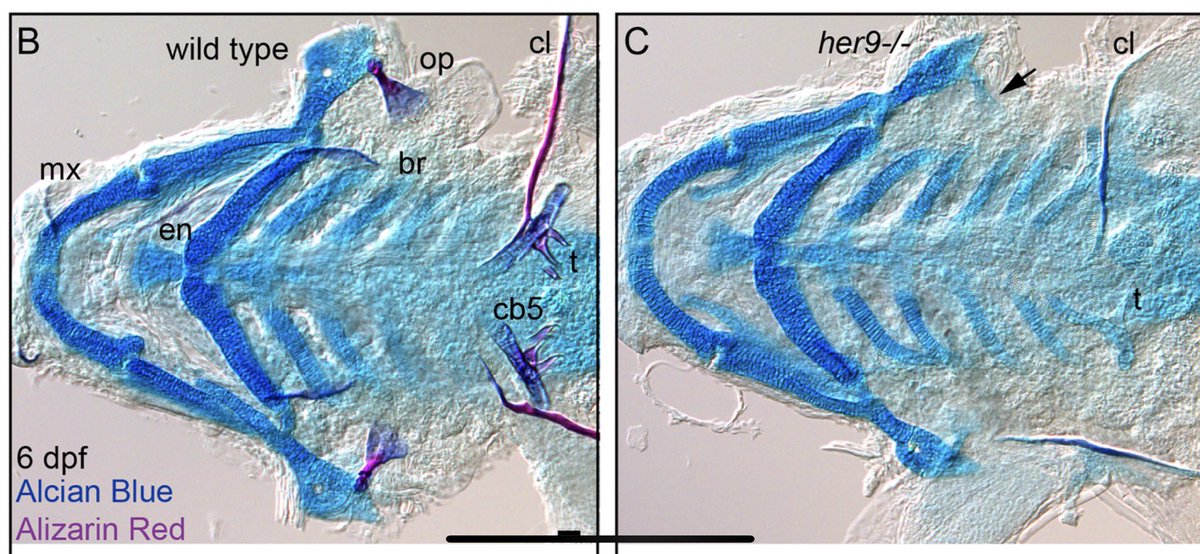
Check out the remarkable mineralization phenotype in zebrafish her9 mutants: Osteoblasts develop at the correct time and place, but mineralization is only very weak, or not detectable. Cartilage is largely unaffected in mutants.
Here are @NicholsLab and I celebrating our six year lab anniversary @CUAnschutz in the lovely new restaurant on campus! It's been a real pleasure navigating new PI life together.
Seeking to understand craniofacial variation we found 1) standing variation in paralog expression levels. 2) paralog expression levels are heritable 3) variation in paralog expression can modify phenotypes associated with mutation of one of the paralogs.
Attention craniofacial and oral biology researchers! We are looking to hire 1-2 faculty (at the Assistant or Associate level) to join our collegial, research-intensive Department. Job posting: https://t.co/SOOcbIqGs0