Building @simpleminingio has never been about shortcuts.
We’ve bootstrapped this company from day one — no outside capital, no debt, no fundraising rounds.
Just hard work, customer obsession, and the discipline to do things the right way.
Our growth has come from the basics:
• Under-promise, over-deliver
• Treat customers like true partners
• Fix problems fast and take ownership
• Build a culture that runs through walls
• Empower great people to do great work
In an industry where “raise first, build later” is the norm, we chose the opposite path. We built Simple Mining the old-fashioned way — with sweat, execution, and a team that believes in the mission.
We’ve come a long way from our first container on our first site just four years ago to now operating nearly a dozen sites under management across Iowa, being ranked the fastest growing company in Iowa on the Inc. 5000, and becoming the 4th largest consumer of power in the entire state, behind only Facebook, Google, and Microsoft.
Bootstrapping isn’t easy. But it creates character, discipline, and a company that controls its own destiny.
Proud of our customers. Proud of our team. And proud that we’re building something real, the right way.
The future is bright.
Let’s roll!
This Saturday, Bitcoin’s network difficulty is projected to drop ~10%.
Here’s the part worth sitting with: once it hits, difficulty will be lower than it was a full year ago.
What that means in practice: it’s more profitable to mine today in Bitcoin terms than it was a year ago. Same block subsidy, lower difficulty, so every unit of hashrate earns more sats than it did 12 months ago.
Hot take: It’s more profitable to mine Bitcoin today at $77K than it was at $125K last October.
Sounds backwards. It’s not.
Q4 2025 peak: difficulty hit 156T.
Today: difficulty sits at 137T.
Hashrate has pulled back as higher-cost operations come offline and a meaningful share of capacity migrates to AI.
What does that mean for the miners still running?
You’re earning ~14% more BTC per terahash than you were at the Q4 peak.
Same machine. Same power bill. More sats.
For operators running a mine-and-hold strategy, this is the setup that rewards conviction. The dollar value of daily production is down. The Bitcoin produced per machine is up.
If you sell BTC daily to cover OpEx, the USD hashprice is your number. If you hold, the only number that matters is sats produced and that’s the best it’s been in months.
Bitcoin difficulty hasn’t made a new high in nearly 6 months.
That hasn’t happened since the 2022 crypto winter.
The numbers:
• Difficulty peaked at 156T on November 11, 2025
• Today: 135.59T. Down 13% from peak
• 5 of the last 8 difficulty adjustments have been negative with a 6th projected in just a few days
• Roughly 252 EH/s came offline after BTC dropped from $126K
Old fleet is being unplugged faster than new fleet is coming online. Bitmain has delayed the S23 by nearly 6 months and isn’t building units without orders stacked up.
The next leg up in BTC will land on a network that physically cannot scale fast enough to absorb it.
The next 12 months will reward whoever’s already plugged in.
There’s a structural bottleneck building in Bitcoin mining hardware that few are tracking.
Bitmain holds one of the most valuable seats in semiconductors.
They are a top-3 customer at TSMC’s 3nm node, behind only Apple and Qualcomm.
Holding that slot requires monthly wafer commitments. Take-or-pay. No exceptions.
Meanwhile the Antminer S23, originally slated for late 2025, has slipped nearly 6 months. Suppliers indicate Bitmain isn’t building finished units until orders stack up. They’re producing to demand, not on spec.
But the chips keep coming. They have to.
So Bitmain is quietly stockpiling raw silicon while assembly sits idle.
This creates real tension:
• TSMC 3nm is running over 120% utilization, meaning they’re producing more wafers than the fabs were designed to handle.
• AI and HPC customers have locked in 3nm and 2nm capacity through 2027.
• If Bitmain reduces their wafer commitment, that allocation gets absorbed instantly by Apple, NVIDIA, and hyperscaler custom silicon.
• Getting it back later? Effectively impossible
So the question is: how long can Bitmain stomach stockpiling chips before cash flow forces them to cut TSMC commitments? And if they hold the line, at what cost?
Either way, the downstream effect is the same.
Even when demand returns and a buyer walks in wanting 50,000 S23s, best case is several months to assembly. Every step downstream of chip production becomes the bottleneck.
The result: network hashrate growth structurally slows.
If Bitmain stays slow on sales for too long, do they eventually risk losing their spot in line with TSMC entirely? And if the market heats up later, taking that spot back at higher production levels is likely impossible. Which means even fewer miners coming online when demand returns.
The miners coming online over the next 12 to 24 months may end up being far fewer than the market is currently pricing in.
The White House just declared grid infrastructure essential to national defense.
Meanwhile cities across America are blocking the data centers and supporting infrastructure that drive grid investment in the first place.
The infrastructure that powers data centers is now a matter of national defense. The communities that embrace this will win the next decade of investment. The ones that don’t will watch it pass them by.
The White House just declared grid infrastructure essential to national defense.
Meanwhile cities across America are blocking the data centers and supporting infrastructure that drive grid investment in the first place.
The infrastructure that powers data centers is now a matter of national defense. The communities that embrace this will win the next decade of investment. The ones that don’t will watch it pass them by.
Proud to share that every Simple Mining employee now earns a 1% Bitcoin bonus every year, redeemable at year-end powered by @fold_app’s new Bitcoin Bonus Program.
Our team works in Bitcoin every day. Now they get to own it too.
It’s one of the many reasons @simpleminingio is a great place to build a career and if you’re looking for your next move, we’d love to talk.
https://t.co/jIoQz2dNEo
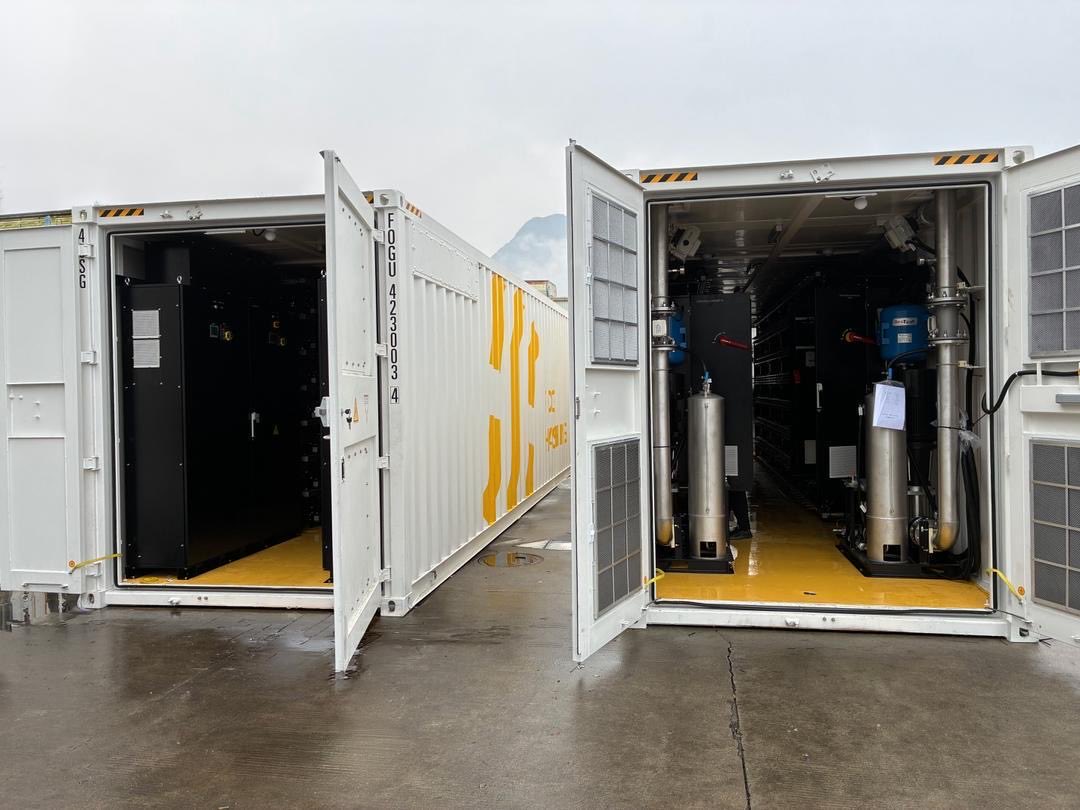
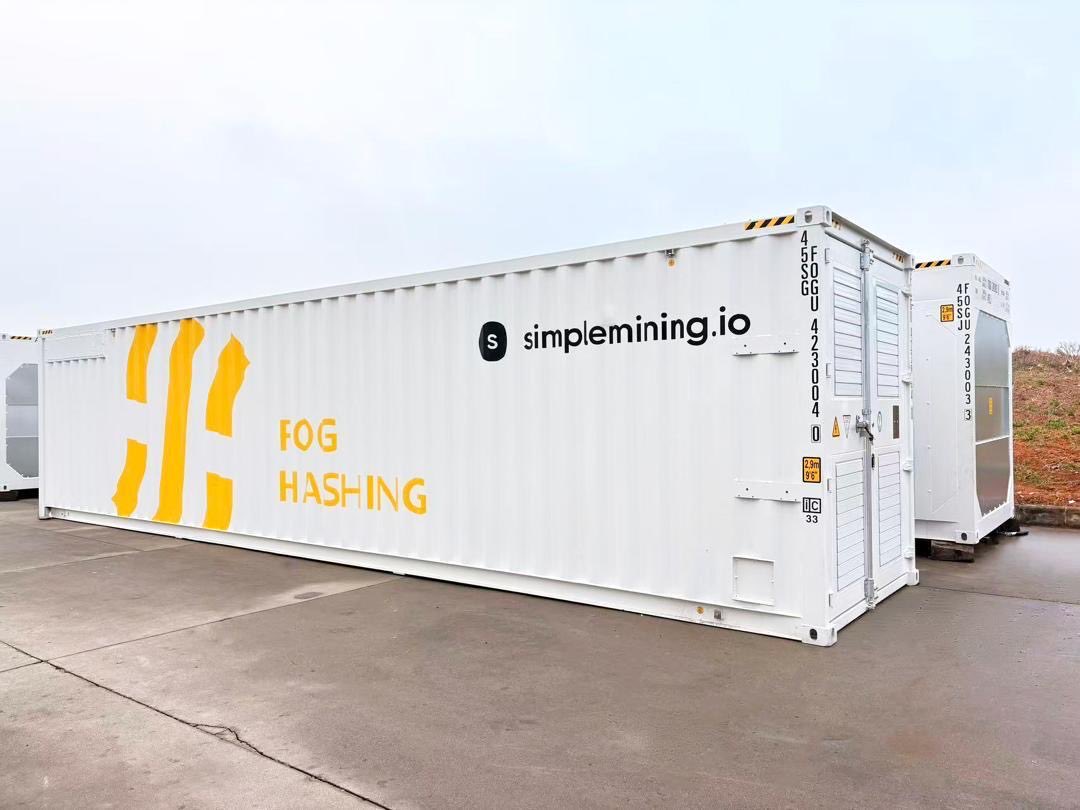
Site #10 is officially live.
This site uses a new closed loop liquid-cooled technology, a major advancement in mining infrastructure that runs at about the level of a normal conversation.
Getting this site built was a fully local effort.
We hired 25+ people across the trades, including crane operators, electricians, dirtwork and grading crews, portapotty and dumpster services. Every dollar we spent with local contractors is a dollar that recirculates through the community, at the hardware store, the diner, the gas station, the local school fundraisers.
Between our tax contributions and ongoing operations, we’re proud to be a meaningful new contributor to this rural economy.
This area recently lost a major employer after more than a century of local manufacturing. We can’t replace that legacy, but we can show up with jobs, with tax revenue, and with a long-term commitment to strengthening the community.
That’s exactly what we intend to do.
Excited for what’s ahead.
Every Bitcoin mining site just became a possible acquisition target for AI companies now that they can operate on flexible loads versus firm loads at 99.999% uptime.
More miners will likely transition to AI and difficulty will continue to stay stagnant.
Those continuing mining will reap the rewards.
Google is now the first cloud provider to integrate 1 GW of flexible demand into long-term utility contracts. Our ability to shift or reduce our energy demand when it’s needed can help utility companies balance supply/ demand and plan for future capacity needs.
This is a big milestone for responsible data center growth and helps keep costs lower for local communities.
https://t.co/yagskz6Wq7
What happens when everyone asks AI for investing advice and it keeps reaching the same conclusion?
Bitcoin is the only globally accessible asset with a credibly fixed supply that anyone in the world can independently audit.
Network difficulty is about to jump 15%+.
If it holds, this will be the largest positive difficulty adjustment in almost five years.
Before everyone screams “massive new hash coming online,” let’s add some context.
Most of this move is simply a correction from the biggest negative adjustment we just had.
The winter storm in the U.S. forced a huge amount of hash offline because of curtailments. Now those machines are back on, so difficulty is snapping back up.
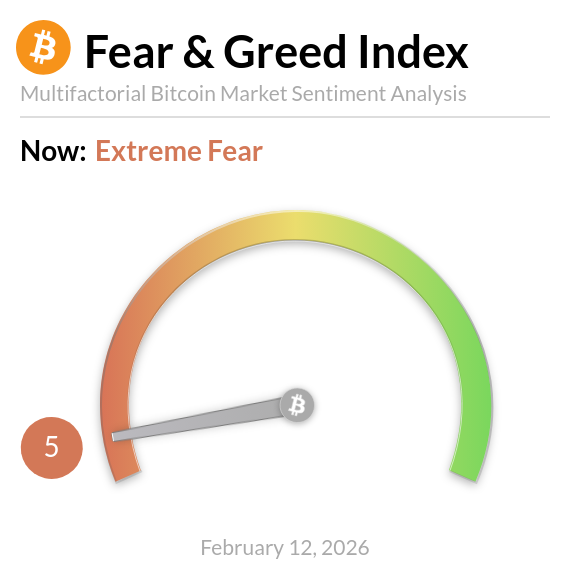
This adjustment is going to push hashprice to all time lows, especially with Bitcoin sitting under $70,000.
So the real question is: how long can inefficient operators survive in this environment?
Here’s the part most people miss.
Large scale operators don’t just flip a switch off because margins get tight for a few weeks. Many have power agreements where they’re expected to draw a certain load. In some cases it actually costs more money or does more long term damage to their business relationships to shut down completely.
That’s why I don’t think we see an immediate wave of machines going offline.
Yes, we’ve already seen a lot of older generation units retired. Some bigger companies have shifted capital into AI and have already powered down inefficient fleets. But there’s still a lot of older hardware out there.
If hashprice stays suppressed for several months, then we’ll likely see a real impact on network difficulty to the downside. It won’t happen overnight.
The operators running newest generation equipment at the best efficiency and lowest power rates will be fine.
Everyone else is going to feel the pressure.
The next few adjustments are going to be very telling.
Site #10 is almost live.
We’re officially inside the 45 day countdown for Site #10 to be energized.
Containers are scheduled to deliver to site on March 13th.
10 MW of hydro cooled bitcoin miners will be deployed here by spring!
Excited to bring this site online and continue expanding what we’re building.
More updates soon. ⚡