Here’s the official trailer for our latest original #WebXR game, "The Escape Artist." Playable now via #MetaQuest! We can't wait to share more on what went on behind the scenes to bring this to life, but for now we hope you'll play the game and let us know what you think.
@egabbert As its first birthday approaches, I just want to thank you for this piece. I'm reading Auden for the first time, and this was the perfect context for a poem of hidden depth. I missed so much in my first read. You've accelerated my appreciation for it 🙏
In 2021, the Dixie fire burned nearly one million acres in Northern California. Creating 3D animations of the fire and its atmospheric impact required us to use new tools and design new techniques. Learn how the visualizations were created on Times Open: https://t.co/fjDt76fGFH
How do you bring a consistent look and feel to mixed reality stories from The New York Times, across all users and environments? What about a fish tank? https://t.co/49uRzhvRdt
I learned this method of visualization from the amazing @nplareau. This project would not have been possible without his inspiring work and guidance. Thanks Neil! Also a big shout out to the team behind @Py_ART, a crucial tool for working with radar data in python. Thanks! 🙏🙏🙏
Feeling proud 😊 2 yrs ago I joined @NYTimesRD as their first #SparkAR dev making #AR on Insta. We've since grown & published dozens of #3D stories. One of my most challenging, a #dataviz of a wildfire's plume from radar using #python > #houdini > #sparkar https://t.co/x1ocfhLoEq
@mapbliss@NYTimesRD In short, in python get radar data using py-art library (https://t.co/5BH7zT2BDI), interpolate and convert to OpenVDB sequence (https://t.co/s0xqpGHmMl), import into Houdini, texture the surface with cloud noise, bake lighting, export volume as a stack of quads, import to Spark.
Over the last two years, The Times published more than two dozen augmented reality effects. Today we’re sharing those effects in one place with brief insights into how each story fits into the ever-evolving world of immersive journalism. https://t.co/1iVebXFefW
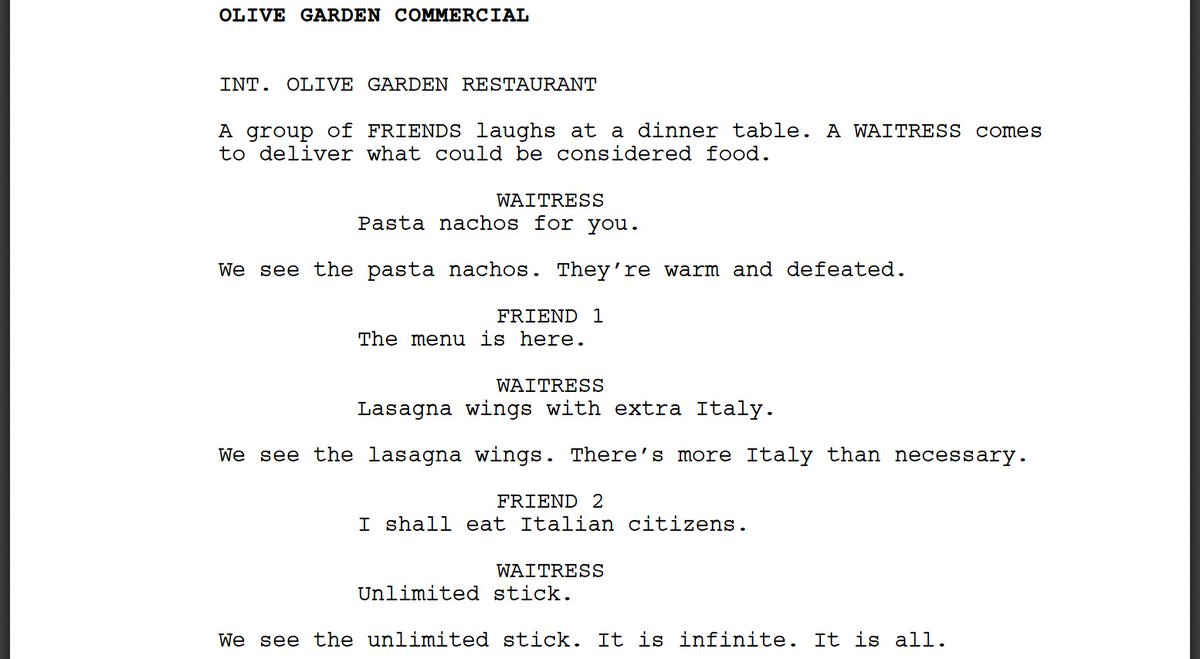
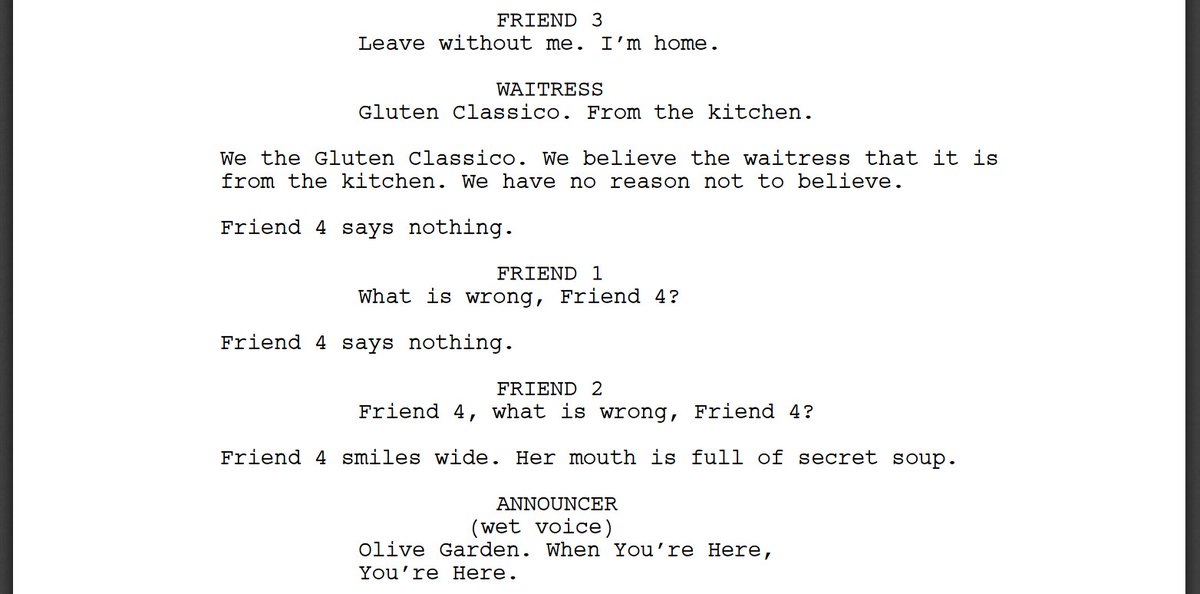
I forced a bot to watch over 1,000 hours of Olive Garden commercials and then asked it to write an Olive Garden commercial of its own. Here is the first page.
The CDC is urging schools to reopen as soon as possible, but questions of proper ventilation remain.
The New York Times worked with experts to understand the simple steps schools can take to reduce coronavirus exposure in the classroom. https://t.co/d6Bxeow2vX
Explore more of our simulations that show how ventilation can work alongside other precautions like mask-wearing and social distancing to keep classrooms safer. https://t.co/gc3J0HkQpA
It's going to be very difficult to fly a helicopter on Mars, but NASA thinks they've figured out how to do it. See what it's like to fly the Marscopter on Instagram with your smartphone here: https://t.co/qyrppT9kV6
How do we assemble multiple animated scenes and graphical simulations into a single 4MB Instagram effect?
Our latest post explains the process of translating @nytgraphics's story on the efficacy of masks into augmented reality.
https://t.co/ICbNoXoYR7
My team at @NYTimesRD in collaboration with @nytgraphics just published an Instagram effect explaining how masks work. Here's a peek behind the scenes...
We built animated sequences in AR to visualize how masks protect people from coronavirus.
R&D Engineer @NickBartzokas describes the technical challenges of using Spark AR and Instagram to transport readers into the magnified fibers of an N95 mask.