@NBerggruen@FT@htsi This is so true. I’d add that thinking is a form doing. There is no external execution without thinking, planning, imagining first, so it’s perhaps more useful to parse the quality and kinds of thinking and the quality of execution, vs reducing to mere “thinkers” and “doers”.
Check out the new podcast STARKLY and dig into a new pedagogy of decision intelligence and what individuals need to keep up in the age of AI 🚀
https://t.co/QiWlXcfA7j
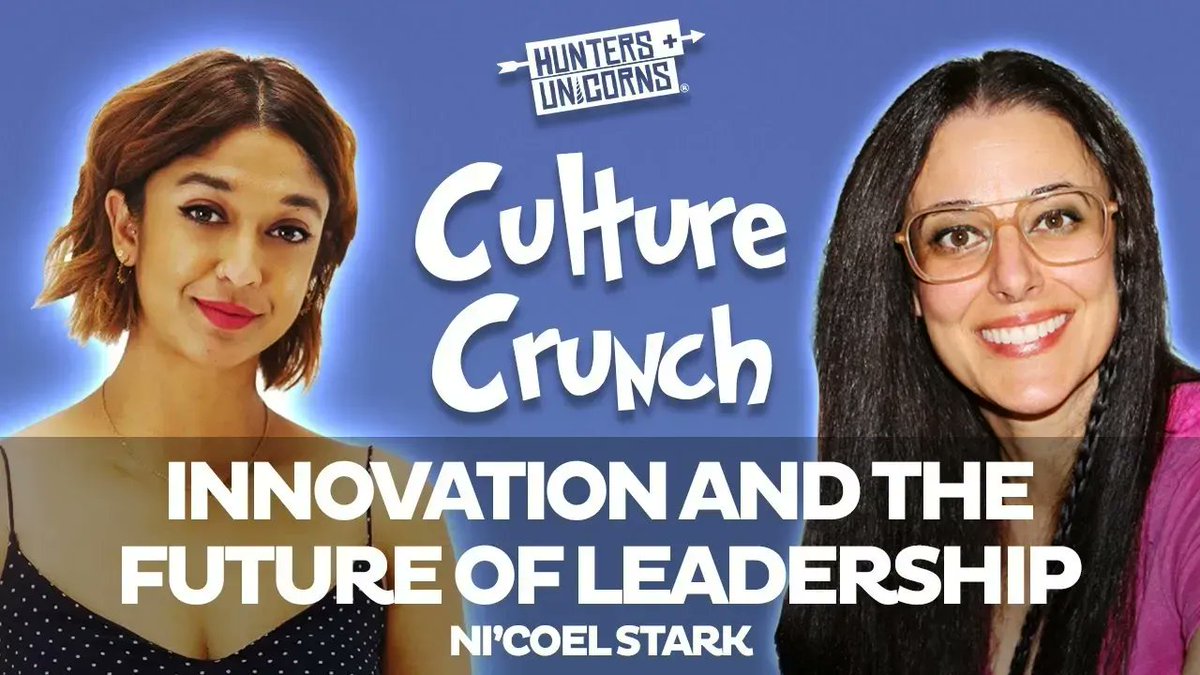
@Culturecrunch__ Episode 3 is OUT NOW featuring @NicoelStark Organizational Systems Officer, Decision Intelligence Coach and Executive Principal at @CygnusSprints Available now on
YouTube https://t.co/UdgHhQNdCZ
Spotify https://t.co/aGvArzBssu
iTunes https://t.co/BTcrDEZFrN
@SweatEm This is your ideal, I share it, but also funny since don’t you often take the oppositional viewpoint for the sake of opposition? I’d say sometimes that’s even strategically good.
@SweatEm There isn’t one without the other. Shitty physical actions come from shitty thinking. Both are parts of the doing…incarnation doesn’t happen without the work of the mind and without the work of the heart. It requires all parts doing together
@SweatEm Do you mean if the critique is precise it’s as important as appreciation? Agree! And I would say it’s the same with appreciation. An inaccurate appreciation I reject as much as an inaccurate critique
@SweatEm Kind of. You can’t paint, move your body, without your brain…you can’t imagine without your mind…mind and body are connected. Thinking is an essential part of doing…we absolutely create in our mind
@SweatEm and knowledge as the study of wisdom. Seems like another reduction. Knowledge is many things. Wisdom is many things. They are all overlapping things so what you’re offering feels like a collapse
@SweatEm Empirical evidence gathering as wisdom is a gross reduction. But perhaps wisdom is gathering different kinds of evidence, sure, but I’d argue not at all limited to any one kind or element
@SweatEm I’d argue that thinking is a form of applying, even if incomplete. And if we understand beauty better, even if we “do” nothing, it still increases our pleasure when we encounter beauty.
@SweatEm I’d argue that subjects are not useless if not applied (using your context). Beauty exists & understanding the subject of beauty is still good even if we don’t “apply” that knowledge in the world ourselves.