Omar Abdullah’s statehood politics increasingly sounds less like a constitutional struggle and more like a protocol grievance.
The grand mission, apparently, is not jobs, institutional reform, stronger local governance or measurable public delivery.
It is to ensure that one day the DGP stands straighter, salutes longer and the Chief Minister’s convoy feels more “complete.”
J&K is being told to treat ceremonial hierarchy as political liberation.
Statehood matters because it restores constitutional balance, democratic authority and administrative accountability. But when the argument is reduced to who salutes whom, the poverty of the political imagination becomes obvious.
People are asking about unemployment, recruitment delays, electricity, roads, drug abuse and governance.
NC’s answer appears to be: first fix the salute.
Perhaps the next manifesto will include the angle of the salute, its duration and the distance between the DGP and the Chief Minister.
A serious demand deserves serious politics.
Statehood cannot be reduced to Omar Abdullah’s search for a more impressive protocol photograph.
عمر عبداللہ کی ریاستی درجے کی سیاست اب آئینی جدوجہد سے زیادہ سرکاری آداب کی شکایت محسوس ہونے لگی ہے۔
گویا اصل مقصد روزگار، ادارہ جاتی اصلاحات، مضبوط مقامی حکمرانی یا عوامی کارکردگی نہیں۔
اصل معرکہ یہ ہے کہ ایک دن پولیس سربراہ زیادہ سیدھا کھڑا ہو، زیادہ دیر سلام کرے اور وزیرِ اعلیٰ کا قافلہ زیادہ بااختیار دکھائی دے۔
جموں و کشمیر کے لوگوں سے کہا جا رہا ہے کہ سرکاری سلام کو سیاسی آزادی سمجھیں۔
ریاستی درجہ اس لیے اہم ہے کہ اس سے آئینی توازن، جمہوری اختیار اور انتظامی جواب دہی بحال ہوتی ہے۔ مگر جب پوری دلیل کو اس سوال تک محدود کر دیا جائے کہ کون کس کو سلام کرے گا، تو سیاسی سوچ کی تنگی خود ظاہر ہو جاتی ہے۔
عوام روزگار، بھرتیوں، بجلی، سڑکوں، منشیات اور حکمرانی پر جواب مانگ رہے ہیں۔
نیشنل کانفرنس کا جواب شاید یہ ہے: پہلے سلام درست کرو۔
ممکن ہے اگلے منشور میں سلام کا زاویہ، دورانیہ اور پولیس سربراہ و وزیرِ اعلیٰ کے درمیان فاصلہ بھی درج ہو۔
سنجیدہ مطالبہ، سنجیدہ سیاست چاہتا ہے۔
ریاستی درجے کو عمر عبداللہ کی ایک بہتر سرکاری تصویر کی خواہش تک محدود نہیں کیا جا سکتا۔
Omar Abdullah’s statehood politics increasingly sounds less like a constitutional struggle and more like a protocol grievance.
The grand mission, apparently, is not jobs, institutional reform, stronger local governance or measurable public delivery.
It is to ensure that one day the DGP stands straighter, salutes longer and the Chief Minister’s convoy feels more “complete.”
J&K is being told to treat ceremonial hierarchy as political liberation.
Statehood matters because it restores constitutional balance, democratic authority and administrative accountability. But when the argument is reduced to who salutes whom, the poverty of the political imagination becomes obvious.
People are asking about unemployment, recruitment delays, electricity, roads, drug abuse and governance.
NC’s answer appears to be: first fix the salute.
Perhaps the next manifesto will include the angle of the salute, its duration and the distance between the DGP and the Chief Minister.
A serious demand deserves serious politics.
Statehood cannot be reduced to Omar Abdullah’s search for a more impressive protocol photograph.
عمر عبداللہ کی ریاستی درجے کی سیاست اب آئینی جدوجہد سے زیادہ سرکاری آداب کی شکایت محسوس ہونے لگی ہے۔
گویا اصل مقصد روزگار، ادارہ جاتی اصلاحات، مضبوط مقامی حکمرانی یا عوامی کارکردگی نہیں۔
اصل معرکہ یہ ہے کہ ایک دن پولیس سربراہ زیادہ سیدھا کھڑا ہو، زیادہ دیر سلام کرے اور وزیرِ اعلیٰ کا قافلہ زیادہ بااختیار دکھائی دے۔
جموں و کشمیر کے لوگوں سے کہا جا رہا ہے کہ سرکاری سلام کو سیاسی آزادی سمجھیں۔
ریاستی درجہ اس لیے اہم ہے کہ اس سے آئینی توازن، جمہوری اختیار اور انتظامی جواب دہی بحال ہوتی ہے۔ مگر جب پوری دلیل کو اس سوال تک محدود کر دیا جائے کہ کون کس کو سلام کرے گا، تو سیاسی سوچ کی تنگی خود ظاہر ہو جاتی ہے۔
عوام روزگار، بھرتیوں، بجلی، سڑکوں، منشیات اور حکمرانی پر جواب مانگ رہے ہیں۔
نیشنل کانفرنس کا جواب شاید یہ ہے: پہلے سلام درست کرو۔
ممکن ہے اگلے منشور میں سلام کا زاویہ، دورانیہ اور پولیس سربراہ و وزیرِ اعلیٰ کے درمیان فاصلہ بھی درج ہو۔
سنجیدہ مطالبہ، سنجیدہ سیاست چاہتا ہے۔
ریاستی درجے کو عمر عبداللہ کی ایک بہتر سرکاری تصویر کی خواہش تک محدود نہیں کیا جا سکتا۔
A nation where parents allegedly feel compelled to consider selling their daughters is a nation in deep crisis.
Under Pakistan's worsening economic turmoil, millions of families are struggling with soaring inflation, unemployment, stagnant wages, and crushing debt. Food insecurity and poverty have pushed many households to desperate measures simply to survive.
Reports and viral videos claiming that fathers are attempting to sell their daughters for as little as PKR 60,000 if authentic reflect the depth of human despair rather than isolated tragedy. No parent should ever be forced into such desperation.
While ordinary Pakistanis bear the burden of economic collapse, rising prices, and shrinking opportunities, those in power continue to prioritize political battles and security narratives over meaningful economic reform.
A country cannot prosper when its people are choosing between hunger and their children's future.
The greatest tragedy is not just poverty it is the loss of hope.
ایک ایسا ملک جہاں غربت والدین کو اپنی بیٹیاں بیچنے پر مجبور کر دے، وہاں صرف معیشت نہیں بلکہ انسانیت بھی دم توڑ رہی ہوتی ہے۔
پاکستان میں بڑھتی ہوئی مہنگائی، بے روزگاری، غربت اور معاشی بدحالی نے لاکھوں خاندانوں کی زندگی اجیرن بنا دی ہے۔ سوشل میڈیا پر گردش کرنے والی ایک ویڈیو، جس میں ایک شخص مبینہ طور پر صرف 60 ہزار روپے میں اپنی بیٹی فروخت کرنے کی بات کرتا دکھائی دیتا ہے، اگر درست ہے تو یہ کسی ایک خاندان کا نہیں بلکہ پورے معاشرے کے زوال کا المیہ ہے۔
جب عوام دو وقت کی روٹی کے لیے ترس رہے ہوں، بچوں کا مستقبل غربت کی نذر ہو رہا ہو، تو اقتدار میں بیٹھے لوگوں کی اولین ذمہ داری عوام کی زندگی بہتر بنانا ہونی چاہیے، نہ کہ انہیں مزید مشکلات میں دھکیلنا۔
غربت صرف جیب خالی نہیں کرتی، یہ انسان کی امید، عزت اور مستقبل بھی چھین لیتی ہے۔
#Pakistan #مہنگائی #غربت #EconomicCrisis
#Pakistan #Poverty
A nation where parents allegedly feel compelled to consider selling their daughters is a nation in deep crisis.
Under Pakistan's worsening economic turmoil, millions of families are struggling with soaring inflation, unemployment, stagnant wages, and crushing debt. Food insecurity and poverty have pushed many households to desperate measures simply to survive.
Reports and viral videos claiming that fathers are attempting to sell their daughters for as little as PKR 60,000 if authentic reflect the depth of human despair rather than isolated tragedy. No parent should ever be forced into such desperation.
While ordinary Pakistanis bear the burden of economic collapse, rising prices, and shrinking opportunities, those in power continue to prioritize political battles and security narratives over meaningful economic reform.
A country cannot prosper when its people are choosing between hunger and their children's future.
The greatest tragedy is not just poverty it is the loss of hope.
ایک ایسا ملک جہاں غربت والدین کو اپنی بیٹیاں بیچنے پر مجبور کر دے، وہاں صرف معیشت نہیں بلکہ انسانیت بھی دم توڑ رہی ہوتی ہے۔
پاکستان میں بڑھتی ہوئی مہنگائی، بے روزگاری، غربت اور معاشی بدحالی نے لاکھوں خاندانوں کی زندگی اجیرن بنا دی ہے۔ سوشل میڈیا پر گردش کرنے والی ایک ویڈیو، جس میں ایک شخص مبینہ طور پر صرف 60 ہزار روپے میں اپنی بیٹی فروخت کرنے کی بات کرتا دکھائی دیتا ہے، اگر درست ہے تو یہ کسی ایک خاندان کا نہیں بلکہ پورے معاشرے کے زوال کا المیہ ہے۔
جب عوام دو وقت کی روٹی کے لیے ترس رہے ہوں، بچوں کا مستقبل غربت کی نذر ہو رہا ہو، تو اقتدار میں بیٹھے لوگوں کی اولین ذمہ داری عوام کی زندگی بہتر بنانا ہونی چاہیے، نہ کہ انہیں مزید مشکلات میں دھکیلنا۔
غربت صرف جیب خالی نہیں کرتی، یہ انسان کی امید، عزت اور مستقبل بھی چھین لیتی ہے۔
#Pakistan #مہنگائی #غربت #EconomicCrisis
#Pakistan #Poverty
Kashmir's Stray Dog Crisis: A Challenge That Demands Compassion, Science & Collective Action
The growing stray dog population has emerged as one of Kashmir's most significant urban challenges affecting public safety, public health, tourism, sanitation, and animal welfare all at once.
Across Jammu & Kashmir, estimates suggest there are over 90,000–100,000 stray dogs, with Srinagar alone believed to have around 30,000–40,000. Over the years, thousands of dog-bite cases are reported annually, placing immense pressure on hospitals while creating fear among schoolchildren, senior citizens, morning walkers, delivery workers, and tourists.
But this is not just a "dog problem" it is a waste management, urban planning, and civic responsibility problem. Open garbage dumps, food waste, abandoned pets, and unchecked breeding have allowed stray populations to grow rapidly.
The solution is not cruelty or indiscriminate killing, but a long-term, scientific, and humane strategy that protects both people and animals.
What is being done?
🐾 Animal Birth Control (ABC) Programme – Large-scale sterilization to gradually reduce stray populations.
💉 Mass Anti-Rabies Vaccination Drives – Protecting both animals and humans from one of the world's deadliest diseases.
🏥 Modern Animal Shelters & Rescue Centres – Providing treatment, rehabilitation, and care for injured and abandoned animals.
🗑️ Improved Waste Management – Scientific garbage disposal reduces food availability for stray animals, naturally limiting population growth.
📢 Public Awareness Campaigns – Encouraging responsible pet ownership, adoption instead of abandonment, and educating citizens on safe interactions with stray animals.
What more should we do?
✔️ Strengthen sterilization and vaccination coverage across urban and rural areas.
✔️ Build more veterinary hospitals and animal rescue infrastructure.
✔️ Ensure proper segregation and disposal of municipal waste.
✔️ Penalize pet abandonment and encourage responsible ownership.
✔️ Support NGOs, volunteers, and veterinary teams working on the ground.
✔️ Promote community participation instead of fear and misinformation.
A humane stray animal management system creates a safer environment for families, protects tourists, reduces dog-bite incidents, prevents rabies, and improves the quality of life for both citizens and animals.
Kashmir's natural beauty deserves clean streets, safe neighbourhoods, and compassionate solutions. By combining science, civic responsibility, effective governance, and kindness, the Valley can become a model for balancing public safety with animal welfare.
A safer Kashmir doesn't mean choosing between people and animals it means protecting both.
کشمیر میں آوارہ کتوں کا بڑھتا ہوا مسئلہ
جموں و کشمیر میں اندازاً 90,000 سے 100,000 آوارہ کتے موجود ہیں، جبکہ صرف سرینگر میں 30,000 سے 40,000 کے قریب آوارہ کتوں کی موجودگی عوامی صحت اور شہری تحفظ کے لیے ایک بڑا چیلنج بن چکی ہے۔
اس مسئلے کا حل تشدد نہیں بلکہ نس بندی (ABC)، اینٹی ریبیز ویکسینیشن، بہتر ویسٹ مینجمنٹ، جدید اینیمل شیلٹرز اور ذمہ دارانہ پالتو جانوروں کی نگہداشت ہے۔
صاف، محفوظ اور ہمدرد کشمیر کے لیے ضروری ہے کہ عوام، بلدیاتی ادارے اور متعلقہ محکمے مل کر سائنسی اور پائیدار اقدامات کریں۔
#Kashmir #Srinagar #PublicHealth #AnimalWelfare #StrayDogs #CleanKashmir #ResponsibleCitizenship #OneHealth #UrbanDevelopment
Kashmir's Stray Dog Crisis: A Challenge That Demands Compassion, Science & Collective Action
The growing stray dog population has emerged as one of Kashmir's most significant urban challenges affecting public safety, public health, tourism, sanitation, and animal welfare all at once.
Across Jammu & Kashmir, estimates suggest there are over 90,000–100,000 stray dogs, with Srinagar alone believed to have around 30,000–40,000. Over the years, thousands of dog-bite cases are reported annually, placing immense pressure on hospitals while creating fear among schoolchildren, senior citizens, morning walkers, delivery workers, and tourists.
But this is not just a "dog problem" it is a waste management, urban planning, and civic responsibility problem. Open garbage dumps, food waste, abandoned pets, and unchecked breeding have allowed stray populations to grow rapidly.
The solution is not cruelty or indiscriminate killing, but a long-term, scientific, and humane strategy that protects both people and animals.
What is being done?
🐾 Animal Birth Control (ABC) Programme – Large-scale sterilization to gradually reduce stray populations.
💉 Mass Anti-Rabies Vaccination Drives – Protecting both animals and humans from one of the world's deadliest diseases.
🏥 Modern Animal Shelters & Rescue Centres – Providing treatment, rehabilitation, and care for injured and abandoned animals.
🗑️ Improved Waste Management – Scientific garbage disposal reduces food availability for stray animals, naturally limiting population growth.
📢 Public Awareness Campaigns – Encouraging responsible pet ownership, adoption instead of abandonment, and educating citizens on safe interactions with stray animals.
What more should we do?
✔️ Strengthen sterilization and vaccination coverage across urban and rural areas.
✔️ Build more veterinary hospitals and animal rescue infrastructure.
✔️ Ensure proper segregation and disposal of municipal waste.
✔️ Penalize pet abandonment and encourage responsible ownership.
✔️ Support NGOs, volunteers, and veterinary teams working on the ground.
✔️ Promote community participation instead of fear and misinformation.
A humane stray animal management system creates a safer environment for families, protects tourists, reduces dog-bite incidents, prevents rabies, and improves the quality of life for both citizens and animals.
Kashmir's natural beauty deserves clean streets, safe neighbourhoods, and compassionate solutions. By combining science, civic responsibility, effective governance, and kindness, the Valley can become a model for balancing public safety with animal welfare.
A safer Kashmir doesn't mean choosing between people and animals it means protecting both.
کشمیر میں آوارہ کتوں کا بڑھتا ہوا مسئلہ
جموں و کشمیر میں اندازاً 90,000 سے 100,000 آوارہ کتے موجود ہیں، جبکہ صرف سرینگر میں 30,000 سے 40,000 کے قریب آوارہ کتوں کی موجودگی عوامی صحت اور شہری تحفظ کے لیے ایک بڑا چیلنج بن چکی ہے۔
اس مسئلے کا حل تشدد نہیں بلکہ نس بندی (ABC)، اینٹی ریبیز ویکسینیشن، بہتر ویسٹ مینجمنٹ، جدید اینیمل شیلٹرز اور ذمہ دارانہ پالتو جانوروں کی نگہداشت ہے۔
صاف، محفوظ اور ہمدرد کشمیر کے لیے ضروری ہے کہ عوام، بلدیاتی ادارے اور متعلقہ محکمے مل کر سائنسی اور پائیدار اقدامات کریں۔
#Kashmir #Srinagar #PublicHealth #AnimalWelfare #StrayDogs #CleanKashmir #ResponsibleCitizenship #OneHealth #UrbanDevelopment
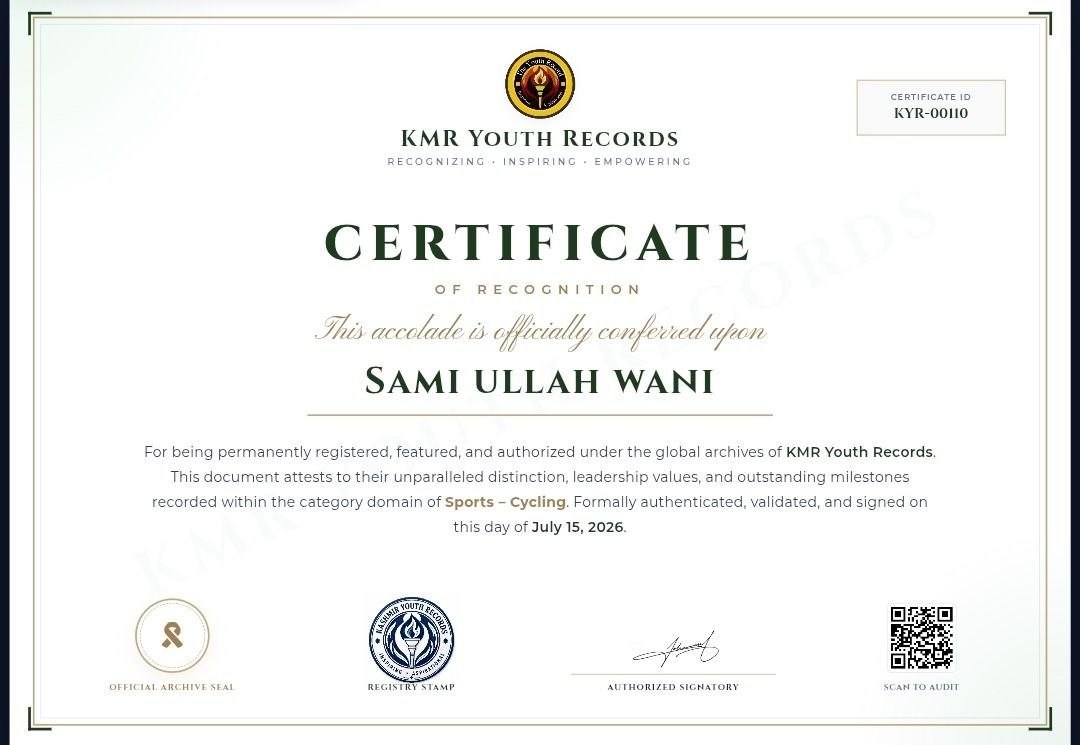
Congratulations, Sami Ullah Wani!
Kashmir Youth Records proudly recognizes Sami Ullah Wani as a Kashmir Youth Records Holder for his outstanding achievements in cycling.
An SGFI National Bronze Medalist, 4-time State Medalist, and National-Level Cycling Representative, Sami's dedication and determination at a young age are truly inspiring.
Wishing you continued success and many more milestones ahead. Keep riding towards greatness!
مبارک ہو، سمیع اللہ وانی!
کشمیر یوتھ ریکارڈز، سمیع اللہ وانی کو سائیکلنگ کے میدان میں شاندار کامیابیوں پر کشمیر یوتھ ریکارڈز ہولڈر کے اعزاز سے نوازتے ہوئے دلی مبارکباد پیش کرتا ہے۔
ایس جی ایف آئی نیشنل کانسی تمغہ یافتہ، چار مرتبہ ریاستی میڈلسٹ اور قومی سطح کے سائیکلسٹ کے طور پر آپ کی محنت، لگن اور عزم قابلِ تحسین ہے۔
اللہ تعالیٰ آپ کو مزید کامیابیاں عطا فرمائے۔ اسی جذبے کے ساتھ آگے بڑھتے رہیں۔
مبارک ہو، سمیع اللہ وانی!
#KashmirYouthRecords #KMRYouthRecords #SamiUllahWani #Cycling #YoungChampion #Budgam #PrideOfKashmir
Congratulations, Sami Ullah Wani!
Kashmir Youth Records proudly recognizes Sami Ullah Wani as a Kashmir Youth Records Holder for his outstanding achievements in cycling.
An SGFI National Bronze Medalist, 4-time State Medalist, and National-Level Cycling Representative, Sami's dedication and determination at a young age are truly inspiring.
Wishing you continued success and many more milestones ahead. Keep riding towards greatness!
مبارک ہو، سمیع اللہ وانی!
کشمیر یوتھ ریکارڈز، سمیع اللہ وانی کو سائیکلنگ کے میدان میں شاندار کامیابیوں پر کشمیر یوتھ ریکارڈز ہولڈر کے اعزاز سے نوازتے ہوئے دلی مبارکباد پیش کرتا ہے۔
ایس جی ایف آئی نیشنل کانسی تمغہ یافتہ، چار مرتبہ ریاستی میڈلسٹ اور قومی سطح کے سائیکلسٹ کے طور پر آپ کی محنت، لگن اور عزم قابلِ تحسین ہے۔
اللہ تعالیٰ آپ کو مزید کامیابیاں عطا فرمائے۔ اسی جذبے کے ساتھ آگے بڑھتے رہیں۔
مبارک ہو، سمیع اللہ وانی!
#KashmirYouthRecords #KMRYouthRecords #SamiUllahWani #Cycling #YoungChampion #Budgam #PrideOfKashmir
HOW PAKISTAN HAS ALLEGEDLY USED TERRITORIES UNDER ITS CONTROL AS LAUNCH PADS FOR CROSS-BORDER TERRORISM
For decades, territories under Pakistan's control have featured in security assessments as locations from which terrorist groups have allegedly recruited, trained, and launched cross-border attacks. Organizations including Lashkar-e-Taiba (LeT), Jaish-e-Mohammed (JeM), and Hizbul Mujahideen have been designated as terrorist groups by the UN and other governments, and Indian authorities have repeatedly alleged that infrastructure linked to such groups has operated from these areas.
Mangla Dam in Mirpur has been cited in Indian investigations as a location allegedly used for water-based infiltration training. According to Indian security agencies, militants received instruction in swimming, underwater movement, tactical river crossing, and maritime infiltration. Investigations into the 2008 Mumbai (26/11) attacks, in which 166 people were killed, also linked the attackers' preparation to Pakistan-based training infrastructure, including sea-infiltration techniques.
Beyond the India-Pakistan context, militant groups based in or operating from Pakistan have also been associated with attacks affecting neighboring countries:
• Afghanistan: The Afghan government and international bodies repeatedly alleged that the Haqqani Network and elements of the Taliban operated from sanctuaries inside Pakistan during the two-decade conflict.
• Iran: In recent years, Iran has conducted strikes against militant groups such as Jaish al-Adl, alleging they operate from Pakistani territory and launch attacks across the border.
• India: Major attacks linked by Indian investigators to Pakistan-based groups include the 2001 Parliament attack, 2008 Mumbai attacks (166 killed), 2016 Pathankot Air Base attack, 2016 Uri attack (19 soldiers killed), 2019 Pulwama suicide bombing (40 CRPF personnel killed), and the 2025 Pahalgam terror attack (26 civilians killed).
Recently surfaced videos reportedly showing Lashkar-e-Taiba conducting water-based combat drills and making threats related to the Indus Waters issue have renewed attention to concerns about evolving infiltration tactics. If authenticated, the footage could indicate continued adaptation of militant training methods.
According to Indian security assessments, the principal concern is not the geography itself, but the alleged use of territories under Pakistan's control as sanctuaries, recruitment centres, training camps, and launch pads for cross-border terrorism, with implications extending beyond one bilateral relationship and affecting regional security more broadly.
پاکستان زیرِ انتظام علاقوں کا مبینہ استعمال دہشت گردی کے لانچ پیڈ کے طور پر
کئی دہائیوں سے بھارتی سیکیورٹی اداروں کا مؤقف رہا ہے کہ پاکستان کے زیرِ انتظام علاقوں میں مبینہ طور پر دہشت گردوں کے تربیتی کیمپ، لانچ پیڈ اور دراندازی کے نیٹ ورکس سرگرم رہے ہیں۔
منگلا ڈیم (میرپور) کو بھارتی تحقیقات میں پانی کے راستے دراندازی، تیراکی اور جنگی تربیت سے جوڑا گیا ہے۔ 26/11 ممبئی حملوں کی تحقیقات میں بھی اسی علاقے سے وابستہ تربیتی ڈھانچے کا ذکر کیا گیا۔
افغانستان اور ایران نے بھی مختلف اوقات میں پاکستان کی سرزمین سے سرگرم شدت پسند گروہوں پر تحفظات کا اظہار کیا ہے۔
حالیہ مبینہ ویڈیوز، جن میں لشکرِ طیبہ کے جنگجو پانی کے راستے دراندازی کی مشقیں کرتے دکھائی دیتے ہیں، نے ایک بار پھر ان سیکیورٹی خدشات کو نمایاں کر دیا ہے۔ اگر یہ ویڈیوز مستند ثابت ہوتی ہیں تو یہ پانی کے راستوں کو دہشت گردی کی حکمتِ عملی کا حصہ بنانے کی نشاندہی کرتی ہیں۔
#CounterTerrorism #RegionalSecurity #PoJK #ManglaDam #LeT #26_11 #BorderSecurity #SouthAsia
HOW PAKISTAN HAS ALLEGEDLY USED TERRITORIES UNDER ITS CONTROL AS LAUNCH PADS FOR CROSS-BORDER TERRORISM
For decades, territories under Pakistan's control have featured in security assessments as locations from which terrorist groups have allegedly recruited, trained, and launched cross-border attacks. Organizations including Lashkar-e-Taiba (LeT), Jaish-e-Mohammed (JeM), and Hizbul Mujahideen have been designated as terrorist groups by the UN and other governments, and Indian authorities have repeatedly alleged that infrastructure linked to such groups has operated from these areas.
Mangla Dam in Mirpur has been cited in Indian investigations as a location allegedly used for water-based infiltration training. According to Indian security agencies, militants received instruction in swimming, underwater movement, tactical river crossing, and maritime infiltration. Investigations into the 2008 Mumbai (26/11) attacks, in which 166 people were killed, also linked the attackers' preparation to Pakistan-based training infrastructure, including sea-infiltration techniques.
Beyond the India-Pakistan context, militant groups based in or operating from Pakistan have also been associated with attacks affecting neighboring countries:
• Afghanistan: The Afghan government and international bodies repeatedly alleged that the Haqqani Network and elements of the Taliban operated from sanctuaries inside Pakistan during the two-decade conflict.
• Iran: In recent years, Iran has conducted strikes against militant groups such as Jaish al-Adl, alleging they operate from Pakistani territory and launch attacks across the border.
• India: Major attacks linked by Indian investigators to Pakistan-based groups include the 2001 Parliament attack, 2008 Mumbai attacks (166 killed), 2016 Pathankot Air Base attack, 2016 Uri attack (19 soldiers killed), 2019 Pulwama suicide bombing (40 CRPF personnel killed), and the 2025 Pahalgam terror attack (26 civilians killed).
Recently surfaced videos reportedly showing Lashkar-e-Taiba conducting water-based combat drills and making threats related to the Indus Waters issue have renewed attention to concerns about evolving infiltration tactics. If authenticated, the footage could indicate continued adaptation of militant training methods.
According to Indian security assessments, the principal concern is not the geography itself, but the alleged use of territories under Pakistan's control as sanctuaries, recruitment centres, training camps, and launch pads for cross-border terrorism, with implications extending beyond one bilateral relationship and affecting regional security more broadly.
پاکستان زیرِ انتظام علاقوں کا مبینہ استعمال دہشت گردی کے لانچ پیڈ کے طور پر
کئی دہائیوں سے بھارتی سیکیورٹی اداروں کا مؤقف رہا ہے کہ پاکستان کے زیرِ انتظام علاقوں میں مبینہ طور پر دہشت گردوں کے تربیتی کیمپ، لانچ پیڈ اور دراندازی کے نیٹ ورکس سرگرم رہے ہیں۔
منگلا ڈیم (میرپور) کو بھارتی تحقیقات میں پانی کے راستے دراندازی، تیراکی اور جنگی تربیت سے جوڑا گیا ہے۔ 26/11 ممبئی حملوں کی تحقیقات میں بھی اسی علاقے سے وابستہ تربیتی ڈھانچے کا ذکر کیا گیا۔
افغانستان اور ایران نے بھی مختلف اوقات میں پاکستان کی سرزمین سے سرگرم شدت پسند گروہوں پر تحفظات کا اظہار کیا ہے۔
حالیہ مبینہ ویڈیوز، جن میں لشکرِ طیبہ کے جنگجو پانی کے راستے دراندازی کی مشقیں کرتے دکھائی دیتے ہیں، نے ایک بار پھر ان سیکیورٹی خدشات کو نمایاں کر دیا ہے۔ اگر یہ ویڈیوز مستند ثابت ہوتی ہیں تو یہ پانی کے راستوں کو دہشت گردی کی حکمتِ عملی کا حصہ بنانے کی نشاندہی کرتی ہیں۔
#CounterTerrorism #RegionalSecurity #PoJK #ManglaDam #LeT #26_11 #BorderSecurity #SouthAsia
Thaal-Barun: A Living Tradition Rooted in Kashmir's Civilizational Heritage
Among Kashmir's many timeless cultural traditions, Thaal-Barun remains one of the Valley's most cherished yet lesser-known customs a beautiful expression of family, gratitude, generosity, and community. Passed down through generations, this age-old tradition reflects Kashmir's rich intangible cultural heritage, where rituals, food, blessings, and togetherness form the foundation of social life.
Believed to have its roots in ancient Kashmiri household traditions, with influences from the Valley's long-standing Hindu and later syncretic cultural practices, Thaal-Barun has survived for centuries by adapting across communities while retaining its core values of sharing, respect, and thanksgiving. It stands as a testament to Kashmir's unique cultural continuity, where traditions evolve yet remain deeply connected to their historical origins.
At the heart of the tradition is the preparation of a ceremonial thaal (platter), beautifully arranged with traditional breads, rice preparations, seasonal fruits, sweets, dry fruits, and other symbolic offerings. The platter is shared among family members or presented to elders and loved ones as a gesture of respect, prosperity, affection, and prayers for health, happiness, and abundance. More than a festive meal, the ritual strengthens intergenerational bonds, reinforces family values, and nurtures the spirit of hospitality for which Kashmir has long been known.
Thaal-Barun is also a reflection of Kashmir's rich culinary heritage. Every ingredient, every arrangement, and every shared meal carries memories of generations who preserved these customs not through written records but through lived traditions, oral teachings, and family practices. Such rituals have quietly safeguarded Kashmir's cultural identity for centuries.
Today, however, rapid urbanization, changing lifestyles, and the gradual decline of traditional practices threaten the continuity of customs like Thaal-Barun. As younger generations move away from age-old rituals, there is an urgent need to document, preserve, and celebrate these living traditions before they fade into history.
Kashmir's heritage is not defined only by its temples, mosques, shrines, gardens, forts, or monuments it also lives in traditions such as Thaal-Barun, Kandurwan (community bakeries), Samovar & Noon Chai culture, Pheran and Kangri, Sufiana Kalam, Khatamband craftsmanship, Pinjrakari, Papier-mâché, Wazwan, Vyeth Truvah (Vitasta festival), and countless folk customs that continue to shape the Valley's unique cultural identity.
Safeguarding these traditions is as important as conserving historic monuments. They are living archives of Kashmir's civilization, preserving its values, craftsmanship, oral history, and collective memory. Every tradition that survives enriches the story of Kashmir and ensures that future generations inherit not only its landscapes and architecture, but also the soul of its people.
تھال بارُن: کشمیر کی ایک نایاب تہذیبی روایت
تھال بارُن کشمیر کی صدیوں پرانی روایت ہے جو محبت، احترام، شکرگزاری اور خاندانی یکجہتی کی علامت سمجھی جاتی ہے۔ اس رسم میں روایتی کھانوں اور تحائف سے سجا تھال بزرگوں اور عزیزوں کو پیش کیا جاتا ہے، جو خوشحالی اور دعاؤں کی علامت ہے۔
ایسی روایات صرف رسم و رواج نہیں بلکہ کشمیر کی غیر مادی ثقافتی وراثت ہیں۔ ان کا تحفظ ہماری تہذیبی شناخت، تاریخ اور آنے والی نسلوں کے لیے بے حد ضروری ہے۔
#کشمیر #تھال_بارُن #ثقافتی_ورثہ #کشمیری_ثقافت #ورثہ_محفوظ_کریں
#Kashmir #ThaalBarun #IntangibleHeritage #CulturalHeritage #KashmirCulture #Traditions #LivingHeritage #PreserveCulture #HeritageMatters
Thaal-Barun: A Living Tradition Rooted in Kashmir's Civilizational Heritage
Among Kashmir's many timeless cultural traditions, Thaal-Barun remains one of the Valley's most cherished yet lesser-known customs a beautiful expression of family, gratitude, generosity, and community. Passed down through generations, this age-old tradition reflects Kashmir's rich intangible cultural heritage, where rituals, food, blessings, and togetherness form the foundation of social life.
Believed to have its roots in ancient Kashmiri household traditions, with influences from the Valley's long-standing Hindu and later syncretic cultural practices, Thaal-Barun has survived for centuries by adapting across communities while retaining its core values of sharing, respect, and thanksgiving. It stands as a testament to Kashmir's unique cultural continuity, where traditions evolve yet remain deeply connected to their historical origins.
At the heart of the tradition is the preparation of a ceremonial thaal (platter), beautifully arranged with traditional breads, rice preparations, seasonal fruits, sweets, dry fruits, and other symbolic offerings. The platter is shared among family members or presented to elders and loved ones as a gesture of respect, prosperity, affection, and prayers for health, happiness, and abundance. More than a festive meal, the ritual strengthens intergenerational bonds, reinforces family values, and nurtures the spirit of hospitality for which Kashmir has long been known.
Thaal-Barun is also a reflection of Kashmir's rich culinary heritage. Every ingredient, every arrangement, and every shared meal carries memories of generations who preserved these customs not through written records but through lived traditions, oral teachings, and family practices. Such rituals have quietly safeguarded Kashmir's cultural identity for centuries.
Today, however, rapid urbanization, changing lifestyles, and the gradual decline of traditional practices threaten the continuity of customs like Thaal-Barun. As younger generations move away from age-old rituals, there is an urgent need to document, preserve, and celebrate these living traditions before they fade into history.
Kashmir's heritage is not defined only by its temples, mosques, shrines, gardens, forts, or monuments it also lives in traditions such as Thaal-Barun, Kandurwan (community bakeries), Samovar & Noon Chai culture, Pheran and Kangri, Sufiana Kalam, Khatamband craftsmanship, Pinjrakari, Papier-mâché, Wazwan, Vyeth Truvah (Vitasta festival), and countless folk customs that continue to shape the Valley's unique cultural identity.
Safeguarding these traditions is as important as conserving historic monuments. They are living archives of Kashmir's civilization, preserving its values, craftsmanship, oral history, and collective memory. Every tradition that survives enriches the story of Kashmir and ensures that future generations inherit not only its landscapes and architecture, but also the soul of its people.
تھال بارُن: کشمیر کی ایک نایاب تہذیبی روایت
تھال بارُن کشمیر کی صدیوں پرانی روایت ہے جو محبت، احترام، شکرگزاری اور خاندانی یکجہتی کی علامت سمجھی جاتی ہے۔ اس رسم میں روایتی کھانوں اور تحائف سے سجا تھال بزرگوں اور عزیزوں کو پیش کیا جاتا ہے، جو خوشحالی اور دعاؤں کی علامت ہے۔
ایسی روایات صرف رسم و رواج نہیں بلکہ کشمیر کی غیر مادی ثقافتی وراثت ہیں۔ ان کا تحفظ ہماری تہذیبی شناخت، تاریخ اور آنے والی نسلوں کے لیے بے حد ضروری ہے۔
#کشمیر #تھال_بارُن #ثقافتی_ورثہ #کشمیری_ثقافت #ورثہ_محفوظ_کریں
#Kashmir #ThaalBarun #IntangibleHeritage #CulturalHeritage #KashmirCulture #Traditions #LivingHeritage #PreserveCulture #HeritageMatters
How many more women must suffer before Pakistan's justice system delivers real accountability?
Reports of sexual violence, so-called "honour" crimes, domestic abuse, forced conversions, and child marriages continue to raise serious concerns about the safety of women and girls in Pakistan. Every new case reinforces fears that many survivors face enormous barriers to reporting crimes and obtaining justice.
According to Pakistan's own rights organizations and independent human rights groups, violence against women remains widespread. Many incidents go unreported due to social stigma, fear of retaliation, pressure from families, and lack of confidence in the legal system. Conviction rates for sexual violence remain low, while lengthy investigations and trials often leave survivors without timely justice.
Religious minority girl including Christians and Hindus have also been the subject of repeated reports alleging abduction, forced conversion, and forced marriage, prompting concern from both domestic and international human rights organizations.
A nation cannot claim to protect its citizens if women continue to live in fear and vulnerable communities feel unprotected. Laws alone are meaningless unless they are enforced impartially, perpetrators are prosecuted, and survivors receive protection and support.
Every survivor deserves justice. Every perpetrator must face accountability. Silence and impunity only deepen the crisis.
پاکستان میں آخر کب خواتین کو انصاف ملے گا؟
ہر نئے واقعے کے ساتھ یہ سوال مزید سنگین ہوتا جا رہا ہے کہ کیا پاکستان کا نظامِ انصاف واقعی خواتین اور کمزور طبقات کو تحفظ دینے کے قابل ہے؟
جنسی تشدد، گھریلو تشدد، نام نہاد "غیرت" کے نام پر قتل، کم عمر بچیوں کی جبری شادی اور مذہبی اقلیتوں کی لڑکیوں کے مبینہ اغوا اور جبری مذہب تبدیلی جیسے واقعات مسلسل رپورٹ ہوتے رہے ہیں۔ انسانی حقوق کی تنظیموں کے مطابق ایسے بہت سے واقعات خوف، سماجی دباؤ، بدنامی اور انصاف پر عدم اعتماد کی وجہ سے رپورٹ ہی نہیں ہو پاتے۔
جب متاثرہ خواتین انصاف کے بجائے خاموشی پر مجبور ہوں، مقدمات برسوں تک لٹکے رہیں اور مجرم سزا سے بچ نکلیں، تو یہ صرف انفرادی جرم نہیں بلکہ نظام کی ناکامی بن جاتا ہے۔
ایک ایسا معاشرہ جہاں خواتین خود کو غیر محفوظ محسوس کریں اور اقلیتیں خوف کے سائے میں زندگی گزاریں، وہاں قانون کی بالادستی پر سنجیدہ سوالات اٹھنا فطری ہیں۔
خواتین کو خوف نہیں، تحفظ چاہیے۔ متاثرین کو خاموشی نہیں، انصاف چاہیے۔ اور مجرموں کو رعایت نہیں، قانون کے مطابق سزا ملنی چاہیے۔
#WomenSafety #HumanRights #Justice #Pakistan
How many more women must suffer before Pakistan's justice system delivers real accountability?
Reports of sexual violence, so-called "honour" crimes, domestic abuse, forced conversions, and child marriages continue to raise serious concerns about the safety of women and girls in Pakistan. Every new case reinforces fears that many survivors face enormous barriers to reporting crimes and obtaining justice.
According to Pakistan's own rights organizations and independent human rights groups, violence against women remains widespread. Many incidents go unreported due to social stigma, fear of retaliation, pressure from families, and lack of confidence in the legal system. Conviction rates for sexual violence remain low, while lengthy investigations and trials often leave survivors without timely justice.
Religious minority girl including Christians and Hindus have also been the subject of repeated reports alleging abduction, forced conversion, and forced marriage, prompting concern from both domestic and international human rights organizations.
A nation cannot claim to protect its citizens if women continue to live in fear and vulnerable communities feel unprotected. Laws alone are meaningless unless they are enforced impartially, perpetrators are prosecuted, and survivors receive protection and support.
Every survivor deserves justice. Every perpetrator must face accountability. Silence and impunity only deepen the crisis.
پاکستان میں آخر کب خواتین کو انصاف ملے گا؟
ہر نئے واقعے کے ساتھ یہ سوال مزید سنگین ہوتا جا رہا ہے کہ کیا پاکستان کا نظامِ انصاف واقعی خواتین اور کمزور طبقات کو تحفظ دینے کے قابل ہے؟
جنسی تشدد، گھریلو تشدد، نام نہاد "غیرت" کے نام پر قتل، کم عمر بچیوں کی جبری شادی اور مذہبی اقلیتوں کی لڑکیوں کے مبینہ اغوا اور جبری مذہب تبدیلی جیسے واقعات مسلسل رپورٹ ہوتے رہے ہیں۔ انسانی حقوق کی تنظیموں کے مطابق ایسے بہت سے واقعات خوف، سماجی دباؤ، بدنامی اور انصاف پر عدم اعتماد کی وجہ سے رپورٹ ہی نہیں ہو پاتے۔
جب متاثرہ خواتین انصاف کے بجائے خاموشی پر مجبور ہوں، مقدمات برسوں تک لٹکے رہیں اور مجرم سزا سے بچ نکلیں، تو یہ صرف انفرادی جرم نہیں بلکہ نظام کی ناکامی بن جاتا ہے۔
ایک ایسا معاشرہ جہاں خواتین خود کو غیر محفوظ محسوس کریں اور اقلیتیں خوف کے سائے میں زندگی گزاریں، وہاں قانون کی بالادستی پر سنجیدہ سوالات اٹھنا فطری ہیں۔
خواتین کو خوف نہیں، تحفظ چاہیے۔ متاثرین کو خاموشی نہیں، انصاف چاہیے۔ اور مجرموں کو رعایت نہیں، قانون کے مطابق سزا ملنی چاہیے۔
#WomenSafety #HumanRights #Justice #Pakistan
Two suspected OGWs intercepted in just two weeks through Facial Recognition System alerts. This is exactly why AI-enabled security isn't optional it's essential for protecting high-risk religious events and public spaces.
@AnchorAnandN@piyushchaudhry@SinghHindesh@IndianSinghh
J&K Police Detains Suspected Over Ground Worker at Nunwan, Anantnag Using Facial Recognition Software
For the second time in just two weeks, technology has once again exposed the terror ecosystem attempting to hide in plain sight.
During the ongoing Shri Amarnath Ji Yatra, J&K Police detained Faisal Muzaffar, a resident of Pulwama and a suspected Over Ground Worker (OGW), after the Facial Recognition System (FRS) generated an alert at the Nunwan X-Ray Point in Anantnag.
Just days earlier, another suspected OGW, Tariq Ahmad Bhat, was similarly intercepted after an FRS alert, highlighting the growing effectiveness of AI-enabled security systems deployed along the Yatra route.
This is exactly why facial recognition technology is indispensable at high-security zones, pilgrimage routes, airports, railway stations, and other sensitive public spaces. Terror networks have historically relied on anonymity, forged identities, and overground workers to facilitate logistics, reconnaissance, and movement. AI-powered facial recognition is steadily dismantling that advantage.
Those who oppose such technology should answer one simple question: What is the alternative allow suspected terror facilitators to move undetected through crowded religious gatherings?
It is important to remember that an FRS alert is not a conviction. It is an intelligence-led trigger that enables security forces to verify identities, question flagged individuals, and take lawful action where required. It strengthens preventive security while allowing genuine pilgrims to continue their journey safely.
The interception of Faisal Muzaffar and Tariq Ahmad Bhat within a span of two weeks demonstrates that technology is becoming one of the strongest force multipliers in India's counter-terrorism framework. Every such interception disrupts the overground network that sustains terrorism and reduces the space available for hostile elements to operate.
The message is clear: Modern terrorism demands modern countermeasures. Smart surveillance, AI-driven facial recognition, and technology-enabled policing are not optional they are essential to safeguarding lives and ensuring that the Amarnath Yatra remains secure for every devotee.
ٹیکنالوجی نے دہشت گردی کے نیٹ ورک کو بے
نقاب کر دیا
صرف دو ہفتوں میں 2 مشتبہ اوور گراؤنڈ ورکرز گرفتار
ننوان، اننت ناگ | امرناتھ یاترا سکیورٹی
جموں و کشمیر پولیس نے فیشل ریکگنیشن سافٹ ویئر (FRS) کی مدد سے مشتبہ اوور گراؤنڈ ورکر فیصل مظفر کو ننوان ایکس رے پوائنٹ پر حراست میں لے لیا۔
اس سے قبل بھی طارق احمد بھٹ کو اسی ٹیکنالوجی کی مدد سے گرفتار کیا گیا تھا، جو یہ ثابت کرتا ہے کہ مصنوعی ذہانت (AI) پر مبنی نگرانی دہشت گردی کے معاون نیٹ ورک کو بے نقاب کرنے میں مؤثر ثابت ہو رہی ہے۔
الرٹ
فیصل مظفر – پلوانہ
طارق احمد بھٹ – پلوانہ
فیشل ریکگنیشن کیوں ضروری ہے؟
▪︎》 مشتبہ افراد کی فوری شناخت
▪︎》 حساس مقامات پر دراندازی کی روک تھام
▪︎》 لاکھوں یاتریوں کی حفاظت کو یقینی بنانا
▪︎》 دہشت گردوں کے معاون نیٹ ورک کی نقل و حرکت محدود کرنا
فیشل ریکگنیشن کا الرٹ سزا نہیں، بلکہ ایک انٹیلی جنس اشارہ ہوتا ہے جس کے بعد قانونی تصدیق اور کارروائی کی جاتی ہے۔
جدید دہشت گردی کا مقابلہ جدید ٹیکنالوجی سے ہی ممکن ہے۔
AI، انٹیلی جنس اور اسمارٹ نگرانی ہی محفوظ جموں و کشمیر اور محفوظ امرناتھ یاترا کی ضمانت ہیں۔
#AmarnathYatra #JKPolice #JammuAndKashmir #CounterTerrorism #FacialRecognition #AI #Security #India
J&K Police Detains Suspected Over Ground Worker at Nunwan, Anantnag Using Facial Recognition Software
For the second time in just two weeks, technology has once again exposed the terror ecosystem attempting to hide in plain sight.
During the ongoing Shri Amarnath Ji Yatra, J&K Police detained Faisal Muzaffar, a resident of Pulwama and a suspected Over Ground Worker (OGW), after the Facial Recognition System (FRS) generated an alert at the Nunwan X-Ray Point in Anantnag.
Just days earlier, another suspected OGW, Tariq Ahmad Bhat, was similarly intercepted after an FRS alert, highlighting the growing effectiveness of AI-enabled security systems deployed along the Yatra route.
This is exactly why facial recognition technology is indispensable at high-security zones, pilgrimage routes, airports, railway stations, and other sensitive public spaces. Terror networks have historically relied on anonymity, forged identities, and overground workers to facilitate logistics, reconnaissance, and movement. AI-powered facial recognition is steadily dismantling that advantage.
Those who oppose such technology should answer one simple question: What is the alternative allow suspected terror facilitators to move undetected through crowded religious gatherings?
It is important to remember that an FRS alert is not a conviction. It is an intelligence-led trigger that enables security forces to verify identities, question flagged individuals, and take lawful action where required. It strengthens preventive security while allowing genuine pilgrims to continue their journey safely.
The interception of Faisal Muzaffar and Tariq Ahmad Bhat within a span of two weeks demonstrates that technology is becoming one of the strongest force multipliers in India's counter-terrorism framework. Every such interception disrupts the overground network that sustains terrorism and reduces the space available for hostile elements to operate.
The message is clear: Modern terrorism demands modern countermeasures. Smart surveillance, AI-driven facial recognition, and technology-enabled policing are not optional they are essential to safeguarding lives and ensuring that the Amarnath Yatra remains secure for every devotee.
ٹیکنالوجی نے دہشت گردی کے نیٹ ورک کو بے
نقاب کر دیا
صرف دو ہفتوں میں 2 مشتبہ اوور گراؤنڈ ورکرز گرفتار
ننوان، اننت ناگ | امرناتھ یاترا سکیورٹی
جموں و کشمیر پولیس نے فیشل ریکگنیشن سافٹ ویئر (FRS) کی مدد سے مشتبہ اوور گراؤنڈ ورکر فیصل مظفر کو ننوان ایکس رے پوائنٹ پر حراست میں لے لیا۔
اس سے قبل بھی طارق احمد بھٹ کو اسی ٹیکنالوجی کی مدد سے گرفتار کیا گیا تھا، جو یہ ثابت کرتا ہے کہ مصنوعی ذہانت (AI) پر مبنی نگرانی دہشت گردی کے معاون نیٹ ورک کو بے نقاب کرنے میں مؤثر ثابت ہو رہی ہے۔
الرٹ
فیصل مظفر – پلوانہ
طارق احمد بھٹ – پلوانہ
فیشل ریکگنیشن کیوں ضروری ہے؟
▪︎》 مشتبہ افراد کی فوری شناخت
▪︎》 حساس مقامات پر دراندازی کی روک تھام
▪︎》 لاکھوں یاتریوں کی حفاظت کو یقینی بنانا
▪︎》 دہشت گردوں کے معاون نیٹ ورک کی نقل و حرکت محدود کرنا
فیشل ریکگنیشن کا الرٹ سزا نہیں، بلکہ ایک انٹیلی جنس اشارہ ہوتا ہے جس کے بعد قانونی تصدیق اور کارروائی کی جاتی ہے۔
جدید دہشت گردی کا مقابلہ جدید ٹیکنالوجی سے ہی ممکن ہے۔
AI، انٹیلی جنس اور اسمارٹ نگرانی ہی محفوظ جموں و کشمیر اور محفوظ امرناتھ یاترا کی ضمانت ہیں۔
#AmarnathYatra #JKPolice #JammuAndKashmir #CounterTerrorism #FacialRecognition #AI #Security #India
She left her home carrying nothing but hope and a demand for justice. She was treated like an enemy of the state.
For far too many women protesting in Pakistan, peaceful demonstrations have been met with intimidation, detentions, baton charges, tear gas, and allegations of excessive force rather than meaningful engagement. Instead of listening to women demanding dignity, safety, and economic rights, authorities have repeatedly been accused of responding with repression.
A nation that claims to stand for democracy cannot criminalize peaceful dissent or silence women through fear. The true test of any state is not how it treats the powerful, but how it protects the rights of ordinary citizens especially women exercising their fundamental freedoms.
The international community must continue to monitor allegations of abuses against peaceful protesters and call for accountability wherever excessive force is used. Women's voices deserve to be heard not silenced.
وہ صرف اپنے حقوق مانگنے گھر سے نکلی تھی… مگر ریاست نے اسے دشمن سمجھ لیا۔
پاکستان میں جب خواتین انصاف، عزت، تحفظ اور اپنے بنیادی حقوق کے لیے سڑکوں پر نکلتی ہیں تو متعدد مواقع پر ان کے خلاف طاقت کے استعمال، گرفتاریوں، لاٹھی چارج، آنسو گیس اور سخت کریک ڈاؤن کے الزامات سامنے آتے ہیں۔ سوال یہ ہے کہ کیا اپنے حقوق کا مطالبہ کرنا جرم ہے؟
ایک ریاست کی اصل طاقت اپنے شہریوں، خصوصاً خواتین، کی آواز دبانے میں نہیں بلکہ ان کے آئینی اور بنیادی حقوق کے تحفظ میں ہوتی ہے۔ اگر پرامن احتجاج کا جواب طاقت سے دیا جائے تو یہ جمہوری اقدار پر سنگین سوالات کھڑے کرتا ہے۔
دنیا کو ان الزامات پر خاموش تماشائی نہیں بننا چاہیے۔ خواتین کی آواز کو دبایا نہیں جا سکتا۔ حقوق مانگنا جرم نہیں، بلکہ ہر شہری کا بنیادی حق ہے۔
#Pakistan #HumanRights #WomenRights #ProtectProtesters #StandWithWomen
She left her home carrying nothing but hope and a demand for justice. She was treated like an enemy of the state.
For far too many women protesting in Pakistan, peaceful demonstrations have been met with intimidation, detentions, baton charges, tear gas, and allegations of excessive force rather than meaningful engagement. Instead of listening to women demanding dignity, safety, and economic rights, authorities have repeatedly been accused of responding with repression.
A nation that claims to stand for democracy cannot criminalize peaceful dissent or silence women through fear. The true test of any state is not how it treats the powerful, but how it protects the rights of ordinary citizens especially women exercising their fundamental freedoms.
The international community must continue to monitor allegations of abuses against peaceful protesters and call for accountability wherever excessive force is used. Women's voices deserve to be heard not silenced.
وہ صرف اپنے حقوق مانگنے گھر سے نکلی تھی… مگر ریاست نے اسے دشمن سمجھ لیا۔
پاکستان میں جب خواتین انصاف، عزت، تحفظ اور اپنے بنیادی حقوق کے لیے سڑکوں پر نکلتی ہیں تو متعدد مواقع پر ان کے خلاف طاقت کے استعمال، گرفتاریوں، لاٹھی چارج، آنسو گیس اور سخت کریک ڈاؤن کے الزامات سامنے آتے ہیں۔ سوال یہ ہے کہ کیا اپنے حقوق کا مطالبہ کرنا جرم ہے؟
ایک ریاست کی اصل طاقت اپنے شہریوں، خصوصاً خواتین، کی آواز دبانے میں نہیں بلکہ ان کے آئینی اور بنیادی حقوق کے تحفظ میں ہوتی ہے۔ اگر پرامن احتجاج کا جواب طاقت سے دیا جائے تو یہ جمہوری اقدار پر سنگین سوالات کھڑے کرتا ہے۔
دنیا کو ان الزامات پر خاموش تماشائی نہیں بننا چاہیے۔ خواتین کی آواز کو دبایا نہیں جا سکتا۔ حقوق مانگنا جرم نہیں، بلکہ ہر شہری کا بنیادی حق ہے۔
#Pakistan #HumanRights #WomenRights #ProtectProtesters #StandWithWomen
Kashmir Youth Records Holder | Umar Rashid Dar
Congratulations to Umar Rashid Dar on being recognized as a Kashmir Youth Records Holder for his outstanding contribution to Kabaddi.
A 4-time National & Senior National Kabaddi Player, District Kupwara's first NIS Certified Kabaddi Coach, National Qualified Technical Official, and Assistant Professor at Guru Kashi University, he continues to inspire the next generation of athletes through excellence in sports and coaching.
Wishing him continued success!
کشمیر یوتھ ریکارڈز ہولڈر | عمر راشد ڈار
عمر راشد ڈار کو کھیلوں کے میدان میں ان کی شاندار خدمات پر کشمیر یوتھ ریکارڈز ہولڈر بننے پر دلی مبارکباد۔
وہ 4 مرتبہ نیشنل و سینئر نیشنل کبڈی کھلاڑی، ضلع کپواڑہ کے پہلے این آئی ایس سرٹیفائیڈ کبڈی کوچ، نیشنل کوالیفائیڈ ٹیکنیکل آفیشل اور گرو کاشی یونیورسٹی میں اسسٹنٹ پروفیسر ہیں۔
ہم ان کی مزید کامیابیوں اور نوجوان کھلاڑیوں کی رہنمائی کے لیے نیک تمناؤں کا اظہار کرتے ہیں۔
#KMRYouthRecords #KashmirYouthRecords #UmarRashidDar #Kabaddi #SportsExcellence #YouthInspiration #JammuAndKashmir
Kashmir Youth Records Holder | Umar Rashid Dar
Congratulations to Umar Rashid Dar on being recognized as a Kashmir Youth Records Holder for his outstanding contribution to Kabaddi.
A 4-time National & Senior National Kabaddi Player, District Kupwara's first NIS Certified Kabaddi Coach, National Qualified Technical Official, and Assistant Professor at Guru Kashi University, he continues to inspire the next generation of athletes through excellence in sports and coaching.
Wishing him continued success!
کشمیر یوتھ ریکارڈز ہولڈر | عمر راشد ڈار
عمر راشد ڈار کو کھیلوں کے میدان میں ان کی شاندار خدمات پر کشمیر یوتھ ریکارڈز ہولڈر بننے پر دلی مبارکباد۔
وہ 4 مرتبہ نیشنل و سینئر نیشنل کبڈی کھلاڑی، ضلع کپواڑہ کے پہلے این آئی ایس سرٹیفائیڈ کبڈی کوچ، نیشنل کوالیفائیڈ ٹیکنیکل آفیشل اور گرو کاشی یونیورسٹی میں اسسٹنٹ پروفیسر ہیں۔
ہم ان کی مزید کامیابیوں اور نوجوان کھلاڑیوں کی رہنمائی کے لیے نیک تمناؤں کا اظہار کرتے ہیں۔
#KMRYouthRecords #KashmirYouthRecords #UmarRashidDar #Kabaddi #SportsExcellence #YouthInspiration #JammuAndKashmir