Architectural wood worker, Agrarian, Disproportionate Beef Superuser, life proponent, geopolymer curious, electric universe. Social media negative influencer.
"My meaning may be learned from Homer; he, you know, feeds his heroes at their feasts, when they are campaigning, on soldiers' fare; they have no fish, although they are on the shores of the Hellespont, and they are not allowed boiled meats but only roast,"
@Margare71531078 I like it when there is only one diesel pump, the person blocking it is in a gas burner and they go inside while three guys with trailers stack up.
Inconvenient, the material is unstable, it can't be moved, it's going to go either planned or accidentally. I don't like it, worried for my friends down wind, it should have been better managed. It's killing work, the monitoring, storing, handling and disposal of certain stuff.
Do we want to put human life at risk over an environmental issue?
Thanks to @Liborio4 and @Kagan_M_Dunlap and many others for highlighting this alarming problem of lead azide storage in Iowa.
In March 2026, a safety review at the Iowa Army Ammunition Plant near Middletown, Iowa, found 68 barrels (roughly 9,7004 lbs/5 tons) of degraded, recrystallized lead azide stored for about 20 years. Because officials determined moving the material risked an accidental explosion, the U.S. Army obtained an EPA emergency permit to dispose of it via a controlled in-place detonation, which would disperse a plume of lead-containing dust. Following lawsuits from environmental groups over short notice and health concerns, a federal appeals court issued an administrative stay pausing the planned detonation.
Lead Azide Pb(N₃)₂ is a primary explosive, meaning it is very sensitive and is used in primers. Lead azide is a shock- and friction-sensitive primary explosive that requires wet storage—typically submerged in an ethanol-water mixture—inside certified, earth-covered storage magazines to maintain stability.
If water or liquid levels drop due to evaporation over time, lead azide can crystallize. Crystallized lead azide is significantly more sensitive to friction, shock, and cold temperatures, making transport unsafe and raising the risk of accidental detonation. Seventy-one percent of the material is lead, which is the problem.
My opinion - The material could detonate spontaneously if allowed to continually sit. If it forms large, pure needle-shaped crystals (especially those exceeding 0.1 mm to 1 mm in length), it becomes acutely sensitive to friction, static, shock, and spontaneous detonation. It is going to blow whether under control conditions or just sitting there. Each barrel contains 143 pounds of lead azide. It would have to be moved by a forklift. It would be great if the entire operation could be destroyed remotely.
We lost two EOD techs and a third person destroying lead azide on 12 March 1973.
SSG Roy Phillips and SP4 Daniel E. Helton were assigned to the 58th Ordnance Detachment (Explosive Ordnance Disposal), Fort MacArthur, San Pedro, California. They were killed while setting up a demolition shot of some unserviceable military ordnance on the demolition range at Fort Irwin, California. The demolition shot prematurely exploded, killing SSG Phillips, SP4 Helton, and SFC Philip Neal Strang, age 45, from San Diego, California who was assigned to the California Army National Guard and worked at Range Control on Fort Irwin. SFC Strang had gone with the EOD team to show them where the demolition area was located.
Among the items to be destroyed were some primary explosives (lead azide). The primary explosives were in one-gallon size “paint” cans and were supposed to be wet. The investigation assumed that one of them may have dropped something into one of the open cans and the explosive initiated.
An alternative theory is that the fuse lighter spit flame into the primary explosive. The exact cause of the detonation was never determined. The last radio contact with the team was at 1630 hours. The three men were found dead at the crater, and their trucks were damaged. Among the ordnance that was being disposed of was a 250-pound bomb that was found a week before by a camper in the Mojave Desert. It is not known if the bomb was a practice bomb or an explosive-filled bomb.
Tomorrow, I’ll post the history behind our losing four EOD techs because of an environmental issue. In short, the Environmental Protection Agency would not allow the Explosive Ordnance Disposal team to destroy the detonators in their burn kettle. Details on Monday.
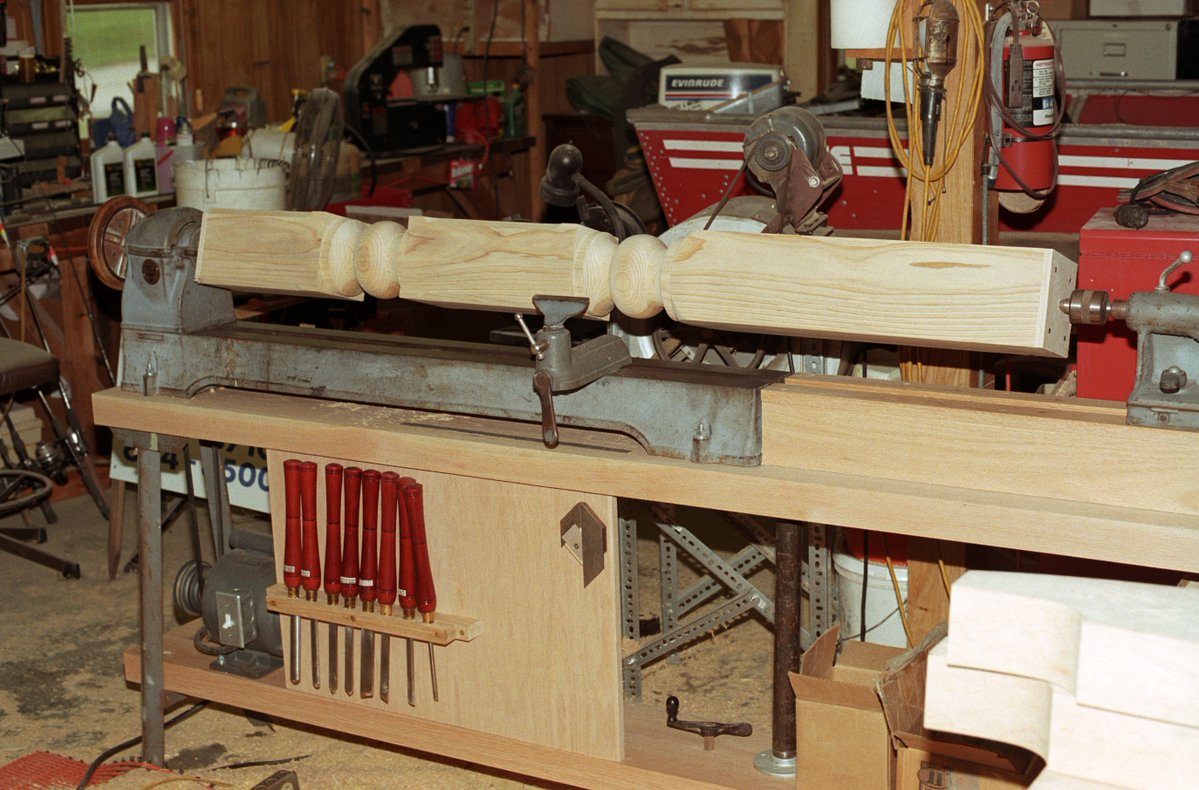
@AmanitaVirosa2@Crockett4848 Meh, it works fine, 16" throw, 54" ctr, runs standard 1" x 8tpi, 2mt so accessories are easy to come by. Found one pic of the one I put in storage before I added the second identical bed to it. Here it features an oak extension bed. Think a poured concrete base would be great.
@AmanitaVirosa2@Crockett4848 I always prefer dedicated machines when possible. Given the basement shop it would be easier to get three smaller machines down the ladder than one monster.
@AmanitaVirosa2@Crockett4848 Having noticed your turning work, how much of what you choose to turn is based on your current setup/capacit? I was length obsessed because my work was architectural. Throw was limiting too. Maybe a little 24” Nova with pivoting head stock would do?
Pre existing bias from experience with early Grizzly stuff, sorta like harbor freight. There’s a lot of it out there, the quality control has improved. I ran 1940’s delta lathes bolted to an oak beam end to end for 20 years.
Turned porch posts, bed posts, newel posts, balusters… had to ballast with dry sacks of concrete for big/odd stuff. Had a Jack screw in the bottom shelf/trestle beam to “tune” the shakes/vibration out of it for some work.
Now run a 1990’s delta with variable frequency drive and reverse that I bought with a 36” Vega duplicator for a job. The vfd and reverse were a huge upgrade. Still enjoyed hand turning on the old setup better.
Weight, spindle/bearings and good vfd/motor are key for lathes imo. I’d shop the secondary market for lathes, guys get in and eventually get out; lot of good machines to be had for $1k, I rarely pay retail for anything.
@ridgelinepath I have a little Timberking, @WadingSmith runs the wheels off a Woodmizer. I like what I’ve seen of Cook’s. Guess anything you can make run and use. Not keen on the cheapies that the band runs on the drive belt doubling as tires but if you can make lumber and use the resource 🤷♂️.
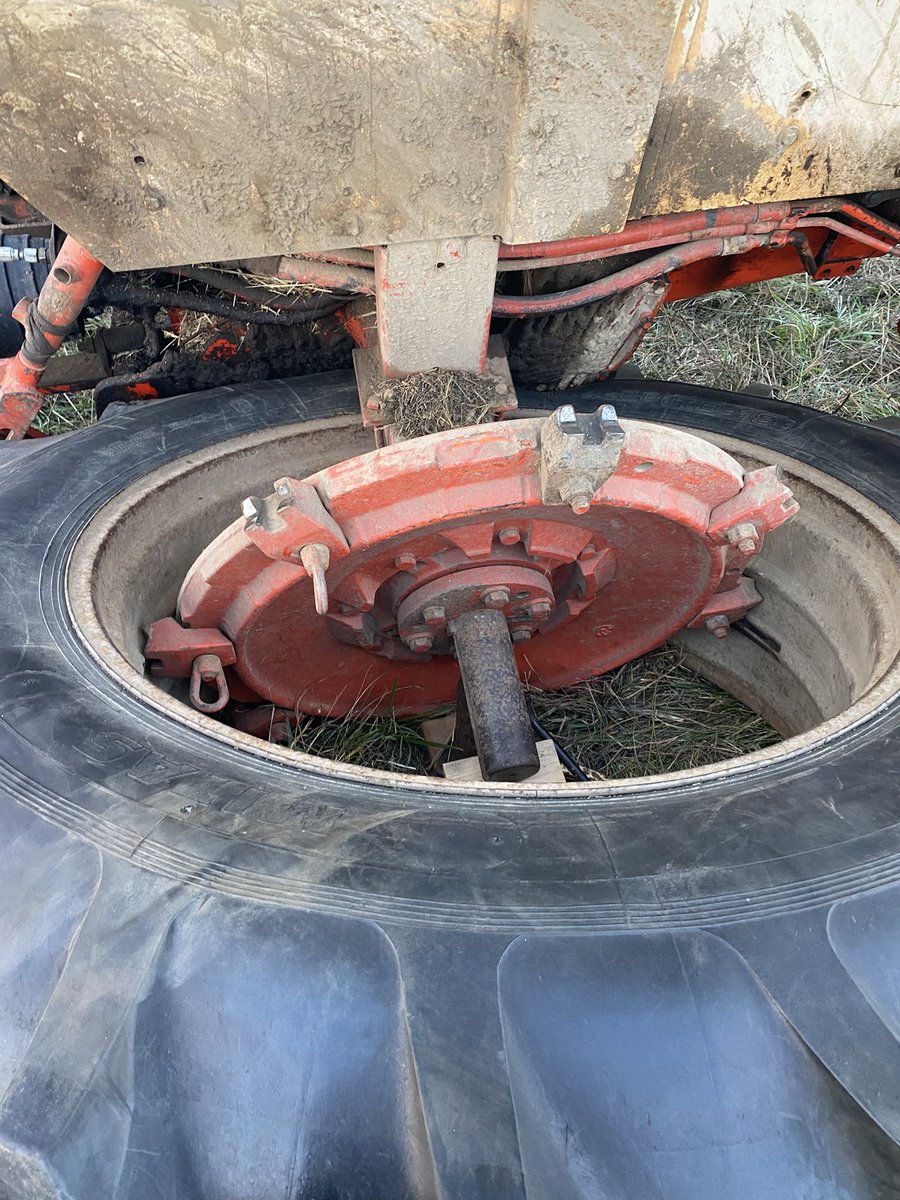
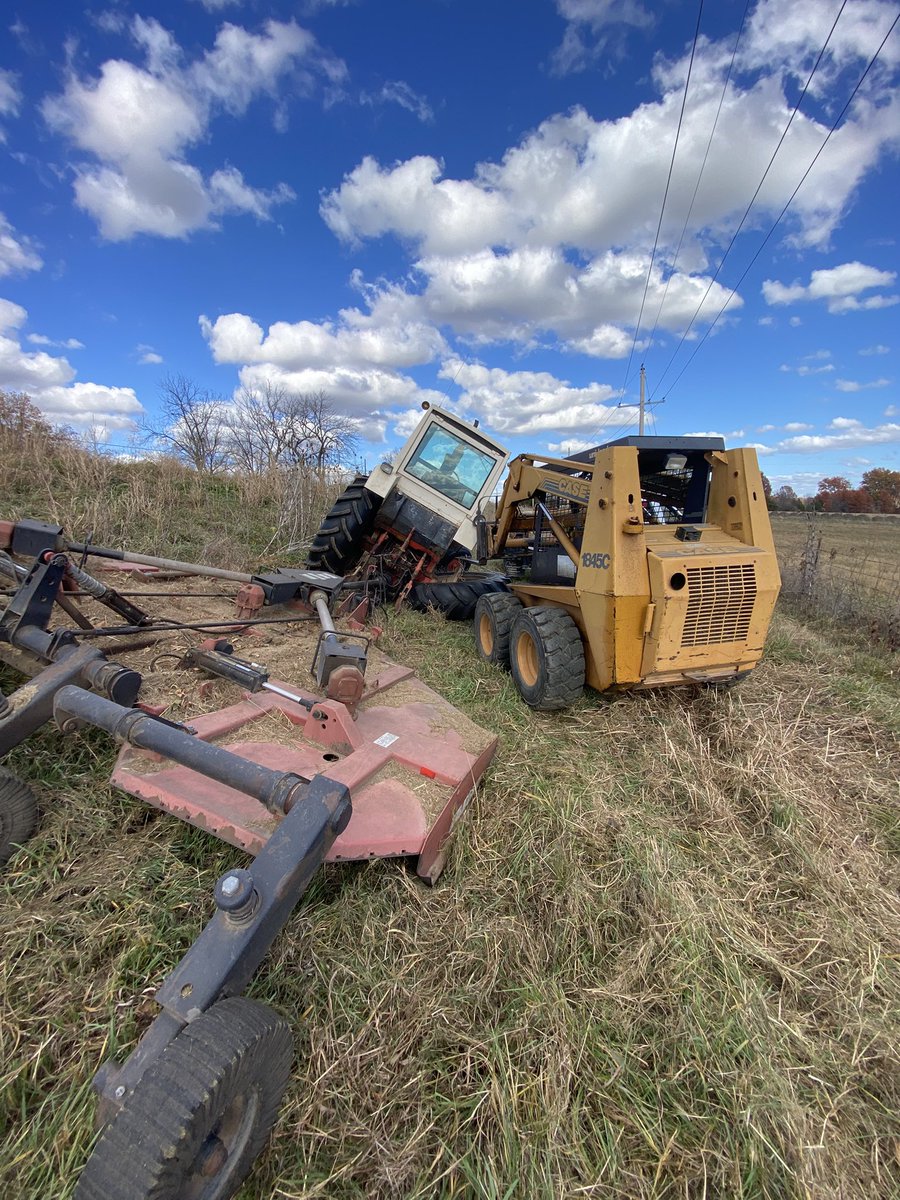
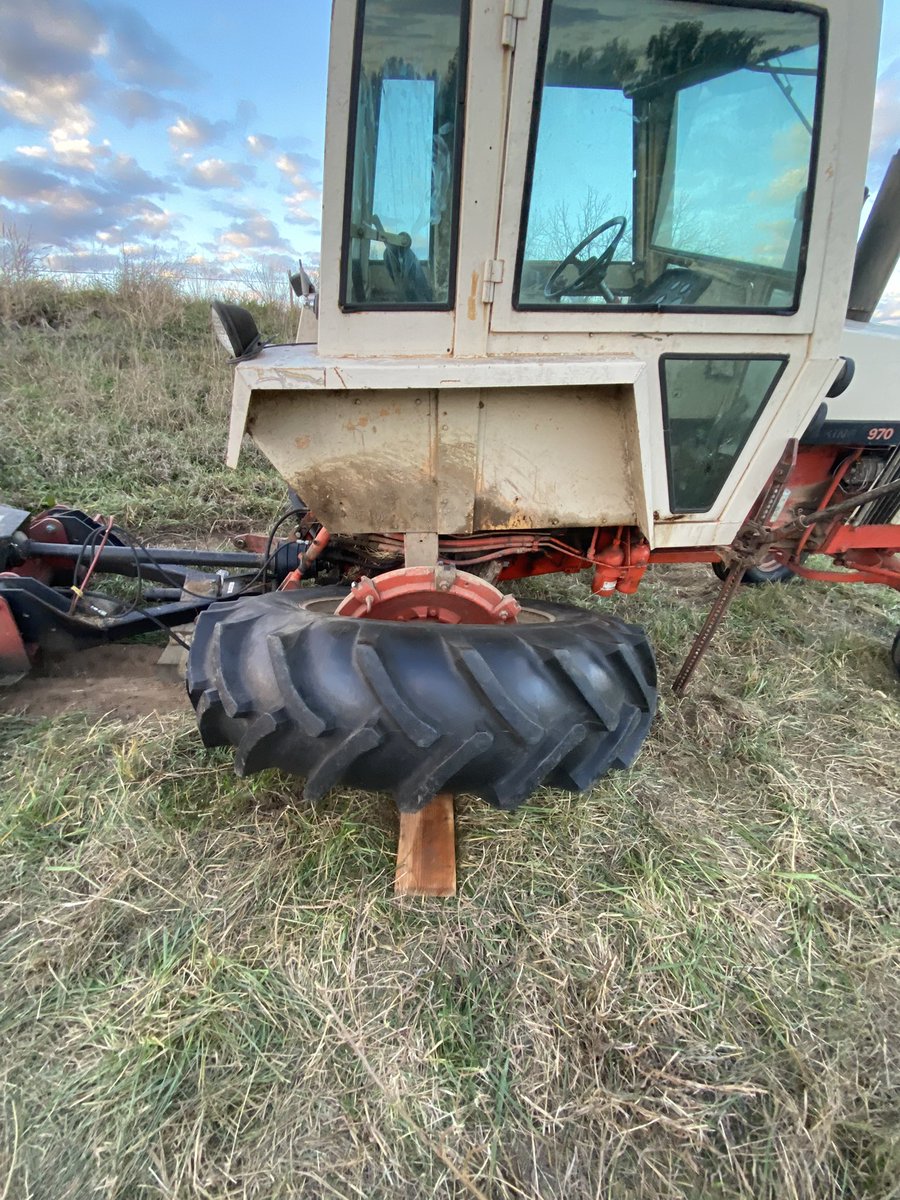
Neighbor had a rough one. Mowing an uncomfortably steep bank, wheel popped off and made it uncomfortably steeper. Used my skidder to lift a corner while he pulled it to level ground. Bit of sketchy re-positioning, snapped chain and such. Felt wrong being around it on slope.
@Quixotic3lixer Not making light, I’m apparently a boot longevity guy. Honestly never assumed that there was much mink oil in “mink oil”, just what was used and available.
@Quixotic3lixer It worked the first ten years, it’ll work the next ten or until I run out. This is the last run on this pair. I oil them then wax a couple weeks after. They’re tools, these have been good tools.
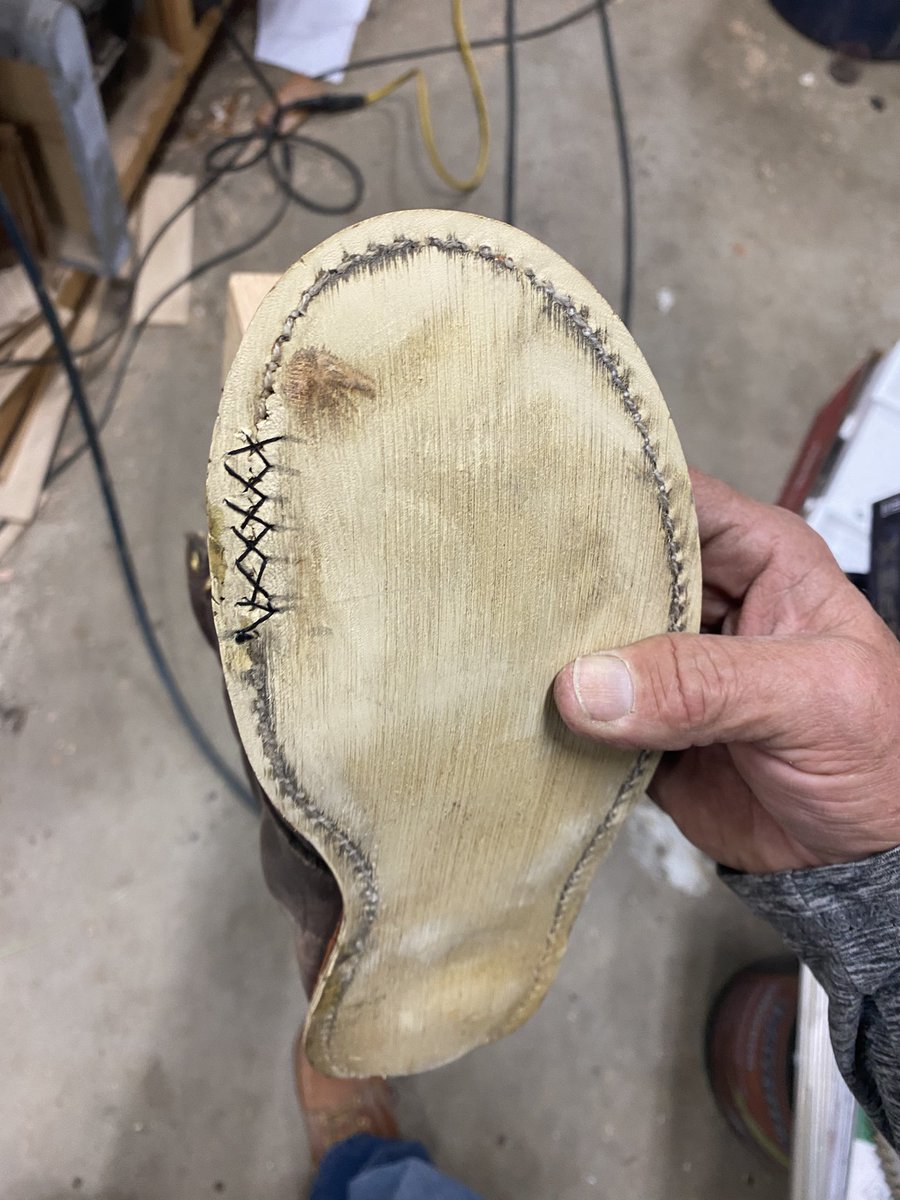
@wrowclif The original stitches pulled through the mid sole. Didn’t want to replace the welt, mid sole and three hundred stitches on this beat boot. Cross stitched through the intact welt stitches before gluing on new outer sole to get a few more years out of it.