A blade from his hand has surfaced.
Tachi · signed · 69.7 cm
Juyo · Kamakura, Bizen
Collector alerts concentrate on a short list of names. Osafune Nagamitsu is on it.
Offered by Iida Koendo.
244 works in the record. 3 on the market. This is one. Find it on NihontoWatch.
Fujishiro ranks him Sai-jo saku. The meibutsu Daihannya Nagamitsu passed from Ashikaga Yoshiteru through Miyoshi Nagayoshi to Oda Nobunaga and Tokugawa Ieyasu, and the wider denrai names Akechi Mitsuhide, Toyotomi Hideyoshi, the Asano of Geishu, the Hosokawa of Higo, the Bizen Ikeda, the Uesugi, the Maeda, the Mito, Owari and Kishu Tokugawa houses, and the Imperial Family. His National Treasures and Important Cultural Properties are patrimony, preserved among holders that include the Tokyo National Museum, the Kyoto National Museum, the Tokugawa Art Museum, Atsuta Jingu and Itsukushima Jinja.
A work by his hand has come to market.
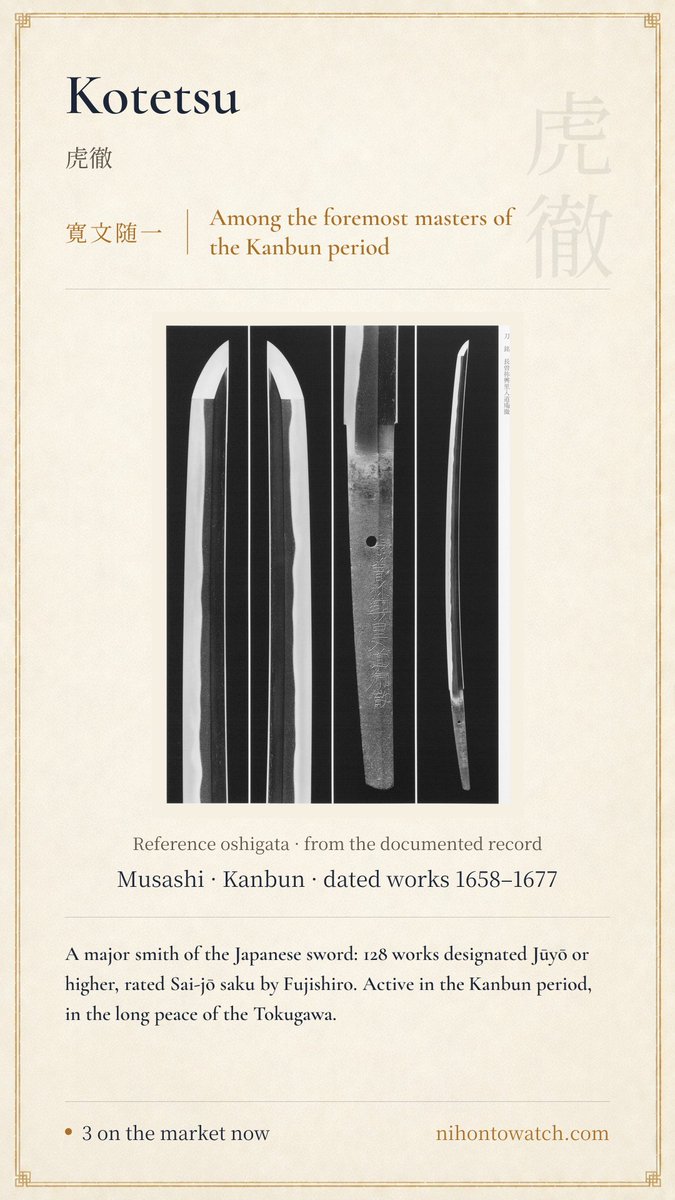
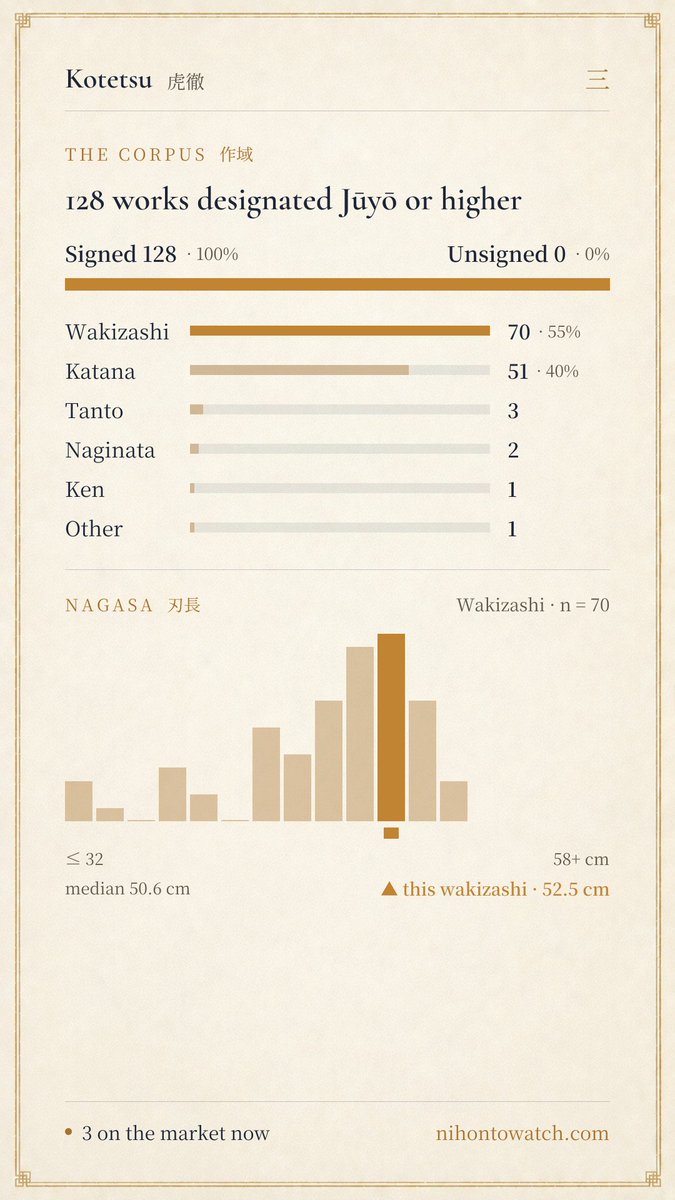
Wakizashi · signed · 52.5 cm
Juyo · Joo (1652-1655), Echizen
Offered by Nihonto.
128 works in the record. 3 on the market. This is one. Find it on NihontoWatch.
Kotetsu worked in Musashi Province during the Shinto era. Many of his blades carry gold-inlaid cutting attestations, as proof of performance mattered in the Edo market. He ranks with the foremost masters of the Kanbun period.
Fujishiro rates him Sai-jo saku, the top grade. The official record carries works across the designated tiers: five Important Cultural Properties, ten Tokubetsu Juyo and 101 Juyo, 111 in those two tiers together, and ten prewar Juyo Bijutsuhin. The record is almost entirely signed, 115 signed blades against a single unsigned piece, so the mei chronology above doubles as the connoisseur's map of the work. The recorded provenance runs through the great houses: the Nabeshima of Hizen, the Shimazu, the Okubo of Odawara, the Uwajima Date, the Maeda of Kaga and the Imperial Family; one blade passed through the house of Yamada Asaemon, the prewar premier Inukai Bokudo owned the wind-and-thunder-gods wakizashi of Enpo 5, his last year, and a blade of Kanbun 1 rests in the Tsukamoto Museum of Art.
A work attributed to him has come to market.
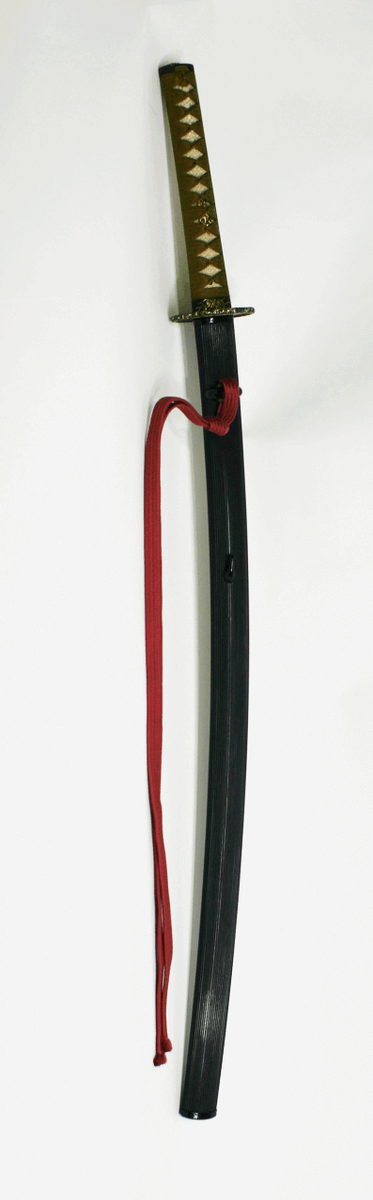
Katana · mumei · 68.7 cm
Tokubetsu Hozon · Ocho (1311-1312), Yamashiro
Offered by Bushido Antique Japanese Swords.
65 works in the record. 3 on the market. This is one. Find it on NihontoWatch.
The Maeda family held works by Rai Kunitsugu. Records show 39 works by the maker hold Juyo designation. He was a leading master of the Late Kamakura period.
His signed work is nearly all tanto and ko-wakizashi; the published sources repeat that surviving tachi are scarce, and that ken and yari survive only in the rarest examples. The tanto are signed below the mekugi-ana at the center of the nakago with a large, thick-chiseled three-character mei, while the slender signed tachi with high koshizori carry an elongated, finely chiseled, smaller signature that the NBTHK reads as his early hand, valued for showing the change of his manner over time. A minority of works keeps the older Rai style unaltered, a quiet suguha with ko-choji, the nie at ordinary strength; the tanto handed down in the Uesugi house is called "a calm register that holds faithfully to the Rai tradition", and such work is noted as extremely rare for him.
A blade attributed to his hand has surfaced.
Katana · mumei · 68.2 cm
Tokubetsu Hozon · Sagami
Offered by Aoi Art.
69 works in the record. 2 on the market. This is one. Find it on NihontoWatch.
Shintogo Kunimitsu stands with the leading masters of the Soshu tradition. Shintogo Kunimitsu is considered the first smith of Sagami. A signed tanto of 1315 bears the Buddhist name Koshin, which is read as late work by the maker.
Tachi are another matter: the sources repeat that nearly everything extant is tanto and the tachi exceedingly rare; the survivors are slender, with high koshizori, funbari and a compact point, forged exactly as the tanto. At their head stands the meibutsu Mutsu Shintogo, an ubu signed tachi of 76.1 cm with layered horimono, heirloom of the Date of Sendai, by tradition a grant from the Emperor Go-Mizunoo, and listed in the addenda of the Kyoho Meibutsu-cho as no meibutsu, yet a fine tool. The osuriage mumei katana attributed to him belong here too, and the sources are explicit that such a judgment names Kunimitsu and his three sons collectively. One such blade carries a Kyoho 7 (1722) origami of Hon'ami Kochu at seventy gold pieces.
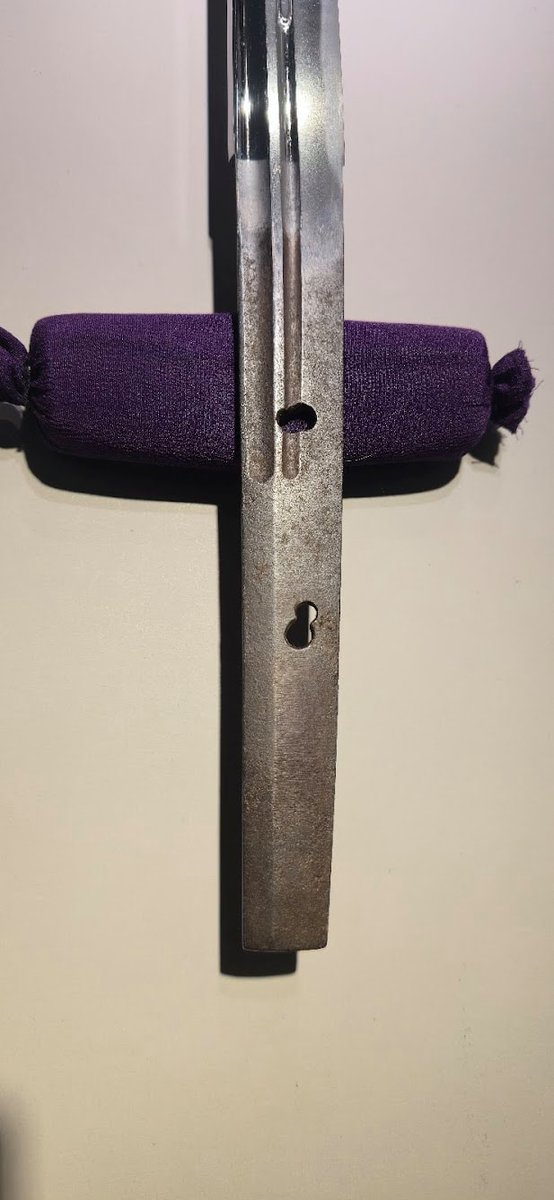
A blade from his hand has surfaced.
Tanto · signed · 29.6 cm
Tokubetsu Hozon · Edo, Hizen
Offered by Sanmei.
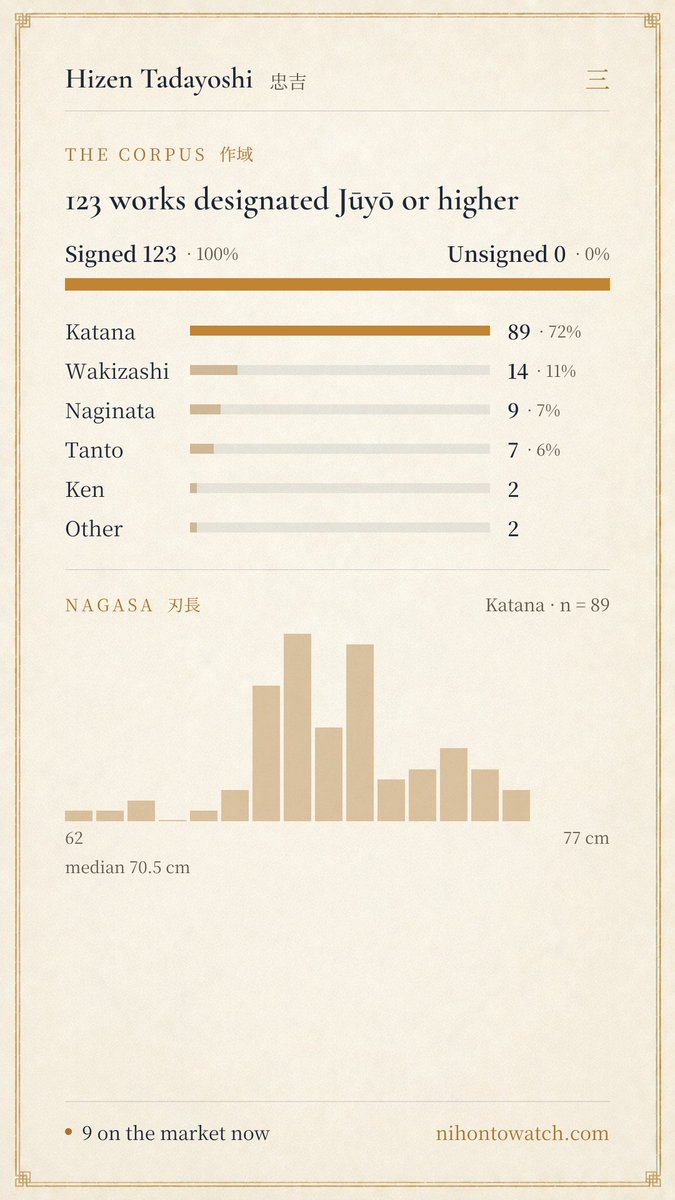
123 works in the record. 9 on the market. This is one. Find it on NihontoWatch.
By domain order in 1596 Hizen Tadayoshi went up to Kyoto with the carver Munenaga and entered the school of Umetada Myoju. Records show 105 works by the maker hold Juyo designation.
From him descends the whole Hizen school. His son the second-generation Omi Daijo Tadahiro carried on the konuka-hada and the suguha to become the most prolific of the Hizen smiths, and the line continued through the third-generation Mutsu-no-kami Tadayoshi and the Tosa-no-kami branch, the published sources noting that the third generation in particular returned in style toward his grandfather the founder, especially accomplished in suguha and skilled also at choji-midare. Tadayoshi is Sai-jo saku in Fujishiro's grading. His blades carry a Nabeshima provenance and pass through notable hands, the recorded transmissions naming the Owari Tokugawa Family, the Satake Family and the Imperial Family among others, with a kinzogan cutting-test inscription on one and a Myoju soemei on another that documents his discipleship.