**LEGAL ACTION ALERT: PUMPDOTFUN**
Burwick Law is pursuing legal action on behalf of investors in pumpdotfun memecoins. If you lost money on any pumpdotfun memecoins, you may be entitled to compensation.
Read more below.
If you lost money on Moonbirds or Proof Collective NFTs, contact our firm to learn about your legal rights.
Our firm represents thousands of NFT and token investors interested in recovering their losses.
This is attorney advertising.
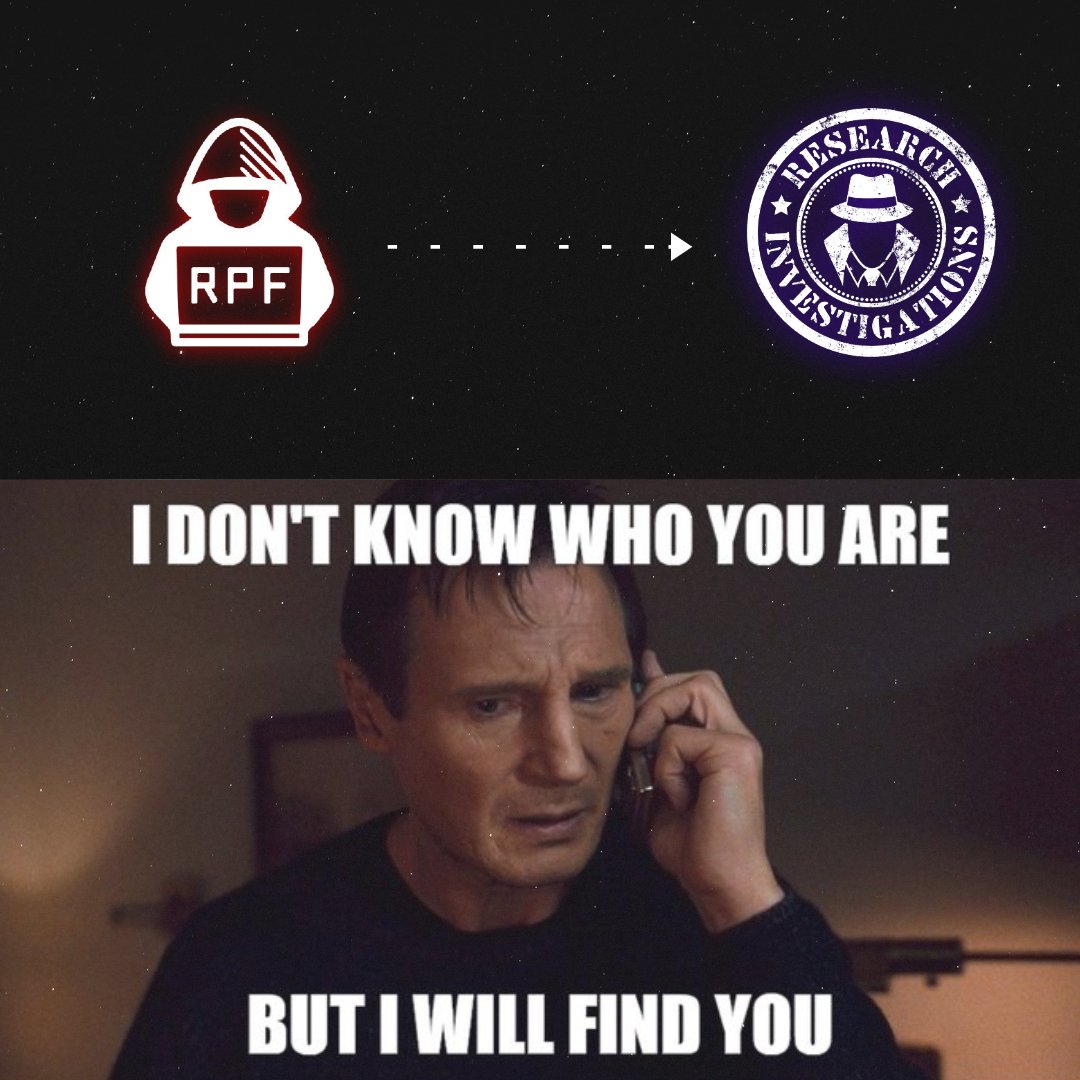
We’re thrilled to announce that @rugpullfinder is officially joining the @Intell_On_Chain family!
For nearly three years, both RPF and IOC have worked tirelessly to protect the Web 3.0 space, bringing transparency and accountability to the forefront. Our collective mission has always been clear: safeguard users through rigorous investigation, provide reliable research, and stand up against fraudulent schemes. With this acquisition, we’re taking an incredible step forward.
Since 2021, RPF has been instrumental in exposing fraudulent projects and educating the NFT community about potential risks. Under Nik's leadership, RPF built a strong foundation in exposing shady projects and educating the community on the risks within Web 3.0, especially in the NFT world. By taking the reins, IOC is amplifying the collective mission to make Web3 safer and more transparent. It’s an honor to take up the torch and continue this amazing work.
Rug Pull Finder’s strong community and social presence on platforms like Discord and X will open new channels for IOC’s research and investigative capabilities, Accelerating RPF’s mission to investigate , validate, and expose more scams. Nik will be officially handing over RPF’s operations, assets, and NFT collections on Monday, December 16th. , and we are committed to building on the foundation he and his team have created. Further information will be posted shortly about what this means for Elite Pass and Bad Guys holders.
For both the IOC and RPF communities, this is a fresh start and an exciting one. We’ll keep you updated every step of the way as we integrate and expand our resources. We’re grateful to have you with us for this next phase, and we’re beyond excited about what lies ahead.
Thank you for your dedication and support. Let’s keep building a safer, more transparent Web 3.0 together.
Warmly,
The IOC & Rug Pull Finder Team
In crypto, we move from one viral headline to another.
But, real users were left with significant losses as a result of friendtech's fall.
Let's do a deep dive into friendtech's platform and the implications of share/key trading:
Friendtech: Another Example Crypto Vaporware Driving Retail Speculation Leading to Liquidity for Base and Coinbase
When friendtech launched in mid-2023, it was marketed as an innovative social platform that allowed users to buy "shares" or "keys" tied to influencers' profiles. However, rather than creating a traditional marketplace where shares were exchanged peer-to-peer, friendtech used a bonding curve model. This system meant that users minted new shares upon purchasing them and burned those shares when they sold, significantly impacting the liquidity on the Base blockchain and indirectly boosting Coinbase's ecosystem.
The Bonding Curve Mechanism: Minting and Burning Shares
Friendtech operated under a unique structure. Rather than buying and selling shares between users, each time someone purchased a share, a new share was minted. The liquidity from the purchase was absorbed into friendtech’s infrastructure. When the user sold their share, it wasn’t transferred to another person—instead, the share was burned, and the liquidity that had been captured was returned to the user, minus fees.
This burning and minting process did not just manage liquidity within friendtech but also had broader implications for the Base blockchain as it increased and decreased liquidity, influencing transaction prices and network throughput. The system was inherently volatile, driven by speculative behavior, and resulted in rapid price fluctuations as liquidity came in and out of the platform.
How Friendtech Increased and Decreased Liquidity on Base
From a technical perspective, the bonding curve model effectively captured liquidity every time a share was minted, holding it within friendtech’s infrastructure. As users bought shares, liquidity flowed into the system and into Base, making it appear more attractive to both developers and users. However, as shares were sold and burned, liquidity was pulled back out, naturally lowering the price and destabilizing the market.
The result was a dramatic surge in Base’s transactional throughput. For instance, on August 20, 2023, daily transactions on Base surged to over 900,000, driven largely by the rapid buy-sell cycles on friendtech. This increase, however, was unsustainable as it was tied more to speculative trading rather than value-based use cases.
Why Friendtech Wasn’t Traditional Trading
Traditional trading markets rely on fixed supply and market-making functions to balance supply and demand. friendtech’s bonding curve eliminated the need for these mechanisms by dynamically minting and burning shares. This led to easier liquidity management but also introduced high volatility, as prices increased rapidly during buying surges and crashed just as quickly when users started selling.
This speculative nature led to inflated prices and unsustainable growth, raising questions about the long-term viability of friendtech as a platform. The ease of minting shares, combined with the speculative demand, exacerbated the inherent volatility and raised concerns about whether friendtech was a value-driven project or simply another crypto vaporware.
Performance Impact on Base and Coinbase
Friendtech’s surge in activity brought significant attention to the Base blockchain, a Layer 2 solution incubated by Coinbase. The increase in liquidity directly enhanced Base’s visibility, helping it surpass rival Layer 2 chains like Arbitrum and Optimism.
By mid-August, total value locked (TVL) on Base had reached $188 million, largely driven by friendtech’s activity. This surge helped Coinbase position Base as a scalable and efficient blockchain solution, but it was largely tied to short-term speculative interest rather than long-term sustainability.
However, as users started selling off their shares, liquidity drained rapidly, leading to potential network instability on Base. The short-term spikes in network usage and value led to concerns about whether this increase in activity was built on sustainable use cases or merely speculative behavior.
Legal and Functional Implications
The model used by friendtech raises significant legal and functional concerns, particularly regarding securities regulation. Since users were effectively buying shares or keys with the expectation that prices would rise as more users bought into the platform, this system could be viewed as facilitating the sale of unregistered securities. However, unlike many cases where investors rely on regulators like the SEC to enforce claims, investors in friendtech who purchased shares or keys, as well as those who bought the platform’s $FRIEND token, have a private right of action.
This means that if the shares or tokens are determined to meet the criteria of securities under the Howey test, investors themselves can pursue claims to recover their money. They don’t need to wait for the SEC or another regulatory body to take action. If users believe they were misled or that the platform failed to disclose risks properly, they can file civil suits under the Securities Act of 1933 to seek restitution.
This ability to file a private right of action provides a legal pathway for investors to reclaim their losses, regardless of whether regulatory bodies take enforcement action. It’s a crucial safeguard in the realm of digital assets and speculative platforms like friendtech, ensuring that investors are not left without recourse in the event that the system fails or operates in a manner inconsistent with securities laws.
Retail Speculation in a Valueless Product Offering
At its core, friendtech’s model encouraged retail speculation. Users purchased shares hoping to profit from increasing demand, despite the fact that the product itself—access to social media personalities—offered little intrinsic value beyond fleeting interactions. This model was reminiscent of other crypto vaporware projects, where hype and speculation drive liquidity but fail to deliver sustainable value.
The speculative nature of friendtech inflated the attractiveness of the Base blockchain and Coinbase’s Layer 2 infrastructure, but it was largely built on unsustainable liquidity flows. As more users sold their shares, liquidity evaporated, and the platform’s true fragility was exposed.
How Institutional Investors Like Paradigm Benefited
Institutions like Paradigm, an early investor in friendtech, were able to leverage the platform's initial success to capitalize on retail speculation. By investing early, Paradigm was well-positioned to benefit from the liquidity surge driven by friendtech’s user base. The increased platform valuation and trading activity on Base made Paradigm’s investment appear sound, even if the underlying product was speculative and valueless.
Conclusion: Crypto Vaporware or Real Value?
Friendtech’s rapid rise and fall underscore the fragility of speculative platforms in the crypto ecosystem. While it provided short-term liquidity and increased activity on the Base blockchain, it raised significant questions about the long-term value of blockchain ecosystems built on speculative products.
The real test for platforms like friendtech and blockchains like Base is whether they can move beyond speculative hype and deliver sustainable, value-driven applications. As it stands, friendtech appears to be yet another example of crypto vaporware: a product that drives massive liquidity in the short term but offers little in the way of lasting innovation.friendtech: Another Example Crypto Vaporware Driving Retail Speculation Leading to Liquidity for Base and Coinbase
Disclosures:
- My firm, Burwick Law, is representing clients pursuing legal action against Friendtech.
- This article is for educational purposes only and does not constitute legal advice.
CALL TO ACTION: @stakx
We are asking for your help to gather information about their Syndicate program, other NFT collections involved, and any other details of this project's roadmap and promised returns. Investors in @stakx suffered significant monetary losses.
If you have any relevant info, see the post below. It takes less than 30 seconds.
A napkin, in and of itself, is not a contract, but what about XRP? The truth about the XRP decision, the nature of tokens, and the end of Crypto self-inflicted delusions https://t.co/7aNBEKppzz
We're bringing 'em back!
Join @NikRPF and @lndofi on stage Friday as they discuss the most impactful storylines impacting the future of crypto
https://t.co/ZIhwXMaTgs
Well would you look at that?
Be cautious (just straight avoid) @EnchantersNFTS
Shitcoin and rug @Rickcoinerc posted this tweet before deleting moments later...
Accidentally send from the wrong account there guys?
🚨🚨🚨
There is suspicious activity happening with the Art Blocks twitter account. DO NOT CLICK ON ANYTHING until we investigate further. Please ignore any tweet from that account until further notice. Thank you.
🚨🚨🚨