Regardless of surrounding context I reckon these are hieroglyphs showing the moment baby Moses is thrown in the Nile, watched by ancient Egyptians with the pyramids in the background. What secrets are Scotrail protecting?
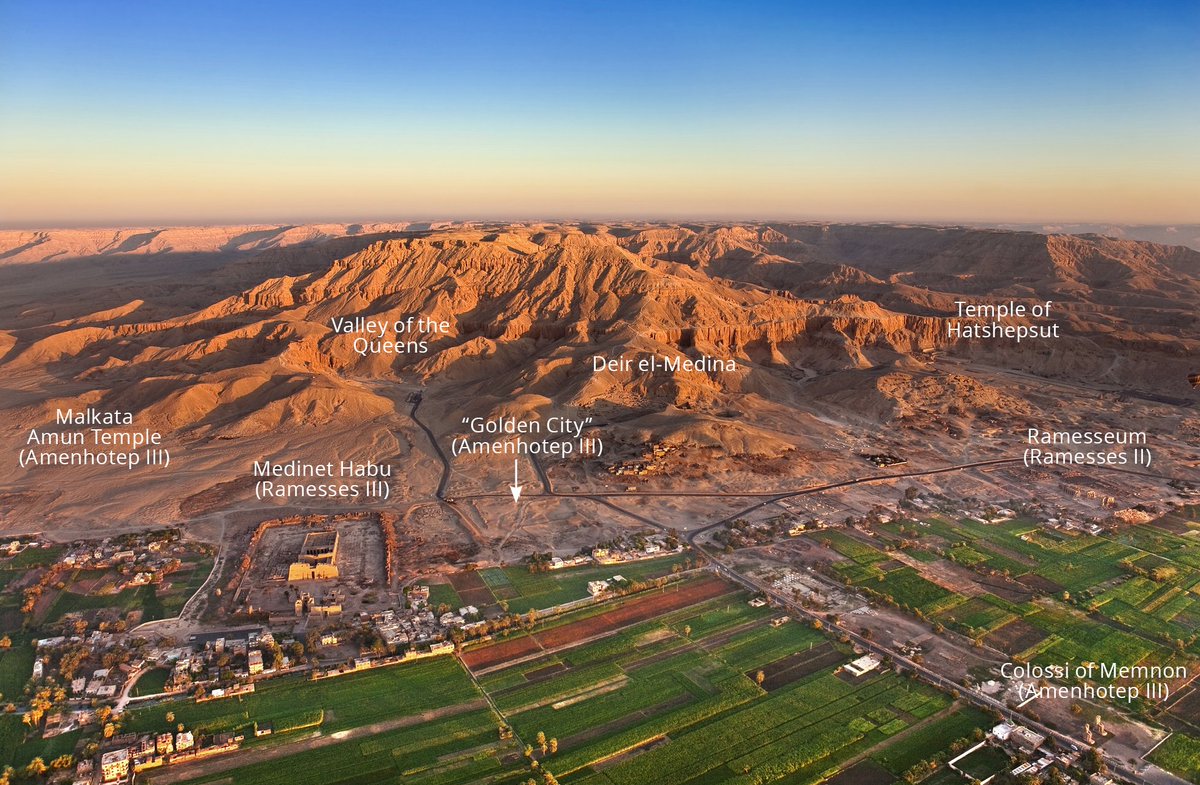
So where exactly is this "Golden City" recently discovered in Luxor? This aerial photo shows you the location of the "city", which was actually a workers' community built to serve Tjehen Aten ("The Dazzling Aten"), the palace and temple complex of Amenhotep III.
Photo: WitR.
It's truly incredible what the Egyptians achieved with some ramps, great minds, and strong muscles.
Photo thanks to Michele Frolla at https://t.co/09KKqjgDR8
OK, so maybe there was just a little stirring.
Wishing you and your loved ones (furry or otherwise) a wonderful Christmas!
This 19th Dynasty "Satirical Papyrus" is in Cairo's Egyptian Museum (JE 31199).
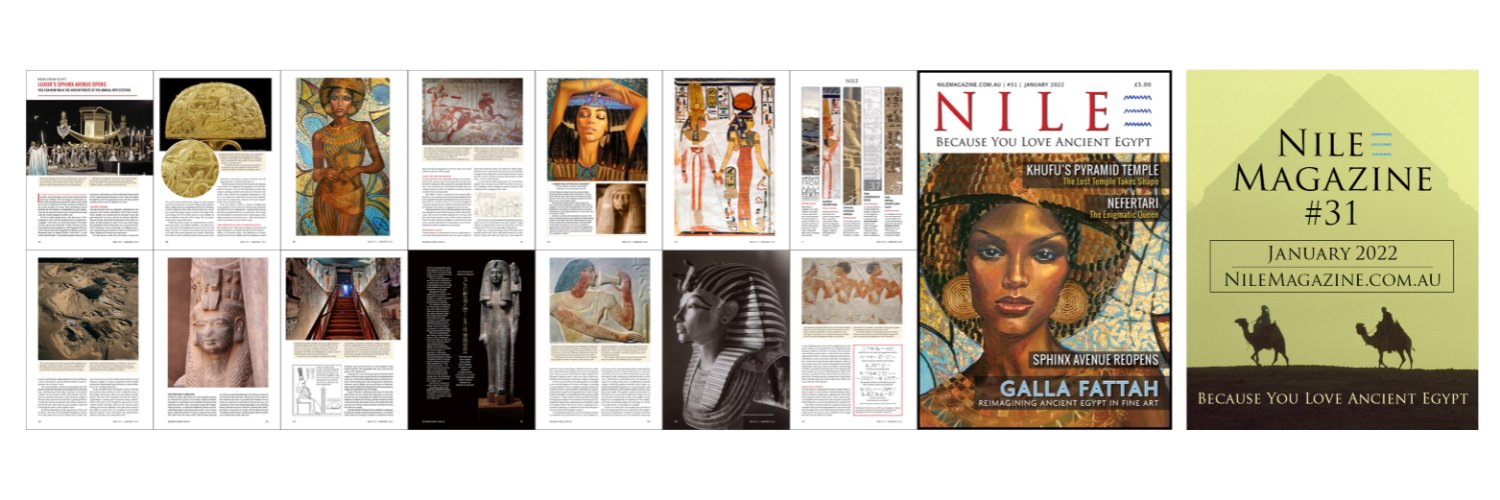
From the current issue of NILE Magazine.
This yellow limestone statue is now in the Musée du Louvre (N 831, AF 109), may be the most true-to-life portrait of Akhenaten we have.
Photo courtesy Ilinca Bartos.
I think museum collections bring together the very best of human ingenuity, passion and faith, and it's great to see that one of the world's best, the British Museum, is again open. This photo of the museum's Egyptian Sculpture Gallery was taken 100 years ago by C.F. Hogkins.
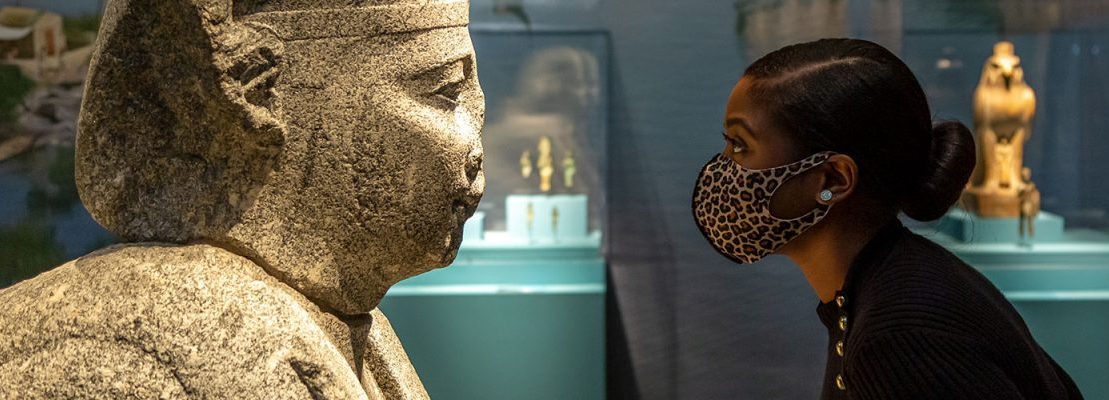
Nectanebo II meets a new admirer.
This sphinx (SCA 282) is thought to represent Necanebo II of Egypt's 30th Dynasty, who ruled between waves of occupation by the Persians. From "Treasures of Ancient Egypt: Sunken Cities", at the Virginia Museum of Fine Arts in
Richmond.
Nefertari, the principal wife of Ramesses II - a watercolour from her tomb by Howard Carter and now in the Worcester Art Museum, Massachusetts (Acc. No. 1925.144).
From the cover of the current NILE Magazine.
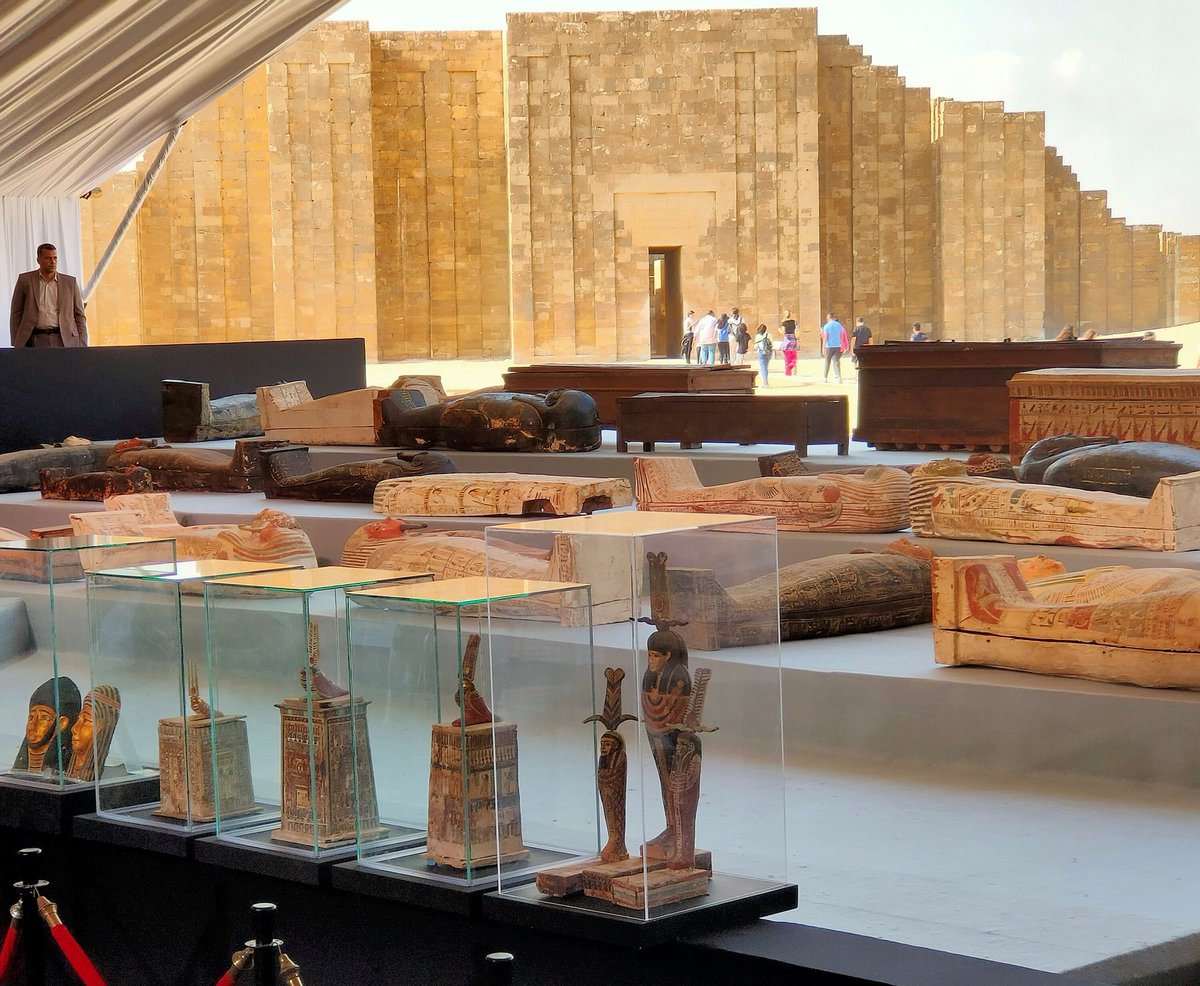
A fresh discovery of 100 beautifully-preserved coffins at Saqqara. Congratulations!
But what I love most is the stunning setting they chose for the press conference: the restored entrance and enclosure wall to the sacred precinct of Djoser's Step Pyramid. Magnificent.
Funerary masks present the deceased in a perfect, eternal state. This one has a serene quality that is simply mesmerising.
This mask belonged to a high official at the end of the 18th Dynasty, around 2,300 years ago.
From the Art & History Museum in Brussels (Acc. No. E.6884).
The latest internet sensation for people who love ancient Egypt AND cats is this photo of Akhenaten's cat.
This terrific photo is by Masayoshi Yamamoto (@nekoiroiro on Twitter). Love your work Masayoshi!
If someone wanted to memorialize me like this, I'd be OK with it.
This is Antinous, immortalised as Osiris by a heartbroken Roman Emperor Hadrian in the 2nd century A.D.
Osiris-Antinous lives on today in the Art Institute of Chicago.
Oh, that we could all age as gracefully.
This is Tawosret, from the tomb of her son, Irynefer (TT 290) at Deir el-Medina.
Tawosret's white hair shows that she reached a ripe old age, which really was something in an era when reaching your 40s was impressive.
Photo: Jeff Burzacott
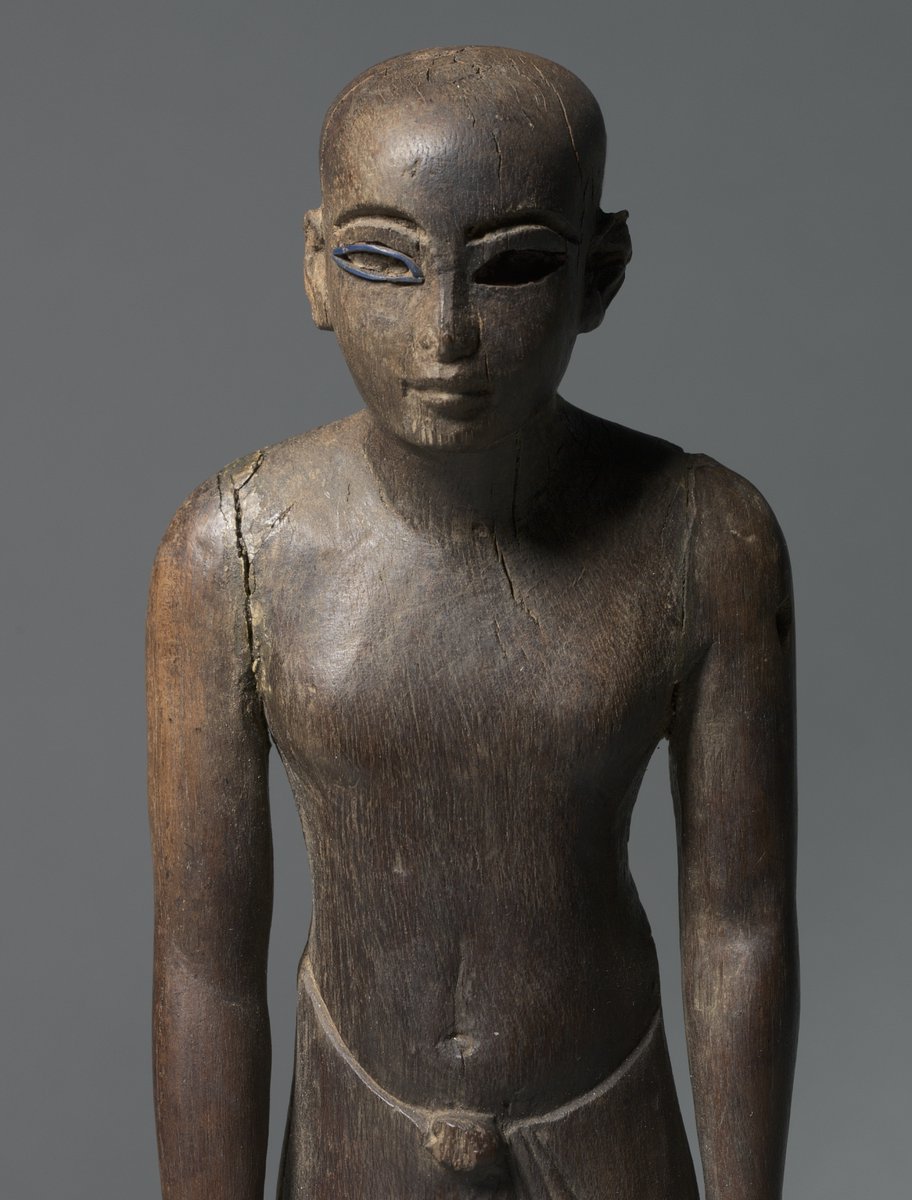
The cover story of the current issue is by the Nile Scribes (no relation) on 5 ancient Egyptian words you didn't know you knew. One of those is 'ebony'. This ebony statuette may be a rare image of Crown Prince Thutmose - Akhenaten's older brother. Image: Cleveland Museum of Art.
Now THIS is how I expect a god of Egypt to look.
Meet Anubis, god of embalming and protector of the cemeteries.
This diorite statue (ÆIN 33) is in the Ny Carlsberg Glyptotek, Copenhagen. It was discovered in Luxor Temple and is dated to the reign of the 18th D's Amenhotep III.
This stunning image of the pyramid field of North Saqqara is by Šárka Bejdová, photographer for the Czech Institute of Egyptology.
In the foreground are the ruins of the pyramid of Iput I - daughter of one pharaoh (Unas), wife of another (Teti), and mother of a third (Pepi I).