As part of our continued commitment to supporting SME growth, Bank of Kigali, together with our risk-sharing partner FAGACE, visited Impexcor Ltd, one of our valued SME clients.
Impexcor plays an important role in Rwanda’s coffee value chain through coffee processing and export, while supporting local farmers, creating jobs, and contributing to the country’s export growth.
At BK, we remain committed to providing financial solutions and partnerships that help SMEs grow sustainably and contribute to Rwanda’s economic development.
#BK60 #NanjyeNiBK
Working together with the @BankofKigali to support #Impexcor is a clear example of how strategic partnerships drive impact. At #FAGACE, we are proud to provide risk-sharing solutions that empower Rwanda's SMEs to scale, export, and create lasting value in the coffee sector. 🇷🇼☕️
As part of our continued commitment to supporting SME growth, Bank of Kigali, together with our risk-sharing partner FAGACE, visited Impexcor Ltd, one of our valued SME clients.
Impexcor plays an important role in Rwanda’s coffee value chain through coffee processing and export, while supporting local farmers, creating jobs, and contributing to the country’s export growth.
At BK, we remain committed to providing financial solutions and partnerships that help SMEs grow sustainably and contribute to Rwanda’s economic development.
#BK60 #NanjyeNiBK
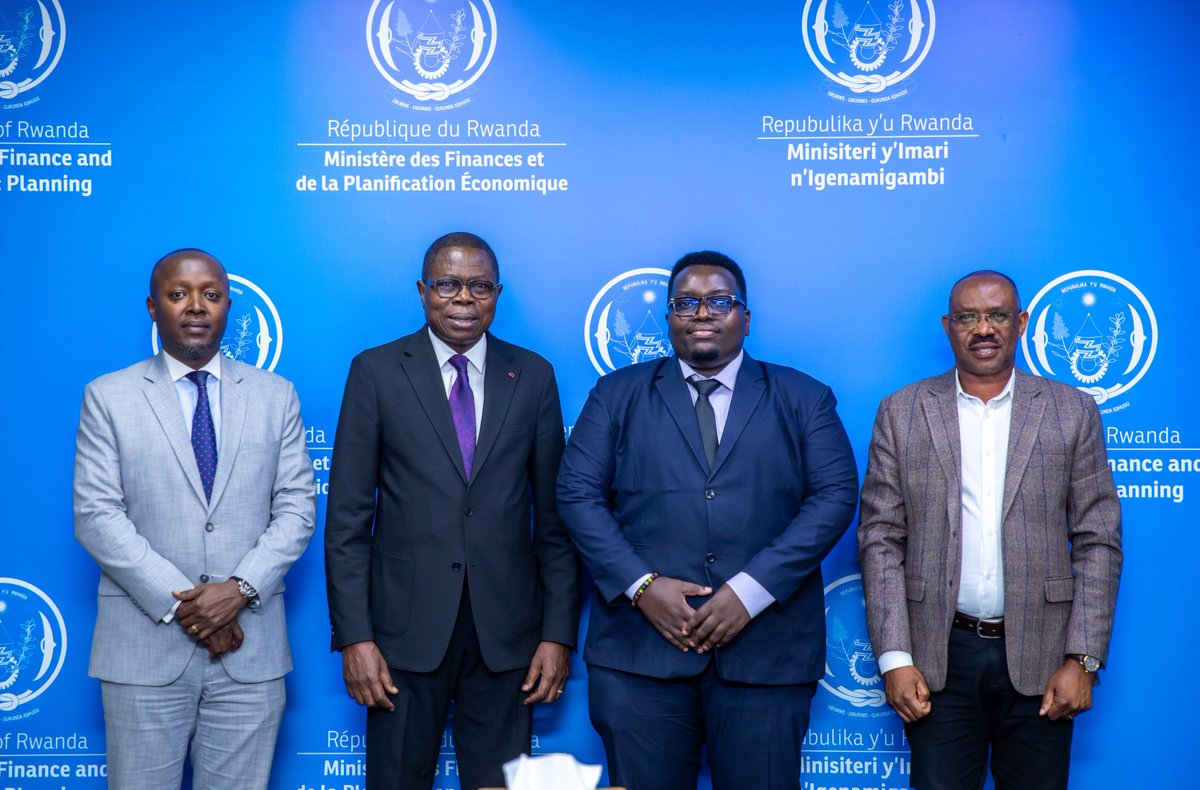
On the sidelines of #ACF2026 Minister @godfreykabera received Dr. Ngueto Tiraïna Yambaye, President of @Fagace_Officiel, for a courtesy call.
Their discussion focused on FAGACE's contribution to Rwanda's economy and opportunities for continued collaboration.
Today marks the start of #Kwibuka32, as we remember the 1994 Genocide against the Tutsi.
Together, we honor the past as we build a shared, peaceful future.
Remember. Unite. Renew.
#Kwibuka32#Rwanda#FAGACE
Honored to speak at the #GEXIM@10 International Conference in Accra on guarantee innovation & MSME export competitiveness. Key levers: valuing movable assets, shifting to cash-flow lending, and strengthening guarantees via #FAGACE to unlock finance. #MSMEs#ExportFinance#Africa
Unlocking MSME export competitiveness through Collateral Innovation at #GEXIM10.
Insights from Randolph Nsor-Ambala, Daniel Fahene Acquaye, Bright Darko & Eric Nkusi Bukeye, moderated by Vivian Kai Lokko.
#TradeFinance#SMEs#MarketAccess#MadeInGhana
Honored to represent #FAGACE at the 6th G-NEXID Exchange in Accra, hosted by @GeximBank! 🇬🇭
Key highlights:
-Strengthening ties with NEXIM, EBID & regional DFIs
-Scaling guarantees & blended finance to de-risk projects
-Driving private sector growth & regional integration
#Export
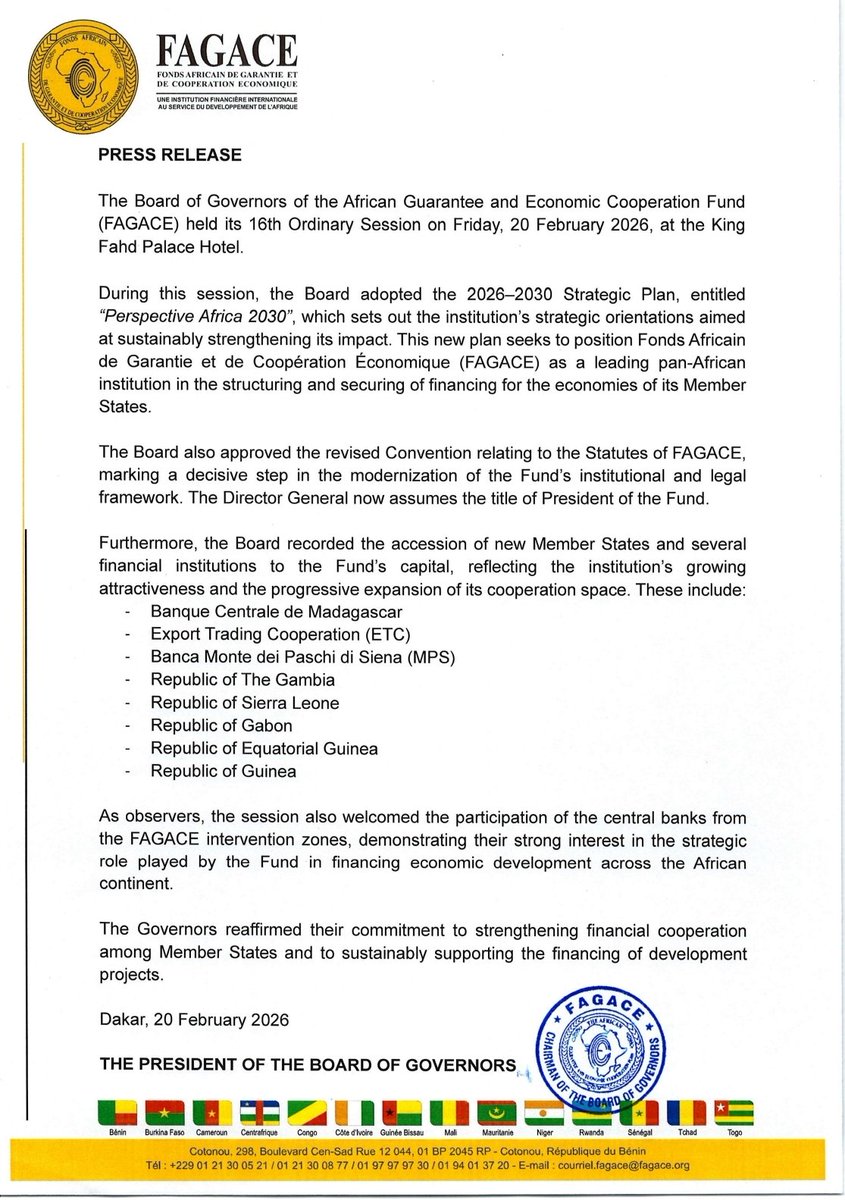
A New Era for FAGACE: "Perspective Africa 2030"
✅ 5 new Member States joined (TheGambia, Sierra Leone, Gabon, Equatorial Guinea, Guinea)
✅ Major capital growth with new institutional partners
✅ Institutional modernization to drive pan-African impact
#FAGACE#Africa2030#Rwanda
49 ans d'engagement, 49 ans d'impact ! 🎉
Le #FAGACE célèbre près d'un demi-siècle au service des PME. Plus qu'un anniversaire, c'est un tournant stratégique : nous lançons officiellement notre Plan Stratégique 2026-2030. 🎯
https://t.co/GG9JSgGmZp
What’s holding Africans back? President Kagame asked.
Prof. Murigande told Kagame that the main reason is that African leaders don’t care about their people. They seek to enrich themselves — to eat, and to eat alone. The president agreed with him, but he pressed further, asking why this problem seems peculiar to Africa.
Kagame doesn’t ask rhetorical questions. He has identified a problem and is involving Rwandans in finding a solution.
Here’s my take:
To overcome challenges like those faced by postcolonial societies, a people must rediscover a sense of collective self-worth. Usually, this comes from the memory of their past achievements— who they were as a people informs who they are and who they aspire to be.
While Africa was not the only region to experience colonization, it is one of the few where colonialism either erased the memory of past greatness or created new countries with no shared memory of such greatness.
Colonisation captured African minds. In that sense, although Africa was colonised last, it was colonised the worst.
Colonial education deepened this alienation, distorting African aspirations, turning them from collective to individual.
In the 1950s, the small group of “educated” African elites aspired to join the white world : the colonial administration. Today, with colonial education still intact and keeping African minds in chains, the elites it creates do not aspire to uplift their people; they aspire to join the global elite. They don’t seek to improve their own societies; they seek to escape from them.
Accordingly, these elites measure their self-worth by:
•how fluently they speak foreign languages,
•which foreign schools they send their children to,
•which foreign hospitals they can afford,
•how many houses they build, and how much money they invest abroad.
At the heart of this lies a quiet acceptance that Africans are somehow defective as a people, and that the only way to succeed is individually. Even those who once believed they could change things often abandon the quest for collective improvement once they grasp the scale of the effort it demands.
The kind of heavy lifting required for real transformation breeds a sense of hopelessness, one that pushes people from collective ambition toward individual greed.
So, the individual’s aspiration becomes to join the global bourgeoisie. But these are strategies of self-evacuation. They are attempts to flee backwardness by moving from the rural village to the capital, then on to the enlightened colonial metropolis, and ultimately to disappear into cosmopolitan anonymity - a form of self erasure rather than a search for self restoration.
This journey became the measure of progress. Those who remain in Africa do so with one foot already out (through dual citizenship or close connections to the representatives of their desired metropoles) for themselves, and especially for their children.
Although Kagame brings up this topic, it has been a theme he turns to whenever he notices that some ethic is creeping in amongst the leaders, only that this time he is more specific.
For example, while he has been teaching agaciro as a form of mental decolonization, most people over the years understood agaciro merely as a material pursuit.
Yet agaciro is, at its core, about retracing and reclaiming the memory of self-worth and therefore the basis for collective pursuit.