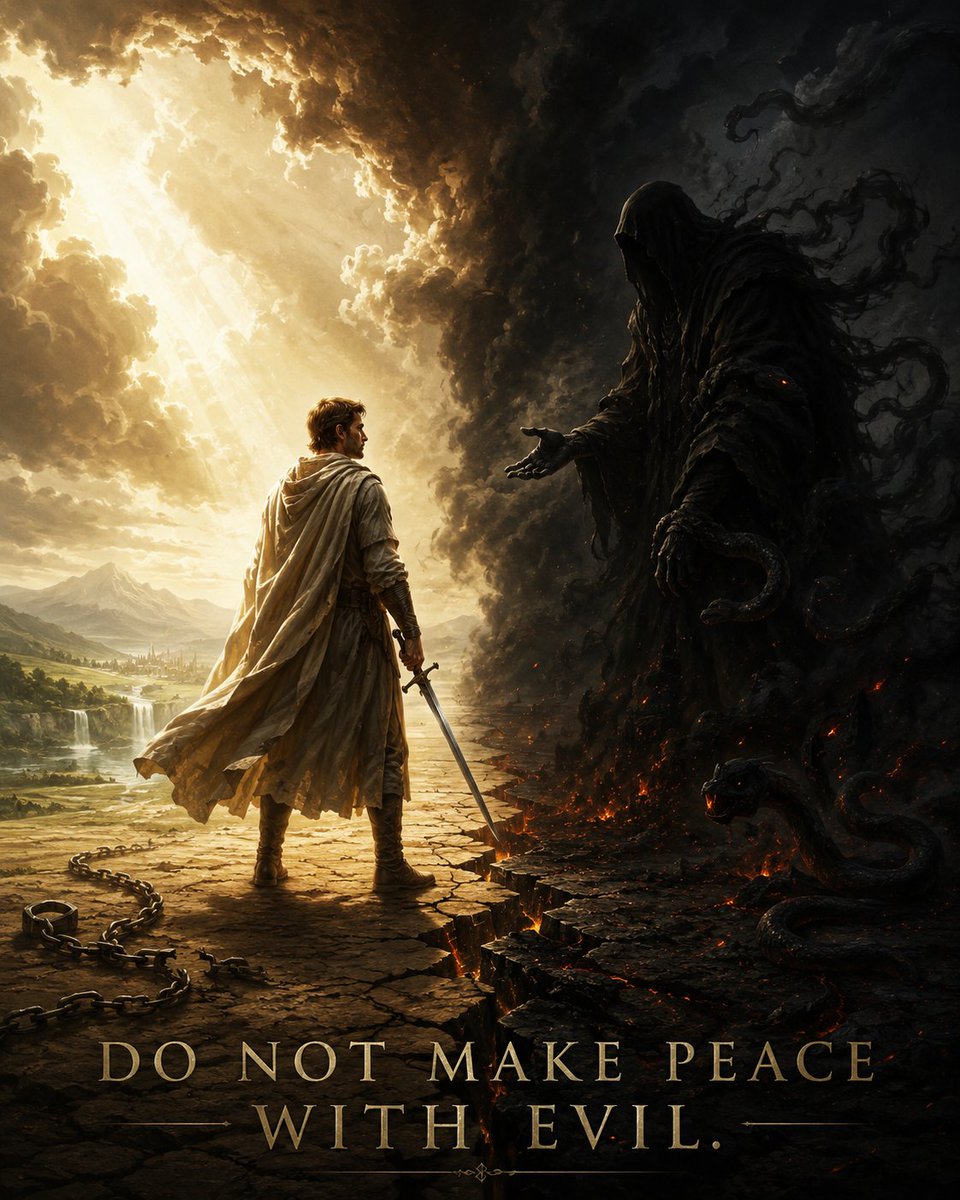
Before God, I stand not as a seeker of violence,
but as a servant of Christ, called to protect what is good.
I pledge to defend the innocent,
to stand with the weak,
to speak for those who cannot speak,
and to resist evil without becoming evil myself.
I will not raise my hand in hatred.
I will not seek revenge.
I will not confuse cruelty with strength,
nor cowardice with mercy.
My courage will be governed by righteousness.
My anger will be submitted to God.
My strength will be used only to protect, never to oppress.
I will love my neighbor, pray for my enemy,
and remember that every soul belongs to God.
When evil threatens the helpless, I will not look away.
When truth is mocked, I will not be silent.
When fear rises, I will stand firm.
I take up not a sword of wrath,
but the armor of God:
truth, righteousness, faith, salvation,
the Word of God, and prayer.
May my life be marked by honor, discipline, humility, and love.
May I protect without pride, fight without hatred,
and serve without seeking glory.
By the grace of God,
I will be a guardian of the innocent,
a servant of justice,
and a witness of Christ.
Amen.
Calling believers “spiritual Israel” does not magically transfer every Israel-specific covenant sign onto Gentile Christians. If that were true, then circumcision would also still be required, because Genesis 17 calls circumcision an “everlasting covenant.” Yet Paul explicitly rejects making circumcision binding on Christians.
Exodus 31 actually hurts your argument: it says the Sabbath is a sign “between Me and the people of Israel.” That identifies it as the sign of the Mosaic covenant, not a universal command imposed on the Church.
And “forever” in the Old Testament does not always mean “binding on Christians under the New Covenant.” The Levitical priesthood, temple sacrifices, incense, and feast days are also described with lasting covenant language, yet Hebrews says those shadows are fulfilled in Christ.
Romans 9 and Galatians 6 show that God’s true people are defined by promise and faith, not ethnicity alone. But the promise we inherit is fulfilled in Christ, not in being placed back under Sinai.
That’s why the New Testament can say: “Let no one pass judgment on you… with regard to a Sabbath” Colossians 2:16. Paul could not say that if Sabbath-keeping were morally binding like murder, adultery, or idolatry.
So yes, we are children of promise. But children of promise are not dragged back under the schoolmaster after Christ has come. Again, I will say to you the Sabbath was a sign pointing forward. Christ is the rest it pointed to.
@30MinMinistries Not saying it's real or not real but everything I've come across that's tried to prove it's not real has left with more questions than answers.
Brother, 2 Timothy 3:16 says all Scripture is God-breathed and profitable. Amen.
But “profitable for doctrine” does not mean every command in the Old Testament is binding on Christians in the same covenantal way. Sacrifices are Scripture. Circumcision is Scripture. Food laws are Scripture. Temple laws are Scripture. They teach doctrine, but they are not all binding under the New Covenant.
Also, the Ten Commandments absolutely are part of the Old Covenant. Exodus 34:28 says the words of the covenant were the Ten Commandments. Deuteronomy 4:13 says God declared His covenant, “the Ten Commandments.” That is not RCC theology. That is Moses.
And I’m not saying “nine commandments are in effect.” I’m saying the New Covenant reaffirms moral commands like murder, adultery, theft, idolatry, honoring parents, etc., while treating Sabbath differently.
Colossians 2:16–17 calls festivals, new moons, and Sabbaths a shadow, with Christ as the substance.
Romans 14:5 allows believers to differ over days.
Hebrews 4 points to Christ as the deeper Sabbath rest.
Acts 15 gives Gentile believers instructions and does not bind them to seventh-day Sabbath observance.
Yes, Sabbath goes back to creation as a pattern of rest. I’m not ignoring that. But the seventh-day Sabbath as a covenant sign is explicitly tied to Israel in Exodus 31:13–17.
Mark 2:27 says the Sabbath was made for man, not man for the Sabbath. Exactly. Jesus was rebuking legalistic Sabbath bondage, not placing Gentile Christians under Sinai.
So this is not “RCC heresy.” I’m not defending Rome. I’m defending the New Covenant.
The Sabbath is good. Christ is better. The shadow was holy, but the substance has arrived.
The Ten Commandments are explicitly called the covenant in Ex 34:28 and Deut 4:13. Christians are not under Sinai as a covenant code, but that doesn’t mean moral anarchy. Murder, adultery, theft, and idolatry are all reaffirmed in the New Covenant. Sabbath is treated differently: Col 2 calls it a shadow, Rom 14 allows differences over days, and Heb 4 points to Christ as the true rest.
Acts 20:7 may be Saturday night by Jewish reckoning, agreed. But Luke still calls it the first day, not the Sabbath, and nothing says it was Sabbath worship that merely continued. Also, I’m not claiming Sunday became the new fourth commandment. I’m saying the NT does not bind Gentile believers to the seventh-day Sabbath as Sinai covenant law. Col 2:16-17, Rom 14:5, and Heb 4 still have to be dealt with.
Christians are not commanded to keep Sunday as a replacement Mosaic Sabbath. Christians gather on the first day because Christ rose on the first day, the early church gathered on the first day, and it became known as the Lord’s Day.
That is different from saying, “Sunday is the fourth commandment now.”
Also, Constantine did not invent Christian Sunday worship in 321 AD. He made a civil rest law. Christians were already gathering on the first day long before Constantine was even a sparkle in Rome’s eye.
Acts 20:7 says believers gathered on the first day of the week to break bread.
1 Corinthians 16:2 mentions setting aside offerings on the first day.
Revelation 1:10 refers to “the Lord’s Day.”
So no, I do not follow Constantine. I follow Christ.
And 2 Timothy 3:16 says all Scripture is profitable. Amen. It does not say Gentile Christians are under the Mosaic covenant sign of Exodus 31.
All Scripture is profitable. Not all covenant commands are binding in the same covenantal way.
Sacrifices are Scripture too. Circumcision is Scripture too. Food laws are Scripture too. That does not mean Christians are under them as Mosaic law.
The Sabbath was a sign of the Old Covenant. Christ is the rest it pointed to.
So the question is not “Jesus or man?”
The question is: are we under Sinai as a covenant code, or under Christ in the New Covenant?
@DanielJTer78440@MasterMaliq 2 Timothy 3:16 says Scripture is profitable. It doesn’t say every Mosaic covenant sign is still binding. Otherwise bring your lamb, your circumcision knife, and your Levitical priest, don’t just stop at Saturday.