Let's do another simulation,
this time with Q1 2026 numbers:
ETH secured by SSV: ~7.4M ETH
ETH staking APR: ~2.9%
SSV Network fee: 1%
Annual fee flow: ~2,146 ETH/year
Taking $ETH price at $2,300.00, that’s roughly ~$5Mn per year.
You can run more simulations on https://t.co/xV61tcfJlO
I’ve been using AAVE for years — steady ETH/USDC loops, nothing crazy. Woke up to this chaos and my feed is pure panic: “DeFi is dead again”, “bridges are always the weakest link”, “who’s next?”Old degen here who survived 2022. Thought we were past this level of stupidity in 2026
Most "real yield" plays are discretionary.
Protocol decides when to buy. Market guesses whether they will. You get paid in the volatile token you're already holding.
SSV Staking is mechanical:
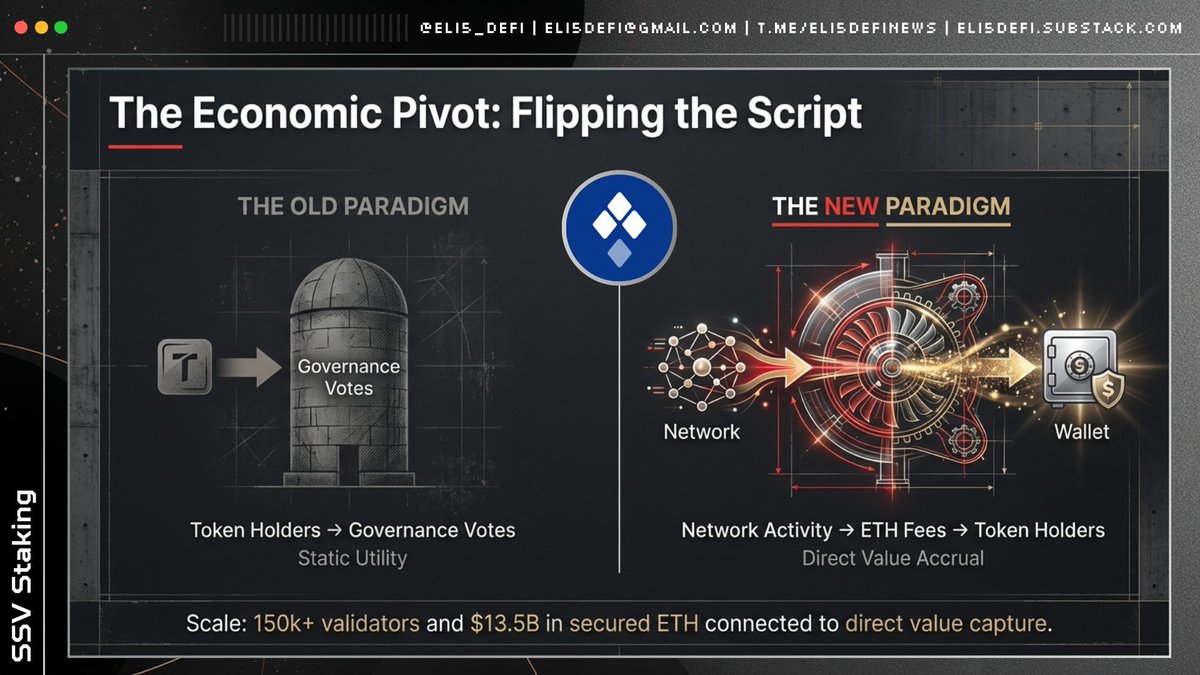
infra usage → ETH fees → your wallet
No governance vote required. No timing risk.
$SSV → 100% fees to stakers ✅
$1INCH → 0% fees to stakers, surplus to team, DAO gets nothing ❌
The difference between a protocol that respects holders and one that just used a token to raise money.
#SSV#1INCH#DeFi#NotYourFees
Imagine raising $175M from VCs, generating $5.3M annual revenue, keeping ALL of it for yourself, and still calling your project a "DAO" 😂
That's $1INCH leadership energy right there.
$SSV → 100% fees to stakers ✅
$1INCH → 0% fees to stakers, surplus to team, DAO gets nothing ❌
The difference between a protocol that respects holders and one that just used a token to raise money.
#SSV#1INCH#DeFi#NotYourFees
SSV Network just change the game on validator infrastructure economics.
Network fees, from $SSV → $ETH
Routing: straight to $SSV stakers via cSSV
150k+ validators. $13.5B in ETH secured.
Now that value actually flows back to you. ↓