Look guys, it's actually really straightforward, a bunch of people staked their ETH on the Ethereum blockchain to earn yield, except they didn't want their capital to be locked up, so they actually staked with a liquid staking protocol called Lido who provided them a liquid staking receipt token called stETH, except they decided to juice their yield further by depositing their stETH receipt tokens into a restaking protocol called Eigenlayer, except they didn't want to lock up their capital, so they actually restaked with a liquid restaking protocol called KelpDAO who provided them with a liquid restaking receipt token called rsETH, except they decided to juice their yield further by depositing their rsETH tokens into a lending protocol called Aave so that they could open a leveraged looping position that borrows ETH against the rsETH collateral and restakes the ETH into rsETH which is then deposited as collateral, except it turns out rsETH used a cross-chain bridge called LayerZero that was hacked by north koreans causing rsETH to become undercollateralized and now these looping positions are stuck and unprofitable, and everyone is pointing fingers at each other, and also DeFi is a very serious industry
Bitcoin's quantum defense just got its first working prototype.
Olaoluwa @roasbeef Osuntokun, CTO of Lightning Labs, published a functional tool to the Bitcoin developer mailing list that solves one of the hardest problems in Bitcoin's long-term security, how to protect the network from quantum attacks without locking millions of users out of their own wallets.
The problem is a painful paradox. Bitcoin's leading quantum defense proposal (BIP-360) would disable the current signature system network-wide if a quantum threat emerged. That protects the network, but every wallet that hasn't migrated to the new quantum-resistant format gets frozen permanently. The coins are still there. The rightful owner just can't access them.
Osuntokun's prototype is the escape hatch. Instead of proving ownership with a digital signature, the system lets users mathematically prove they created the wallet using its original seed phrase, without ever revealing the seed itself. Recovering one wallet doesn't compromise any others derived from the same seed. It replaces "I can sign this transaction" with "I can prove this wallet came from me."
It already runs on a consumer MacBook. Generating the proof takes about 55 seconds. Verification takes under two seconds. The proof file is roughly 1.7 MB.
There's no formal proposal to integrate this into Bitcoin yet and no deployment timeline. But the prototype closes a gap that had only existed in theory until now, a credible path to quantum resilience without the collateral damage of stranding user funds.
Nic: Recent papers (Google Babbush et al + Oratomic) cut ECC-256 break resources to ~1.2k logical/~500k physical qubits (9-23 min runtime) or ~10-26k for neutral atoms. Argues Q-day (2030-35) now plausible, incl. short-range "on-spend" attacks; Bitcoin needs urgent post-quantum upgrade.
NVK: Pure Shor's max factored is still 21. Hardware gap to ECC is ~120x; only ~15% experts agree on near-term timelines (Adam Back: 20-40yrs; Gidney: 10% by 2030). 9-min attack needs 500k qubits vs today's ~4k best. Roadmaps slipping.
NVK is more correct: papers are impressive theory optimizations assuming advanced (unbuilt) error correction + scaling. Hardware reality lags badly—no cryptographically relevant QC exists. But Nic flags real estimate drops; long-term prep makes sense.
Uncertainty: 65 (timelines speculative; hardware breakthroughs possible but unproven).
In Texas, a criminal can steal your $6,000,000 building for $30 in cash.
No ID required. No background check. Just a forged signature and a trip to the county clerk.
In 2022, this happened to two of our buildings. If you own real estate, you are a target.
The Texas county recording system runs on a "notice" basis. The clerk’s job is to record documents. Not verify them.
A criminal created a fake deed for two of our assets. They used a cut-and-paste notary stamp pulled from a different public record. They used a courier to send the documents into the clerk’s office. The courier handed over the forged paper and paid $30 in cash.
The clerk accepted the document. No driver's license. No signature check.
The public record showed a Delaware LLC owned my property. $6 million in equity vanished from the legal chain of title in seconds.
Once a criminal controls the deed, they have two moves. They sell the property to an unsuspecting buyer and disappear with the cash. Or they get a hard money loan against it, collect the proceeds, and vanish. Either way, they try to be long gone before you find out.
I found out during a refinance. My title company called with a question: "Why did you quitclaim these buildings to a new entity?"
I hadn't.
I contacted the Dallas Police Department, the FBI, and the Texas Secretary of State. Every agency gave the same answer: they are overwhelmed with this type of fraud and didn't have the time or resources to pursue it.
The criminals hide behind Delaware shells and registered agents. The county takes cash, so there is no bank trail. There is no ID requirement, so there is no face for the cameras.
Most investors assume their title policy covers this. It does not.
Standard title insurance covers defects that existed before you closed. It guarantees you received a clean deed at purchase.
It does nothing for crimes committed after.
This is a gap in your risk management you did not know you had.
It took 90 days of legal work to fix.
The "new owner" was a ghost. I had to file a lawsuit to quiet the title. I spent $20,000 in legal fees and secured a default judgment because the criminals never showed up to court (obviously).
I won. But I am out $20,000 and three months of sleep.
Criminals hunt three targets: raw land, free-and-clear buildings, and estate properties.
A mortgage acts as a tripwire because banks flag transfers. If you own your assets outright, you are defenseless.
Here is what I did after this happened to me:
Property alerts. Most counties offer a free service that emails you when a document is recorded against your parcel number. Sign up for every asset you own. This costs nothing.
Entity audits. Make sure your Secretary of State filings are current. Criminals look for lapsed registrations and "zombie" entities to find their next target.
Push for policy change. State legislatures are starting to act. The law must require a government-issued ID to record a transfer of real property. It is insane that it does not.
@honestpollster The solution is so simple. Cut fraud by $1T and reduce taxes by $1T. The tax cuts would be productive and stimulative with a multiplier effect on the economy.
After 2 years of using ChatGPT, I can say that it is the technology that has revolutionized my life the most, along with the Internet.
So here are 10 prompts that have transformed my day-to-day life and that could do the same for you.
Owning a cat is associated with a 2x odds of schizophrenia.
The proposed causal agent is Toxoplasma gondii, a parasite found in cats.
This parasite can persist in the nervous system and has been linked to changes in the brain.
Did you know Bitcoin nearly failed! 😨
Staying decentralized hasn’t been easy, and we’ll tell you why.
This is the story of UASF and Bitcoin Independence Day. 👇🧵
"Money is the ultimate form of property because it’s the only one that can be redeemed for any other form of property.
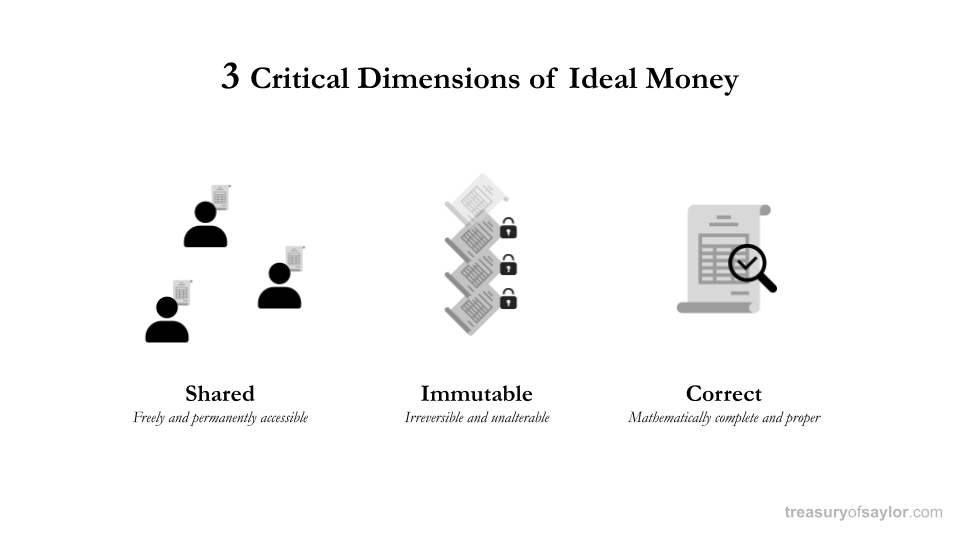
But, what is the ideal model of money?
It’s a ledger that is:
1. Shared: everybody has the same access to it.
2. Immutable: no one can doctor it.
3. Correct: it’s mathematically complete or proper.
Imagine a godlike being descended on Earth and created this perfect, incorruptible system. Next, they telepathically dropped that shared, immutable, and correct ledger into the heads of every human being. Every time you incur a debt or credit, the ledger updates in real time, so no one can corrupt it.
Using this framework, we can begin to see what the perfect form of money might be.
This gets to the heart of property; it’s essentially just a list of who owns what. And that ownership is based on what favors you’ve rendered to the market. In return, you’ve then earned the right to redeem favors from the market in the future."
—Michael Saylor
USAID was funding over 6,200 journalists across 707 media outlets and 279 "media" NGOs, including nine out of ten media outlets in Ukraine.
https://t.co/tLUoBT2GfN
https://t.co/Siq2RJOXQf