Specializing in antique diamond engagement rings from ArtDeco, Edwardian, and Victorian Era.
In beautiful down town Santa Monica for the past 30 years.
A man suddenly approaches a group of street musicians and asks, “Can I play with you? I’ve got my pan flute.” When they ask what he wants to play, he chooses Vivaldi’s Winter from "The Four Seasons"—one of the most difficult pieces there is.
And then he leaves everyone around him in awe. On the pan flute, Michel Tirabosco delivers an incredibly skillful performance, with remarkable breath control and emotion. Even though this was a planned flash-mob-style setup, the real talent of the musicians and the pure joy they bring still move people deeply.
A beautiful moment of music, connection, and limitless passion.
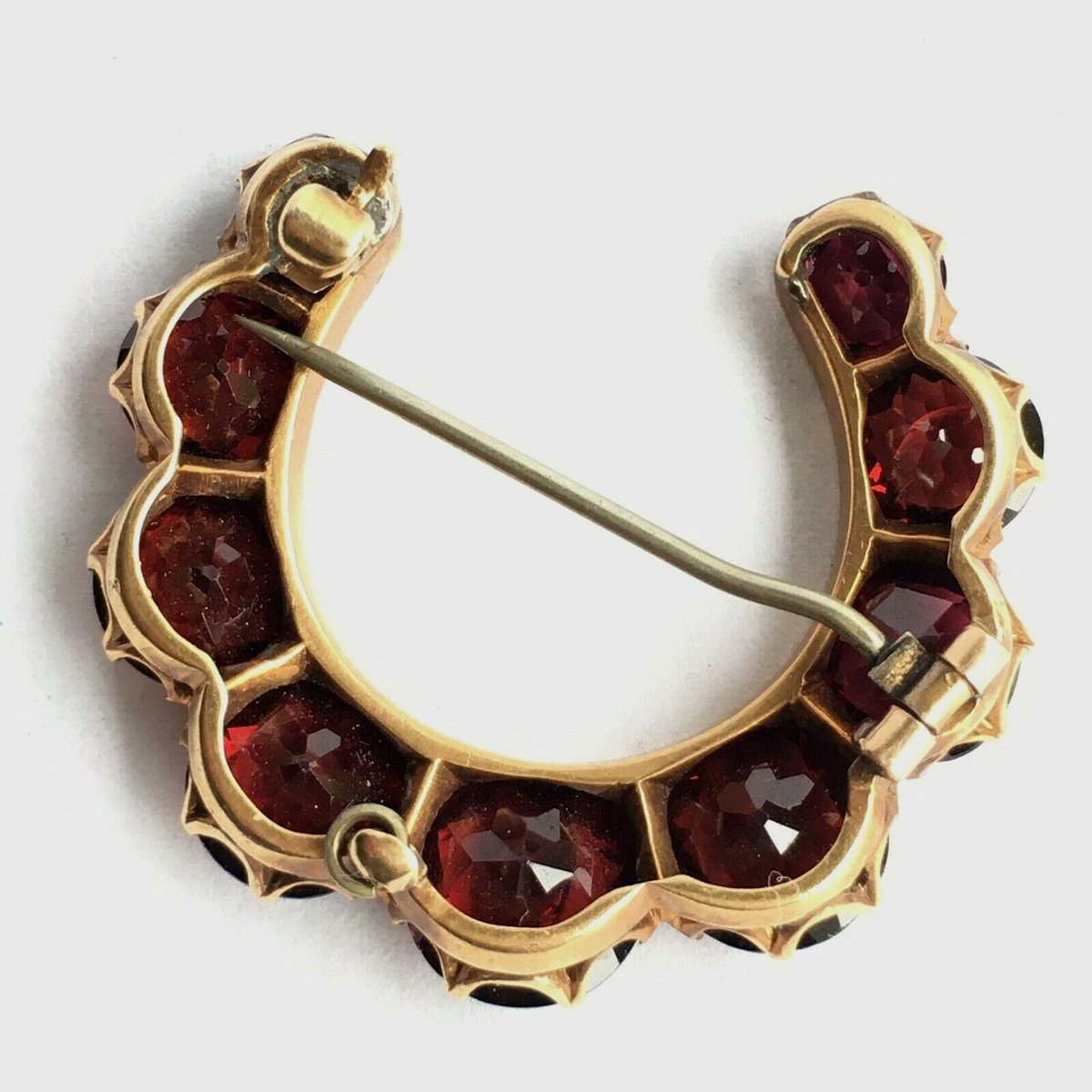
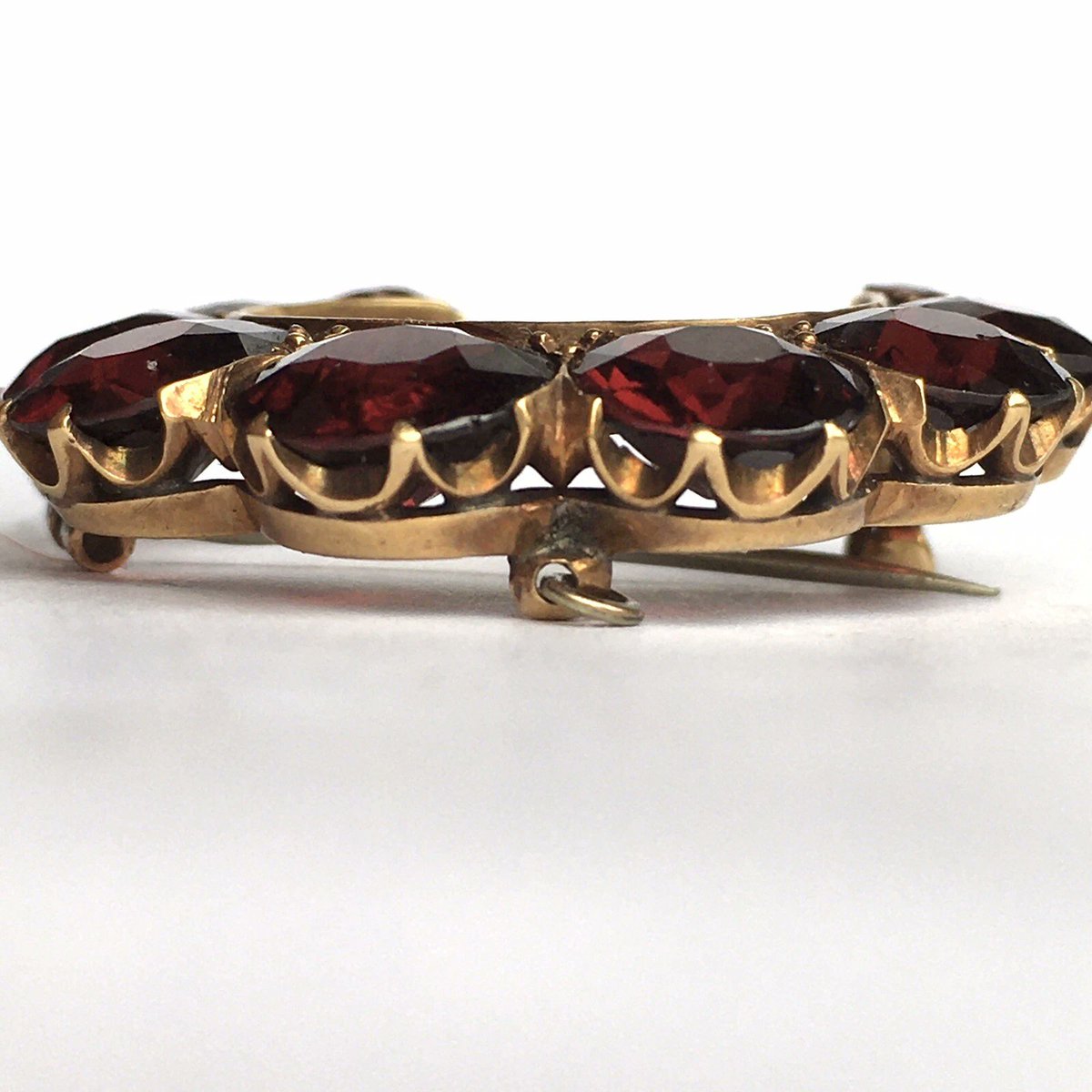
-Worn with open end facing up-
Crafted in 14K gold and set with 9 natural rich deep brown-red color garnets, this elegant crescent brooch reflects the refinement of America's Gilded Age transition into the Edwardian era. The crescent symbolized growth, femininity, and good fortune. ❤️
In 1900: Gold was about $20 per ounce and a good riding horse often sold for roughly $50-$15.
• A brooch of this craftsmanship and materials may have retailed for approximately $15-$40, equivalent to several weeks' wages for many workers (estimate based on period jewelry pricing and gold value).
More than 125 years later, this original American antique remains both a wearable work of art and a tangible piece of history.
#AntiqueJewelry #Edwardian #Garnet #PyropeGarnet #14KGold #GoldBrooch #EstateJewelry #VintageJewelry #FineJewelry #AntiqueBrooch #JewelryCollector #AntiqueGold #RubyLane #EtsySeller #JewelryLover
https://t.co/9x0QJxQhMz
X (Twitter) Post
✨ Antique Edwardian Diamond Crescent Brooch ✨
26 pcs of "Old European Cut" diamonds totaling to 5 carats, set in platinum over 14K yellow gold. Victorian examples are often silver-topped gold.
Edwardian examples are increasingly platinum-topped gold. Circa 1895-1910.
#EdwardianJewelry #AntiqueJewelry #DiamondBrooch #OldEuropeanCut #EstateJewelry #BelleEpoque #RubyLane #EtsyVintage
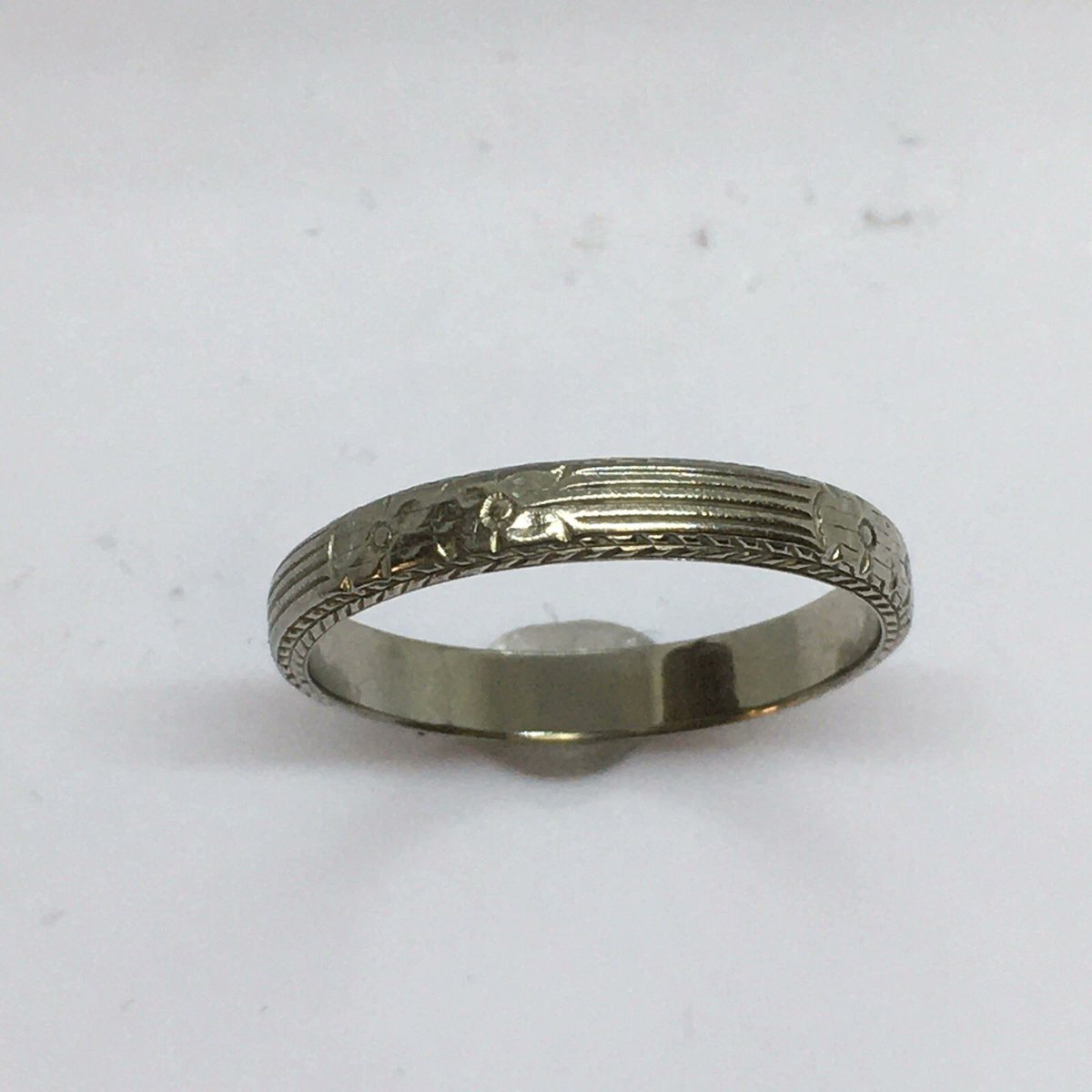
Authentic Art Deco Belias wedding band in solid 18K white gold, circa 1920s. Art Deco men's band are very hard to find. This beauty is hallmarked Belias & 18K. Size 9.5, 3.6 grams, very well preserved after nearly 100 years.
https://t.co/9x0QJxQhMz
#ArtDeco #AntiqueJewelry #WeddingBand #18KGold #VintageJewelry
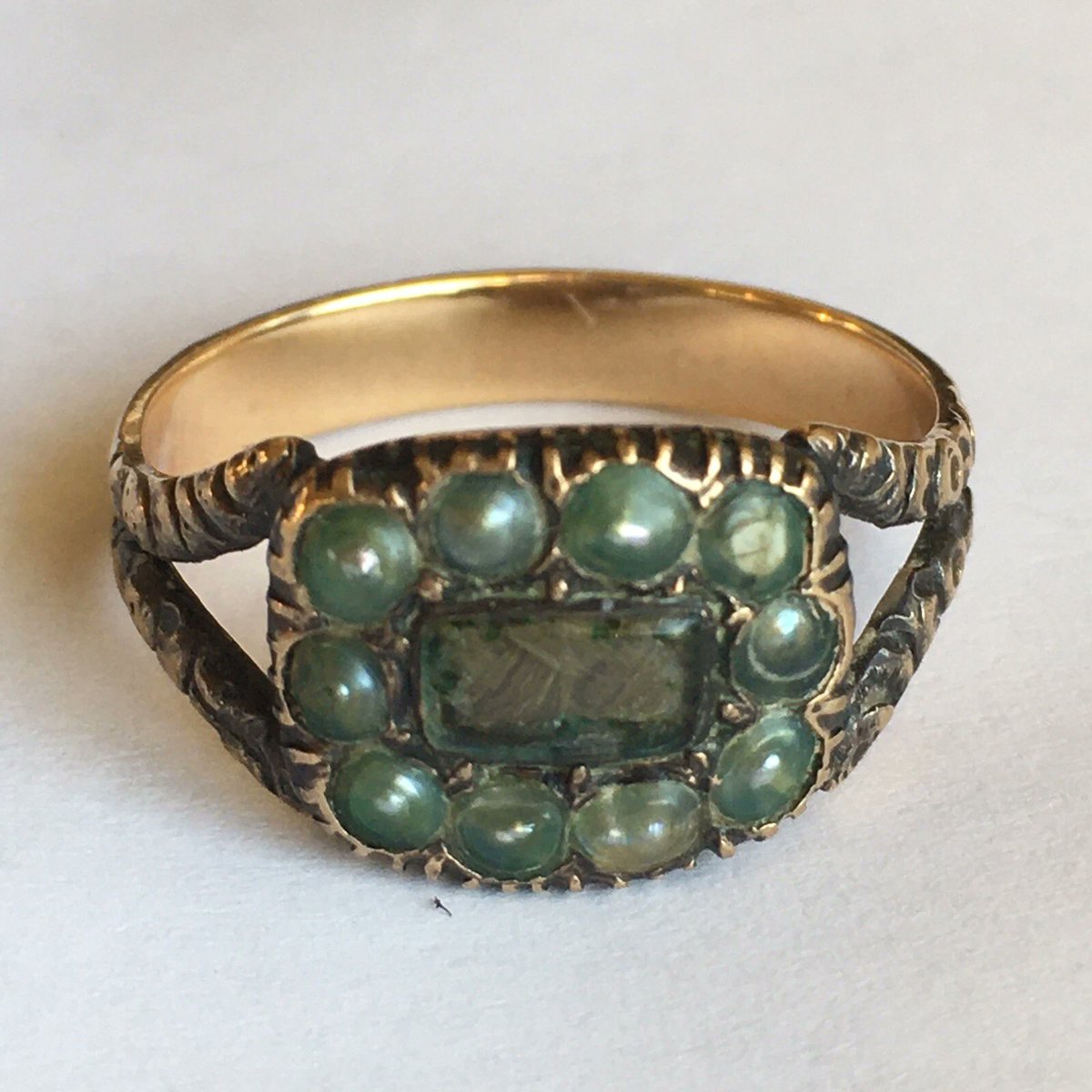
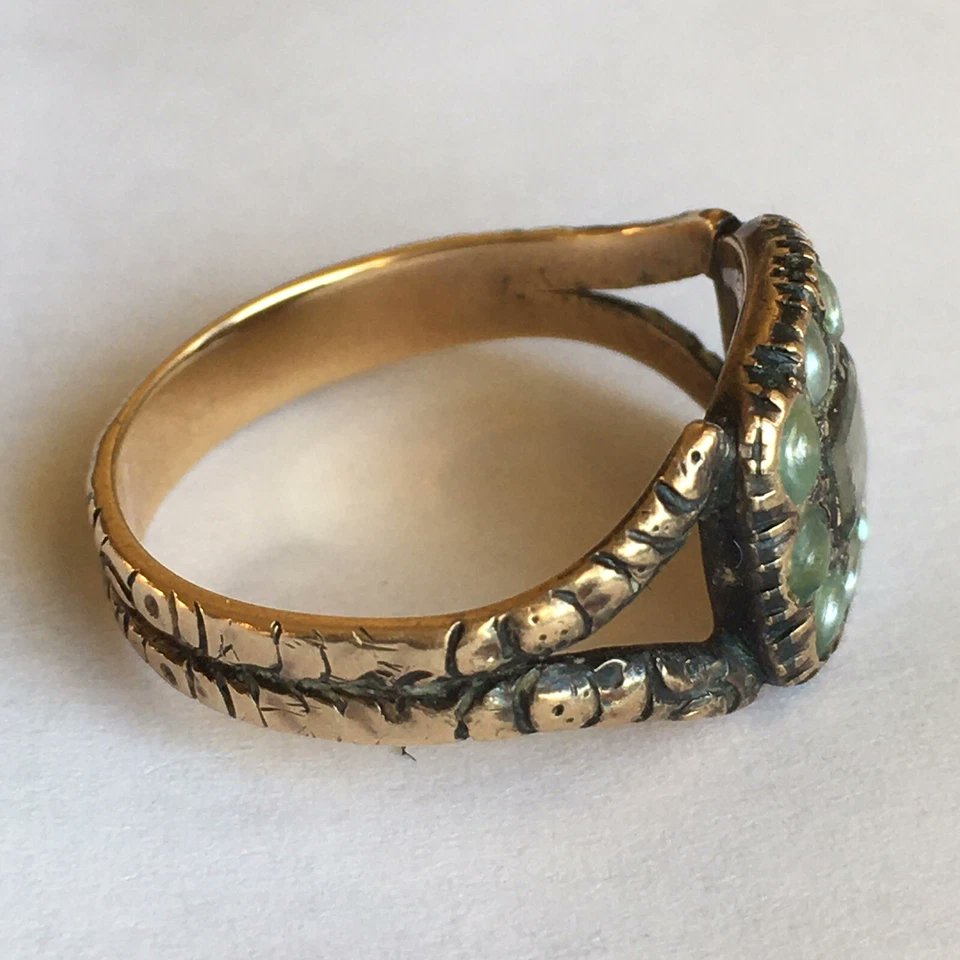
Great catch. The center is not a gemstone, but a lock of hair preserved beneath the original crystal compartment surrounded by 10 pearls. The ring is indeed a 1828 piece. Over nearly 200 years, the copper alloy mixed in gold has taken a patina at the edge of the crystal, around pearls, and the backing material, developing a greenish appearance. That can make it look like a green stone in photos.
Thanks for noticing.
American sweetheart ring dated 1828, inscribed: "From Fredrick to Mary Ann."
The center preserves a lock of hair beneath crystal, surrounded by seed pearls symbolizing purity and devotion. Nearly 200 years later, their love story still survives. An especially charming Georgian-era ring, when gold was about $19 per ounce and America was 52 years after Independence.
#AntiqueJewelry #GeorgianJewelry #Hairwork
https://t.co/9x0QJxPJX1
Experience has taught me that different factors increase the appeal of an antique piece for different buyers. Some are drawn to larger diamonds, some appreciate the distinctive faceting of older cuts, some enjoy the craftsmanship or the work of a particular maker, and others are fascinated by knowing exactly when a piece was made.
For example, when I buy an antique coin, I enjoy learning what that coin could have purchased at the time it circulated. That knowledge doesn't necessarily increase the coin's intrinsic value, but it enriches the story and makes the piece more interesting.
I view the 1901 date on this ring in a similar way. It is intriguing to imagine that while the jeweler was crafting the ring, the diamond dealer was sorting the stones, or the retailer was arranging it in a showcase, news of Queen Victoria's death may have been circulating through town.
Does that make the ring dramatically more valuable than an otherwise similar ring from 1899 or 1902? Probably not. But it does give the piece a precise place in history, and that adds another dimension to its appeal.
A time traveler would remember the moment. We can only imagine it, but the hallmark lets us know exactly when that moment was. 😊
Thank you for raising that point. It's an interesting question, and one that antique collectors often look at from different perspectives.
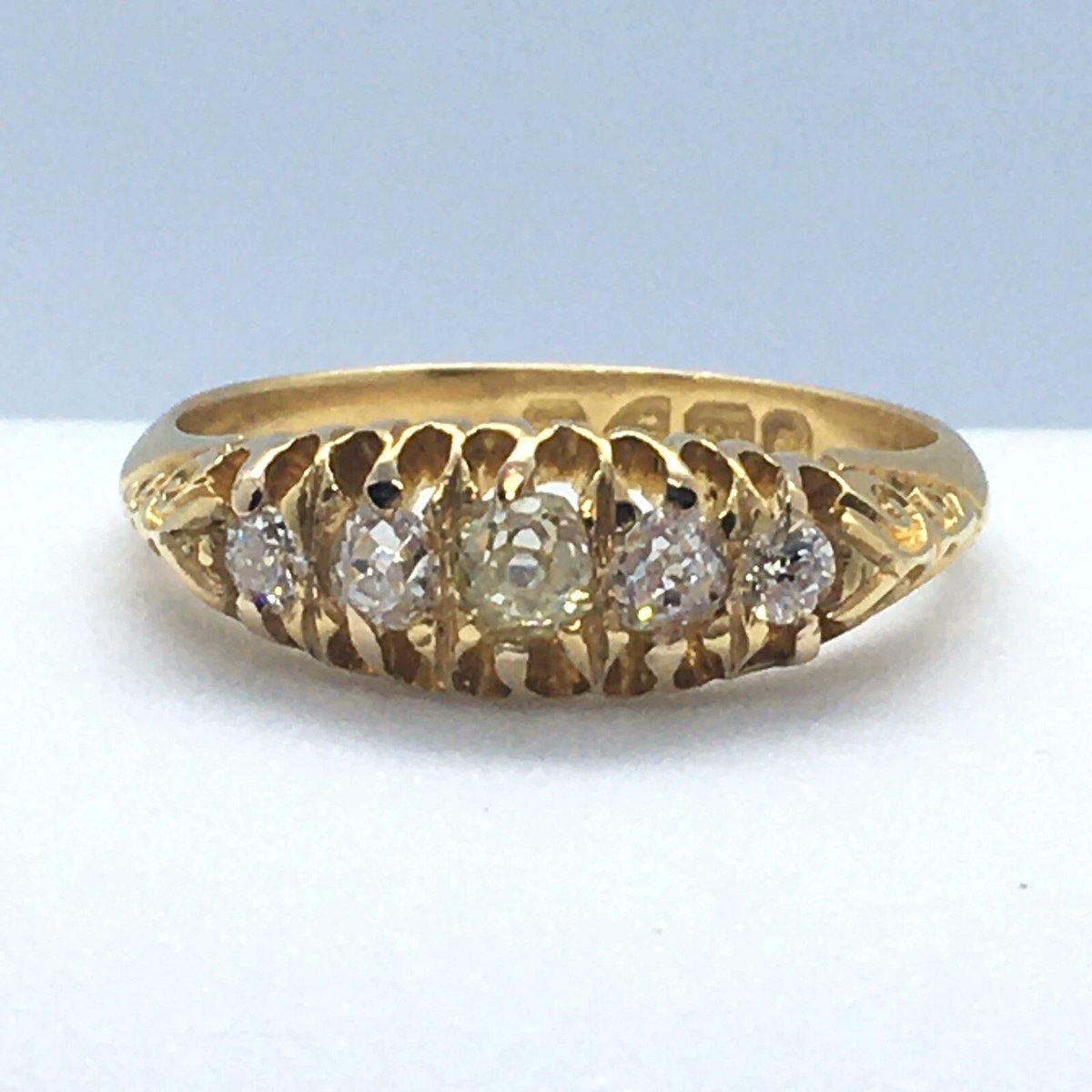
Chester Hallmarked 1901
A beautiful English Victorian five-stone diamond ring crafted in 18K yellow gold with delicate hand-carved filigree detailing. Dated to 1901, the final year of the Victorian era.
Notice hallmarks:
1- Crown: Old British gold standard.
2- "18" for 18K.
3- Chester Assay Office Mark, the shield-shaped mark containing three wheat sheaves and a sword is the mark of the Chester Assay Office in England. Meaning it was tested and hallmarked in Chester, England, one of Britain's historic assay offices.
4- "A". This is the date letter used by the Chester Assay Office. For the style shown in this particular hallmark set, the letter A corresponds to 1901. Final year of Queen Victoria's reign.
#VictorianRing #AntiqueDiamondRing #Chester1901 #EstateJewelry #AntiqueJewelry #FineJewelry #OldEuro
https://t.co/9x0QJxQhMz
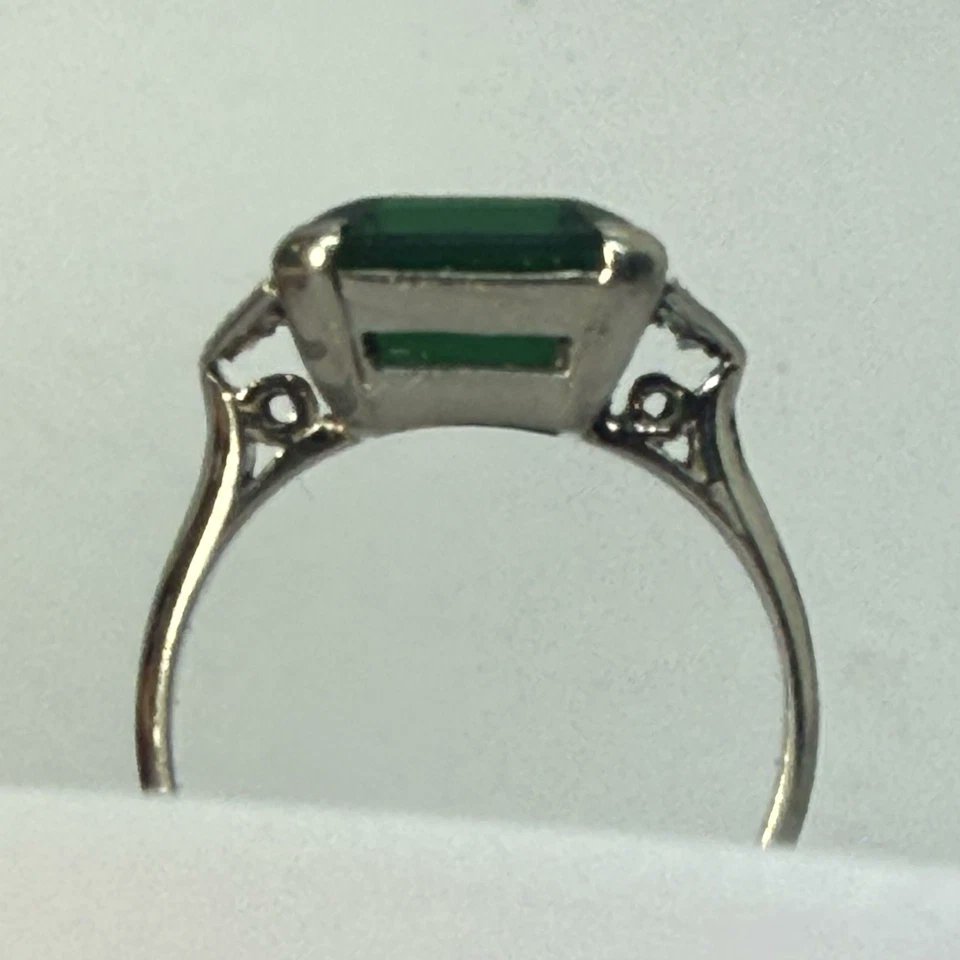
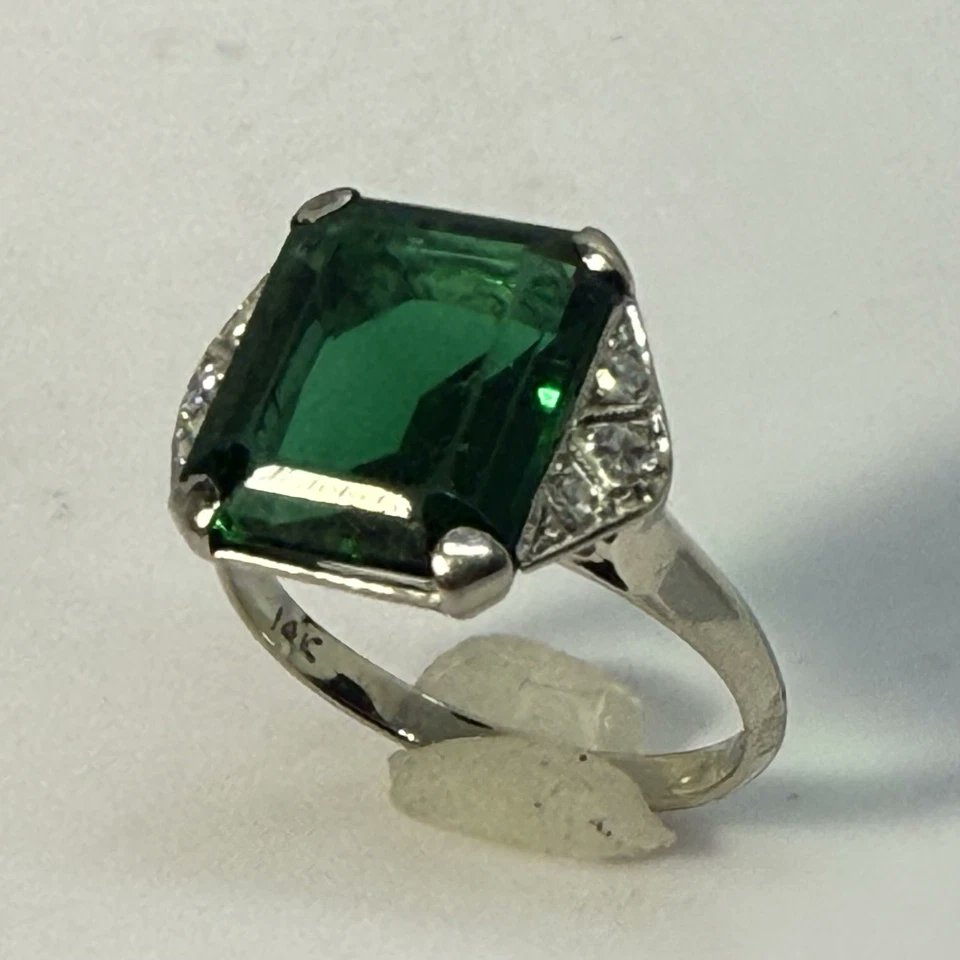
-Stunning Antique American Art Deco Ring-
Handcrafted in white gold with a striking emerald-cut laboratory made green stone and six natural diamonds.
Regarding the use of synthetic stones in Art Deco period:
During the Art Deco era of the 1920s and 1930s, the use of synthetic gemstones in jewelry was not inherently intended to deceive consumers with imitation or “fake” stones. Rather, it reflected the emergence of groundbreaking laboratory technology that, for the first time in history, made vibrant colored gemstones more widely available and affordable. Synthetic sapphires, rubies, spinels, and other lab-created stones became popular because they offered jewelers exciting new design possibilities at a time when bold geometric patterns and vivid color contrasts defined the Art Deco aesthetic. These stones were often viewed as modern scientific achievements and allowed designers to create striking jewelry that might otherwise have been prohibitively expensive. While proper representation and disclosure still mattered, the presence of synthetic stones in many period pieces should be understood within the historical context of innovation and evolving jewelry manufacturing rather than automatically assuming an intent to mislead
#ArtDeco #VintageJewelry #AntiqueJewelry #EstateJewelry #WhiteGold #DiamondRing #DecoStyle #VintageRing
--Silver-Topped Gold Jewelry--
During the Victorian era, particularly from the mid-1800s through the early 1900s, jewelers often used a technique known as silver-topped gold construction. Before the invention of modern white gold and platinum jewelry, silver was considered the ideal metal for setting diamonds because its light color reflected more light and enhanced the stones' brilliance.
This silver-over-gold technique is considered a hallmark of many fine Victorian and Austro-Hungarian jewelry and is highly appreciated by collectors.
#VictorianJewelry #AntiqueRing #EstateJewelry #RubyRing #DiamondRing #AntiqueJewelry #VictorianEra #RubyAndDiamond #JewelryCollector #FineJewelry
https://t.co/9x0QJxQhMz
Thank you for the comment and for taking the time to look closely at the hallmark. I always appreciate knowledgeable collectors who help keep the discussion honest and informative for readers.
You're absolutely right that a maker's mark shouldn't be accepted simply because it "looks right." My attribution isn't based solely on interpreting the mark itself. Crown Silver Company is documented in silver reference sources and collector databases as using a trademark consisting of a C, a crown, and an S arranged side-by-side, accompanied by the word STERLING. The identification comes from matching the hallmark to published examples attributed to Crown Silver Company of Brookline, Massachusetts, rather than reading the symbols independently. The mark itself does not contain an explicit date code, and I am not aware of any evidence that the C or S function as year letters in an American silver dating system. If you know of a source suggesting these are date marks, I'd be very interested to compare references.
The reason some collectors think letters might indicate dates is that many silver systems, especially British hallmarks, use date letters. However, an American sterling mark would generally not use a British-style date-letter system, and these three punches are clearly part of a single manufacturer's logo rather than separate assay marks.
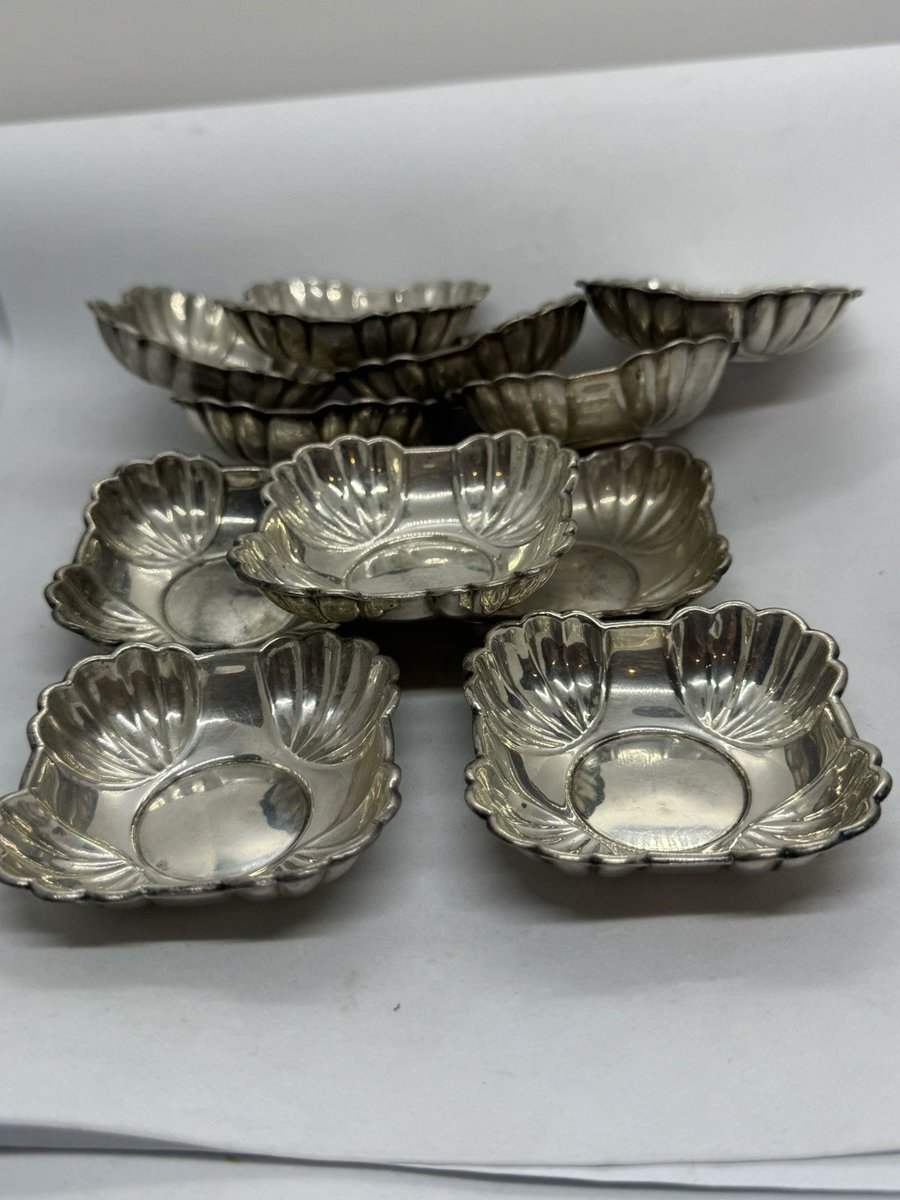
Hallmark Spotlight:
Collectors love finding maker's marks because they help tell the story behind the item or reveal the date they were made. Pictured below, C and S are maker's trade mark:
C = Crown
Crown silhouette = Crown
S = Silver
Together they form "Crown Silver Company", the American manufacturer that produced sterling silver hollowware and tableware during the mid-20th century in Brookline, Massachusetts.
Created by California jeweler Jean Lasnier, a beautiful 12 Carat Aquamarine set in 14 Karat yellow gold.
Lasnier was known for contemporary gold jewelry, custom work, and organic modernist designs rather than traditional mass-produced pieces.
He opened his first San Francisco shop,"Lasnier the Silversmith," around 1955, later expanded into gold jewelry, opened a store in Ghirardelli Square in 1965, subsequently operated shops in Mill Valley and Ashland, Oregon, and retired in 1986.
#JewelryHistory #Aquamarine #VintageJewelry #GoldRing #SantaMariaAquamarine
https://t.co/9x0QJxQhMz
Before globalization had a name, Swiss watchmakers were already mastering it:
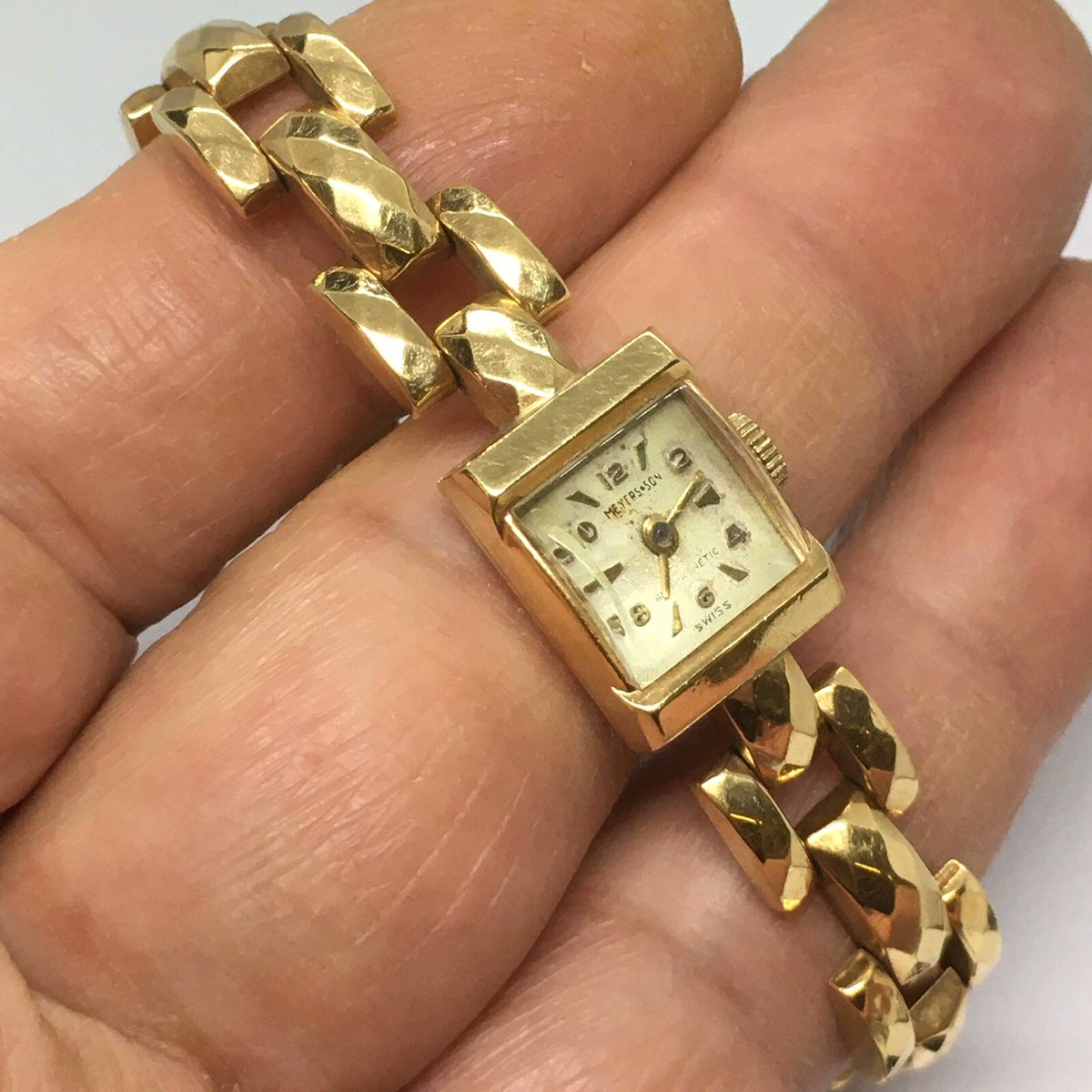
This vintage "Meyers Son" Swiss wristwatch from 1950s features a 17-jewel mechanical movement housed in a solid 14K gold case and bracelet. It is a beautiful example of mid-century Global Sourcing.
Many American jewelers, department stores, and retailers did not manufacture watches themselves. Instead, Swiss factories produced complete watches or partially assembled watches and placed the retailer's name on the dial.
#VintageWatch #SwissWatch #14KGold #EstateJewelry
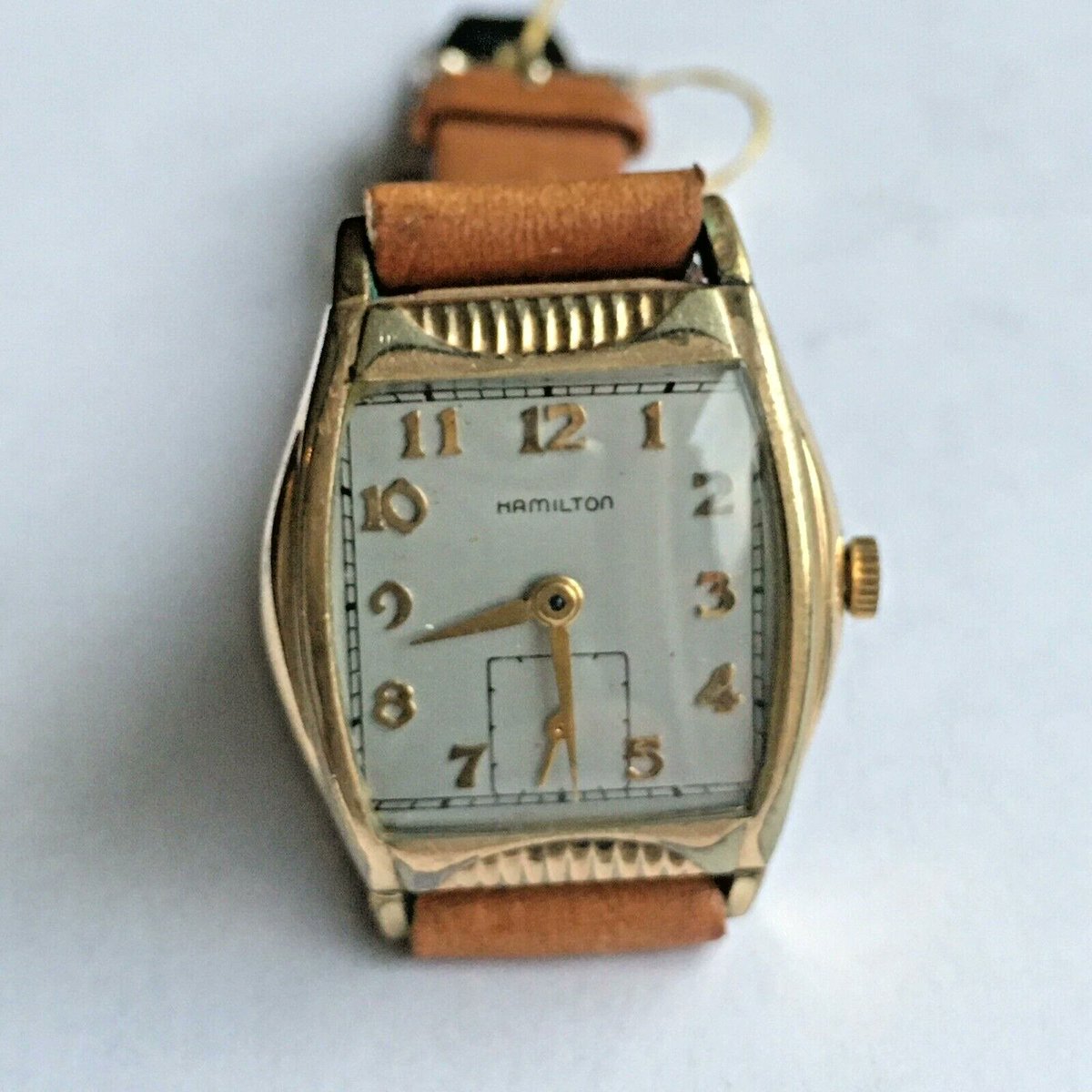
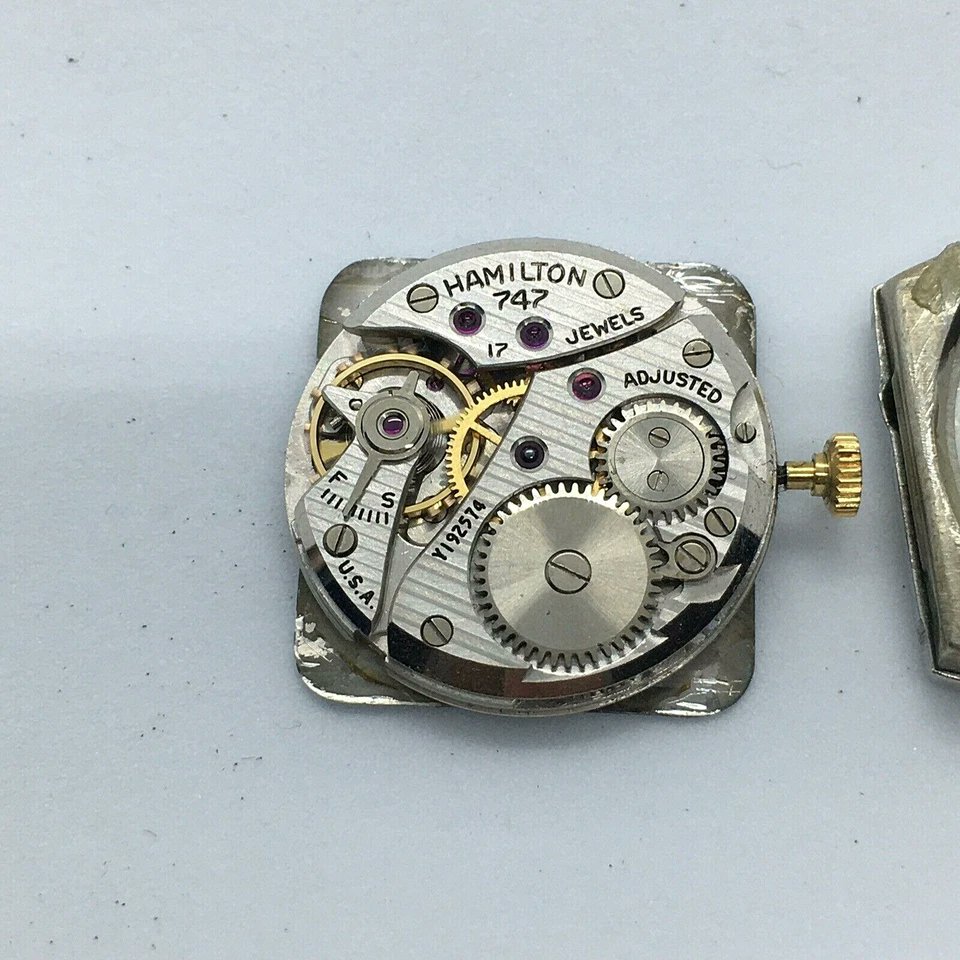
The Era America Made World Class Wrist Watches:
--Vintage Hamilton Sutton Men's Watch--
Classic 14K Gold Filled cushion case, Arabic numeral dial, manual wind movement, and still running. A handsome American-made mid-century timepiece with timeless style. Ref. Y1925...
#HamiltonWatch #VintageWatch #MensWatch #MidCentury #Wristwatch #WatchCollector #VintageStyle #AmericanMade #Horology #NobelAntiqueJewels
A fine example of early 20th-century American craftsmanship: An Antique solid gold belt buckle.
14K solid yellow gold, American made circa 1915. Marked "14K" and copyrighted 1915, 18.3 grams, featuring a classic geometric design with original JHG monogram.
https://t.co/9x0QJxQhMz
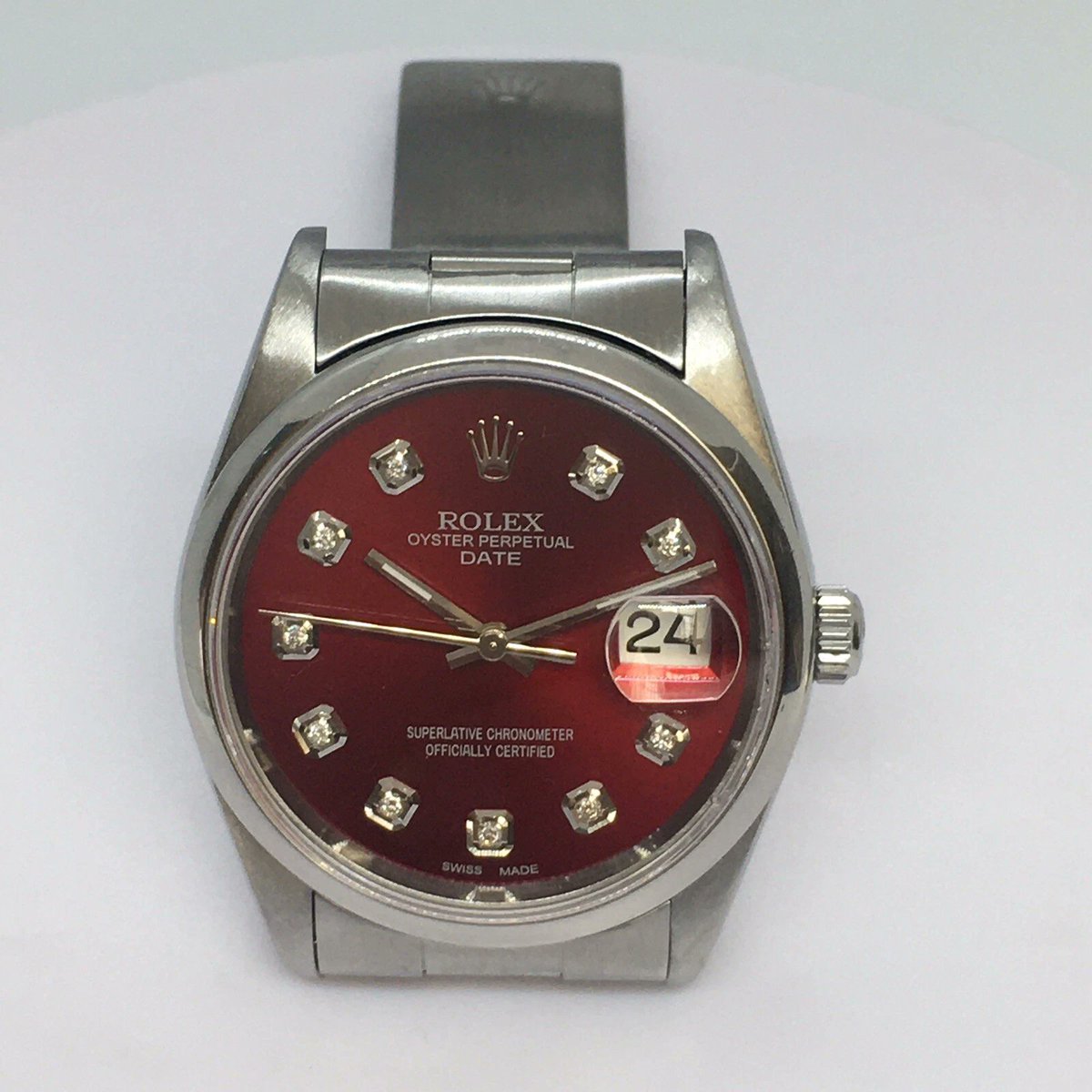
Red Rolex 1996.
A striking and elegant Rolex Date Ref. 15200 , featuring a stunning custom red diamond dial and classic Roman numeral design. This timeless stainless steel Rolex combines everyday wearability with distinctive character.