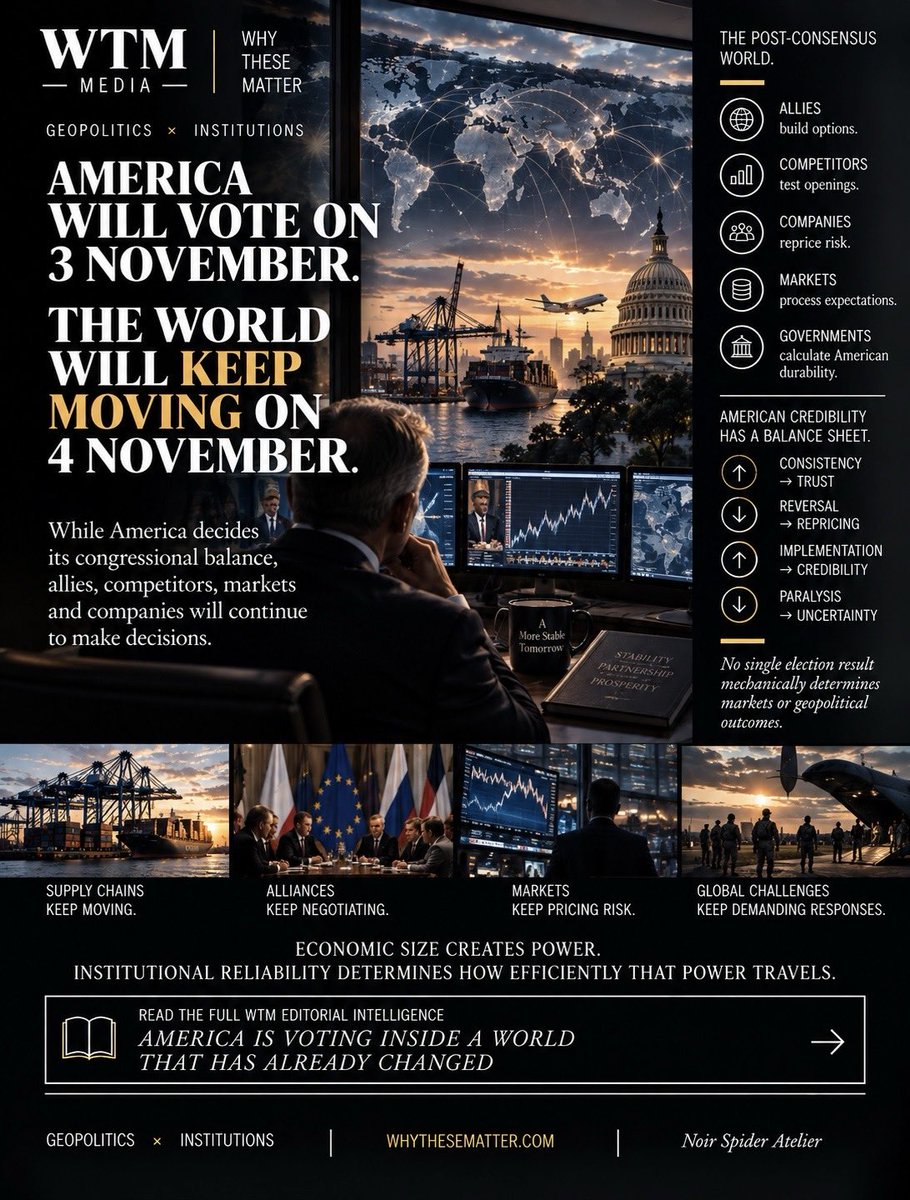
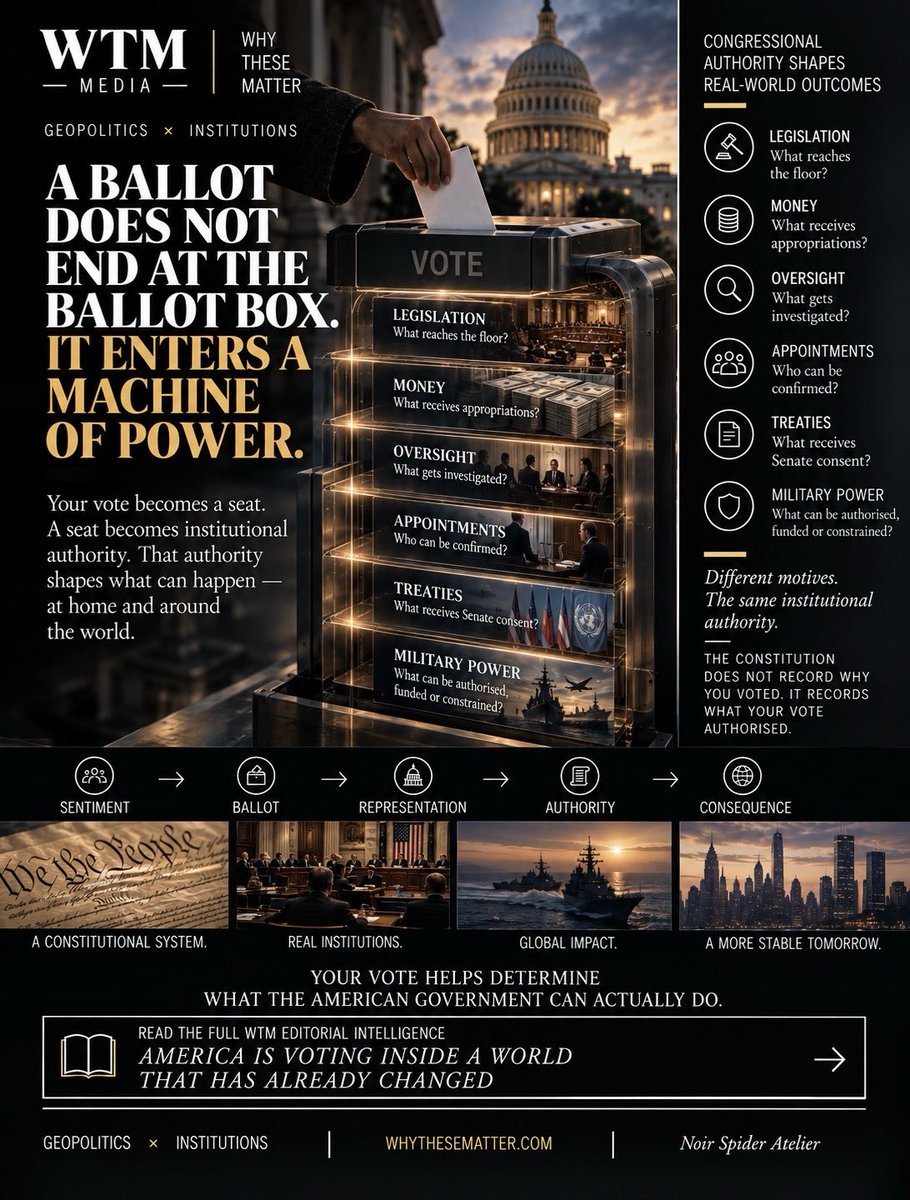
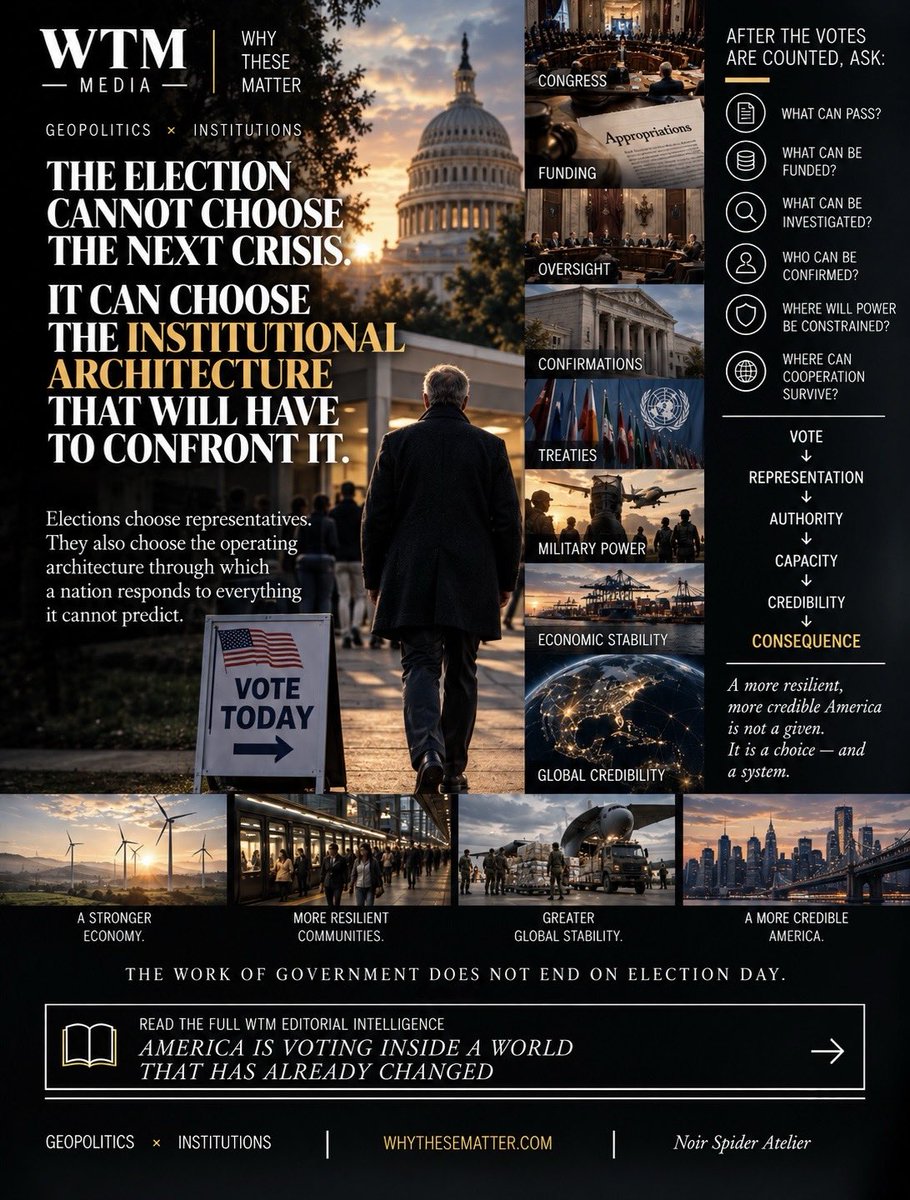
America Is Voting Inside A World That Has Already Changed
America will vote on 3 November. But the deeper consequence is the institutional architecture those votes create—and how that architecture governs in a world that will keep moving on 4 November.
Read the full WTM Editorial Intelligence: America Is Voting Inside a World That Has Already Changed.
https://t.co/kne78fy9dU
The conversations are about to begin.
Ten voices. Ten perspectives. Ten conversations moving beyond the headlines to examine the people, systems and ideas shaping what comes next.
From leadership, identity and belonging to culture, trust, human potential, institutions and the future of work, Season 1 of The WTM Conversations brings together people whose experiences invite us to think differently—not simply about where the world is going, but about how we might shape it.
No soundbites. No performance for the algorithm. Just thoughtful conversations, difficult questions and perspectives worth carrying forward.
MEET THE GUESTS OF OUR INAUGURAL SEASON
Linda Imonti
Liris Crosse
Edafe Okporo
Dakarai Larriett
Marc Blakeman
Dr. Rod Berger
Michael Steiner
Dr. Amii Barnard-Bahn
Greg Merrill
Bo Lockwood
Kelly Dowd
The WTM Conversations
Ten people. Ten different bodies of experience. One season built around a larger question: What can we learn from one another about building a more thoughtful tomorrow?
THE WTM CONVERSATIONS — SEASON 1
Premieres 7 October 2026
WATCH. LISTEN. READ.
Follow WTM Media and The WTM Conversations as Season 1 unfolds.
https://t.co/WBekA7K8Op
#WTMConversation #WTMMedia #WhyTheseMatter #EditorialIntelligence #SeasonOne
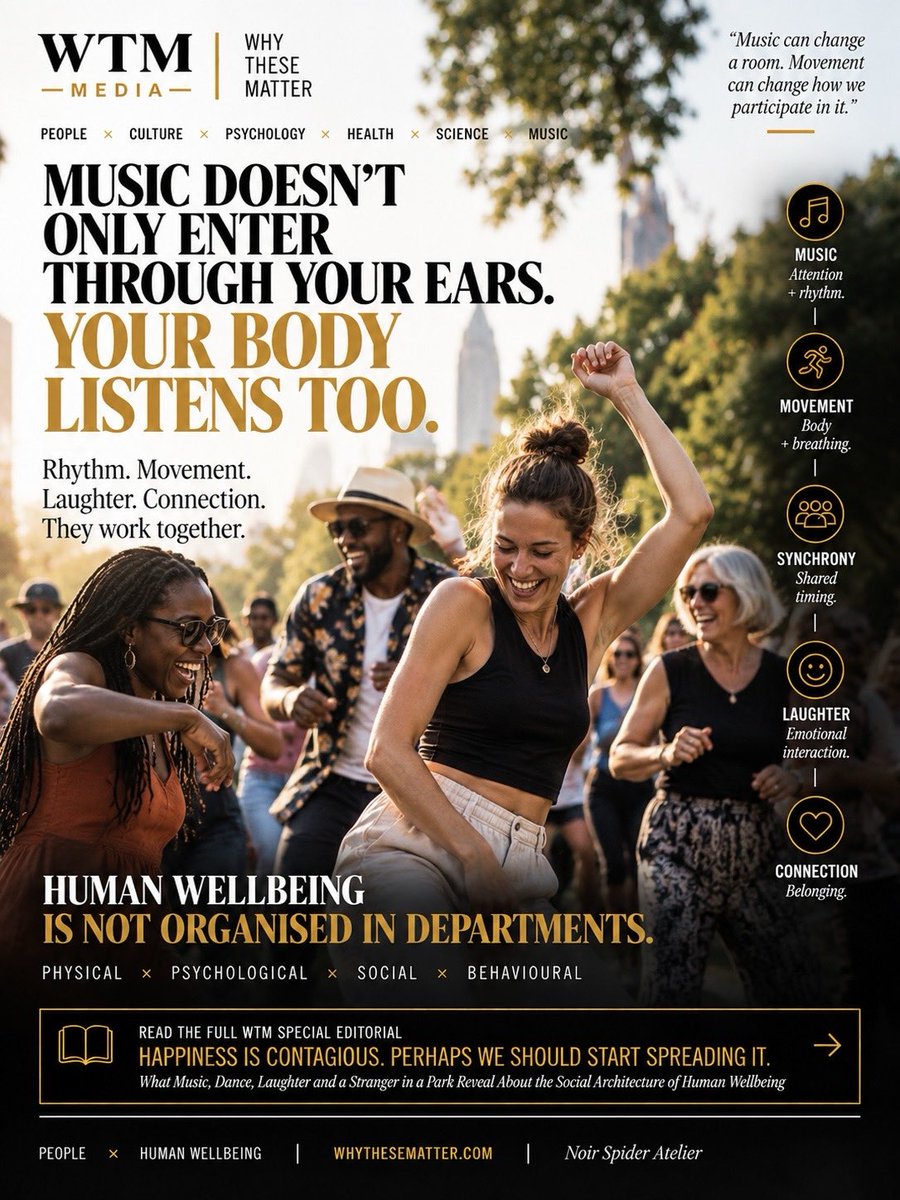
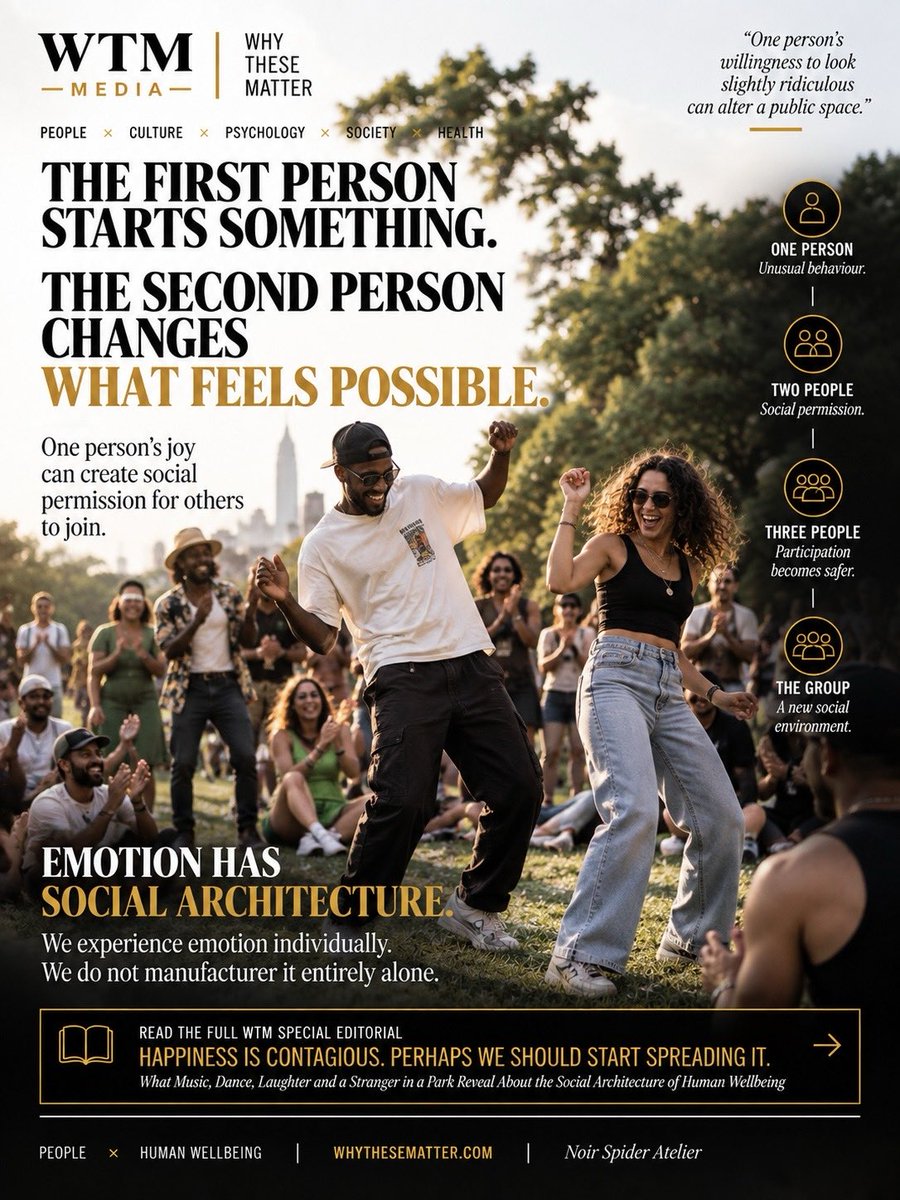
Happiness may be more social than we think. Music, movement, laughter and connection can change what feels possible between people. Perhaps joy deserves infrastructure too.
Read the full WTM Special Editorial:
https://t.co/TLluzmQVdv
Tennis Reveals Judgement, Pressure and the Architecture of Human Performance
Pressure exposes more than skill. It reveals judgement: when to persist, when to adapt and what deserves to remain unchanged. Tennis makes that architecture visible.
Read the full WTM Editorial Intelligence: There Is Nowhere to Hide.
https://t.co/XMK0Sk8T2o
Alzheimer’s and the Future War Over Cognitive Survival
A longer life means more when the mind remains part of it. From olive oil research to cognitive health, the real question is how we preserve not only years, but ourselves.
Read the full WTM Editorial Intelligence:
https://t.co/E7tIHeY0AN
When intelligence becomes cheap, human value moves upstream: judgement, trust, context and accountability. The question is no longer what AI can do—but what only you can bring.
Read the full WTM Editorial Intelligence:
https://t.co/zZ3Hte3zkD
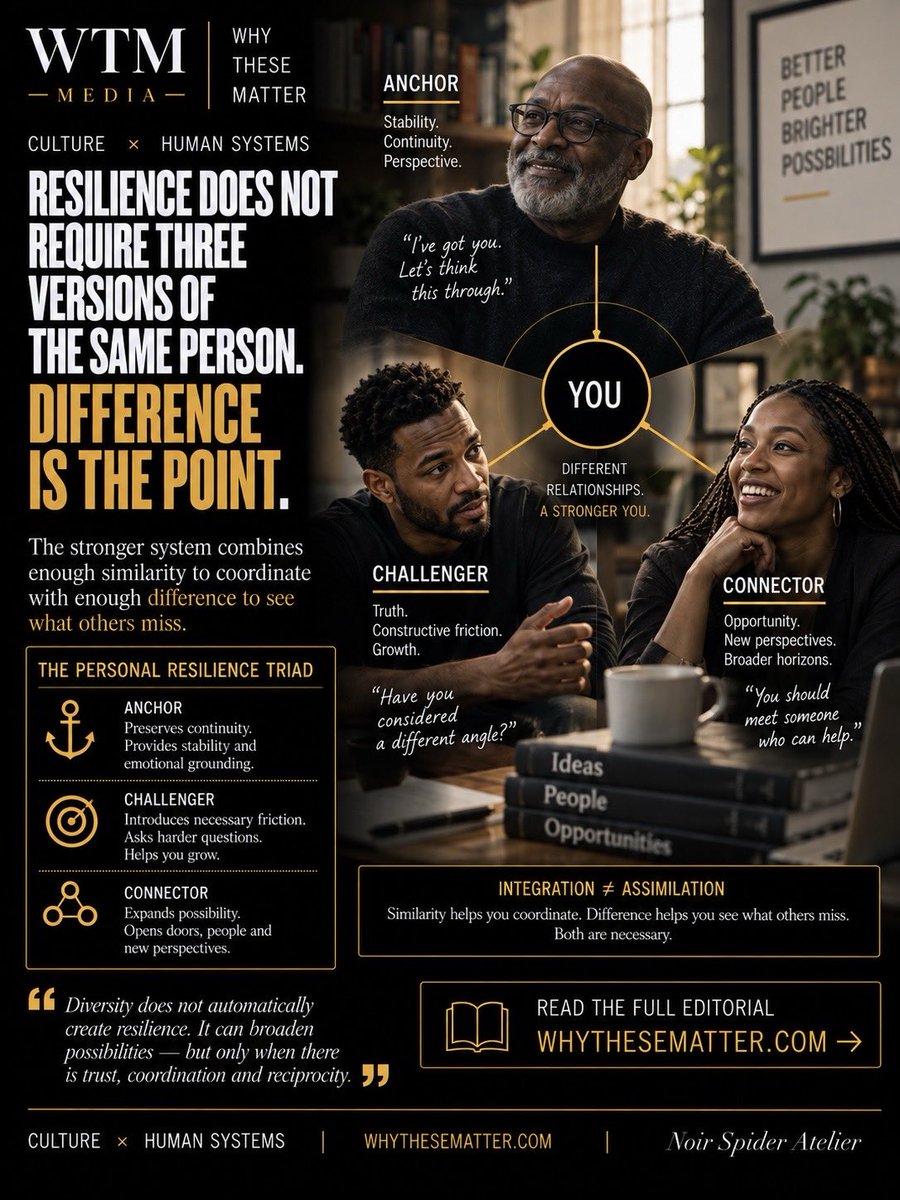
Who Are Your Three?
A large network can create opportunity, however, opportunity is not the same as resilience.
We often measure our relationships by reach: contacts, followers, colleagues, acquaintances, invitations, introductions. Yet when life becomes difficult, the more consequential question is smaller:
Who actually shows up?
Human resilience is partly relational infrastructure. And strong infrastructure does not depend on every component performing the same function.
You may need an Anchor who preserves continuity when life becomes uncertain.
A Challenger who respects you enough to tell you what you may not want to hear.
A Connector who expands the horizon—introducing people, possibilities and perspectives you could not reach alone.
Three is not a scientific prescription. It is a systems-thinking device for examining whether the relationships around us contain enough stability, constructive friction and possibility to help us adapt.
But there is another side to the framework.
Support can become extraction.
Truth can become distortion.
Connection can become destabilisation.
Which means the diagnostic cannot only point outward.
Where do I extract?
Where do I distort?
What becomes less stable when I enter the system?
That changes the central question.
It is no longer simply:
Who are your three?
It becomes:
Whose three are you?
Who can call you when the polished version of their life disappears? Who receives your difficult truth without humiliation? Whose possibilities expand because you made the introduction, returned the call, apologised, listened—or simply stayed?
Relationships are not merely emotional assets. They are living infrastructure. And a functioning human system is not something we possess. It is something we participate in.
Read the full WTM Editorial Intelligence essay:
https://t.co/0DGXQjNo6n
#Friendship #Relationships #HumanResilience #HumanSystems #Community #WTMMedia #WhyTheseMatter
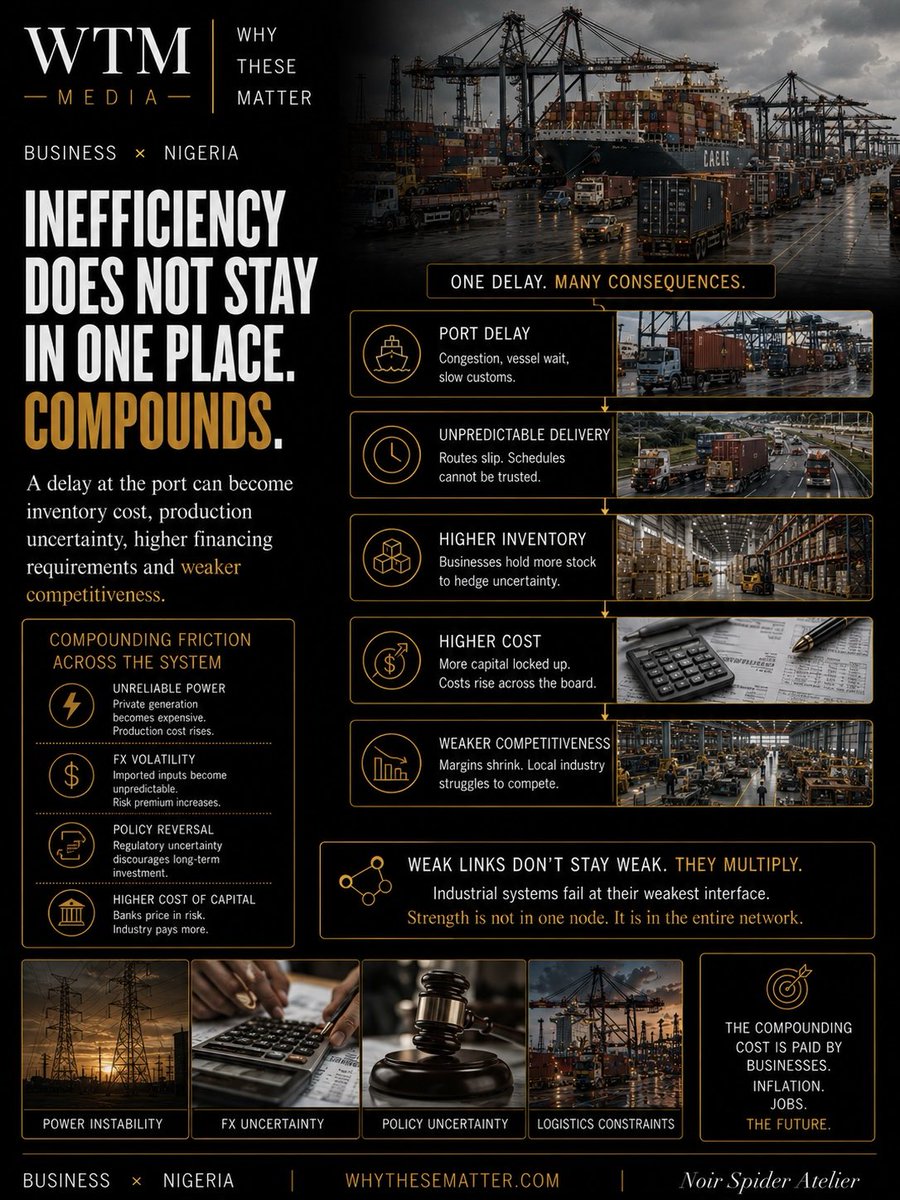
Nigeria’s Manufacturing Bet and the Logistics Reality Most Analysts Ignore
Can Nigeria’s industrial future be decided by the size of what it can build? Realistically, no, It will be decided by what it can keep moving.
Factories and megaprojects absolutely matter. But industrialisation does not happen inside the factory gates alone. Production depends on an interconnected system of electricity, ports, roads, rail, foreign exchange, finance, regulation, security, skilled labour and institutional predictability.
And when one part fails, the consequences travel.
A port delay becomes an inventory problem.
Currency instability reaches the factory floor.
Unreliable electricity becomes a production cost.
Policy uncertainty becomes a financing premium.
Weak logistics become weaker competitiveness.
This is why industrialisation cannot simply be measured by announcements, investment commitments or ribbon-cuttings.
The harder measure is throughput: BUILD → OPERATE → MAINTAIN → MOVE → EXPORT → REPEAT
Can the factory keep producing?
Can the equipment be maintained?
Can goods move efficiently?
Can businesses plan with confidence?
Can Nigerian production compete beyond Nigeria?
Private capital can build extraordinary assets. But sustainable industrialisation requires something larger: private capital, public governance, infrastructure, human capability, finance and security moving coherently.
The opportunity is not small, neither is the systems challenge. Ambition builds the asset whilst the Systems keep it alive.
Read the full WTM Editorial Intelligence analysis:
Dangote: Nigeria’s Manufacturing Bet and the Logistics Reality Most Analysts Ignore
https://t.co/ACHXOMg6Dz
#WTMMedia #WhyTheseMatter #Nigeria #Manufacturing #Logistics #Dangote #AfricanBusiness #AfCFTA
Play the Game or Play Yourself in the Game: Corporate Life Has Rules Nobody Writes Down
Most people are taught that good work speaks for itself, unfortunately, It doesn’t.
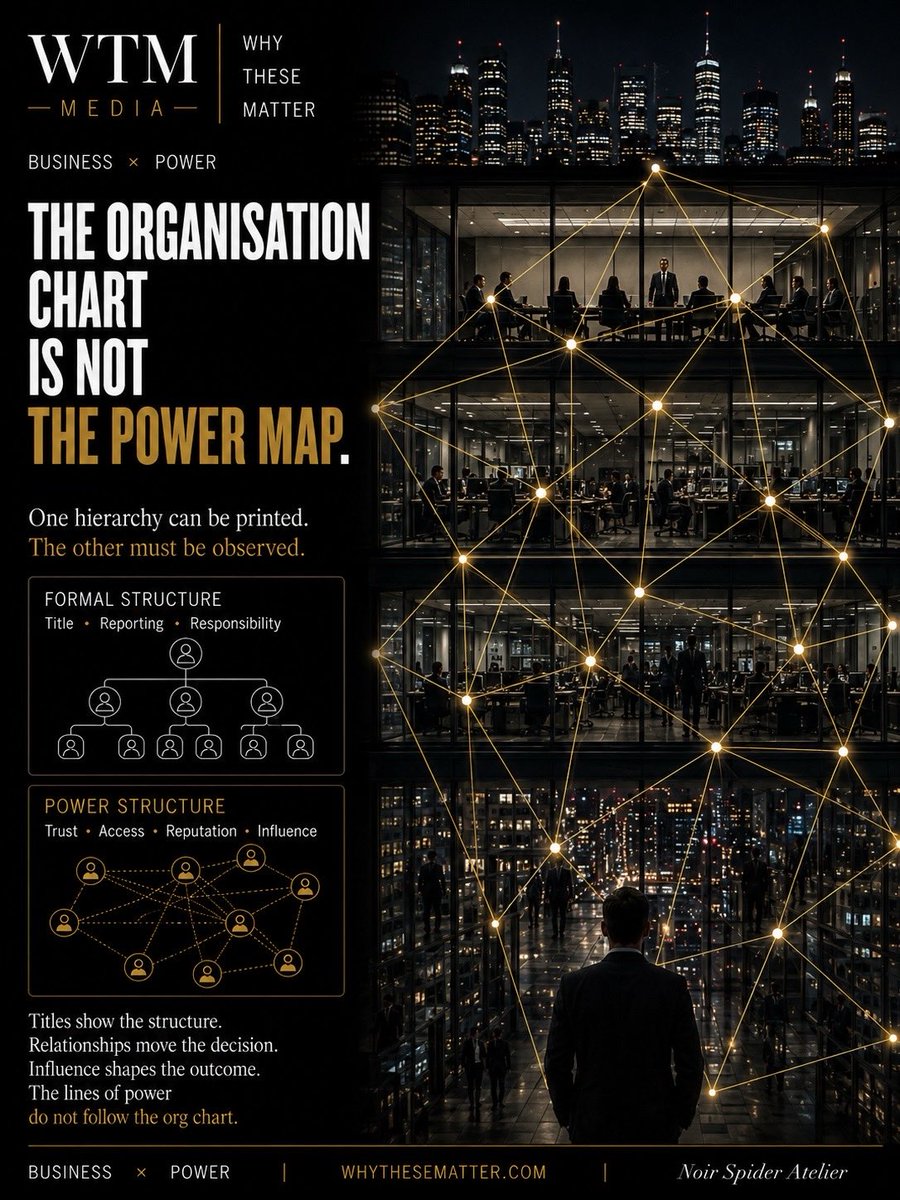
Organisations have two architectures: the one printed on the organisation chart—and the one built through trust, access, reputation, relationships and influence.
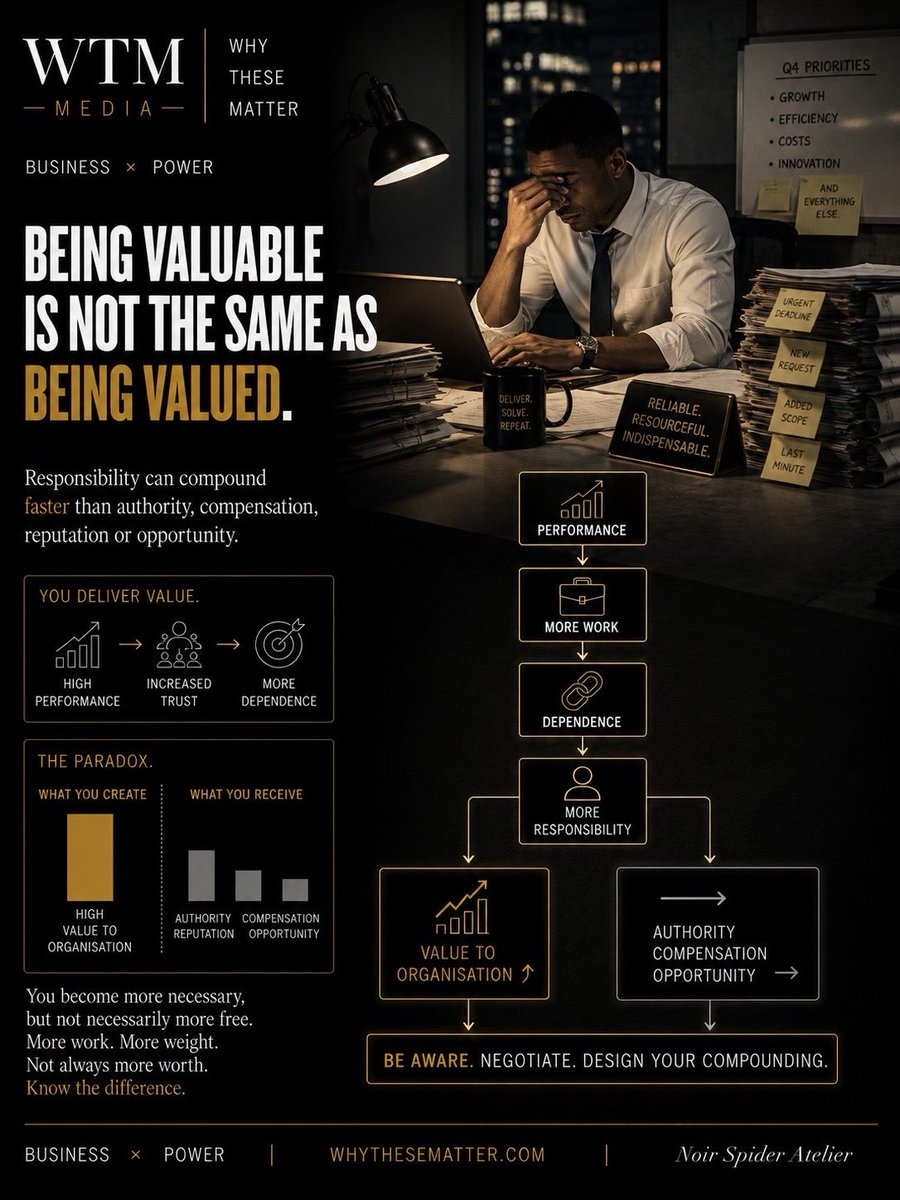
Understanding that difference is not cynicism, It is pragmatic career intelligence. Because being valuable is not the same as being valued. Responsibility can compound faster than authority, compensation or opportunity. Your contribution can be indispensable while your professional capital remains stagnant.
And when conflict arrives, being right is not always enough. Reaction can surrender the very leverage you need to produce a better outcome.
The deeper lesson observed over the years is not to become more political, It is to become more self aware.
Know where decisions actually move.
Make valuable work visible.
Build relationships before you need them.
Understand the difference between mentorship and sponsorship.
Adapt how you communicate without surrendering who you are.
And never confuse an organisation’s authority with your identity.
Because titles expire, Access disappears, and Organisations reorganise. However, judgement, expertise, relationships, reputation, transferable skills, financial capital and independence can leave with you.
The overall objective is not merely to win the game. Learn the board, Preserve the self, and Build what they cannot take back.
Read the full WTM Editorial Intelligence investigation:
https://t.co/DNTJA0zoIa
#Career #Corporate #WorkplaceCulture #WTMMedia #WhyTheseMatter
Elon Musk is very easy to make the story, which is precisely why many keep missing the larger one.
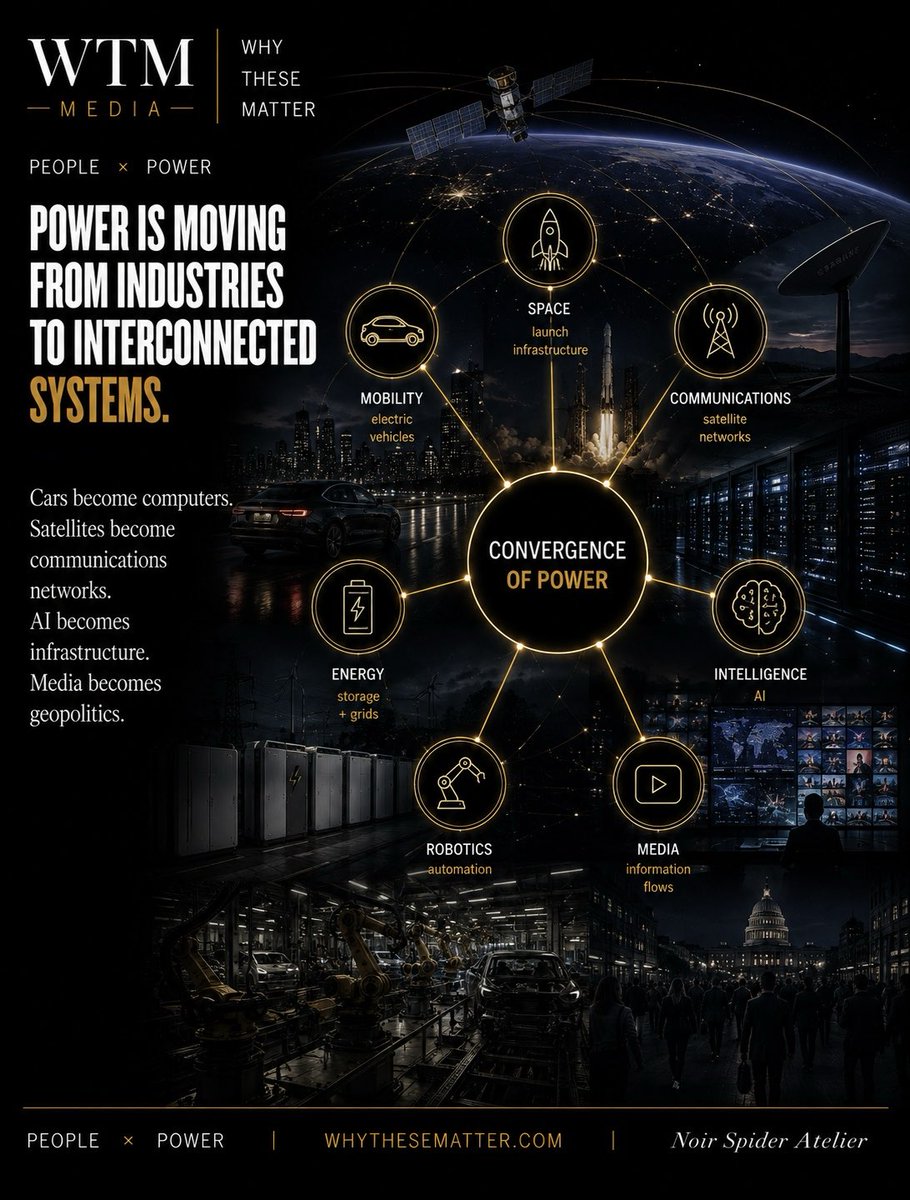
Look beyond the man and a different architecture comes into view: mobility, space, communications, artificial intelligence, energy, robotics and media—industries once treated as separate domains increasingly converging into interconnected systems of power.
And pragmatically, when systems converge, so do the consequences.
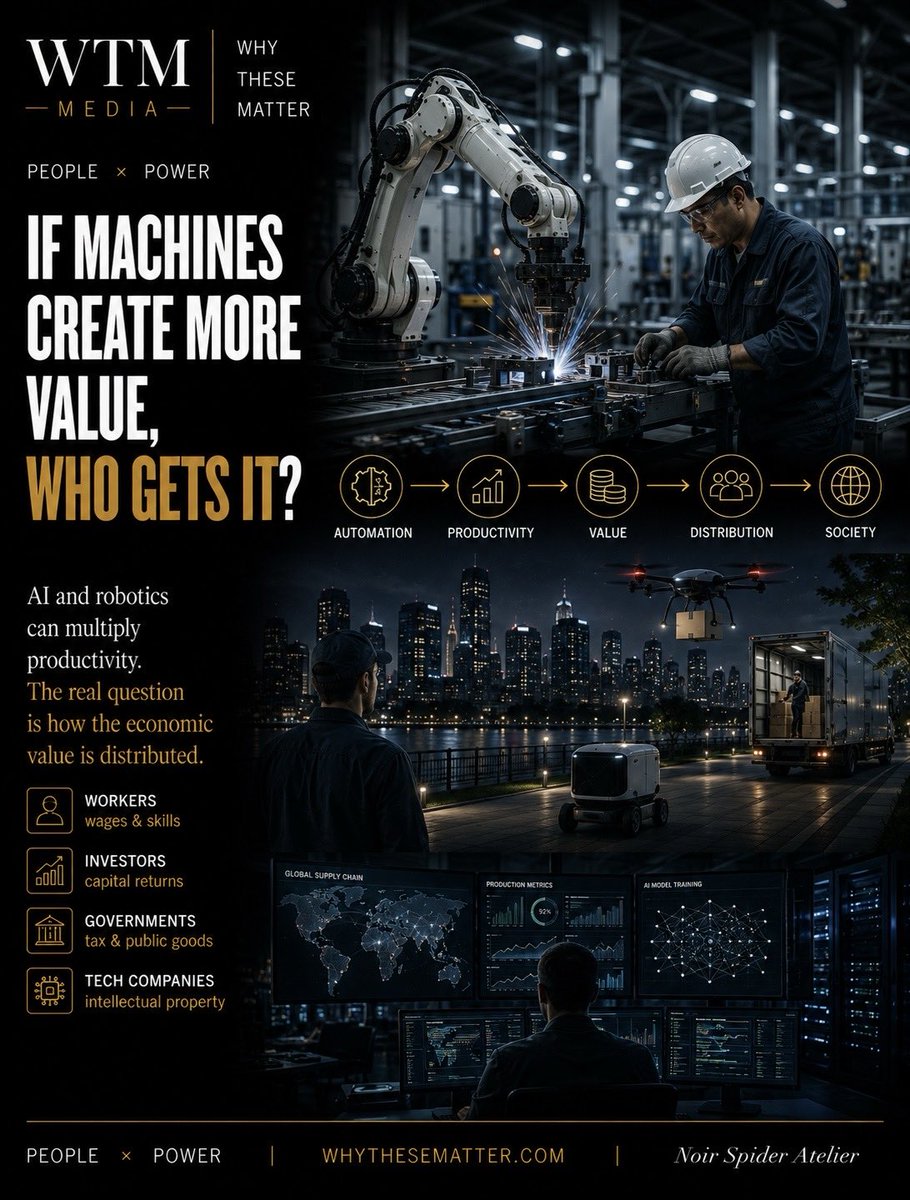
Let’s break it down: A satellite network becomes communications infrastructure - AI becomes economic infrastructure - Media becomes geopolitical influence - Automation becomes a question of who captures productivity - Private infrastructure becomes a question of public governance.
This is where the Musk story becomes something much larger than Musk. The defining question of the next era may not simply be who invents the future first.
It may be:
Who owns it?
Who governs it?
Who benefits from it?
And who lives with the consequences?
The story is not simply about one man, It is the architecture of the future he’s building.
Read the full WTM Editorial Intelligence investigation:
Elon Musk and the Architecture of the Future
READ THE FULL EDITORIAL INTELLIGENCE → WHY THESE MATTER
https://t.co/xMx4XXWTaO
#ElonMusk #Technology #Power #WTMMedia #WhyTheseMatter
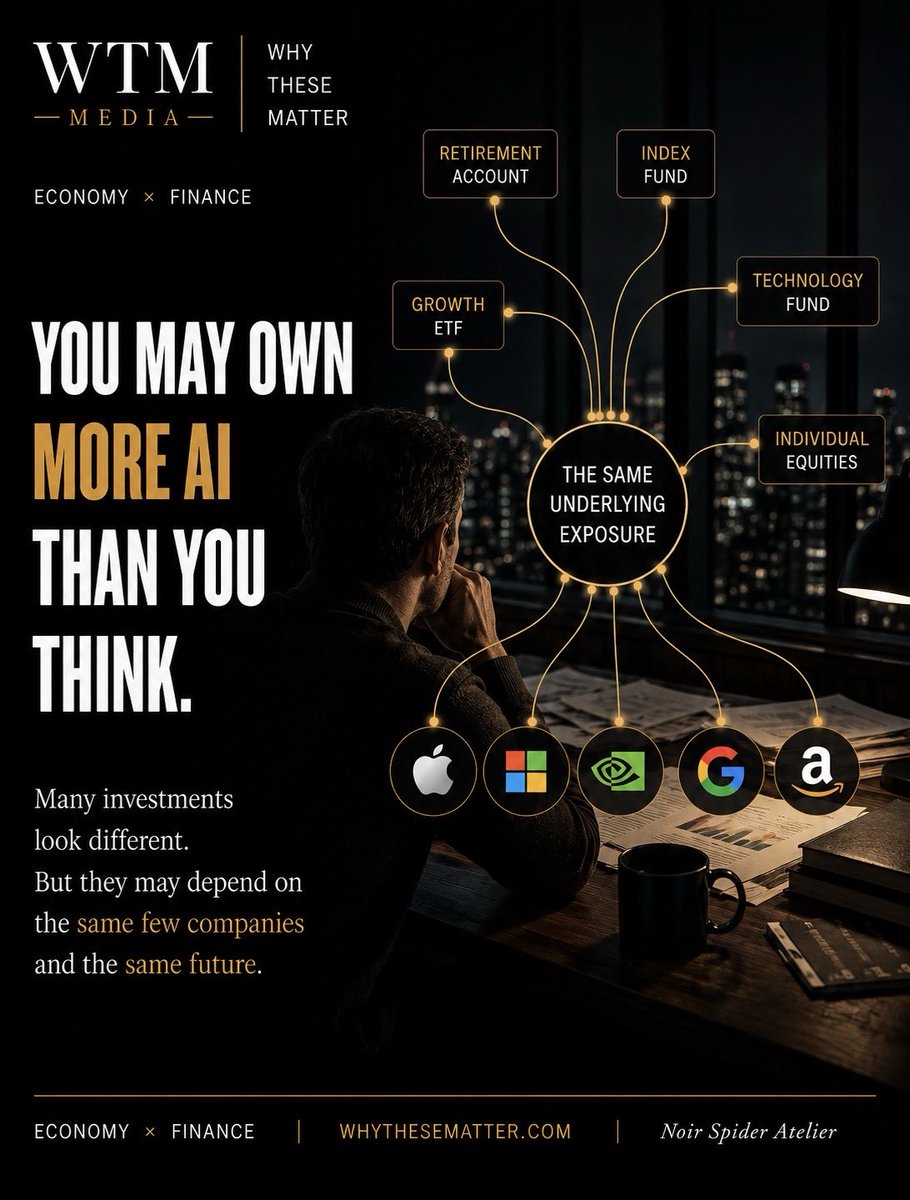
The AI boom is creating extraordinary wealth. But wealth creation and financial security are not the same thing.
The deeper risk is concentration—not simply in a portfolio, but across an entire economic life. The same technological transformation lifting markets may also reshape employment, wages, infrastructure, capital allocation and the future value of human skills. That changes the question.
Diversification can no longer mean owning many securities while depending on the same underlying companies, assumptions and technological future. Financial resilience increasingly requires looking across investments, income, liquidity, skills and optionality as one interconnected system.
AI may create enormous opportunity. It may also redistribute risk in ways conventional portfolio thinking does not fully capture.
The objective is not to predict the AI economy perfectly, It is to remain financially capable if your assumptions are wrong.
READ THE FULL WTM EDITORIAL INTELLIGENCE → WHY THESE MATTER: https://t.co/0geNJM2bS9
#WhyTheseMatter #WTMMedia #Wealth #AI #Investing
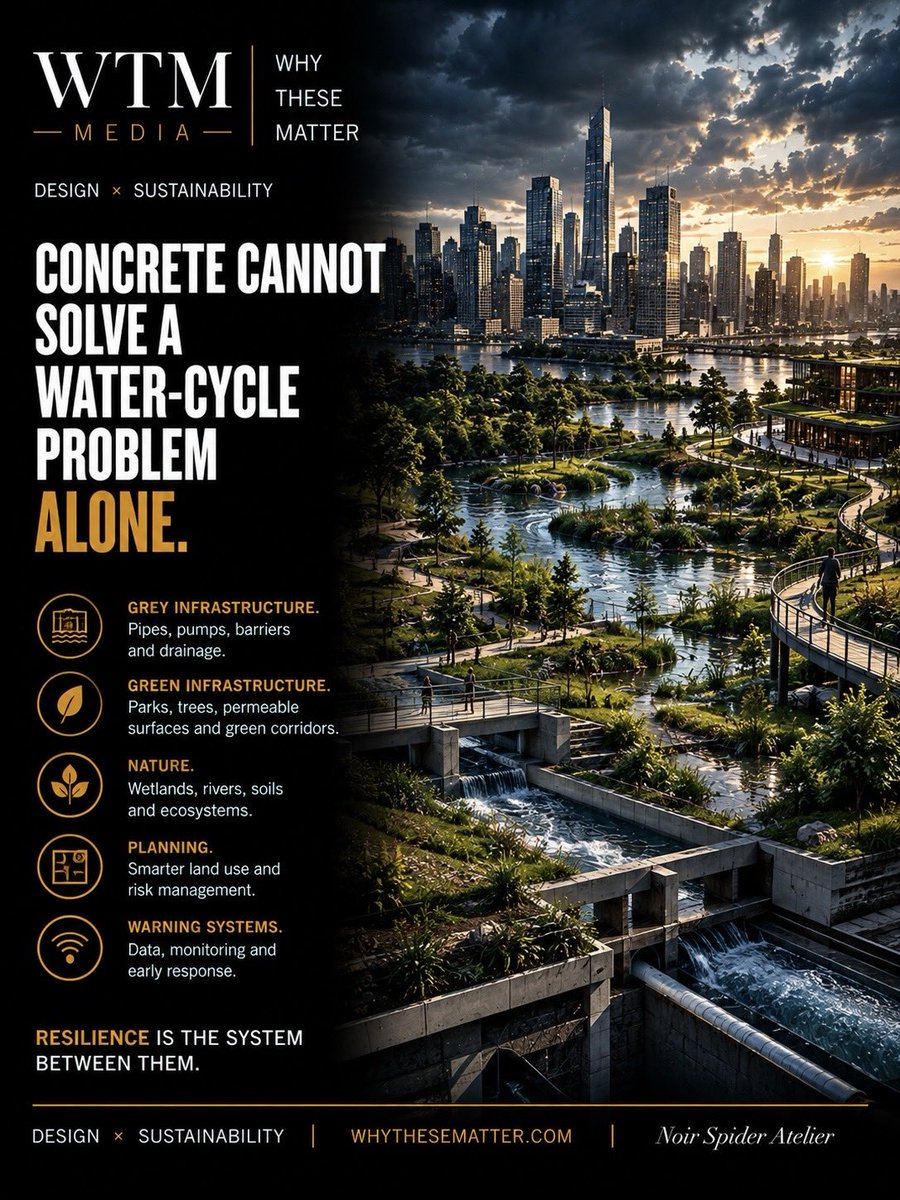
For more than a century, cities were designed around a deceptively simple idea: make water disappear.
Rain hits roofs, roads and pavements. Drains capture it. Pipes bury it. Pumps move it. Rivers are constrained. Wetlands give way to development.
But as extreme rainfall collides with increasingly impermeable cities, that architecture is reaching its limits.
The next generation of urban resilience requires a different question: What if the city itself became part of the water cycle again?
Parks can store stormwater. Wetlands can absorb it. Permeable surfaces can slow it. Streets can redirect it. Grey infrastructure can work alongside green infrastructure rather than attempting to replace nature entirely.
This is not simply an environmental issue. It is increasingly an architecture, infrastructure, insurance, property, investment and quality-of-life issue.
The most resilient city may not be the one that keeps every drop outside.
It may be the one that knows what to resist, what to absorb, what to redirect — and what to let in.
Read the full WTM Editorial Intelligence:
The City Must Learn to Live With Water
https://t.co/nGiZQqG0ei
#WhyTheseMatter #WTMMedia #UrbanDesign #Architecture #SustainableCities
Visual Intelligence by @NoirSpiderHQ
Power does not always announce itself with armies.
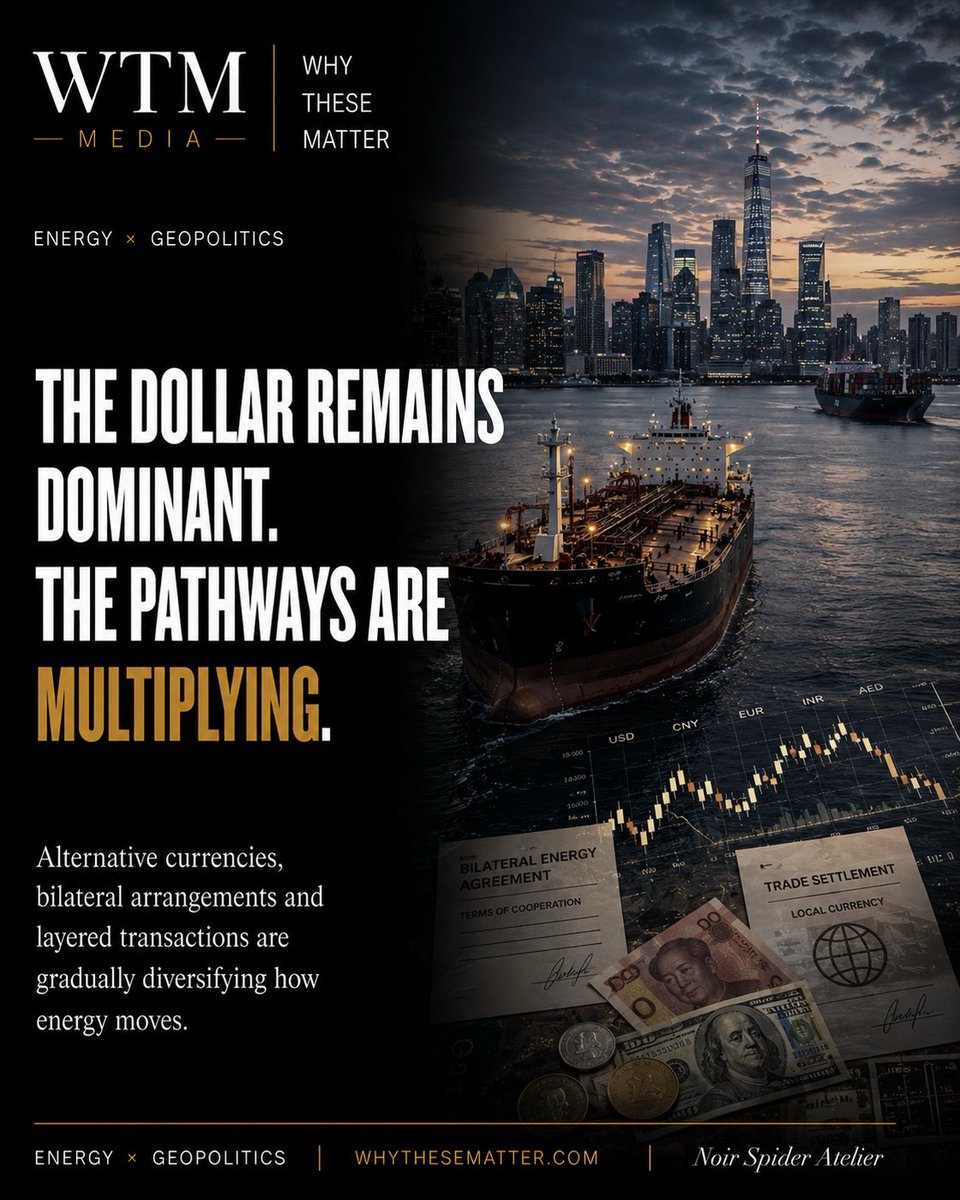
Increasingly, it moves through the systems beneath everyday life: energy flows, shipping routes, payment networks, sanctions, currencies and supply chains.
Iran sells. China buys. America sanctions. The dollar remains dominant, but the pathways around the global energy system are multiplying.
That distinction matters. The geopolitical question is no longer simply who owns the resource? It is also who can influence where it moves, what it costs, how it is paid for — and who gets access.
For businesses, this changes risk.
For markets, it changes exposure.
For households, it eventually changes prices.
The absence of declared war does not mean the absence of conflict. Modern power can operate through the continuous management of the flows that sustain modern life.
Read the full WTM Media analysis:
Energy Weaponisation: https://t.co/fWU7cfRLwr
#China #Iran #UnitedStates #WTMMedia #WhyTheseMatter
The Price of Money Is Becoming Political Again
Cheap money did not disappear without consequence, It changed the rules.
For years, governments, companies, investors and households learnt to operate in a world where borrowing was unusually inexpensive. Today, governments are refinancing enormous debts just as AI infrastructure, energy systems, defence, housing, healthcare and climate adaptation are competing for capital of their own.
That competition reaches far beyond bond markets.
Higher sovereign yields influence corporate financing, mortgages, infrastructure economics and the returns investors demand elsewhere. Savers may benefit. Weak investments may finally face discipline. But essential projects can also become harder to finance.
The deeper shift is therefore about allocation.
When capital becomes expensive, societies can no longer finance every ambition as though money has no meaningful cost. Governments must choose. Businesses must prove returns. Households encounter the consequences through borrowing costs. Investors acquire greater power over what receives financing — and what quietly does not.
The price of money is becoming the price of priority. And that leaves a question considerably larger than interest rates:
When everyone needs capital, who gets to decide what the future can afford?
Read the full WTM Editorial Intelligence:
The Price of Money Is Becoming Political Again
https://t.co/kYPGEsbP9V
#WTMMedia #WhyTheseMatter #Finance #Business #Capital
Your biology may soon become part of the design brief for your treatment.
Personalised mRNA cancer vaccines point towards a profound shift in medicine: from treating a disease category to designing an immune response around the molecular characteristics of an individual patient’s tumour. But greater precision introduces an equally important systems question — who can access the sequencing, computation, specialised manufacturing, clinical expertise and time-sensitive infrastructure required to make personalisation work?
The science is becoming more individual. The systems around it must become more capable — and more equitable.
Read the full WTM Editorial Intelligence:
https://t.co/FosravPEyJ
Because the next frontier of medicine may not be a treatment made for millions. It may be one designed for you.
#WTMMedia #WhyTheseMatter #mRNA #PrecisionMedicine #PersonalisedMedicine
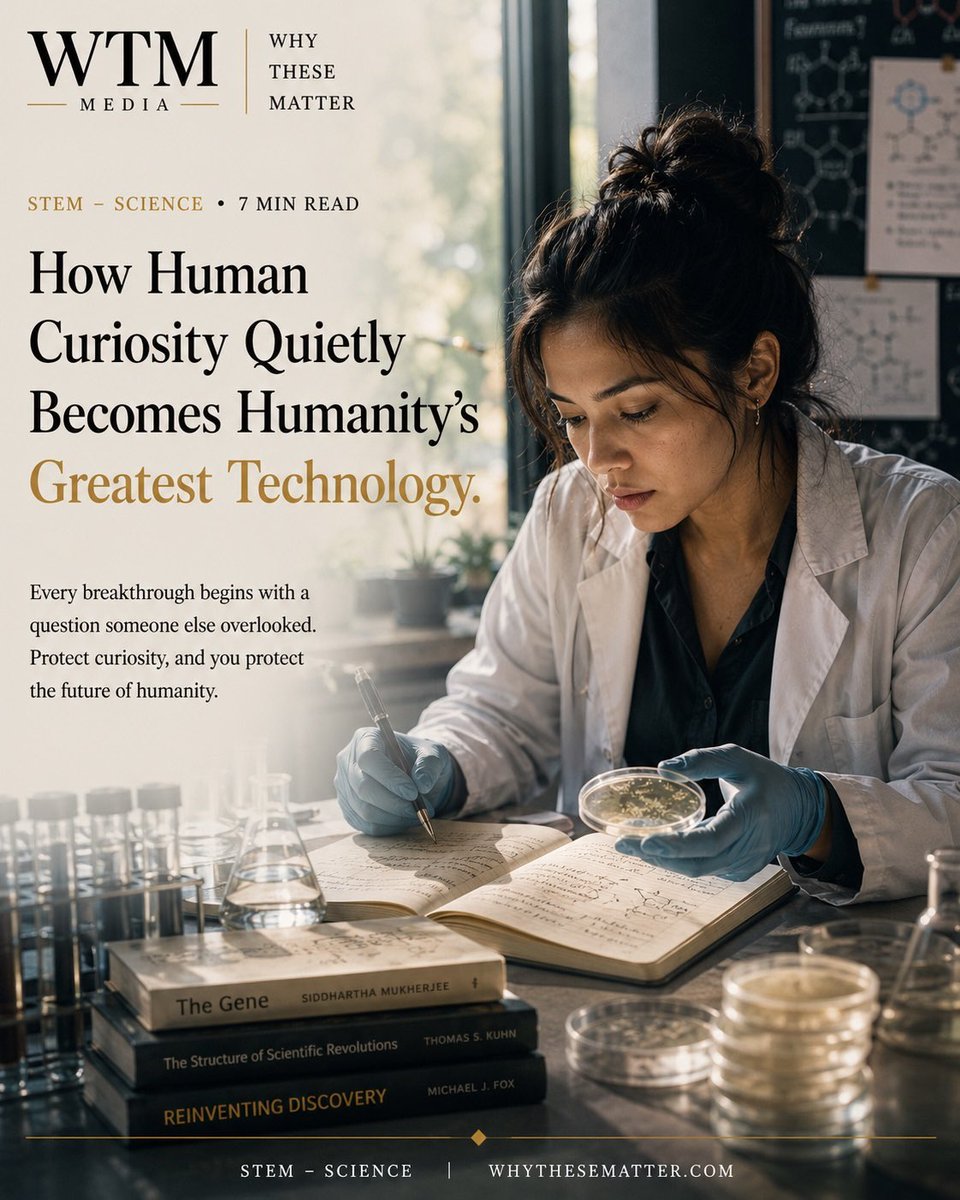
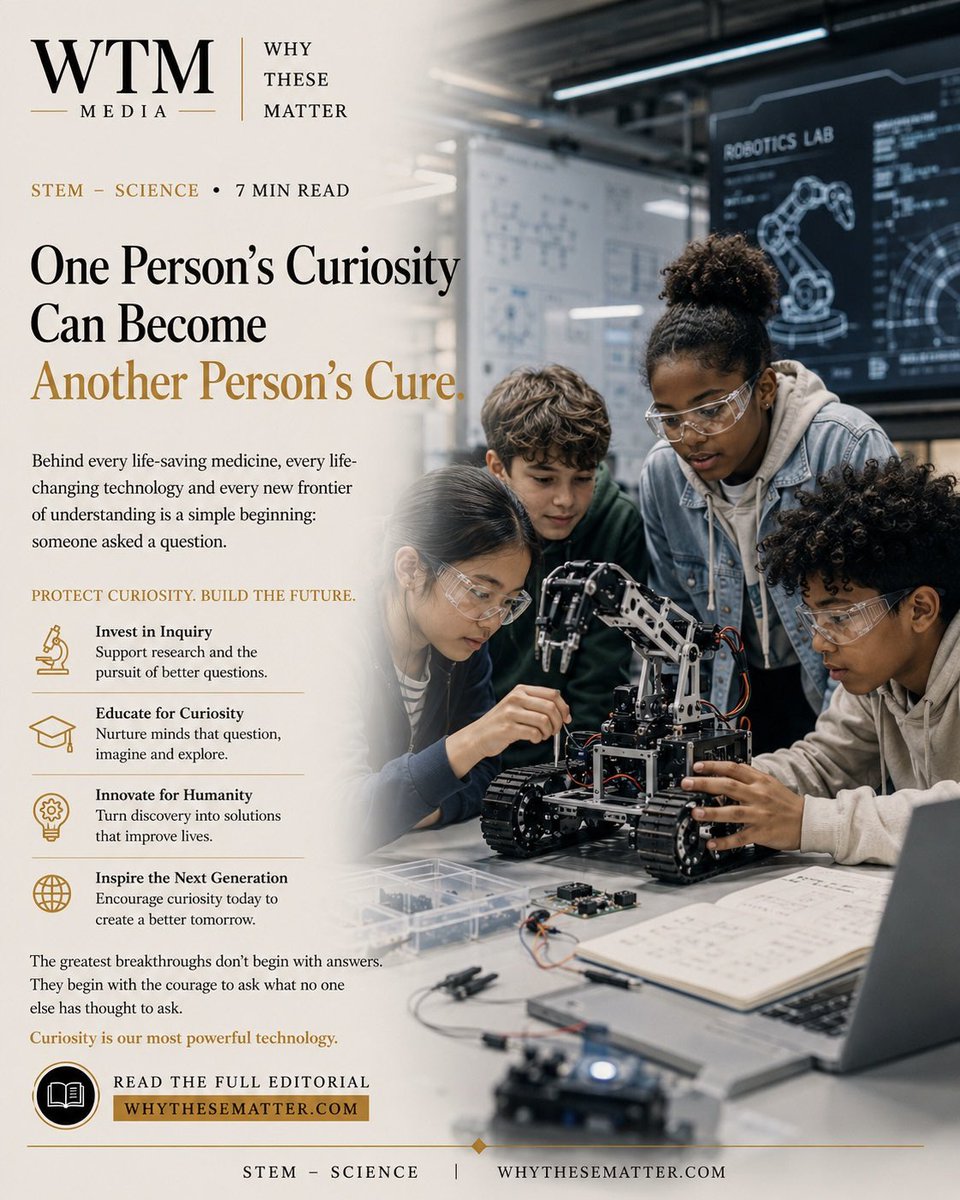
Great discoveries are built on better questions.
Science does not advance because humanity suddenly acquires all the answers. It advances because someone notices what others have overlooked, questions what others have accepted, and has the discipline to investigate what remains uncertain.
Behind every medicine, scientific breakthrough and transformative technology is an act that looks remarkably ordinary at first: someone became curious enough to ask why.
That is why curiosity is not intellectual decoration. It is infrastructure.
A society that protects inquiry creates the conditions for discovery.
A society that educates people to question creates the conditions for innovation.
A society willing to investigate uncertainty creates knowledge that can outlive the person who first asked the question.
One person’s curiosity can become another person’s cure.
And perhaps that is the larger intelligence worth remembering: human curiosity may be the oldest technology we possess — and still one of the most powerful.
Protect curiosity. Build the future.
Read the full editorial at https://t.co/teWGT0BDCT
#WhyTheseMatter #WTMMedia #Science #STEM #Curiosity
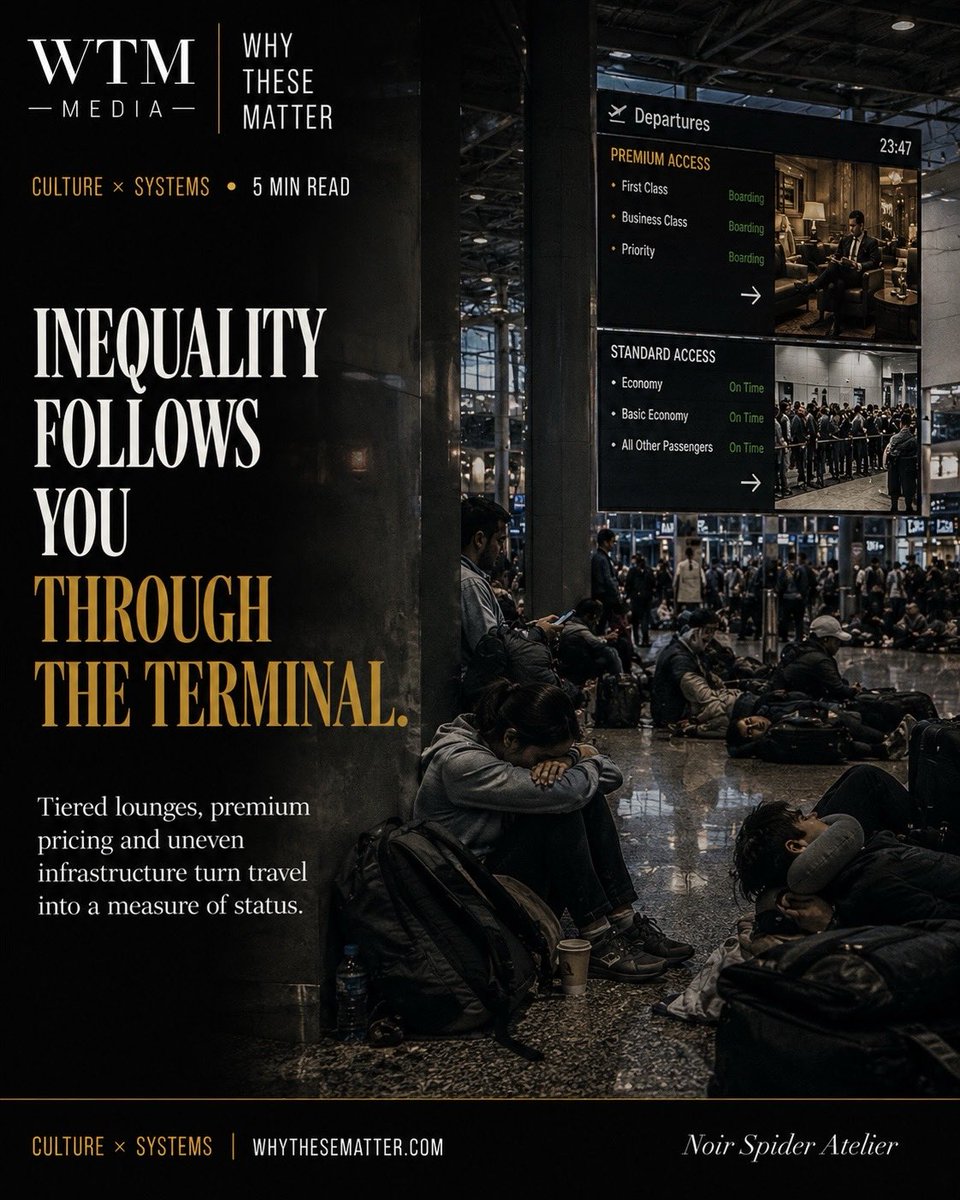
Culture is often dismissed as noise but noise can be diagnostic.
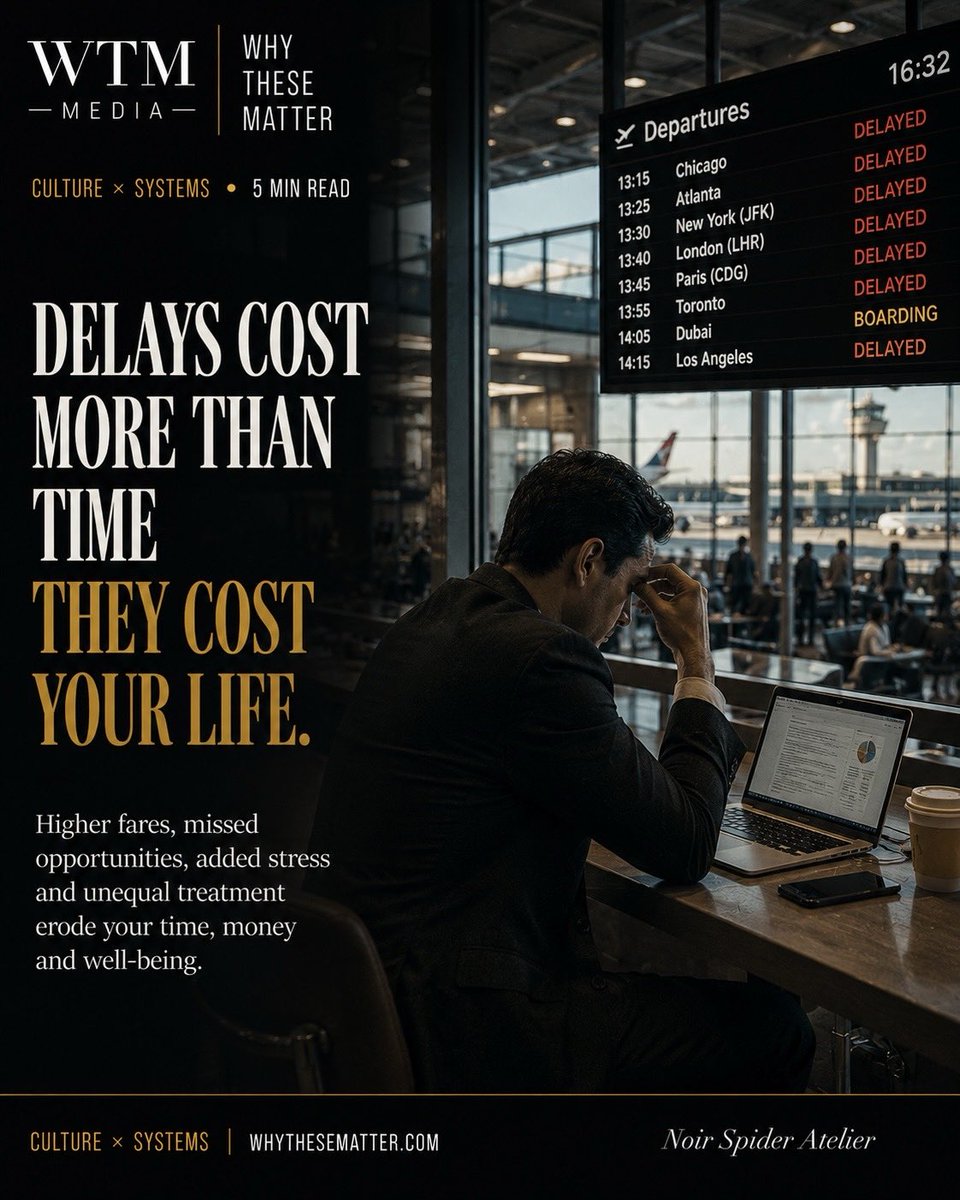
The celebrity outrage, fan wars, airport exhaustion, climate anxiety, and social-media volatility all appear to belong to different conversations. Look upstream, however, and a more consequential pattern emerges: systems under pressure often become visible through human behaviour before institutions formally acknowledge the strain.
When people cannot meaningfully influence structures, conflict migrates towards symbols. When infrastructure is optimised beyond human tolerance, ordinary movement becomes exhausting. When climate pressure remains diffuse but persistent, anxiety finds more immediate places to land.
The result can look like cultural chaos. It may be something more useful: an early-warning system.
Culture does not collapse societies. It warns them. The question is whether institutions are intelligent enough to read the signal before the strain becomes structural failure.
Read the full WTM Media editorial:
https://t.co/AvEvd2RFUK
#WhyTheseMatter #WTMMedia #Culture #Travel #SocialIntelligence
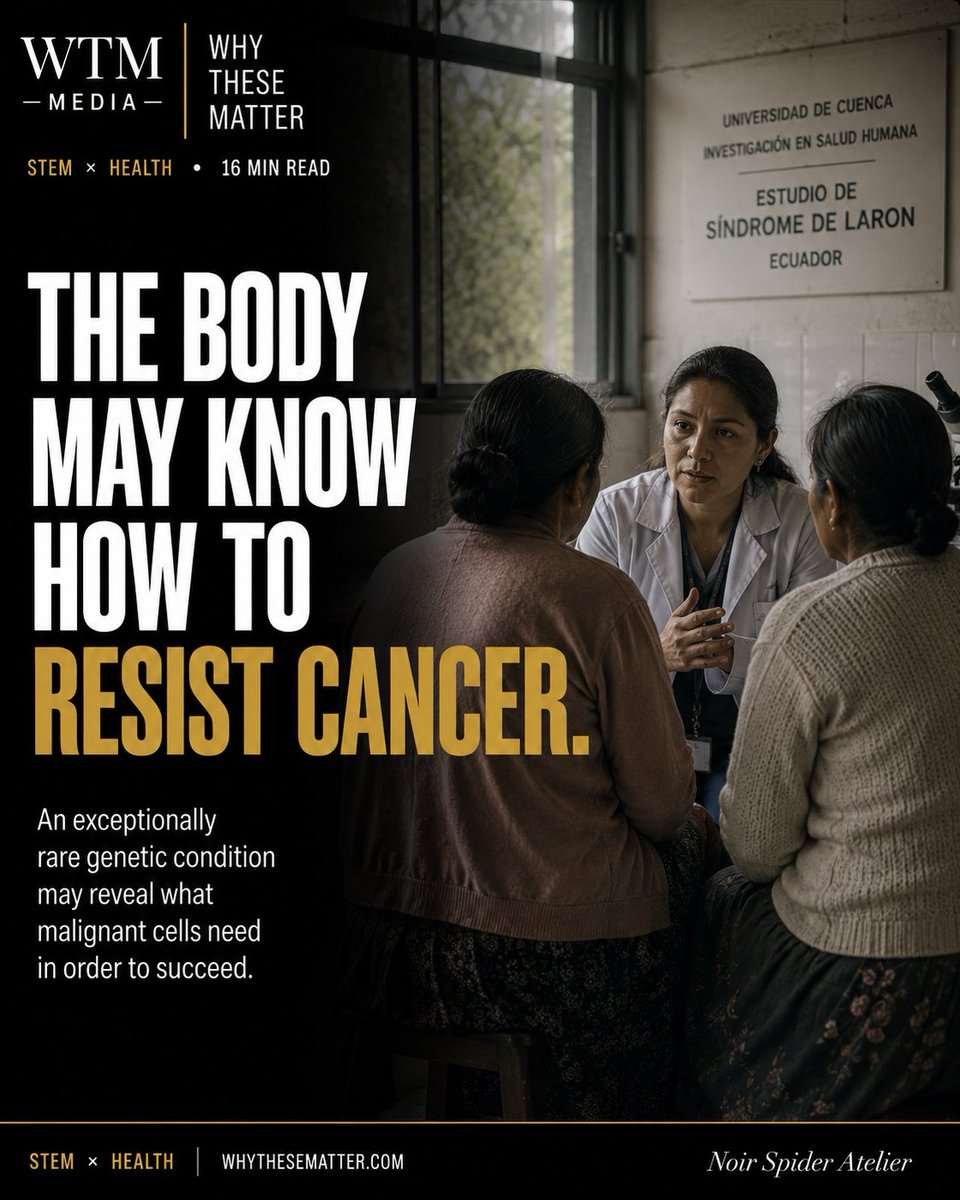
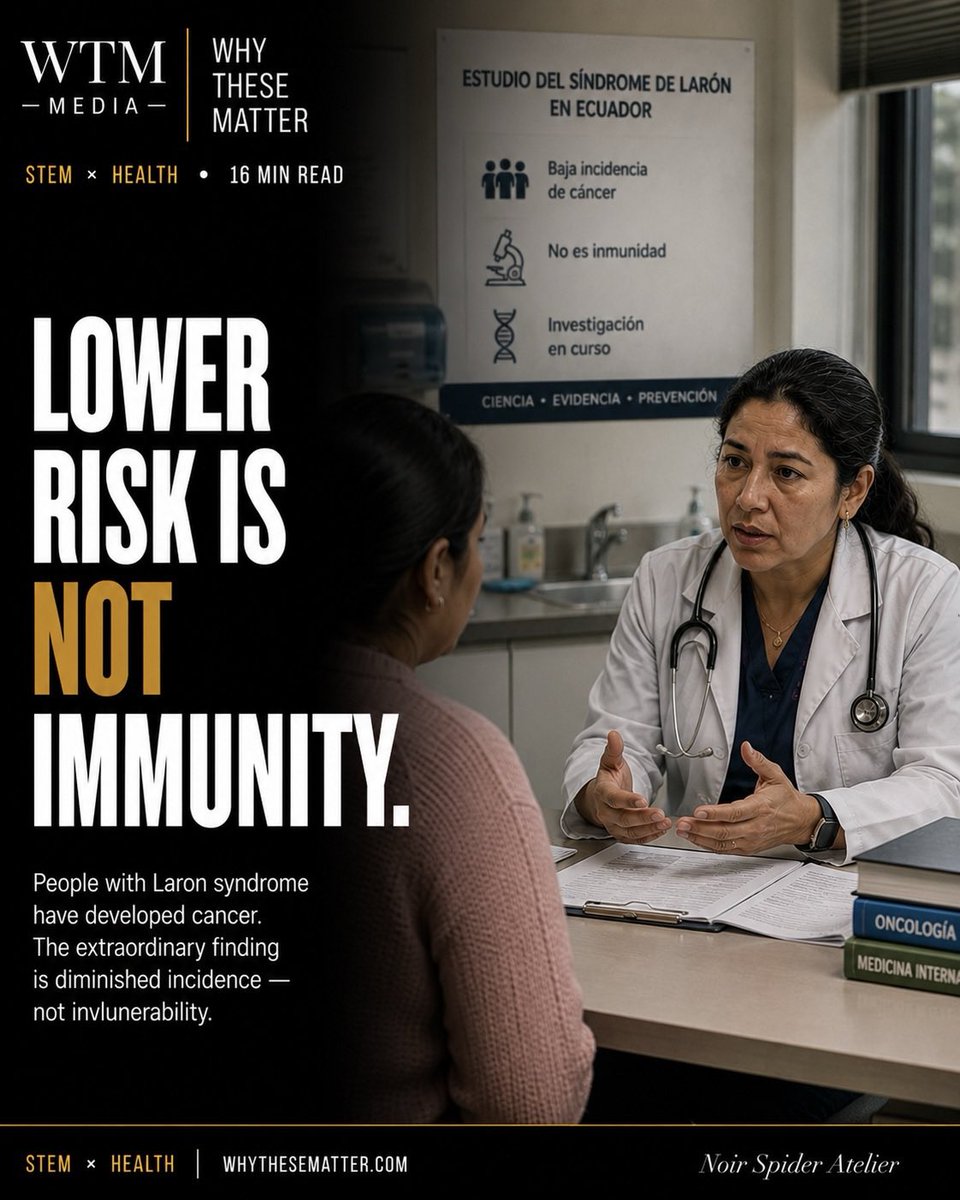
Some people with Laron syndrome appear to develop cancer at strikingly low rates.
That does not mean immunity.
The consequential question is what their rare biology might reveal about the conditions cancer needs to thrive — and whether those mechanisms can inform prevention.
Read: WTM Media — https://t.co/GwXdZZBDP8
#CancerResearch #LaronSyndrome