✨Explore the Super Simple Staking feature with
@NovaWalletApp
📷Simplify your staking experience with as little as 1 $DOT using Nova Wallet Read more in the article below📷
#StakeDOT#Staking#Polkadot#NovaWallet
https://t.co/cAHWne2mET
Who wants to fill their money bags? 🚀🚀🚀
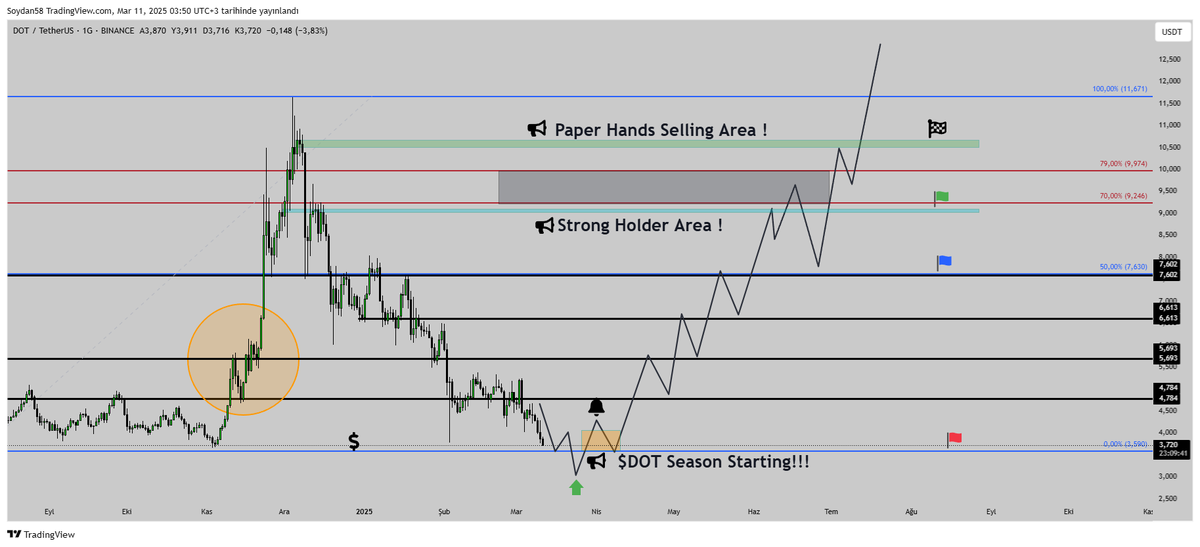
Polkadot season is starting soon! 🚨
I have been warning you for months with my $DOT Chart.
We are now approaching the levels I want!
Please pack your bags 🔥🔥🔥
We are closely monitoring the Polkadot chart after the price drop below $3.59 .
Watch out for the alarm zone after heavy purchases!
When the alarm goes off I'll start filling my DOT bag.
This year will definitely be Polkadot's year.
. The foundations of the decentralized future are being laid.
. Incredible investments are being made in Web3.
. Polkadot JAM is revolutionizing the technology field.
. DOT ETF process awaits approval
. Marketing efforts are progressing at full speed.
. Great progress in Polkadot Gaming
. Kodadot is preparing to make its mark on the NFT industry
For the best altcoin investment:
@Polkadot will be a good choice!
Polkadot: the dark horse for stablecoin transfers globally.
The go-to for users who prioritize security and expect reliable throughput (with no congestion).
Everything you need to know about Liquid staking DOT
Here’s the scoop: if you’re holding assets that are prone to inflation, the smart move is to get a yield that offsets the inflation. Think of it as giving your money a life jacket to keep it afloat!
For US dollars, treasury bills are the way to go. But when it comes to DOT, we’ve also got some options when staking. When you stake DOT, you are locking your assets on the Polkadot relay chain, these assets are used to secure the network and in return you receive the staking rewards.
You have many options, staking directly on chain or using a liquid staking product. This is where things get a little bit complex, there are many options. In this article I’m going to go through each of them, outline the pros /cons of each and give you a recommendation as to which one I believe is best for the majority of normal users.
First lets run through some basics to get us started.
- The Polkadot staking APY is roughly 15%. It can change as more or less users stake their DOT with the target staking rate of ~52%.
- If you want to unstake, you will need to wait a 28 day unbonding period.
- Liquid staking refers to products that will allow you to deposit DOT into a staking pool and in return you will receive a receipt token.
- This receipt token represents your percentage share in the DOT staking pool. Over time as this DOT pool earns more DOT rewards via the staking APY, your percentage share will also increase in nominal value.
Note: Generally on Polkadot they do not use rebase tokens, so the amount of liquid staking receipt tokens you own will never change. When you go to unstake them, you will be able to withdraw more DOT than you deposited. These extra rewards are the DOT you deposited + any earned staking rewards from the pool.
Your options:
Directly staking on chain — https://t.co/zr1QvcQGJo
You can use this application if you do not want to trust a parachain with your assets. It is arguably the safest way to stake. If you choose to use a nomination pool you can also partake in governance votes. I think the dashboard is beautifully made and shows all the relevant information you may need on your journey. There are no fees to use this platform so it is also the lowest fee option.
Pros:
- Easy to use.
- Native to Polkadot.
- Extremely safe and low cost.
- Nice dashboard to review and manage your holdings.
- You can partake in governance votes.
Cons:
- Once you stake your assets, you have no access to them.
- If you would like to unstake, you have no possibility of getting around the 28 day unbonding period.
- You will not be able to leverage these staked assets on other platforms.
stDOT @StellaSwap — https://t.co/15Kis2GFIm
When LIDO sunset their stDOT liquid staking product, the Stellaswap team took over its management. But the product is the exact same. It can be both issued and redeemed on the Moonbeam EVM and was developed by the LIDO team who have deep experience with liquid staking products. It is now under the management of the Stellaswap team who are equally highly experienced.
Pros:
- Highly trusted developer team behind this technology.
- Native to EVM for those that like using Metamask.
- Easy to use, work with and unstake.
- Very large extra incentive programs are being offered on this product, allowing users to obtain the ~15% staking rewards + extra incentives.
Cons:
- StellaSwap applies a 10% fee on a user’s DOT staking rewards.
- A fast unstake option is offered but can be temperamental to use. This is as the fast unstake queue is cleared every ERA (day) meaning that if you are unable to fast unstake in the ERA you submit your unstake transaction to the relay chain and you will need to wait 28 days.
- Cannot be used to vote in Governance.
sDOT @ParallelLabs_ — https://t.co/5GEHgsB08g
I never like to see people talking badly about crypto teams, more so than most I understand that this is a difficult game we play. But the facts on the ground are that the sDOT product offered Parallel finance has been through some tough times. There was a long period of time where it could not be unstaked. This has led to there being a large discount on their swap to buy these receipt tokens. I also am unsure if there is still a team of engineers working on their Polkadot offering at Parallel.
Pros:
- There’s a large discount on their DEX for this product.
Cons:
- There was a long period of time that this product was broken and could not be unstaked.
- The future of Parallel on Polkadot is uncertain.
- Cannot be used to vote in governance.
LDOT @AcalaNetwork — https://t.co/gmTySggcly
Acala is one of the largest DeFi platforms on Polkadot at this point in time. They also were the first to win a parachain slot on Polkadot and have been operating their liquid staking product for some time. They are one of the longest running Polkadot teams and many of their developers have been building on Polkadot since its inception. The fees for fast unstaking are quite high but it is still possible to avoid the 28 day unstaking period.
Pros:
- One of the longest running staking products.
- There are multiple ongoing incentive programs for those willing to enter them.
- Is being used on multiple different parachains allowing for more incentive opportunities.
- You can see all the validators they are using and I can confirm they have never been slashed.
Cons:
- There’s a 10% fee on staking rewards. I cannot confirm this information in their documentation so it would be best to review this figure but I do know for sure there is a fee baked into any earned staking rewards.
- 1% fee when fast redeeming. This makes the asset much more tricky to arbitrage and to me seems unreasonably large.
- It is hard to see the fast redeem unstaking queue, you need to be careful when trying to unstake and ensure you are happy with the ‘expected to receive’ number shown on their UI.
- Cannot be used to vote in governance.
vDOT @Bifrost — https://t.co/8IInmPqjre
Currently Bifrost has the largest amount of DOT staked in their product and I can understand why. It works really well, their app has a great UI and the product is both cheap and easy to use. They do also hold one massive technical advantage over all of the other competitors. Their unstaking technology is both very original and an absolute pleasure to use.
In layman’s terms, I’ll explain how it works. Unlike the other liquid staking offerings, Bifrost uses a separate account to manage the unstake queue, this is really handy for users as it means your unstake request is not batched each ERA. So for example, we want to unstake vDOT and we submit this request, at this point in time there is no DOT available in the unstake queue. So an unstake request is sent onchain to retrieve your DOT from the pool, this begins the 28 day wait. But 3 days later a large staker deposits 50K DOT, instead of having to wait for your 28 unstake request to complete. Bifrost will use this newly deposited DOT to clear your unstake request. Meaning you avoid the 28 day wait! The total cost of this complex service is 0.1%, amazing.
Alongside this, you can also use your vDOT to vote in governance. Personally, I think the unstaking features are where all the value is, but I know many people like to make their voice heard on OpenGov so this is a great option for that.
They have also brought out a new feature called “Loop staking”. This will allow you to borrow against your vDOT, buy more vDOT and open a leveraged staking position. More risk, but potentially more fun too!
Pros:
- Fast unstaking is both very cheap and very easy. I’ve made 1000s of unstake requests and never had to wait 28 days. 🤯
- You can use your vDOT to vote on governance.
- Leveraged staking option
- Unstake fee is very favourable to users.
- Unstaking mechanism is an excellent experience.
- They have a super cool data link that shows some very interesting data about the protocol https://t.co/yZ7HUNRv7G
- I do also love that little chart they have on the UI.
Cons:
- There’s a 1% fee on any rewards earned while using the pool.
- You are limited to only 10 redeems at once, but this will only affect the most dedicated unstakers. 😉
Summary
Aside from Parallel finance, I would recommend all of these products. I have at one point or another held each of them myself and bid on all of these assets everyday. There are many situations where someone might want to use a specific product for their own benefit e.g. you may want to access an incentive program so would consider using LDOT from Acala. Or you like to LP with your liquid staking tokens so want to use stDOT on moonbeam. Both great choices. I also don’t want to understate the value in the native DOT staking dashboard, it’s been built beautifully and shows some really great stats and information about @Polkadot
But if I was asked to recommend which liquid staking product someone should use. I would recommend vDOT from Bifrost. Not because of the low fees or ability to vote on governance, just because of their sensational unstaking process. Simply put, it’s just very easy to turn vDOT back into DOT. If the price of DOT rises very quickly you really don’t want to have to start a 28 day waiting period of praying that the market stays high and if you’re holding large amounts of DOT you wouldn’t want to sell this on a DEX.
I hope this article was useful and you have learned something, I think all of these teams have built some fantastic technology and I wish you all the best on your Polkadot Staking journey. If you liked this you can follow me for more.
Ciao for now.
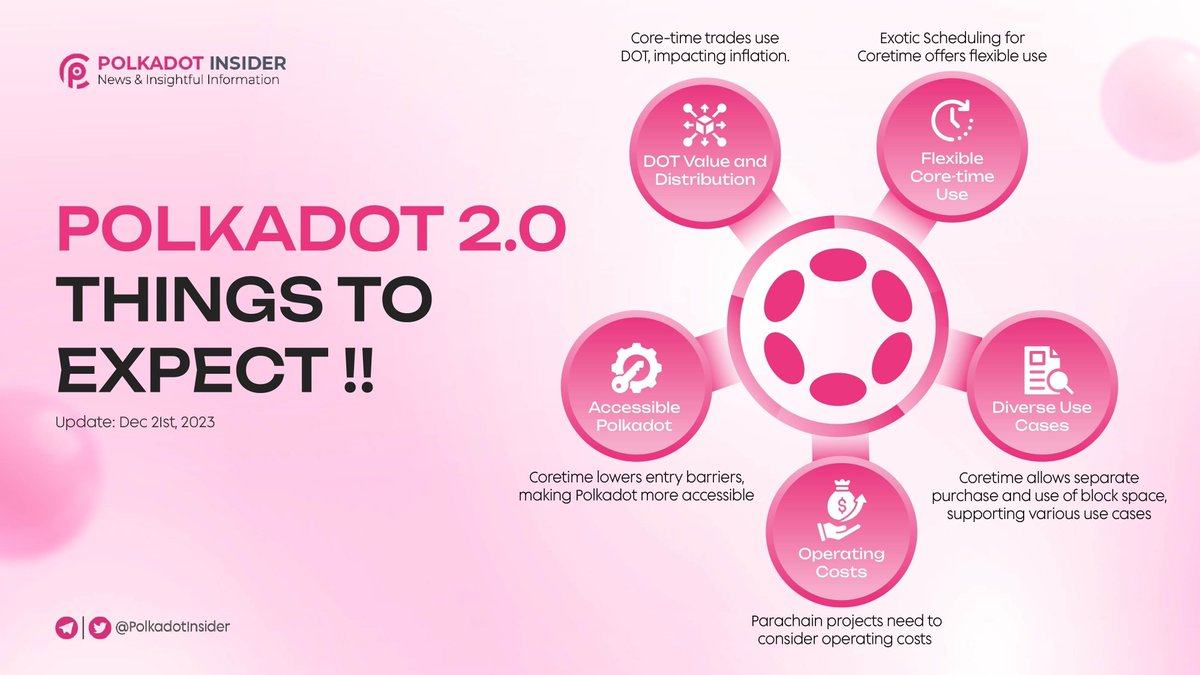
Polkadot 2.0 Roadmap
I spent dozens of hours asking Polkadot core devs like @gavofyork and @shawntabrizi about the steps to Polkadot 2.0 that you don't have to!
This is the roadmap I extracted out of their minds:
https://t.co/MnxUnkvirF
🎮✨ HUGE NEWS!
Moonbeam & @ANIMOindustries are collabing to bring together the joy of gaming with the power of Web3 and deliver premium gaming experiences starting with Animo’s Stars Arena!
See the announcement below ⬇️
The @Polkadot Weigher app for tracking the blockspace consumption of parachains will soon be publicly available. Great work by @niftesty on the frontend.
🚨 BREAKING: #USDC deposits & withdrawals from @binance direct to Polkadot AssetHub are now live!
As the largest centralized crypto exchange globally, Binance's 150M+ users around the world can now move #USDC to/from AssetHub and their CEX account 🔄