Vinod Kambli was still batting. He had not lost his wicket. But he walked off the field in tears.
It was the 1996 World Cup semi-final at Eden Gardens. India were chasing 252 against Sri Lanka. At 98 for 1, with Sachin Tendulkar on 65, the final was in sight.
Then Tendulkar was stumped. India lost seven wickets for 22 runs and fell to 120 for 8.
The crowd lost control. Bottles rained onto the field, fires were lit in the stands, and match referee Clive Lloyd stopped the game and gave the match to Sri Lanka.
Kambli was still at the crease, 10 not out. Years later he said, "I cried because I thought I was robbed of a chance to do it for my country."
Sri Lanka went on to win the World Cup. India never got their chance.
Less than four years ago, a car crash nearly ended his career. He came back in 2024. Now he is doing things no Indian keeper has done before.
Rishabh Pant was on 99. He danced down the track and hit Glenn Phillips for a six to reach his hundred.
That was his ninth Test hundred, and it made him the first Indian wicketkeeper to score a Test hundred in all four SENA countries, South Africa, England, New Zealand and Australia.
He made 128 off 153 balls in Wellington, with 10 fours and 6 sixes. He has now hit 108 sixes in Tests, second most ever, behind Ben Stokes.
"I have 199 reasons to smile," KL Rahul said in December 2016.
He had just made 199 against England in Chennai. One run short of a double hundred.
He had only recently returned from a hamstring injury, hesitant and afraid of breaking down again. In his first Test back at Vizag, he made a duck. Then a blow to the arm while fielding ruled him out of another Test.
In Chennai, he batted for over seven hours to reach 199 before chasing a wide ball from Adil Rashid and edging it to Jos Buttler.
At the other end stood Karun Nair, his friend since they were 11. Nair turned his maiden Test hundred into 303 not out, only the third man ever to do it, as India won by an innings and 75 runs.
After his 136 in Wellington today, it is worth remembering Chennai. Some innings stay with you, even one run short.
On this day in 2001, one match referee banned six Indian players in a single Test.
Effigies were burnt, Parliament stepped in, and the next Test was declared unofficial.
At Port Elizabeth, cameras showed Sachin Tendulkar running his nail around the seam. Referee Mike Denness said he cleaned the ball without telling the umpire. Everyone else called it ball tampering.
Denness fined six Indians 75% of their match fee. Virender Sehwag got an immediate one-Test ban for excessive appealing, while Tendulkar, Ganguly, Harbhajan, SS Das, and Deep Dasgupta got suspended bans. Denness refused to answer questions, and the players had no right to appeal.
India demanded his removal. South Africa backed them, Denness was barred from the next Test, and the ICC declared it unofficial. Tendulkar and Ganguly were later cleared, but Sehwag still missed the next Test against England.
He hated keeping wicket. So he quit the wicket keeping and made history.
Glenn Phillips began his New Zealand career as a wicketkeeper.
He told New Zealand Cricket not to pick him if he was going to play as a keeper. "I would rather do what I was enjoying than stick around doing something I hated with a passion."
Then came 2026, all against India. 106 in an ODI at Indore in January. 107 off 49 balls in a T20I at Auckland in October. And yesterday, 118 in a Test at Wellington, walking in at 70 for 5.
Only Rohit Sharma had ever scored hundreds in all three formats against one team in a single year, against Sri Lanka in 2017. Now Phillips is the second.
His parents gave him a deadline. Make it to India by 22, or go back and study medicine.
On this day in 1996, VVS Laxman was 22 when he made his Test debut against South Africa at Ahmedabad. His first innings lasted 43 balls for 11 runs, lbw to Allan Donald.
Then, in the second innings, India were 82 for 4. Laxman made 51 off 125 balls, India's top score, and was 50 not out overnight.
India set South Africa only 170 to win. Javagal Srinath took 6 for 21, and South Africa fell from 96 for 4 to 105 all out. India won by 64 runs.
Laxman still could not hold his place for years. He was moved to opener, dropped, and brought back. Then, in March 2001, he made 281 at Kolkata, and India won after following on.
The boy with a deadline became Very Very Special.
Mind the windows, Tino!
In 2004 at Lord's, Flintoff said that to Tino Best from slip. Best, 22, was a fast bowler who could barely bat. He charged at Ashley Giles, missed and was stumped. He later named his book after the joke: Mind the Windows.
Eight years later, at Edgbaston in 2012, Best walked out at 283 for 9, his best Test score 27, after nearly three years out of the side.
Then he hit 95 off 112 balls, with 14 fours and a six. With Ramdin (107 not out) he added 143 for the last wicket, a West Indies record. It was the highest score by a No. 11 at the time, beating Zaheer Khan's 75. He fell five short of the first No. 11 hundred, caught by Strauss going for the hundred. He also took 2 for 37.
Best called it his 'rebirth'. In 2020 Flintoff called it the best thing he had done on a cricket field. Best answered with a clip of his 95 and Bob Marley's words: 'he who laugh last wins.'
Before this day in 2000,
Andy Flower was a good batter.
After it, he became the best in the world.
Going into the 2000 Test series against India, he had played 46 Tests in 8 years: 3,085 runs at 44.71, 7 hundreds, and a top score of 156. Good, but not great.
Then he walked in at 154 for 4 in Delhi and made 183 not out.
A week later, he hit 232 not out at Nagpur, still the highest Test score by a wicketkeeper.
Over the next 13 months, he scored 1,466 runs at 133.27, with 5 hundreds and 7 fifties.
By September 2001, he was the world's No. 1 Test batter, the only Zimbabwean ever to do it.
Pakistan were winning the Test. Then the umpires accused them of cheating, and the match ended in a way never seen before.
At The Oval in August 2006, Pakistan bowled England out for 173 and made 504. England were still 33 runs behind at 298 for 4 when umpires Darrell Hair and Billy Doctrove said Pakistan had changed the ball. They gave England five penalty runs and changed the ball.
Pakistan refused to come out after tea in protest.
The umpires removed the bails and handed England the win the first forfeit in 129 years of Test cricket. Pakistan came out 25 minutes later. Too late.
Inzamam said: 'It was a matter of the team's reputation.' He was later cleared of ball tampering, but banned for four one-day games. And Hair emailed the ICC offering to quit for $500,000. The result was changed to a draw in 2008, then changed back to an England win in 2009.
Youngest Australian to debut in a Test since 1953. He was 18.
He debuted on this day, 17 November 2011.
He won Man of the Match on debut.
Then injury kept him out of Test cricket for more than five years.
He returned in 2017.
In 1979, Dennis Lillee walked out to bat in a Test with an aluminium bat
He did it as a marketing stunt.
At the time there was no rule against it, so nobody could stop him.
England complained the metal was damaging the ball. His own captain forced him to switch and Lillee threw the bat 40 yards in anger.
Because of this, the Laws of Cricket were changed: bats must be made of wood.
Some dates simply belong to one man.
Nov 15, 1989:
Sachin Tendulkar made his Test debut for India at Karachi on 15 November 1989. He was just 16 years and 205 days old, the youngest Indian to play a Test.
Nov 15, 2013:
Exactly 24 years later, he bats for the final time, scoring 74 in his epic 200th Test.
Nov 15, 2023:
Ten years later, Virat Kohli breaks Sachin’s monumental record of 49 ODI centuries right in front of the Master Blaster himself.
Destiny has a favorite date. 🇮🇳🐐
#OnThisDay #SachinTendulkar #CricketTwitter
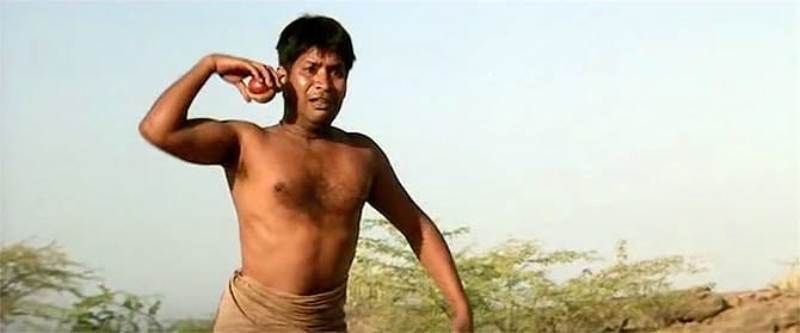
The real life Kachra: Bhagwat Chandrasekhar
His right arm was too weak to hold a cup of tea.
Polio at age five left Bhagwat Chandrasekhar with a withered right arm.
He could not even throw with it. He started bowling with his left arm, then went back to his weak right arm, because it gave him more spin.
At the Oval in 1971, he was almost dropped after a bad game. Then he took 6 for 38. England were all out for 101. India won by four wickets, their first series win in England.
One ball was named after a racehorse, Mill Reef. It bowled John Edrich for no runs.
Fans brought an elephant named Bella from a zoo to the Oval that day, as a lucky sign. It worked.
A weak arm became India's magic wand.
In Lagaan, Kachra, played by Aditya Lakhia, is the same story on screen. A man with a polio withered hand, who no one wants in the team, whose spin wins the match.