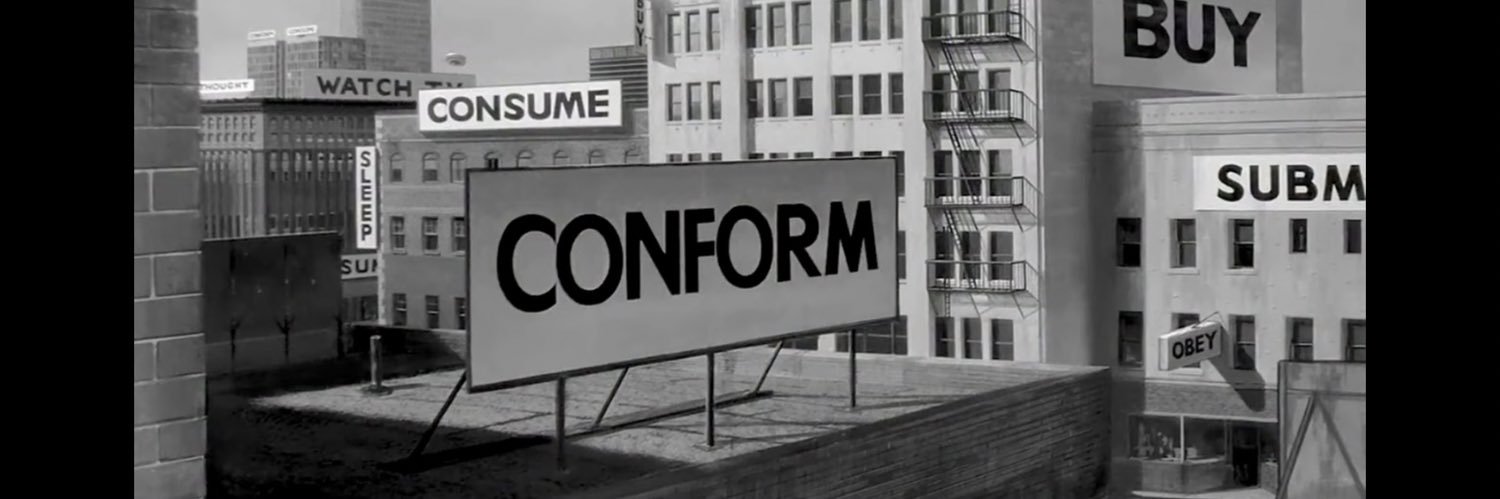
We live in a culture where the church is following influencers. Christianity is not being defined by what is said in the pulpit or preached out of the Bible, it’s being defined by celebrities. Don’t get your gospel from Kid Rock or Jelly Roll, they’re satanic grifters!
When someone gets inside a church and tampers with the church the punishment is severe. When someone says they’re a believer, a true believer, and they introduce their error and their corruption to the church, the Lord is very serious in His response.
The Wickedness of Gospel Distorters — John MacArthur // February 11, 2018
Just to show you a little more of that, Jude chapter – only one chapter, verse 11 of chapter 1: “Woe to them!” These are the false teachers. “Woe to them! For they have gone the way of Cain. They have rushed into the error of Balaam for pay. They perish in the rebellion of Korah.”
And then he describes them: “They are the men who are hidden reefs in your love feasts; they feast with you without fear. This is what they do: they get inside the church and they feast with you, and they’re part of your love feasts.” They want to be there for the occasions that give them credibility. The fact is, “They are clouds without water, carried along by winds; they are autumn trees without fruit, doubly dead, uprooted; wild waves of the sea, casting up their own shame like foam; wandering stars, for whom the black darkness has been reserved forever.”
“And on them” – verse 15 says – “will judgment fall, to convict all the ungodly of al their ungodly deeds which they have done in ungodly way, and of all the harsh things which ungodly sinners have spoken against Him.” Four times they’re called “ungodly” in one verse.
These people do not come from God, they permeate and contaminate the church.
Paul comes to a fourth characteristic in verse 10: “I have confidence in you in the Lord that you will adopt no other view. But the one who is disturbing you; but the one who is disturbing you will bear his judgment, whoever he is.” They will face divine judgment.We saw that, as I just read, in Jude, and also in 2 Peter chapter 2. They will face judgment. Paul is saying, “I have confidence in you in the Lord, that you will adopt no other view. I have confidence that you’re going to go the right way, that you’re going to be faithful to the gospel of grace. My confidence isn’t in me, it’s in the Lord, that the Lord is going to lead you into the truth. I have confidence that the Lord is going to bring you to the truth, and that you will adopt no other view.“
But the one who is disturbing you will bear his judgement, whoever he is. I don’t care who he is, I don’t care what credentials he has, I don’t care what religious claims he makes,” – Paul says – “I have come to the settled conclusion in the Lord that you’re going to come to the truth and be faithful to the truth. But with regard to the false teachers, they will bear judgment from God. Doesn’t matter who they are. Doesn’t matter who they are.” It’s as if he’s saying, “I’m confident that you’re going to be okay, because the Lord is going to lead you to a full commitment to the gospel.“
But the false teachers who are disturbing you” – that word means “throwing you into confusion” – “they’re going to face horrendous punishment, horrendous punishment.” When someone gets inside a church and tampers with the church the punishment is severe.
141 years ago today, on July 23, 1885, Ulysses S. Grant died at 63.
Most people know him as the general who won the Civil War and the two term president on the fifty dollar bill. Almost nobody knows how his story actually ended, and it's one of the most quietly heroic things in American history.
Start with the fact that "Ulysses S. Grant" was never even his name. He was born Hiram Ulysses Grant. When he got to West Point, a congressman filled out the paperwork wrong and wrote him down as Ulysses S. Grant. The S stood for nothing at all. Grant just shrugged and kept it for the rest of his life. Later, when he forced a Confederate fort to give up with no conditions, soldiers said the U.S. stood for "Unconditional Surrender."
Here's the strange thing though. Before the war, Grant was a failure at nearly everything he tried. He flopped at farming. He flopped at real estate. By his late thirties he was working as a clerk in his father's leather goods store, hauling hides for his younger brothers. Then the war came, and the quiet clerk turned out to be one of the greatest military minds the country ever produced. He took Vicksburg. He ground down Lee. He accepted the surrender at Appomattox and, instead of gloating, let the Confederate soldiers keep their horses so they could plant crops. Then he won the White House twice.
So how does a man like that end up dying broke?
In 1884 Grant trusted his savings to a Wall Street firm run by a young hotshot named Ferdinand Ward, basically the Bernie Madoff of his day. Ward was running a con. When it collapsed, Grant lost everything. He was so wiped out that he had to borrow money just to cover his household, and he handed over his war trophies and swords to pay a debt. The most famous soldier in America was suddenly poor.
Then it got worse. Doctors found throat cancer. Grant had smoked as many as twenty cigars a day, a habit the public actually fed. After his victories, admirers mailed him cigars by the thousands, and it very likely killed him.
Now here is the part that gives me chills.
Grant knew he was dying, and he knew he was leaving his wife Julia with nothing. So a man in constant pain, throat closing up, some days unable to speak above a whisper, sat down to write his memoirs and out earn death itself. Mark Twain, who admired him, offered him a stunning book deal, far better than anything normal authors got. Grant took it and went to work.
He wrote something like three hundred thousand words in about a year while cancer ate his throat. On the days he couldn't talk, he wrote on slips of paper. Witnesses said the pain was constant. He kept going anyway. He finished the manuscript just days before he died.
And it worked. The memoirs became one of the best selling books of the century and are still considered maybe the finest memoir ever written by an American president. The royalties sent to Julia came to roughly four hundred fifty thousand dollars, an enormous fortune then, enough that she never had to worry about money again. He couldn't win the money back on Wall Street, so he wrote his way out and crossed the finish line with almost nothing to spare.
When he died, the country stopped. Around a million and a half people lined the streets of New York for his funeral, the largest the city had ever seen. And look at who carried him. His pallbearers included Union generals and Confederate generals, side by side. One of them, Simon Bolivar Buckner, was the very man who had surrendered to Grant at Fort Donelson decades earlier. He came to Grant's sickbed near the end, two old enemies making peace, and then helped carry him to his grave.
That grave became Grant's Tomb in New York, the largest mausoleum in North America.
A failed store clerk who saved the Union, lost everything to a con man, and then, dying and in agony, wrote a masterpiece to protect his wife.
141 years ago today. They really don't make them like that anymore.
This is pride, ego, and vanity. The modern Christian music presented in mega churches now isn’t as much about worship as it is about self-seeking pleasure. It’s the “ feed me, bless me, entertain me” mindset that is all about how cool you can be. It’s Brandon Lake and elevation music.
This is pride, ego, and vanity. The modern Christian music presented in mega churches now isn’t as much about worship as it is about self-seeking pleasure. It’s the “ feed me, bless me, entertain me” mindset that is all about how cool you can be. It’s Brandon Lake and elevation music.
@WallStreetApes Let’s be honest here; canned soup is for LAZY people. How hard is it to put meat, vegetables, a starch, water, and seasonings together… gotta be one of the easiest things on the planet.
Make your own!
@elonmusk didn't just buy Twitter—he disrupted the Left's most powerful storytelling machine.
Wokeness didn't spread because it was true. It spread because the institutions controlling the story kept repeating it until millions believed it. If you want to understand why America changed so quickly, don't follow the politicians—follow the storytellers.