🚨 BREAKING: Bulgarian migrants Ilia Belov and his sister Nadjedzha Belova have been found guilty of attacking a group of young girls, aged 12-14, in Dundee last year.
The attack went viral on X after one of the victims unveiled an axe.
Nadjedzha assaulted a 13-year-old girl by seizing and pulling her hair, dragging her to the ground, and striking her on the head to her injury during the incident.
The pair will be sentenced at Dundee Sheriff Court on 5 August.
The court heard that Belov had said "hello sexy, I'll show you a good time" to the girls while walking past them in the Lochee area of the city.
Many liberals online, including the former first minister of Scotland Humza Yousaf, came to the defence of the attackers at the time, accusing the children of being racist.
🚨REVEALED: The hero from Belfast has been IDENTIFIED 🇮🇪
Maitie Mag Toghearnan has revealed himself as the person with the stick who took matters into his own hands to confront the attacker last night.
Kudos to this man, Ireland needs thousands more just like him 👏
He was only eighteen years old. His weapon of choice was not a gun, but a tiny bottle of acid. Yet, this teenage boy managed to save fourteen thousand lives from certain death.
In 1943, Paris was a dark place under Nazi occupation. Adolfo Kaminsky was just a young apprentice working in a textile dyeing shop. He spent his days learning how colors reacted with chemicals, which solvents could dissolve certain pigments, and how to alter tones at a molecular level.
He had no idea that this highly specific knowledge about ink and fabric would soon become the thin line between life and death for thousands of innocent people.
During the occupation, the Gestapo used paperwork as their primary weapon to hunt down Jewish people. Identity cards, travel permits, and food rations were all strictly monitored. On the documents of Jewish citizens, the authorities stamped one single word in blue ink: "JUIF".
That one word was a direct ticket to a concentration camp.
The French Resistance desperately needed a way to erase that word without ruining the paper. Standard forgery techniques failed because the official ink was designed to be permanent.
Any attempt to scrape it off left obvious marks that would get someone killed.
They brought the problem to Kaminsky.
The boy analyzed the paper under a dim lamp and remembered a trick from his textile work. Lactic acid could dissolve that exact blue ink while leaving the paper fibers perfectly intact.
It worked.
But erasing the stamp was only the first step. He had to rewrite names, birthdays, and signatures perfectly. The Resistance set up a secret laboratory for him in a hidden attic on the Left Bank of Paris. The demands poured in constantly.
He needed to make fifty birth certificates for children escaping to Switzerland, two hundred food cards for families hiding in cellars, and hundreds of passes to Spain.
The conditions were brutal. Bleach and acid fumes filled the tiny room, burning his throat and making his eyes water constantly. His fingers were permanently stained with dark ink. Kaminsky realized that each document took him about two minutes to make.
That meant he could save thirty people every single hour.
This realization turned into an obsession that haunted him. He looked at the clock and thought, "If I sleep for an hour, thirty people will die."
So, he stopped sleeping.
One week, word came that a local orphanage with three hundred Jewish children was about to be raided by the Nazis. They needed fake papers immediately or they would be put on a train to Auschwitz. Kaminsky locked himself in the attic.
He worked for two straight days and nights without a pause. His vision blurred and his hand cramped so badly he had to physically massage his fingers to keep writing.
Eventually, his body gave out and he collapsed onto the desk.
He slept for exactly one hour. When he woke up, panic gripped him. He cried out, "Thirty people are dead because I was lazy!"
He refused to eat or rest until the remaining papers were finished.
Thanks to his sacrifice, the children were moved to safety in time.
Kaminsky spent years in that suffocating attic, constantly upgrading his skills as the Nazis upgraded their security measures.
When Paris was finally liberated in 1944, the young genius had saved roughly fourteen thousand people.
He never accepted a single penny for his work, believing that taking money to save a life was deeply wrong.
After the war, Kaminsky became a photographer and lived a quiet, modest life. He never bragged.
He did not tell his neighbors, his coworkers, or even his own children about his wartime heroism for decades.
He simply faded into the crowd as an ordinary man.
Adolfo Kaminsky passed away in 2023 at the age of ninety-seven.
He did not want monuments or medals. His true legacy lives on today in the children, grandchildren, and great-grandchildren of the thousands of people who survived the darkness simply because a brave teenager chose to stay awake.
🚨BREAKING: A Coroner has ordered an investigation into whether police officers' actions "caused or contributed" to the death of Henry Nowak
This is a BIG win.
Widely acclaimed as one of the greatest duets of all time, this 1987 archival footage from Ibiza captures the iconic song "Barcelona." It stands as a vivid testament to the perfect fusion of Montserrat Caballé’s sublime operatic vocals and Freddie Mercury’s captivating stage presence—a masterpiece that left an indelible mark on music history and went on to become the official and defining anthem of the 1992 Summer Olympics in Barcelona.
🚨NEW: The mother of Stephen Lawrence has said the police "should be at fault for what happened that night" in reference to the stabbing of university student Henry Nowak
[@GBNEWS]
BREAKING:
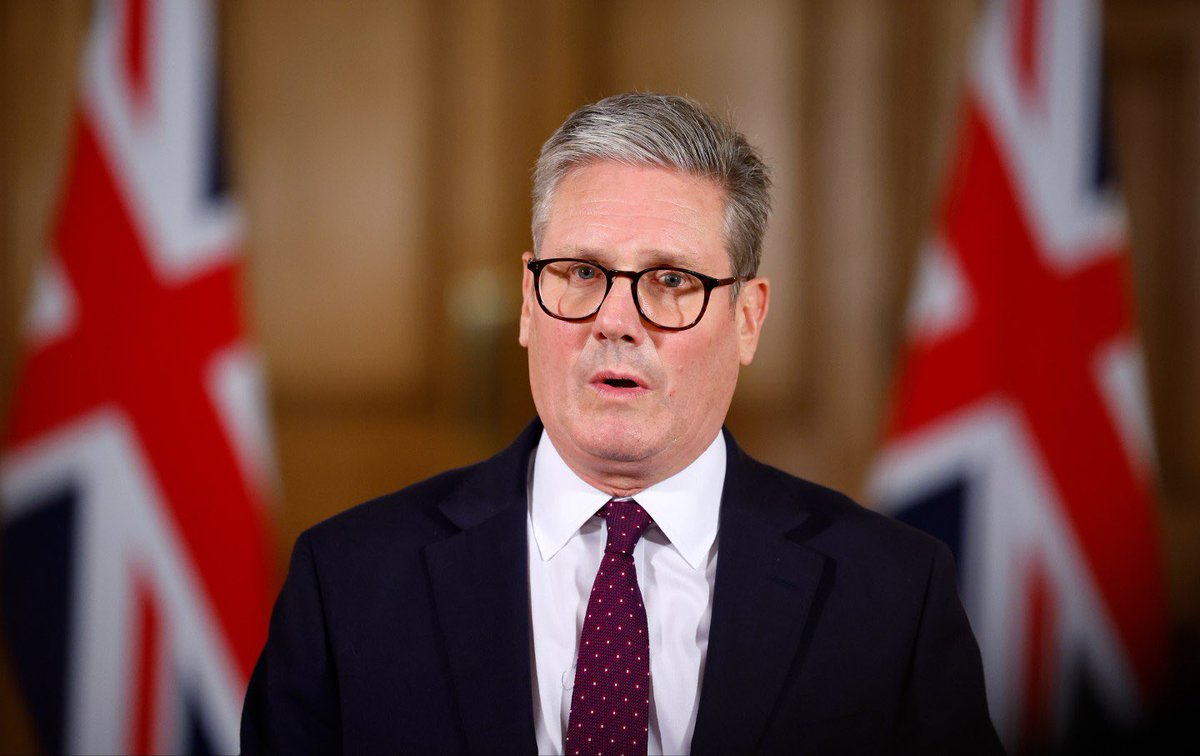
Keir Starmer says he won’t remove the exemption which allows Sikhs to carry large ceremonial knives on them.
Meanwhile, English women are being prosecuted for carrying regular pepper spray on them when out on the streets at night
🚨BREAKING: Henry Nowak's father speaks out on the murder of his son:
"He told officers he could not breathe NINE TIMES, he said he had been stabbed FOUR TIMES, but the officer replied saying' 'I don't think you have, mate.'"
What a brave man.