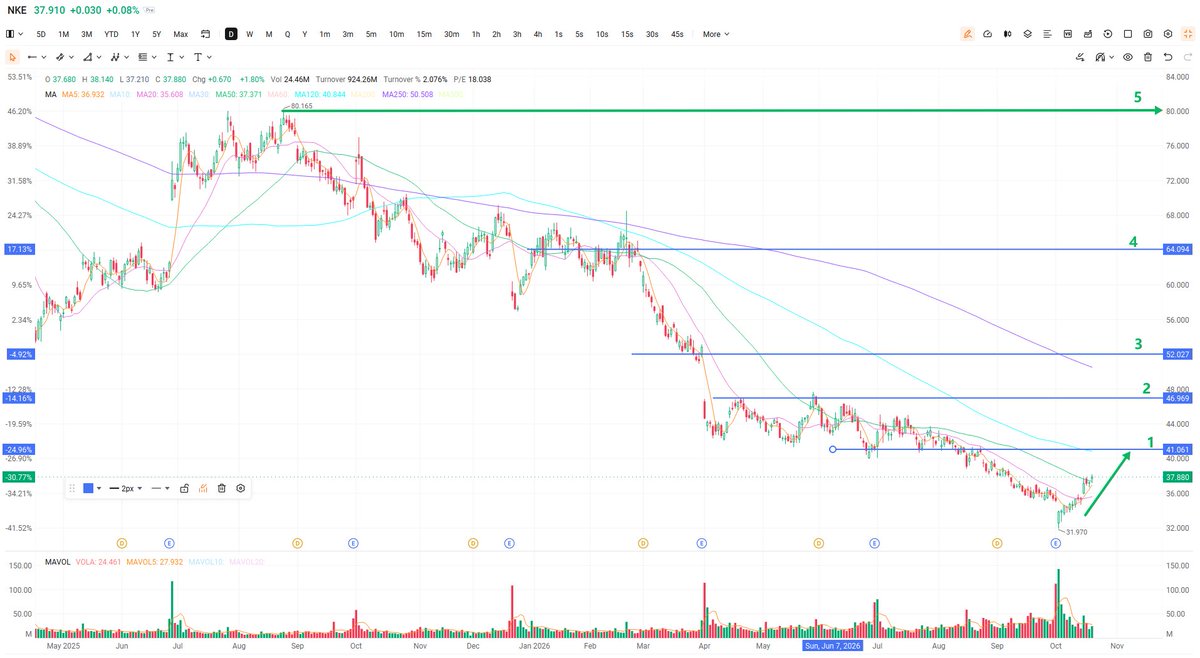
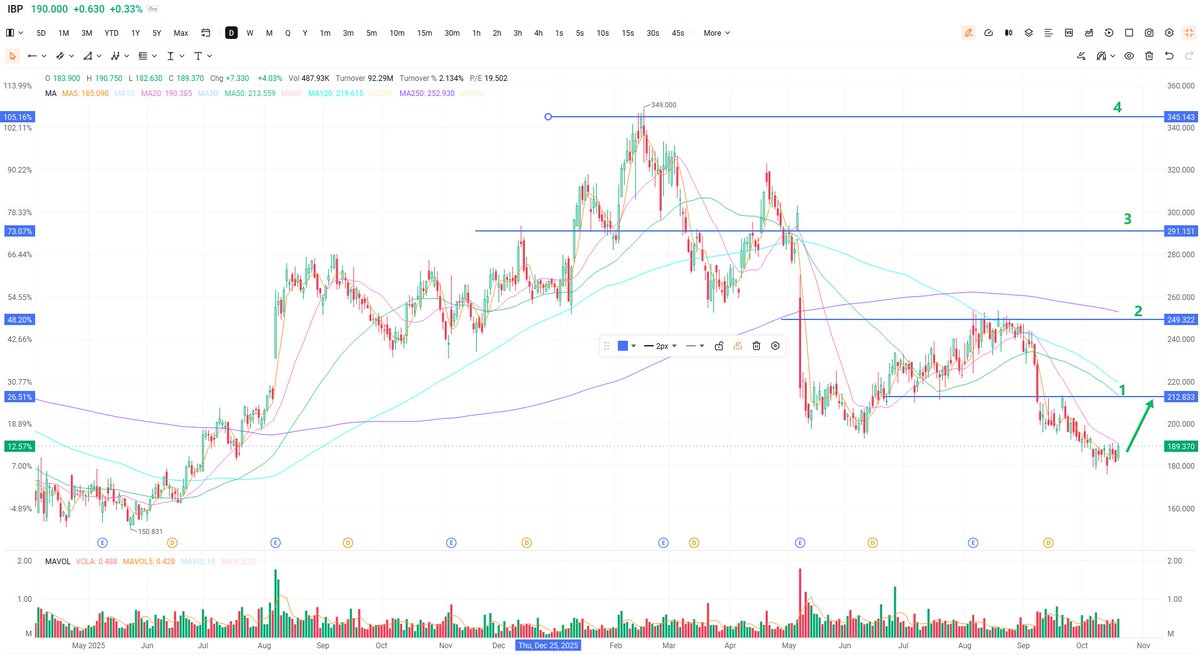
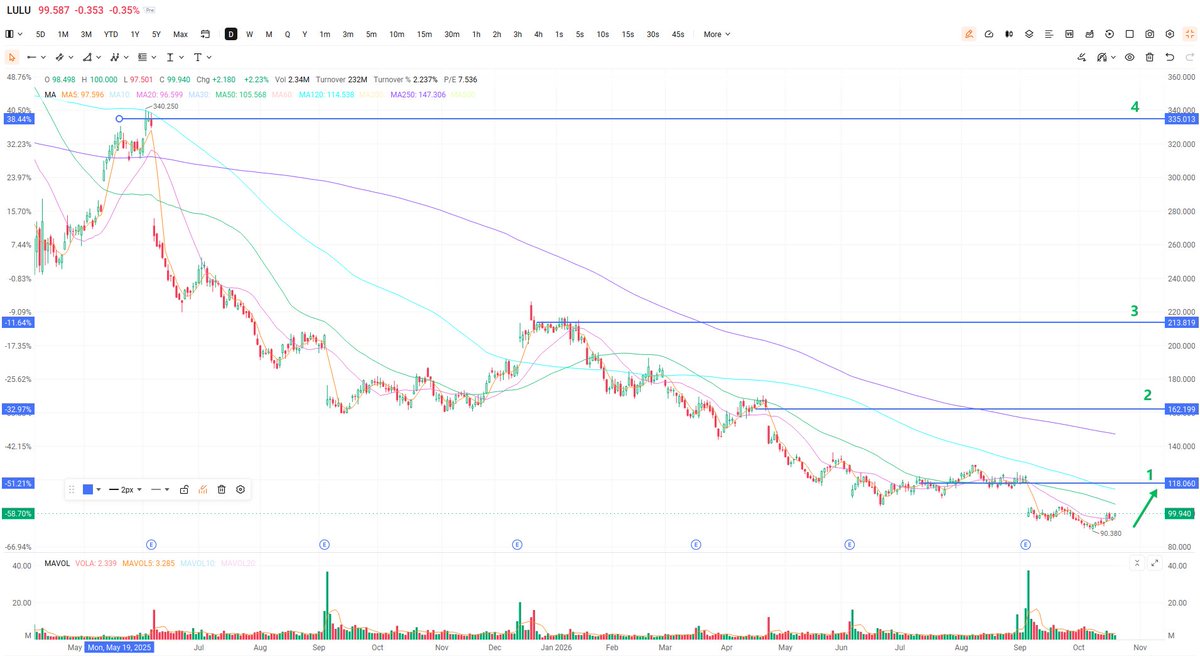
$IBP $LULU $NKE
The blue horizontal line represents the next target price
So far, the profits are looking good
Holding on—the outlook is promising
It’s sure to reach our target price
🚨 NVIDIA BOMBSHELL: Could Elon Musk Become a Major Stakeholder in $NVDA ?
Speculation is swirling around a potential 50% stake acquisition and Jensen Huang's possible return as CEO
If such a deal ever materializes, it could fundamentally reshape NVIDIA's leadership, ownership structure and future in the AI industry.
For now, the 50% acquisition claim remains unconfirmed
@EMSTODADL Whether someone owns stocks or not, inflation, jobs and the cost of living affect everyone. A healthy economy benefits more than just Wall Street. That's the bigger issue
🚨 WALL STREET IS GETTING HAMMERED — AND DEMOCRATS ARE IN THE CROSSHAIRS!
The Nasdaq just plunged 5.3%, wiping out ALL of its 2026 gains.
The S&P 500 sank 3.7%, while the Dow also suffered a brutal sell-off.
Tech stocks are bleeding. Billions in market value are disappearing. Investors are rushing for the exits.
The political divide is now spilling onto Wall Street.
Democrats may celebrate election victories, but investors are asking a very different question:
What will their policies mean for the economy, corporate profits, and the stock market?
Elections are political victories. Markets deliver the verdict in dollars.
@AlexFitzgetf76 The real question isn't just how much rates should rise, but how much economic damage the economy can absorb. A recession would have consequences far beyond the stock market
🚨 Trump Lashes Out at the Fed! Nasdaq Plummets 5.3%, Nvidia $NVDA Plunges 23% in a Single Week: Is the Real Crisis a Tightening of Liquidity?
The U.S. stock market is enduring a brutal sell-off.
Donald Trump has set his sights directly on the Federal Reserve, publicly criticizing its interest rate policy and arguing that the stronger the U.S. economic data, the more the Fed should cut rates.
His logic is straightforward:
A strong economy warrants lower financing costs; lower interest rates would, in turn, boost corporate investment, consumer spending and overall economic growth.
He has even suggested that with lower interest rates, U.S. GDP growth could reach 15% or even 20%.
But there’s a catch:
While Trump desires low interest rates, what the market truly needs is sustainable liquidity and a stable, credible U.S. dollar.
These are not the same thing.
📍1 、Why Does the Market Remain Panicked Despite Trump’s Calls for Rate Cuts?
The Federal Reserve does not focus solely on GDP growth.
It pays closer attention to inflation, employment, financial conditions and the risk that inflation expectations might spiral out of control once again.
If economic data is strong while inflation remains stubborn, cutting rates too soon could inadvertently stimulate demand and cause inflation to resurge.
This is a key reason why the Fed has maintained its hawkish, restrictive stance.
Currently, the market’s expectation for a rate hike in December has reached nearly 95%.
This means investors are facing not only high interest rates but also the risk of further monetary tightening.
📍2 、The Real Source of Market Fear: The Dual Pressure of High Interest Rates and AI Valuations
When the risk-free rate of return remains high, the threshold for justifying high-valuation assets naturally rises.
This is especially true for the AI sector.
Previously, the market was willing to pay a significant premium for projected growth in the coming years.
Now, however, investors are beginning to ask:
- When will the massive capital expenditures on AI translate into actual cash flow?
- Can investments in data centers and GPUs generate sufficient, sustainable returns?
- If financing costs continue to climb, can companies maintain their current pace of investment?
When these questions arise simultaneously, valuations are forced to undergo a repricing. This is why a sell-off in the AI sector could potentially escalate into a broader risk-off event across the entire technology market.
📍3 、The Severity of the Sell-off
As of the market close on November 20:
📉 The Nasdaq plunged 5.3% in a single day—down approximately 10% for the week—wiping out all gains for the year.
📉 The S&P 500 fell 3.7%, officially entering technical correction territory.
📉 The Dow Jones Industrial Average dropped below 48,200 points, also entering technical correction territory.
📉 Nvidia shares fell about 14% in one day and roughly 23% for the week, hitting a 52-week low.
📉 The PHLX Semiconductor Sector Index (SOX) plummeted more than 10% in a single day.
This is no longer just a correction in a few individual tech stocks; the market has begun to re-evaluate AI valuations, capital expenditures, financing costs and future profitability.
📍4 、What Should Investors Do Now?
In my view, the priority right now is not to guess when the market will bottom out, but to protect your capital while the risks play out.
① 、Do not rush to "buy the dip" simply because prices have fallen.
A decline in share price does not necessarily mean a stock has become "cheap."
For companies with high valuations, heavy debt loads, or a reliance on continuous external financing, it is essential to re-examine their cash flow and debt-servicing capacity.
②、 Reduce leverage and hold cash.
During periods of rapidly rising volatility, leverage amplifies losses.
Do not let a standard market correction turn into a crisis that forces you to liquidate positions.
③、 Distinguish between high-quality companies and speculative assets.
Companies truly worth holding for the long term should possess a healthy balance sheet, stable cash flow, a sustainable competitive advantage and a proven ability to generate profit.
Do not treat all AI-related stocks as the same type of asset.
④、Watch for these three signals:
- A clear signal from the Federal Reserve regarding a shift in policy.
- A sustained, synchronized easing in U.S. Treasury yields and the U.S. dollar.
- Stabilization in the earnings outlook for tech companies and the returns on their AI-related capital expenditures. A sustainable market rebound is only likely to emerge once liquidity pressures ease and earnings expectations stabilize.
Keep this in mind:
In a bull market, capital chases growth; in a bear market, capital prioritizes safety.
Trump may call for interest rate cuts, but he cannot command the market to regain its confidence.
The Federal Reserve can adjust interest rates, but it cannot guarantee that every rate cut will lead to a rally in the stock market.
The greatest danger right now is not missing out on a rebound, but rather exhausting all your "ammunition" before the market has fully purged its risks.
Hold onto your cash, manage your position sizes and wait for a genuine opportunity.
Do you believe this sell-off in the U.S. stock market is simply a repricing of the AI valuation bubble or the beginning of a new liquidity crisis?
Are you planning to "buy the dip," or will you continue to hold cash and wait?
If you find these articles helpful, please like, follow and share. Thank you 🤝
@dept150x Political rhetoric aside, the real test is the numbers: national debt, interest payments, inflation and economic growth. Those are the metrics that will determine America's long-term financial health
When the market crashes, why do some investors profit while others suffer losses?
Peter Lynch offers a crucial answer:
Do you truly understand what you have bought?
When a stock price drops from $10 to $6, those who understand the company see an opportunity, while those who don't see only panic.
Some stocks fall from $18 to $8, only to eventually climb to $40; others, however, plummet from $18 all the way to $0.
Remember three things:
- A price drop does not necessarily mean it is "cheap."
- Being "cheap" does not necessarily mean it is worth buying.
- A market crash is not automatically an opportunity to "buy the dip."
The true core of investing lies not in predicting stock prices, but in understanding the company.
The next time the market crashes, don't rush to add to your position. Ask yourself three questions:
1. Have the company's fundamentals changed?
2. Is the decline driven by market sentiment or by a deterioration in the business?
3. If I didn't own this stock today, would I still buy it?
If you can't answer these, hold off on "buying the dip."
Research before you buy; understand the company before you increase your stake.
👍 Like, follow and share to stay updated on more investment opportunities worth exploring
November 2026:
$AAPL – $5.12 Trillion
$MSFT – $3.77 Trillion
$NVDA – $3.64 Trillion
$GOOGL – $3.43 Trillion
$AMZN – $2.89 Trillion
$META – $1.58 Trillion
$TSLA – $1.52 Trillion
These 7 companies are now worth over $22 Trillion combined — almost 1/3 of the entire S&P 500.
14 years. From hundreds of billions to multi-trillions…
Who hits $6 Trillion first?
Follow me for the most accurate and mind-blowing US stock data every day 🔥
Gold is down 👎🏻
Bitcoin is down👎🏻
Ethereum is down👎🏻
Silver is down👎🏻
The stock market is down👎🏻
Bonds are down👎🏻
Everything is falling ! 😱
Good heavens, @grok If everything is falling are the short sellers the ones making all the money?👎🏻
🚨 OIL IS REBOUNDING, BUT IS IT A REAL RECOVERY OR JUST ANOTHER DEAD-CAT BOUNCE?
WTI : $83.46 (+0.3%)
Brent: $92.77 (+0.9%)
Rising Middle East tensions and Russian supply disruptions are driving a rebound.
But oversupply concerns remain.
All eyes on OPEC+ on November 29.
Is this a real recovery or just a temporary bounce?
📊Two Types of People in the Investment Market
The Fool:
Spends every day immersed in financial news,
studying valuations,
analyzing economic cycles,
forecasting Federal Reserve policy,
and attempting to guess market tops and bottoms.
The Wise:
The Wise:
Carefully selects high-quality companies with strong potential,
avoids chasing prices higher during rallies,
remains calm when prices fall,
refrains from predicting short-term market fluctuations,
and instead focuses their energy on their own work and life.