Founder @OrbTechAi • Building the next chapter of navigation • Spatial intelligence, movement & the future of human-computer interaction • Thinking in public.
We built maps for roads.
We built systems for cities.
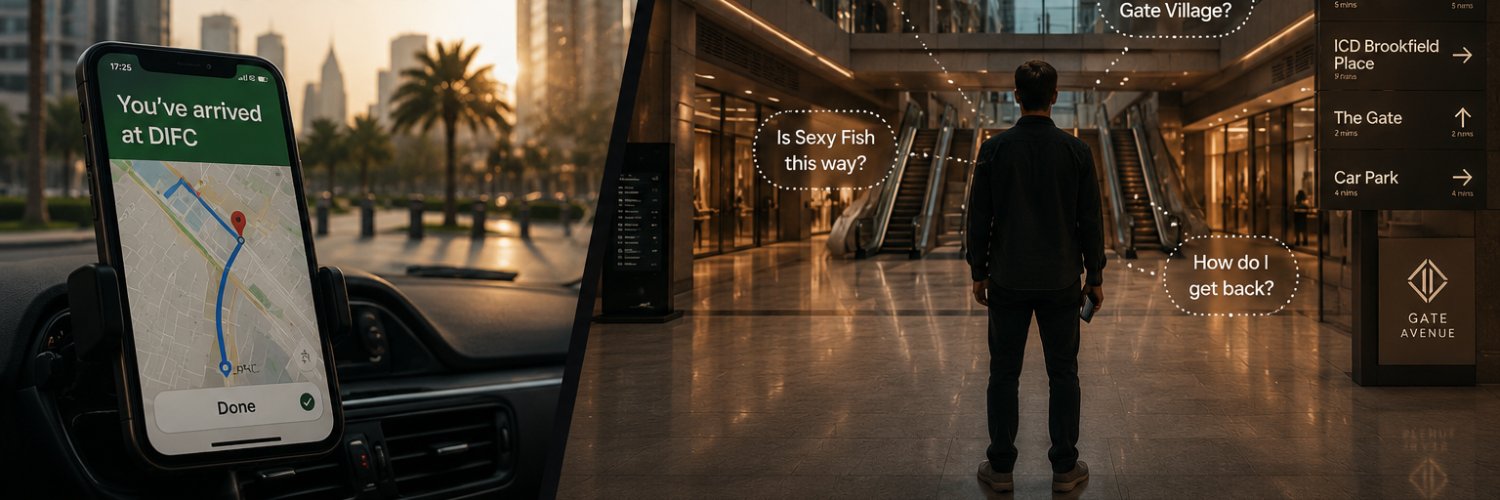
Yet the moment we step inside complex environments, movement becomes signs, memory and guesswork.
I'm building what comes next.
Thinking in public as I do.
Sometimes the most valuable outcome of an event isn’t who you meet.
It’s the one idea that reframes how you see your own work — in this case, moving from navigation to full customer journey ecosystems.
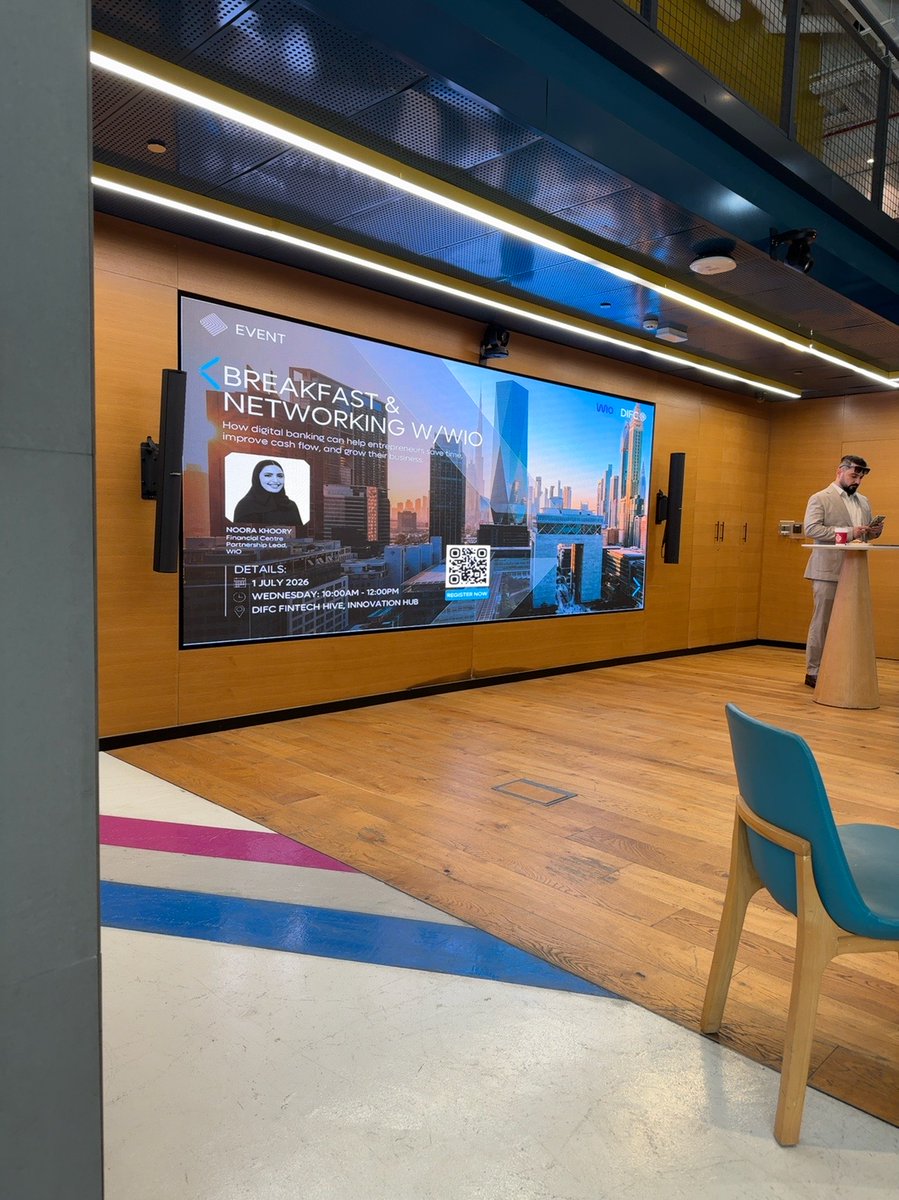
One conversation at a @DIFC breakfast w/ @WioBank shifted the lens.
Indoor navigation is best when arrival, discovery, partner benefits, and transaction become one continuous experience.
That’s when partnerships stop being integrations and start becoming part of the journey.
Every founder hopes their work gets noticed.
Today, Orb Tech was featured in this week's @RoundFunded Demo Day by @ArtemLuko.
Grateful for the opportunity to put our work in front of more investors and continue the conversations.
Back to building the pilot.
#Startup #Fundraising #AI #BuildInPublic
Proud to see Orb Tech featured in this week's @RoundFunded Demo Day.
Thank you to @ArtemLuko and the Round Funded team for helping connect founders with investors.
We're building AI-powered indoor navigation for complex indoor environments — and we're just getting started.
Street View quietly transformed how we navigate and remember cities.
Applying that same continuous understanding to indoor environments feels like the obvious next step.
Google Street View changed how we understand cities. You could drop in anywhere and instantly feel oriented.
Indoor environments still lack that continuous, explorable memory. Malls, districts, and large venues remain fragmented the moment you step inside.
The reliance on screenshots, staff, and memory tricks reveals how much the current systems are missing. People have simply learned to work around the gaps.
When navigation fails, people turn to workarounds: static directories, staff assistance, screenshots of maps, and memorised routes.
These are not solutions. They are adaptations to fragmented systems.
Parking recall remains one of the most consistent behavioural pain points. People photograph signs, share locations with others, or simply walk until they recognise something familiar.
The environment rarely helps them remember where they left the car.
In large environments, 61% of people report recurring difficulty with navigation, parking recall, or simply finding what they came for.
Many describe these moments as normal. They have adapted rather than solved them.
The hardest disorientation isn’t in completely new places.
It’s when a familiar environment has quietly shifted around you — and nothing matches your memory.
Spatial intelligence bridges that exact gap.
Nighttime pickup zones at airports or malls look identical — same curb, same lights, same circling cars.
Yet your ride is never where you expect.
Spatial intelligence quietly understands the precise, chaotic choreography of arrival and departure.
Large venues empty out after events.
The wide hallway that felt natural on arrival becomes a quiet maze of closed doors and dimmed lights on the way out.
Spatial intelligence remembers the return path through spaces that have completely changed.
You step off the train exhausted.
Construction walls, temporary signage, and closed exits turn a familiar station into unknown territory.
True spatial systems read the live environment and your intent — not the outdated map.
Airports are built to move millions, yet they still break basic orientation for almost everyone. This is where spatial intelligence should feel invisible and obvious at the same time.
Airports compress time and space until nothing feels familiar. Gates change. Crowds surge. Your connecting flight appears in a terminal you didn't anticipate.
Spatial intelligence holds continuity so the environment itself becomes the guide when every sign conflicts.
Complex indoor spaces break static maps instantly.
Crowds shift. Levels change. Intent evolves as you walk.
The right intelligence draws a living path instead — one that adapts without pulling you out of the moment.
Finding your car again shouldn’t require retracing steps or taking photos. The environment itself should hold that memory for you.
Spatial intelligence makes the return journey feel obvious.
Most systems assume the world stays still. In reality it never does.
People move. Lights change. Cars reposition.
Spatial intelligence stays coherent inside that constant motion.
The handoff from inside to outside is where most navigation quietly fails.
Continuity across environments is harder than it looks — and more important.
You leave the building and the instructions end.
The outdoor lot looks nothing like it did hours ago.
Spatial intelligence carries continuity across that threshold — remembering where you came from even when the environment has shifted.
We’ve seen this moment in stories for years.
The real work is building systems that let anyone move with that same quiet certainty through the messy, changing places we actually live in.
May the 4th be with you
In the wreckage of the 2nd Death Star, Rey didn’t follow a perfect map. She moved through chaos — flooded ruins, shifting waves — and still found what she needed.
Spatial AI is exactly that: the ability to discover + navigate inside environments that refuse to stay still.
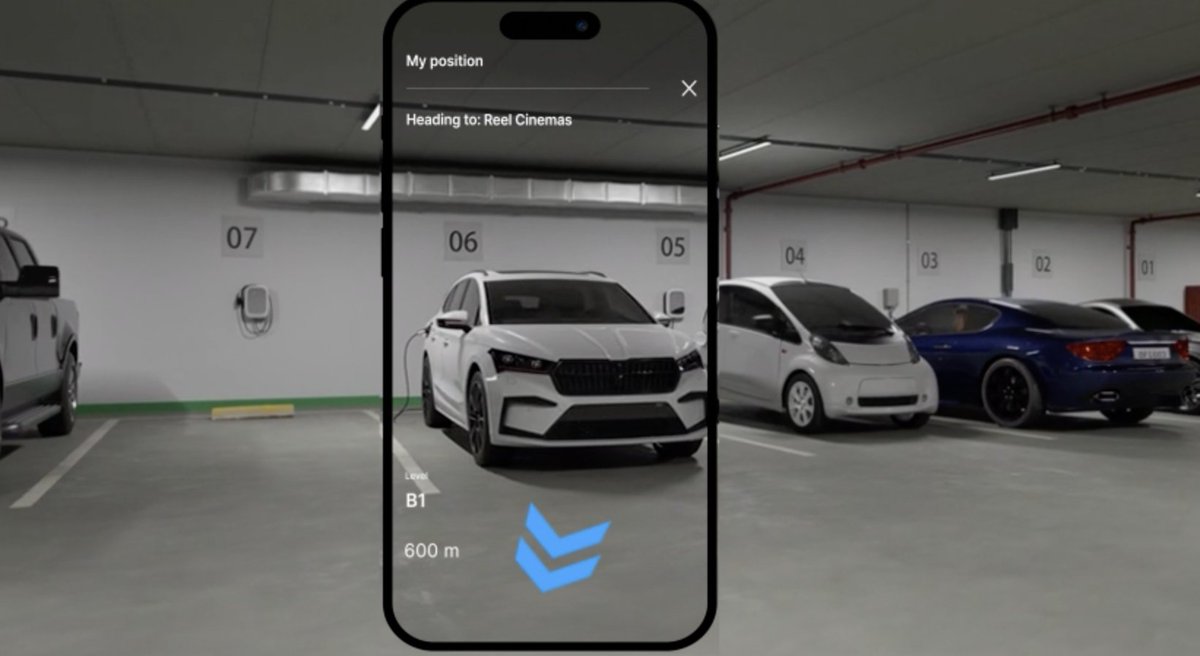
Parking garages expose the limits of current systems.
Identical levels.
Moving cars.
Constant small changes.
True spatial intelligence detects your vehicle’s position, understands intent, and quietly overlays direction without demanding extra attention.
We’ve optimized AI for screens long enough.
The physical world deserves intelligence that lives inside it — aware of motion, context, and human presence. That’s where the real leap happens.
Parking garages expose the limits of current systems — identical levels, moving cars, constant small changes.
True spatial intelligence detects the vehicle's position, understands intent, and quietly overlays direction without demanding extra attention.
Spatial intelligence turns chaotic real-world movement into something intuitive.
No more fighting the environment. The system works with it — reading presence and flow so guidance feels natural instead of imposed.
In complex indoor spaces, the right intelligence doesn’t show a static map.
It draws a natural path — sensing crowds, levels, and shifting intent as you move.
This is ambient spatial awareness in the physical world: technology that disappears into the experience.