Fresh off the press! Another #DataAdventure. This time we're looking at a method to estimate errors on #machinelearning model probability predictions.
https://t.co/yHotfsCxWy
New #DataAdventure. Check it! Learn about real-world predictive modelling. Sending people to jail. #Python, #MachineLearning, and confidence in your models.
https://t.co/MCiytRRQid
If you don't remember retweeting this, it means that you have leaked your Twitter Access Token in a public GitHub repository. Not the best practice, right?
For details, read our latest article: https://t.co/6WBC6DRNDS
#InfoSec#CyberSecurity#GitHub
I wrote out some thoughts on how to make this moment a real turning point to bring about real change––and pulled together some resources to help young activists sustain the momentum by channeling their energy into concrete action. https://t.co/jEczrOeFdv
"I believe that humanity will beat this pandemic, but only when most of the population is vaccinated," writes Bill Gates in The Economist https://t.co/0wgK9Y6AUe
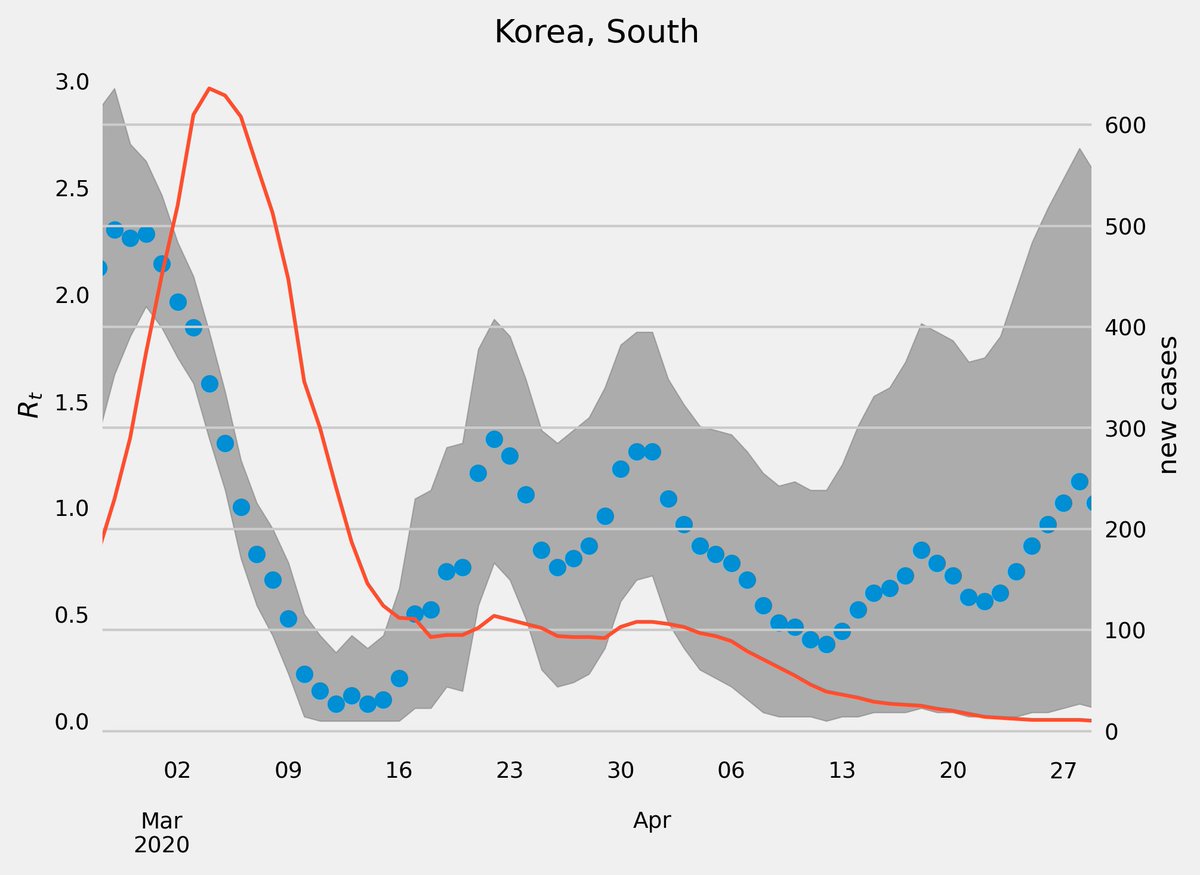
A new data adventure: Working with #COVID19 data using @pandas_dev and #python, and going down the dangerous road of fitting the data with @statsmodels and estimating R0. https://t.co/0PdrW5TBPZ
Credit to Pope Gregory’s Jesuit priests for figuring out the Julian calendar needed updating - before telescopes, and while Christendom was sure the Sun orbited Earth.
Fifty years later, Jesuits would prosecute Galileo for saying (and flaunting) that Earth orbits the Sun.
By 1582, the Julian calendar, with a Leap Day every four years, had accumulated TEN extra days relative to Earth’s orbit. So Pope Gregory jump-started his new and exquisitely accurate calendar by canceling 10 days that year, in which October 4 was followed by October 15.
The 1582 Gregorian update to the Julian Calendar prescribes: The century years 1600 1700 1800 1900 & 2000 are all divisible by four, but 1700 1800 1900 were not leap years, yet 1600 & 2000 were. And 2400 will be.
On February 29, 2000 most had no idea how rare that Leap Day was.
The Leap Day alone overcorrects the calendar, requiring we remove a Leap Day every century year.
But that under-corrects the calendar, requiring we put a Leap Day back in, every four centuries.
Behold the Gregorian Calendar.