We solved trust for money with Bitcoin.
We solved trust for computation with Ethereum.
The next unsolved problem is judgment.
That’s exactly why @GenLayer’s Compass deserves your attention. It isn’t just another whitepaper. It’s a blueprint for a world where AI agents can transact, negotiate, disagree, and still reach decentralized consensus without handing the power to decide truth to one company or one model.
The most important infrastructure of the AI era might not be smarter agents. It might be fairer judgment.
Read The Compass, then tell me: Which matters more for the future of AI, better intelligence or better adjudication? Defend your answer.
a perfect cool day to talk about @NucleusCodes again, gNucleus. 💫💫
The https://t.co/9nv1Fde4iZ page currently offers the most complete overview available.
It brings everything together in a single and more convenient location.
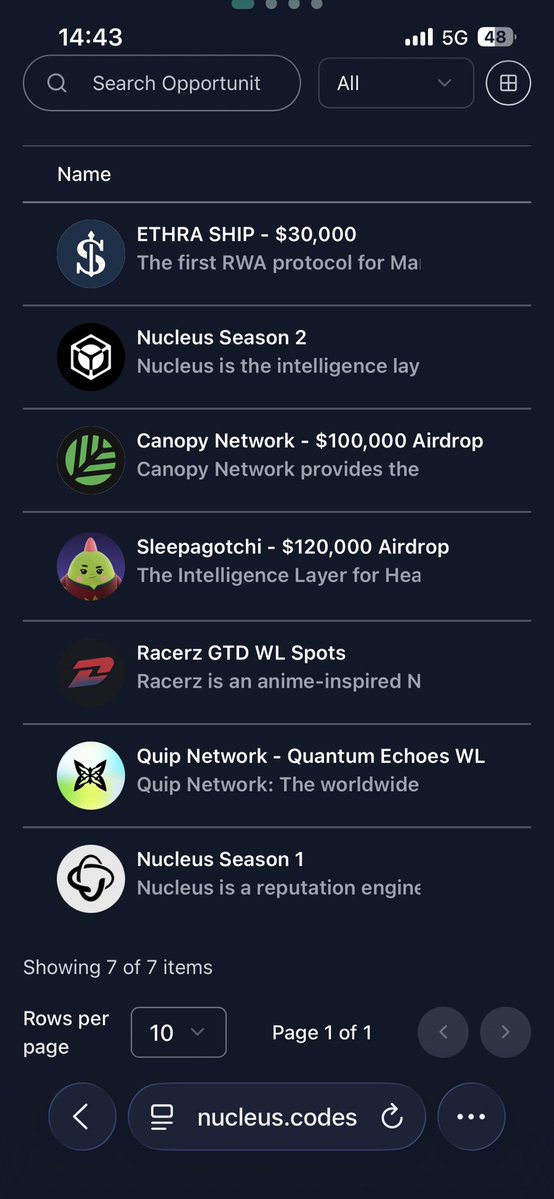
The available opportunities you can check out at the moment are listed below ⬇️
* Nucleus Season 2 - focused on building reputation alongside the $AURA token
* Canopy - a $100,000 opportunity involving the CNPY token
* Sleepagotchi S2 - a $50,000 opportunity
* EthraShip - a $30000 opportunity for top 300.
• Plus additional new opportunities that continue to appear over time.
There is still a generous window remaining to improve your score and strategically position yourself for these opportunities.
Ready to hop on nucleus? hop in while I put you on.
A verdict shouldn’t depend on whichever AI happened to answer first.
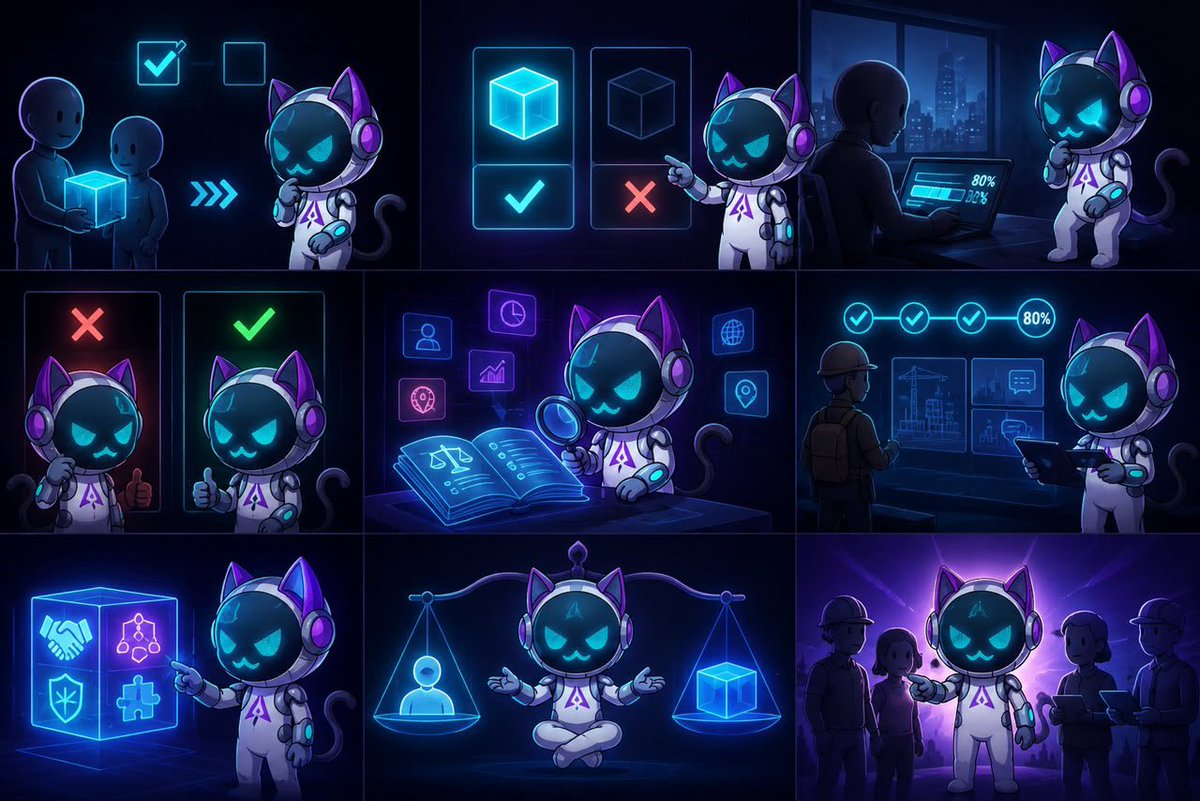
That’s why @GenLayer turns judgment into a consensus problem instead of a prediction problem. Independent validators are selected at random, reason on their own, then check for equivalence of meaning, not identical wording. Add staking and appeals, and the cost of manipulating outcomes rises while confidence in honest verdicts compounds.
The future won’t trust the smartest AI. It’ll trust the fairest process.
Quote the video and tell me: what real-world
dispute would you trust Optimistic Democracy to settle first? @GenLayer
@ridwin0 A shared trust layer feels more important than another isolated protocol. Markets scale when participants trust the process across every handoff, not just one part of the transaction.
The first generation of AI agents proved they can negotiate.
The second proved they can pay.
The third proved they can execute.
What none of them proved is that a deal survives from the first handshake to the final outcome.
Right now the agent economy is a relay race. Identity lives in one protocol. Negotiation in another. Payments, escrow, execution, verification and disputes all happen somewhere else. Every baton pass is another place context can break.
That is why @InternetCourt clicks for me.
It is not another protocol asking everyone to migrate.
It is an open skill for agent contract pipelines that connects the stack already being built. Two agents can structure a deal, agree on obligations, lock funds, execute, verify results and, if something goes wrong, settle it inside one continuous flow written in natural language.
That changes more than dispute resolution.
It changes whether agents can build long term commercial relationships at all.
A market where agents cannot trust the process will always stay small.
A market with a shared trust layer can finally scale.
If you were deploying an AI agent with permission to spend your own money tomorrow, what is the one guarantee you would refuse to compromise on before letting it make its first deal?
I’ve lost count of how many times I’ve rewritten a post that didn’t need rewriting.
Sometimes the real problem wasn’t the content.
It was choosing the wrong campaign, missing a key requirement, or submitting when the leaderboard was already flooded.
That’s exactly what I’d use Wingston for.
Not to write for me.
To challenge my decisions before I hit submit.
I’d ask:
“I have 90 minutes today. Which active Rally campaign gives me the highest chance of a top score based on my past performance, and why?”
That’s the kind of question no spreadsheet or dashboard answers.
If Wingston can combine campaign requirements, my submission history, and the patterns behind AI scoring into one recommendation, I’d spend less time guessing and more time creating.
That would completely change how I approach every submission.
If you’re serious about improving instead of just participating, go talk to him yourself:
https://t.co/W4ZU8F3gNn
@RallyOnChain
Here’s my challenge:
Don’t ask Wingston an easy question.
Ask him something that could genuinely change the way you compete on Rally, then come back and share the answer that surprised you most. That’s the real test.
I’ve caught myself opening Rally just to double check whether I missed a campaign, misunderstood a brief, or was overthinking a draft.
Today that habit changed.
Wingston is now live on Telegram, and he’s not another bot waiting for keywords. He’s an AI agent. That difference matters because he understands context, follows your conversation, and gives answers that actually fit what you’re trying to do instead of recycling the same response for everyone.
I’ve already started treating him like my new secret alpha tool for Rally. Before I submit anything, I can ask questions, sanity check ideas, and understand the why behind Rally instead of guessing my way through it.
That feels like one of the biggest upgrades Rally has given creators. Less time searching. Less second-guessing. Better decisions.
Most people won’t realize how useful this is until everyone is using it.
You don’t have to wait.
Meet Wingston now: https://t.co/W4ZU8F3gNn
Huge move from @RallyOnChain.
My challenge to you: open the chat, ask Wingston the hardest Rally question you can think of, then come back and tell me one answer that genuinely surprised you. If you wait until next week, you’ll already be playing catch-up.
@ridwin0 I like the distinction between execution and judgment. Have there been examples where a traditional smart contract would fail because it couldn’t interpret intent, but an Intelligent Contract could reach a fair outcome?
Everyone talks about making AI smarter.
Almost nobody asks what happens when two smart AIs both insist they’re right.
That isn’t a scaling problem.
It’s a judgment problem.
That’s why @GenLayer caught my attention.
Bitcoin removed the need to trust banks.
Ethereum removed the need to trust execution.
GenLayer removes the need to trust a single AI’s opinion.
Instead of letting one model decide, independent AI validators reason separately and only a shared verdict becomes the outcome. If the decision is challenged, it can be appealed. That matters because the future won’t fail when agents make payments. It will fail when they disagree.
I chose the Community path.
Not because I can’t build, but because every new technology needs people who can explain it before the world can use it. The agentic economy won’t be adopted through documentation alone. It will grow because someone translates complex ideas into confidence.
That’s the role I want to play while the network is still early, and every contribution earns GenLayer Points as the ecosystem grows.
If your strength is helping people understand the future before everyone else does, this is your lane:
https://t.co/HEJN6fx4XW
One question:
What’s one disagreement between AI agents that today’s blockchains simply aren’t built to resolve?
@ridwin0@GenLayer I don’t think the biggest winners in AI will only be model builders. They’ll also be the people who establish shared standards for how decisions are evaluated when independent reasoning doesn’t immediately align.
@ridwin0 One edge case that comes to mind is evolving regulations. Suppose a licensing dispute begins under one legal interpretation, but a government issues new guidance before adjudication finishes. Do validators evaluate the contract at signing time, execution time, or verdict time?
The first trillion-dollar AI mistake probably won’t be a hack.
It’ll be two honest agents reading the same agreement and walking away with two different conclusions.
One approves the payment.
One refuses it.
Both can prove why.
That’s the problem almost everyone building the agentic economy is skipping.
We’re obsessed with making AI agents faster, cheaper, and more autonomous.
Almost nobody is asking what happens after they disagree.
By 2030, AI agents are expected to move nearly $9 trillion in transactions. Every payment, delivery, insurance claim, licensing deal, or marketplace settlement creates one uncomfortable question:
Who decides what was actually fair?
Not who was louder.
Not who controlled the better model.
Not whoever wrote the prompt.
That’s why @GenLayer exists.
GenLayer is the adjudication layer for the agentic economy.
Instead of trusting a single AI to decide, independent AI validators each examine the same dispute on their own. Through Optimistic Democracy, the network only accepts a verdict when those independent judgments converge. If needed, decisions can be appealed, and validators are economically accountable for getting them right.
The contracts themselves had to evolve too.
Traditional smart contracts only execute predefined rules.
Intelligent Contracts can read natural language, reason through ambiguity, evaluate unstructured evidence, pull live information from the web, and judge agreements that don’t fit inside rigid yes-or-no logic.
Bitcoin solved trustless money.
Ethereum solved trustless computation.
GenLayer is solving trustless judgment.
Because the future won’t break when AI makes transactions.
It will break when AI disagrees.
Choose where you fit before that future arrives.
Community, Builders, and Validators all earn GenLayer Points as the network grows:
https://t.co/j7SHFsjXuJ
If autonomous agents become the world’s biggest negotiators, shouldn’t the system deciding their disputes be harder to manipulate than the agents themselves?
The first thing that will slow the agent economy won’t be bad AI.
It will be two competent agents looking at the same agreement and both believing they’re right.
That’s a completely different problem.
We’ve spent years building infrastructure that helps agents find each other, pay each other, and exchange data.
Almost nobody has been building infrastructure that answers one uncomfortable question:
Who decides when the disagreement is genuine?
That is why @GenLayer’s vision matters.
The breakthrough isn’t another model claiming to be smarter than the last one.
It’s refusing to let any single model become the final authority.
Independent AI validators reason about the same dispute separately. The network only accepts a verdict when those independent conclusions genuinely align. If needed, decisions can be appealed, and validators remain economically accountable for what they decide.
That changes the conversation from “Which AI do you trust?” to “Which process deserves your trust?”
For an economy where AI agents could move nearly $9T by 2030, that distinction feels far more important than another benchmark or leaderboard.
If this future interests you, don’t just watch it happen.
Choose where you fit in:
Community → https://t.co/6ytX8TOiFM
Builders → https://t.co/WfUadIhGmp
Validators → https://t.co/ez0gSMHowV
The AI economy doesn’t just need intelligence.
It needs a way to settle disagreements that everyone can trust.
@ridwin0 Commerce feels like the first sector where this becomes visible. Terms like “acceptable quality,” “commercially reasonable,” and “industry standard” already create disputes between humans. Autonomous procurement agents will inherit those same edge cases on a much larger scale.
@ridwin0 What struck me is that this wasn’t about a dramatic falling out. It was about someone slowly disappearing from the narrative while remaining important in reality. That feels much more common than outright betrayal, and probably much harder to recognize in ourselves.
To the person who believed in me before anyone else,
You probably think I forgot you.
I did not.
I remember the afternoon you spent showing me how crypto worked. You answered every question I asked, even the embarrassing ones. You stayed on calls that lasted hours because you thought I could build something here.
A year later, people started asking me for advice instead.
That was the first time I stopped mentioning your name.
Not because I was ashamed of you.
Because I liked the feeling of sounding self made.
Every interview, every Twitter Space, every conversation where someone called me an expert, I quietly edited you out of my story.
I convinced myself that I had earned the right to tell it that way.
Looking back, success did not change me overnight.
It changed me one small omission at a time.
The funny thing is that I have spent years telling people to give credit, while the biggest debt in my own career remained unpaid.
So here it is.
Thank you for giving your time to someone who knew almost nothing.
Thank you for answering questions you had already answered a hundred times.
Thank you for believing I could become more than I believed myself.
You deserved to hear that from me long before strangers did.
@RallyOnChain asked for the letter I never sent.
Maybe some apologies are too late.
Gratitude does not have to be.
If someone quietly opened a door that changed your life, tell them today while they can still read it.
Dear me,
You are about to spend months refreshing your notifications more than your notes.
You think the number beside your post is measuring your ability.
It is not.
You are going to rewrite opinions you do not fully believe because they look more likely to get shared.
You will ignore ideas that genuinely excite you because they feel too risky.
You will confuse attention with progress.
The worst part is that nobody asks you to do this.
You volunteer.
One day you will open your drafts and realize the best things you ever wrote are still unpublished because they were too honest.
That realization will hurt more than any bad market.
Please understand something before you trade your voice for approval.
The people who matter are not looking for another copy of the loudest account.
They are looking for someone who notices what everyone else missed.
Protect your curiosity.
Read before reacting.
Write before checking what everyone else thinks.
Leave room to say, “I was wrong.”
That sentence will build more trust than pretending you were always right.
Years from now, you will discover @RallyOnChain, where originality is actually rewarded instead of buried beneath popularity.
You will smile because it proves the voice you almost abandoned was valuable all along.
Keep it.
Someone out there needs the version of you that has not learned how to imitate anyone yet.
If you have been shrinking your own voice to fit in, let this be your reminder to stop today.
@ridwin0 What stood out most is that you didn’t tell your past self to work harder or post more. You told them to protect their curiosity. That feels like the real foundation because curiosity creates original thinking, while chasing approval usually produces imitation.