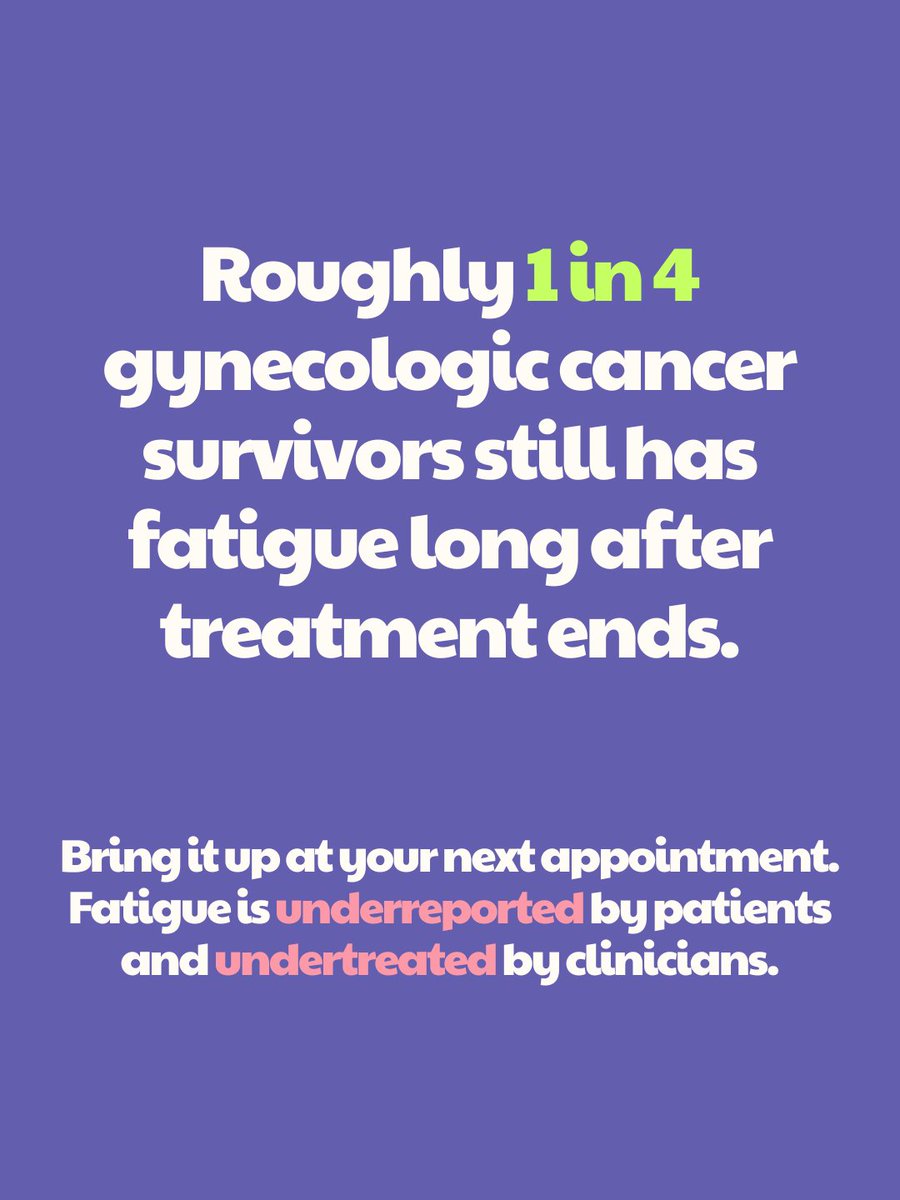
Roughly 77% of ovarian cancer patients experience cancer-related fatigue. It isn't ordinary tiredness, and sleep doesn't fix it. What does help: gentle movement, pacing, treating sleep and mood, and asking your care team to look for the cause. #OvarianCancer
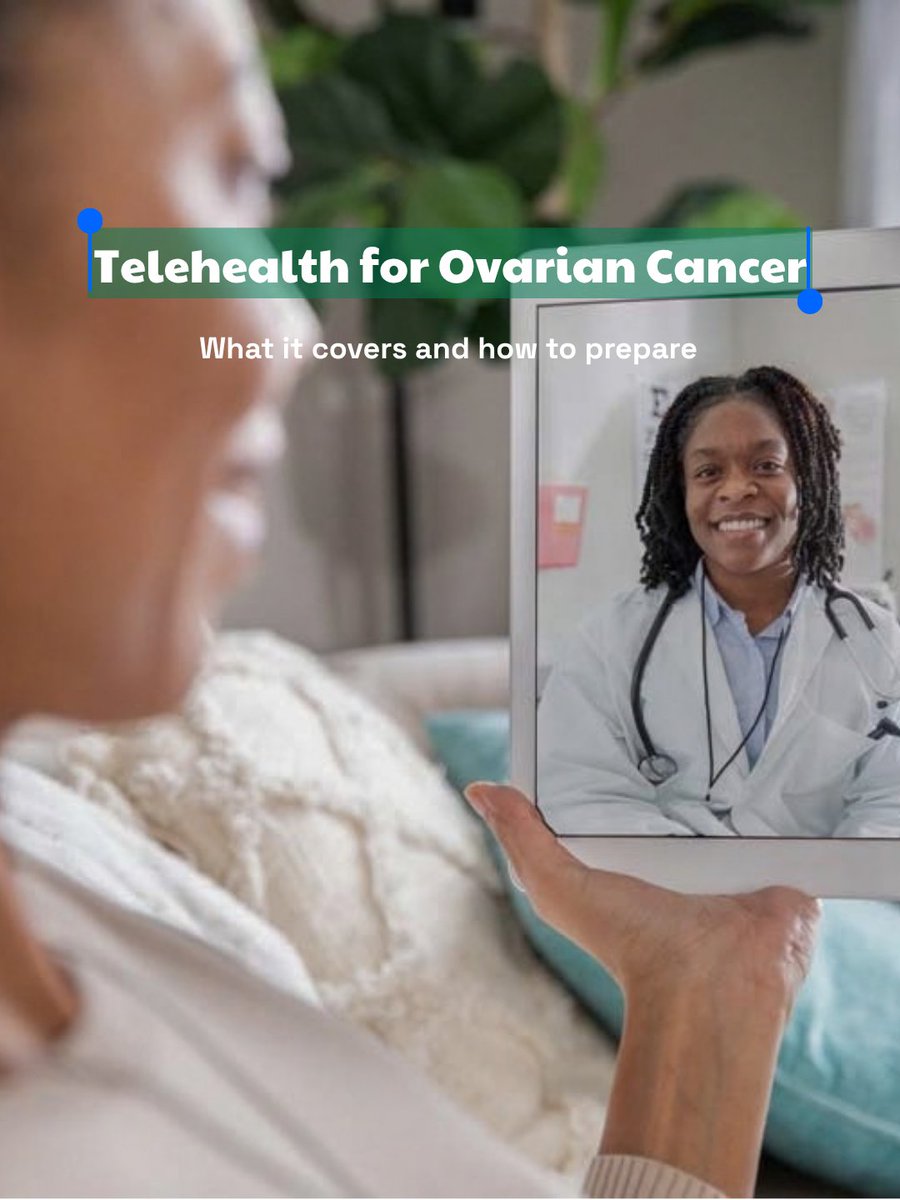
A 137-mile drive became a 17-mile one. What telehealth can (and can't) do for ovarian cancer patients, and how to prepare for your first virtual visit: https://t.co/Pa6sbb7Uod #OvarianCancer
Your Pap smear doesn't screen for ovarian cancer. Most women diagnosed have no family history. And the "silent killer" isn't silent.
11 myths that cost women time, debunked: https://t.co/fbjwHRuwsP #OvarianCancer#WomensHealth
"Why won't this bloating go away?"
"Am I being dramatic?"
"Doctor doesn't believe me, what do I do?"
Women with rare ovarian cancers often search for years before finding answers. You're not being dramatic. Start here:
https://t.co/69wIbrdqhy #OvarianCancer
"No evidence of disease" isn't the same as cured. And 3 in 4 patients whose charts say NED still believe they have cancer. What the phrase really means after ovarian cancer: https://t.co/iWkJj0Kf9U #OvarianCancer#NED
You get maybe fifteen minutes — while still absorbing the diagnosis — to make fertility decisions that can't be undone.
Nobody should do the hardest math of their life at that moment.
Newly diagnosed and want children? Ask about fertility preservation before surgical planning.
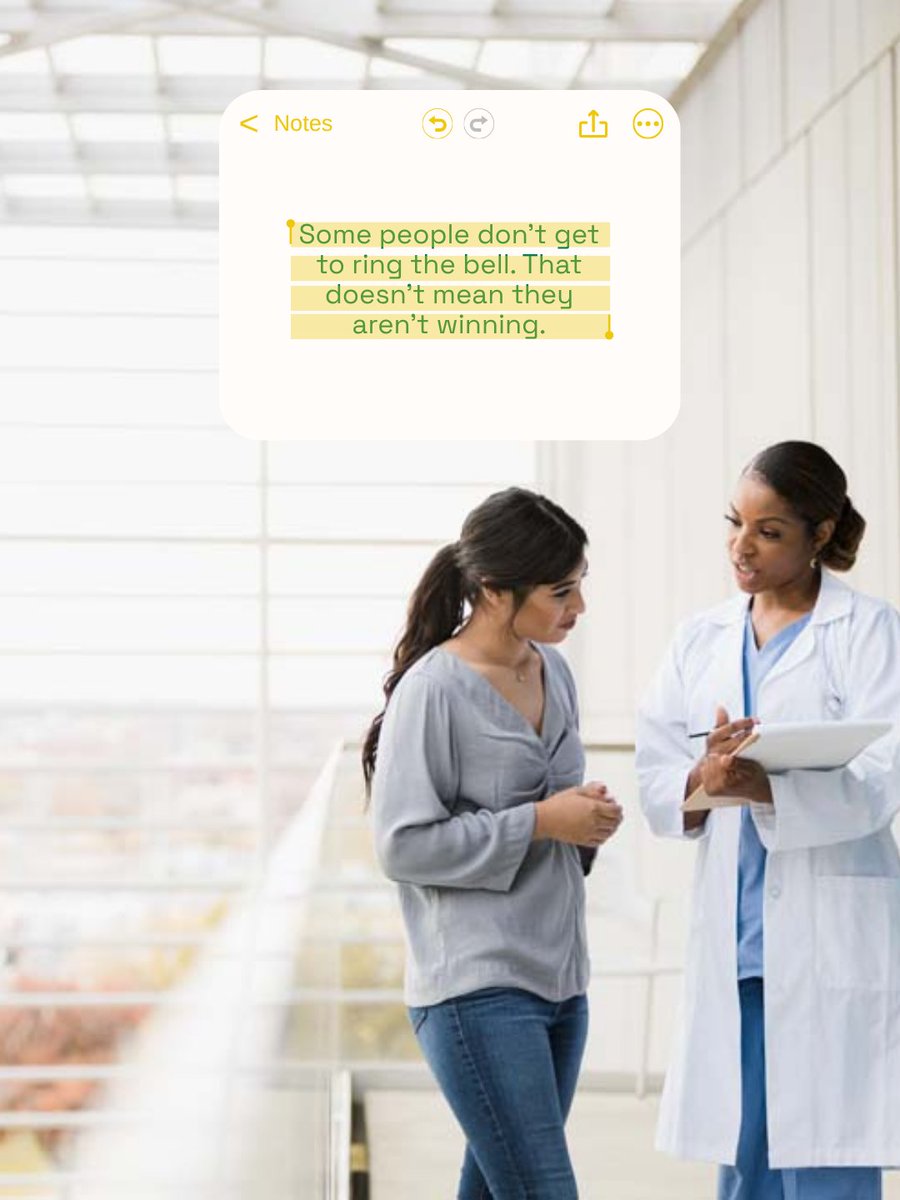
At the end of chemo, most hospitals let you ring a bell.
For many women with low-grade serous ovarian cancer, there's no last day. Just treat, scan, wait, recur, treat again.
You didn't miss the bell. You were handed a different kind of race.
#OvarianCancer is usually caught late. Previvors, women with inherited risk who've never been diagnosed, get something almost no patient does: time to move first.
What that looks like in practice: https://t.co/tAwZrNTRB4
"Symptoms are often dismissed or misdiagnosed as other benign conditions, and that delay leads to more advanced disease." —our founder Emily Campbell
This #OvarianCancerAwarenessMonth, she explains how to close the diagnostic gap. https://t.co/rA0HDlYC1Z
"It's probably just stress."
"You're too young for that."
Three years later: Stage 3.
Weeks of bloating, early fullness, or urinary urgency? Ask about ovarian imaging. At any age.
#OvarianCancerAwarenessMonth#StandUpToCancer
Today, on the 3rd annual LGSOC Awareness Day, we're recognizing the power of community in helping people navigate life with low-grade serous ovarian cancer (LGSOC).
The LGSOC Resource Guide was developed to help make trusted information and support easier to find, bringing together resources from advocacy organizations across the ovarian and LGSOC cancer communities to a single destination for patients, care partners, and families.
Download the Guide from the LGSOC Awareness Day website: https://t.co/Dvq2DLUDvp
@staarovarian@NotTheseOvaries Sandy Rollman Ovarian Cancer Foundation @ovarcome@ocrahope@NOCCNational@UniteforHER Sharsheret: The Jewish Breast & Ovarian Cancer Community @SHARECancerSupt@GYNCancer@WOCCnews
#LGSOCAwarenessDay #LGSOC #OvarianCancer #RareCancer #PatientAdvocacy
Today is Low-Grade Serous Ovarian Cancer (LGSOC) Awareness Day.
In a survey, 99% of patients said they had never heard of low-grade serous ovarian cancer before they were diagnosed with it.
Share this. Someone in your feed may need to see it. #LGSOCDay
She was 34. The bloating? IBS. The fatigue was the new baby. The pain was stress.
Each explanation was reasonable. But the reasonable answer & the rare one look identical from outside. Age is not a screening tool. You're allowed to ask twice.
LGSOC Day: https://t.co/YZWA8TzTGy
"Rare" isn't a fact about a cancer. It's a funding decision.
Studied less → fewer papers → fewer trials → thin evidence → "too rare to prioritize."
LGSOC Awareness Day is in two days. 100% of what you give goes to research:
https://t.co/YZWA8TzTGy
https://t.co/VPSOzj2dAs
Low-grade serous isn't a milder ovarian cancer. It's a different disease.
It recurs. It resists platinum chemo. It hits women in their 30s and 40s.
Her treatment didn't fail her. It was never designed for her.
Sept 9 is LGSOC Awareness Day: https://t.co/YZWA8TzTGy
In the literature, low-grade serous is the asterisk. The trial arm she didn't qualify for.
Footnotes are where science puts what it gets to later. She doesn't have later.
Sept 9 is LGSOC Awareness Day. Move her into the body text.
It takes 3 years to get an accurate low-grade serous ovarian cancer (LGSOC) diagnosis. It's a long time to be right about your own body and have nobody agree with you.
This Sep 9 is #LGSOCDay. Help fund the research to shorten the 3-year time frame: https://t.co/VPSOzj2dAs.
A Pap smear does not screen for ovarian cancer. It checks the cervix, not the ovaries.
There is no screening test. Symptoms are the early warning system: bloating, feeling full fast, pelvic pain, fatigue.
September is #OvarianCancer Awareness Month. Learn the signs.
Ovarian cancer deaths are down 43% since 1976. That came from research, not luck. September is Ovarian Cancer Awareness Month, and Sept 9 is LGSOC Awareness Day. Eight ways to keep that number falling: https://t.co/V4ggOCUZGX #OvarianCancerAwarenessMonth
Not benign. Not quite malignant. Borderline ovarian tumors sit in the gray area between — and they tend to appear a decade earlier, often during a woman's reproductive years.
There are six types. Most people have heard of two.
#OvarianCancer#WomensHealth