@RicoFuentes78@Richterwrecker@WeAreAustinTV His positioning is terrible that’s why he’s all over the place, except where he needs to be.
5 goals out of a 12m dollar signing, talk about underperforming
@JorgeIturralde@TMuk_news Al rato sale el documental sobre el dinero, lavado en la época de Rodolfo Borrell… como un jugador de la segunda España va a valer 12 millones no mames
@WeAreAustinTV That guy is terrible, I’m almost certain we have better coaching talent here at the Academy level. Kinda, makes you wonder how he gets jobs. 🤣
Last year, Austin made the decision to turn off its Flock camera network following a public pressure campaign built on misinformation about how the technology works. This weekend showed what that tradeoff can look like.
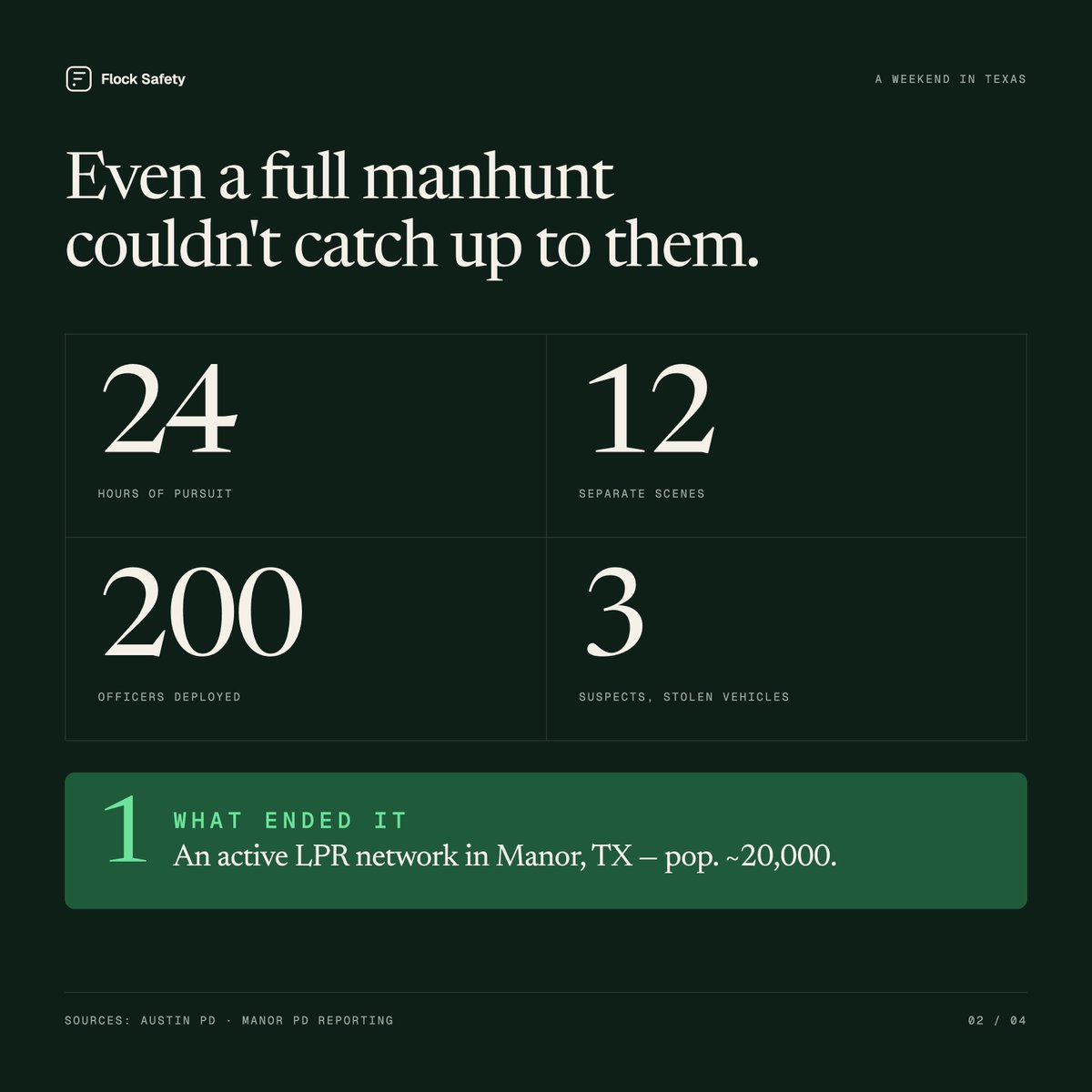
For nearly 24 hours, three suspects moved through Austin in stolen vehicles, carrying out a shooting spree across 12 separate locations. People were shot. Homes, apartment buildings, businesses, and fire stations were hit. Robberies and additional car thefts piled up as the suspects kept moving.
The response was massive. 200 officers, helicopter support, K9 units, a full manhunt. Even with all of that, the suspects stayed ahead of law enforcement. Then they crossed into Manor, Texas.
Manor is a city of roughly 20,000 residents with a fraction of Austin's resources. What Manor has is an active license plate recognition network and the community support to keep it running. Manor PD located the suspects almost immediately. The spree ended. Residents stayed safe.
We're grateful for the officers in both cities who worked to bring this to a close, and we're glad it's over. Austin is a great city full of people who deserve to feel safe in their neighborhoods. Our hope is that stories like Manor's can help inform the conversation about what these tools actually do, and what communities lose when they're taken away.