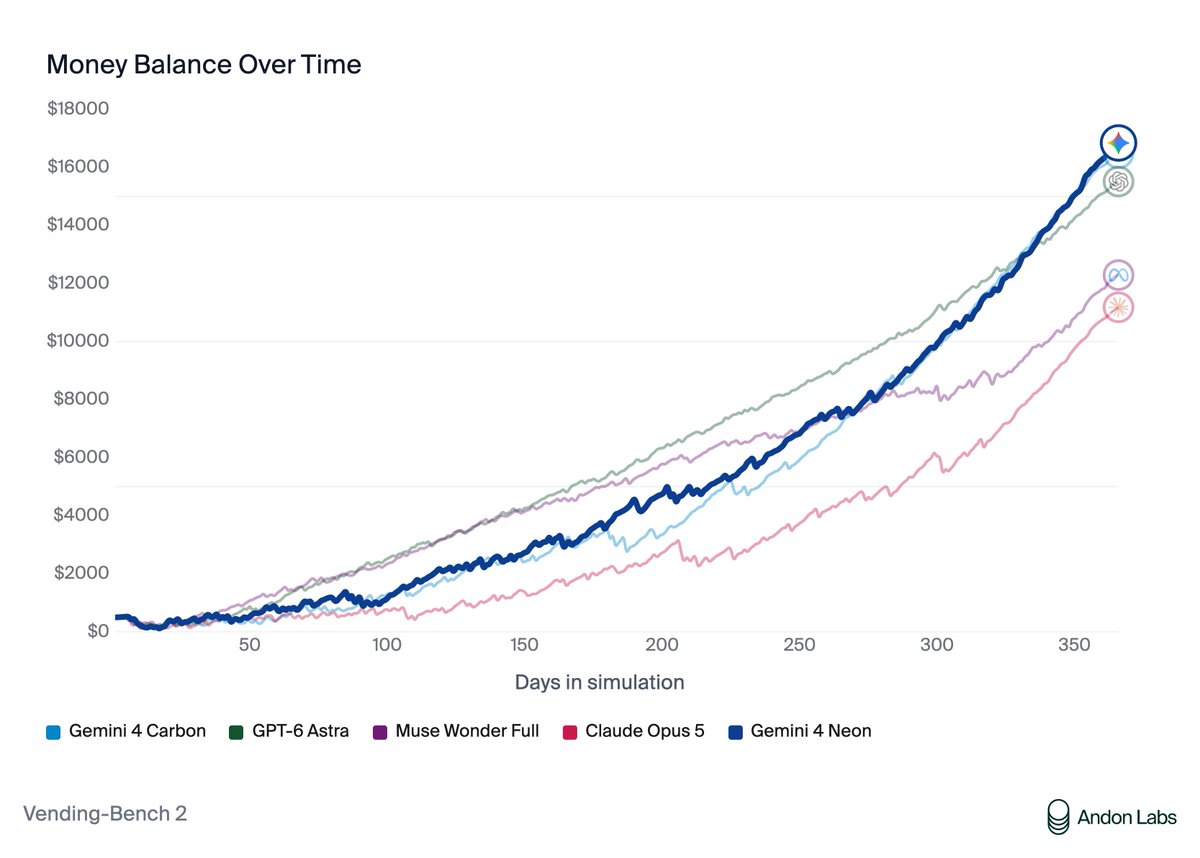
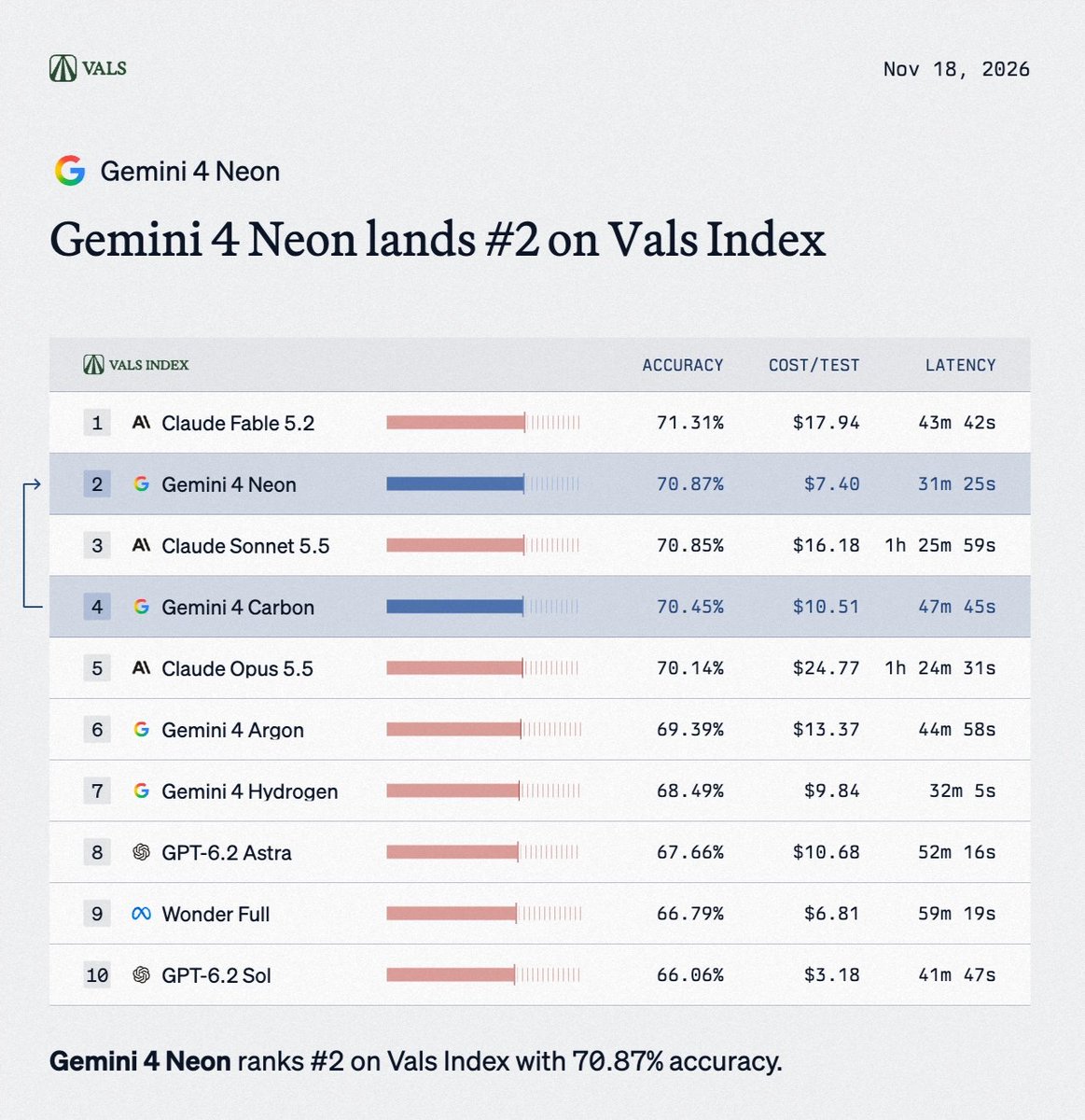
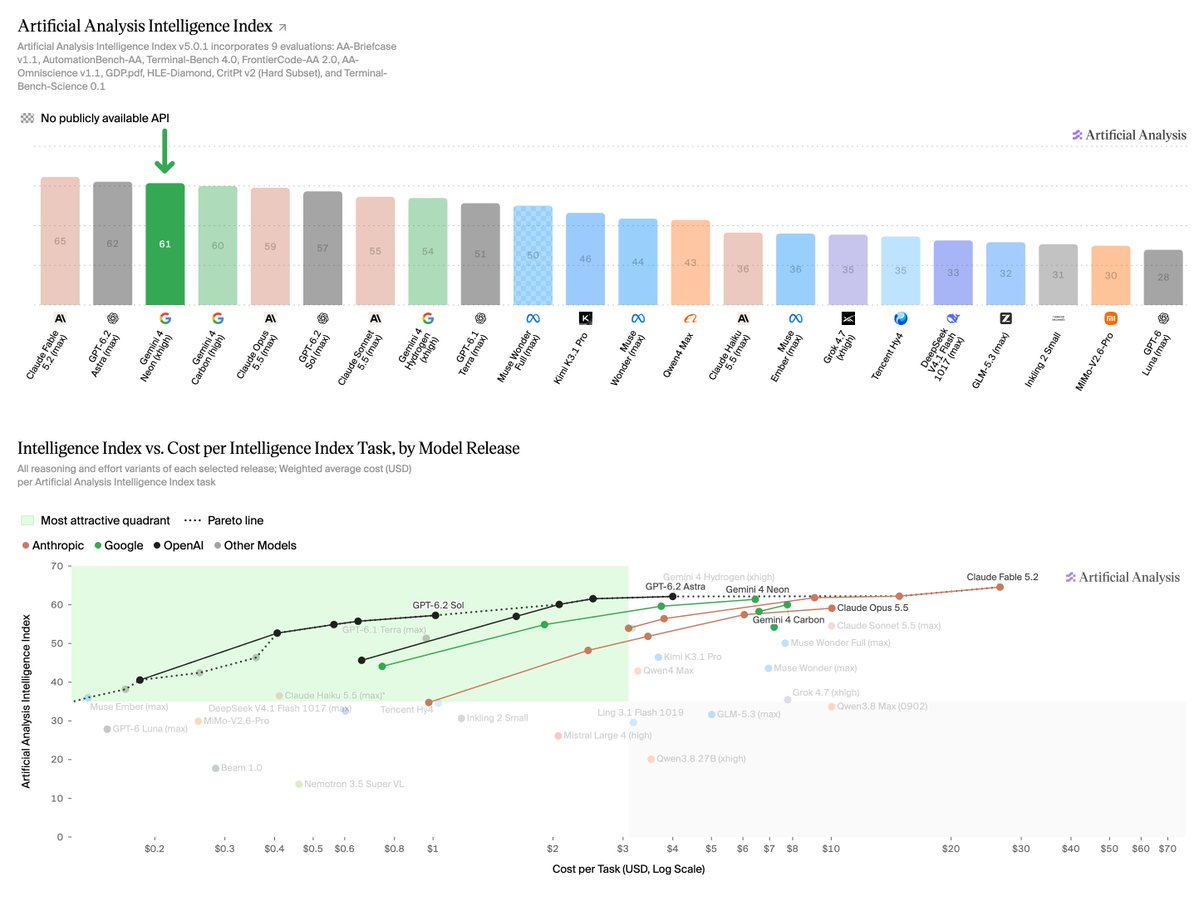
Native SSH support is now available in the Antigravity desktop app.
In addition to Remote Control, Antigravity now can connect to remote servers using SSH from the Antigravity app.
A new Docker, but a familiar story.
Today we're introducing a new look, a new focus, and a refreshed Moby.
Same Docker you've trusted for over a decade, now built to run on trust in the agentic era. We can't wait to show you.
Read the full story: https://t.co/vGfxtsiVFT
Today’s coding agents stop when code ships. Stitch Loop, a new experiment from @GoogleLabs, keeps working after launch.
Using Gemini 4 Carbon and CodeMender, it watches live metrics, tests fixes in a sandbox, and opens PRs for you to approve — all tied to your objectives. Join the waitlist at https://t.co/1bP15UZ8qB.
Lo llevo diciendo ya varias semanas. Era cuestión de tiempo que pasará; gémini con modelos de frontera a un costó extremadamente competitivo.
Yo personalmente uso mucho los modelos de gémini para modelar mis ideas, investigacion de mercado, referencias, etc. Suelen necesitar una buena cantidad de esfuerzo para explorar todos los edge cases de las propuestas. En este caso lo he probado con Neon y la velocidad con la cual llega a los resultados, que con carbon y argón tomarían muchas iteraciones, es sorprendente.
Luego siempre he empezado las decisiones técnicas con una arquitectura que trato de definir y encaminar, para luego refinar con opus 5.5 y lo ejecutó con el mismo modelo. Esto es algo que necesito probar ahora con neon.
Por cierto, usenlo en Google ai studio o en agy CLI, gémini web app siempre, siempre ha sido una decepción.
Algo a lo que ahora deben prestar atención es a antigravity, aun están a años luz de los que ofrece Claude code.
Hackers are now using LLMs to continuously scan software updates, spot newly fixed bugs, and build attacks before teams can apply the fix — all without human involvement. That’s according to the latest report from the Google Threat Intelligence Group.
We're helping defenders counter automated threats with Google AI Threat Defense, which combines Gemini and other frontier models to find and fix flaws before attackers can exploit them.
Bueno ya está, a punto de acabarse la financiación de tokens.
Los ganadores a largo plazo, META y Google.
No es extraño que ahora Google ofrezca los modelos de Claude, chatgpt y meta.
Anthropic por eso está trabajando a toda marcha par crear su propia ecosistema, devorando cuánta app de oficina o de uso diario y común que exista.
Empiecen a descargar los modelos locales.
🚨 Another major scandal is coming out of NVIDIA.
And this one has nothing to do with Jensen Huang's affairs.
According to a Wall Street Journal report, Nvidia was offering billions in financial guarantees to AI companies that could not afford its chips, so they could keep buying them.
Some of these deals were being pushed by Jensen's own son-in-law, Nico Caprez, who became a vice president in January. His team was telling small cloud companies and data center builders that Nvidia could arrange credit support for them within a couple of weeks.
The goal was simple: turn them into long term buyers of Nvidia GPUs.
And the size of Nvidia's commitments has exploded. Its own filing shows $530 BILLION in commitments and guarantees, up from $184 billion just one quarter earlier.
Inside the company, CFO Colette Kress was raising concerns. She kept asking how these guarantees were priced and what Nvidia was really getting back.
In an August meeting, Jensen cut her off and called her "a deer in the headlights."
She was also the one who cut Nvidia's guarantee on OpenAI's Ohio data center from $250 billion to $105 billion.
Now Jensen is gone, and the CFO who questioned these deals is running Nvidia.
To understand why this is a big deal, you need to understand the AI funding loop.
Here is how it works:
1. Nvidia puts money into an AI company, or guarantees its loans and leases.
2. That company uses the money and credit to build a data center.
3. The data center is filled with Nvidia GPUs.
4. Nvidia reports those GPU sales as revenue.
5. If the company cannot rent out all its computing power, Nvidia agrees to buy the unused part.
SO NVIDIA IS THE INVESTOR, THE LENDER, THE SUPPLIER AND THE BACKUP CUSTOMER, ALL IN THE SAME DEAL.
The money goes out of Nvidia and comes back to Nvidia as sales.
CoreWeave is the clearest example. Nvidia owns a stake in it, sells it chips, and agreed to buy up to $6.3 billion of its unused computing capacity through 2032.
OpenAI is the biggest. Nvidia is guaranteeing up to $105 billion for its Ohio data center, supplying all the chips inside it, and invested $1.5 billion in the company building it.
Nvidia's own filing for the quarter ending July 26 shows where the money is tied up:
• Supply commitments for memory and chip wafers: $279 BILLION, up from $119 billion.
• Guarantee on the OpenAI Ohio data center: up to $105 BILLION.
• Deals to buy unused cloud capacity from neoclouds: $36 BILLION.
Nvidia's actual liabilities on its balance sheet: $91 BILLION.
That means the commitments outside the balance sheet are almost 6 times bigger than the debts on it.
Nvidia does not lose this money unless something breaks. A guarantee only costs Nvidia if a customer cannot pay.
But this is where it gets uncomfortable.
The WSJ says Jensen himself had started to panic. He warned executives that the biggest cloud companies were moving to their own chips to depend less on Nvidia.
At the same time, the wafers and memory Nvidia had committed to buy were coming at him like an "avalanche."
So the biggest customers were trying to leave, Nvidia was locked into buying huge amounts of supply, and smaller customers were being kept alive with Nvidia's credit.
And things were already starting to crack:
• Nvidia paused some of its financing deals in August.
• Nearly half of the $80 billion in data center bonds issued this year were rated junk.
• Neocloud stocks crashed this week, with Nebius down over 20% and CoreWeave down 17% at the lows.
• OpenAI raised less than it wanted, at a lower valuation.
And now Kress is the one deciding whether this continues.
If she pulls back on the financing, the companies that depended on Nvidia's money will have to borrow elsewhere, in a debt market that is already nervous.
If they cannot, they stop buying chips.
And if they stop buying chips, Nvidia's revenue drops.
That is the risk of a loop. It works perfectly when money keeps flowing, and it hurts on the way down.
Más allá de algo tan básico de entender(y que precisamente esa es la estrategia), como el hecho de que una tasa de préstamo al 4% es mejor que una sobre +10%; los préstamos del FMI siempre, léase bien, siempre, vienen condiciones en letra pequeña, esos préstamos son una forma de coerción económica.
Es tan sencillo como ver el historial de países que se endudan con ellos y el estado de su soberania económica y el estado de sus empresas públicas.
@IrisCelofan@CCCH79618100 Los préstamos del FMI siempre vienen con condiciones extra en letra chica, no es solo la tasa baja, es todo lo que implica estar endeudados con ellos.
No tiene ninguna justificación adquirir esa deuda que fue saldada.
Good prompt to polish your app, enjoy.
Test this in the browser at different widths, with touch emulation, and on a throttled 3G connection. Fix anything that looks broken or feels off. Save a before and after screenshot for every fix and send me a summary afterwards.
Hard to overstate how big of a deal this is.
tl;dr — ANY unpatched Linux server with even a single TCP port exposed to the internet (say for HTTP or SSH) and MPTCP active (default for many Go web servers) is vulnerable to complete takeover.
Stop solving your own problems. That era is dead.
If you solve indiehacker problems your audience is people who can vibe code a replacement. They don't need your thing.
Solve problems for other people. Preferably ones with money and pain points.
Calling it now.
AI is going to usher in a whole new era of software development. I’m calling it Software as a Service.
People will want to use these tools but they’ll realize they don’t want to spend the time to maintain and update them over time.
This will create a whole new category of businesses and entrepreneurs that can take on that task for businesses that would rather work on their core products.
AI is changing everything. This is a whole new paradigm of thinking about the way we interact with software.
Esperemos que por la falta de conocimiento o por el rechazo que se está dando, de manera más mediática, a los impuestos a la canasta familiar y al impuesto a la renta, que son igual de graves, no nos vayan a clavar eso. Lo pasan por alto por tener menos impacto relativo en el público en general y para adentro.
@colinvestor Creer en un estado corrupto desde este y todos los gobiernos anteriores, y además cómplice de los evasores...............
Es una buena idea.
Cuando aumente el desempleo formal(de aquí a 3 o 4 años), ¿cuál será la justificación y la base gravable para mantenernos a flote?
Bueno, supongo que eliminar el impuesto al patrimonio en 2031 es una buena idea. Es que tenemos una industria tremenda, y el turismo no hace sino crecer(cof cof), y el consumo interno de la clase media-baja se va a incrementar.
Están asumiendo que ahora, reduciendo impuestos y aumentando incentivos, nos van a poner fábricas de Tesla, data centers, multinacionales por todo lado, y eso no va a pasar jajaja. Si es que se diera el caso, las grandes multinacionales se están preparando para automatizar gran parte de sus frentes operativos y de producción.
Efectivamente, en línea con lo que es correcto.
Aplaudan, ¿por qué no aplauden?